Court unanimously sides with oil and gas companies in suit over damage to Louisiana coast

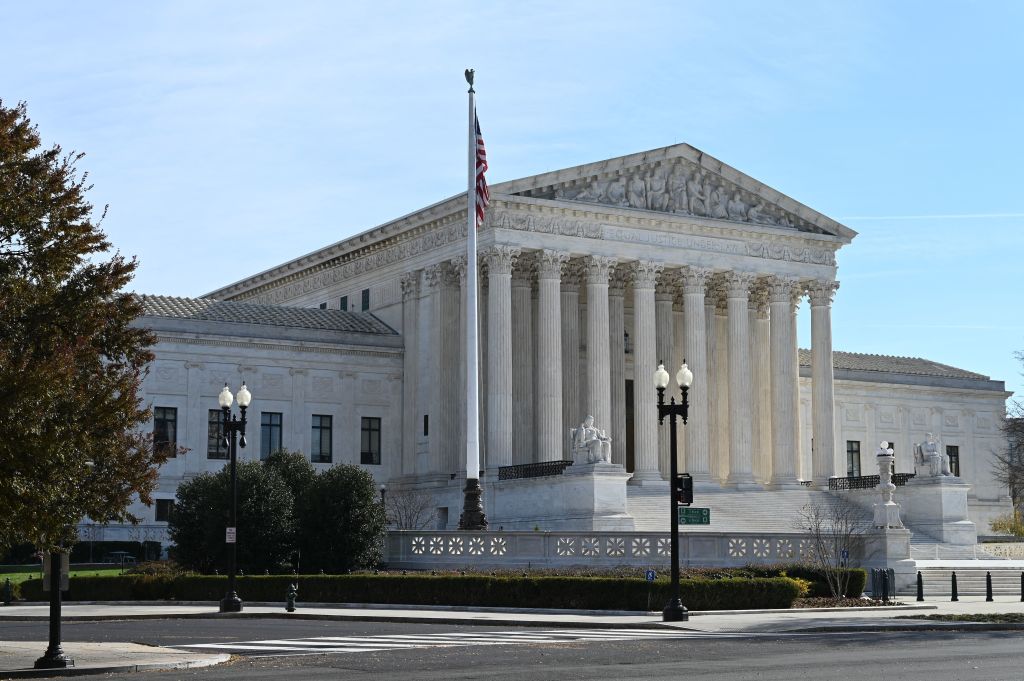
The Supreme Court on Friday sent a lawsuit seeking to hold oil and gas companies liable for damage to the Louisiana coast back to the federal courts. Several Louisiana parishes – the equivalent of counties in that state – had filed the lawsuit in state court, and in 2024 a federal appeals court in New Orleans rebuffed the companies’ latest effort to move the case to federal court. By a vote of 8-0 in Chevron USA Inc. v. Plaquemines Parish, Louisiana, with Justice Samuel Alito not participating because he owns stock in the parent company of one of the defendants in the case, the justices on Friday morning threw out the appeals court’s decision.
The federal law at the center of the case is known as the “federal officer removal statute.” It gives federal courts the power to hear state court cases filed against “any officer (or any person acting under that officer) of the United States or of any agency thereof, in an official or individual capacity, for or relating to any act under color of such office.”
More than a decade ago, the parishes, along with state officials, filed lawsuits in state court against oil and gas companies whose predecessors had produced crude oil along the Louisiana coast during World War II. They argued that the companies had violated state environmental laws by either failing to obtain the proper permits or violating the terms of any permits that they did obtain. Moreover, they claimed, the companies’ activities before 1980 were not covered by the laws’ prior clauses protecting them because they did not follow prudent industry practices. The parishes sought to have the companies pay damages, including to restore the areas where the oil companies were operating.
Citing the federal officer removal statute, the companies sought to transfer the case to federal court. They argued that two of Chevron’s predecessors had been federal contractors that had contracts with the federal government during World War II to produce aviation gasoline, known as “avgas,” which (among other things) required them to refine crude oil.
The U.S. Court of Appeals for the 5th Circuit agreed with the companies that, for purposes of the first prong of the federal officer removal statute, they were “acting under” a federal officer. But, the divided three-judge panel concluded, the companies could not show that the lawsuit was “for or relating to” its acts. Although the parishes’ claims “target Defendants’ oil production and exploration practices,” the panel majority reasoned, there is nothing in the companies’ refinery contracts about oil production, and the federal government’s wartime regulation of crude oil production was “minimal,” the majority concluded. Rather, the majority wrote, the companies’ contracts with the federal government gave them “‘complete latitude . . . to forego producing any crude and instead to buy it on the open market.’”
By a vote of 7-6, the full 5th Circuit declined to rehear the case. The oil and gas companies came to the Supreme Court last year, asking it to weigh in – which it agreed to do in June.
In an opinion by Justice Clarence Thomas, the court rejected the 5th Circuit’s reasoning. In his 12-page ruling, Thomas noted that “[t]he phrase ‘relating to’ sweeps broadly,” so that a defendant seeking to transfer his case from state court to federal court is not required to “show that his federal duties specifically required or strictly caused the challenged conduct.” At the same time, Thomas cautioned, the phrase’s “ordinary meaning” “is not ‘so broad that it is meaningless.’” Instead, he wrote, the phrase “requires a connection that is not ‘tenuous, remote, or peripheral.’”
“Chevron’s case,” Thomas concluded, “fits comfortably within” that range because the lawsuit “implicates acts by Chevron that are closely connected to the performance of its federal duties.” “Much of the crude oil that Chevron produced in” the oil field at the center of the dispute “was ultimately used for its own avgas refining.” Moreover, Thomas continued, the parishes’ “suit will challenge Chevron’s actions that allowed it to increase its production of crude oil in” that field “during wartime.”
Justice Ketanji Brown Jackson agreed that the companies could transfer their case to federal court, but for a different reason. In a separate concurring opinion, she argued that it is not enough for there to be an “indirect relationship between the conduct targeted by the lawsuit and the asserted federal duties.” Instead, she contended, the federal officer removal statute requires a cause-and-effect relationship between the duties and the conduct – a test that the oil companies can satisfy here, she concluded.
Posted in Court News, Featured, Merits Cases
Cases: Chevron USA Inc. v. Plaquemines Parish, Louisiana