The Brazilian Federal Supreme Court

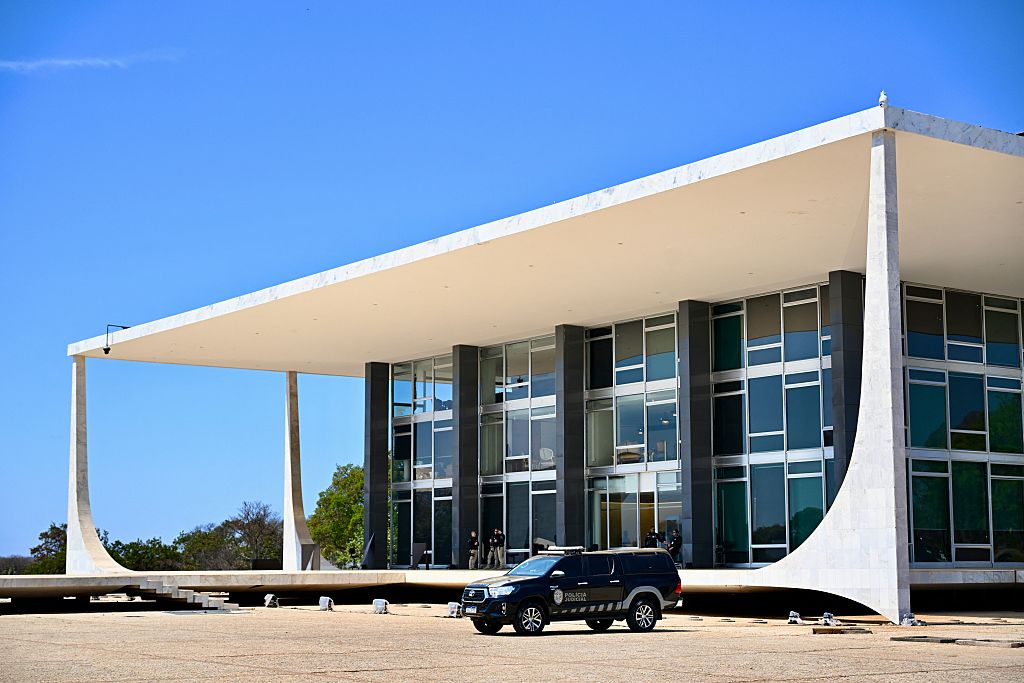
Welcome to SCOTUSblog’s recurring series in which we interview experts on different supreme courts around the world and ask about how they compare to our own. Today we focus on the Brazilian Federal Supreme Court, which has some absolutely fascinating differences with SCOTUS (in ways both very good and very bad – you can choose which is which). To help me unpack things, I spoke to Professor Diego Werneck Arguelhes.
Professor Arguelhes is Dean of the Law Faculty at the Insper Institute for Education and Research, in São Paulo, Brazil. He obtained his LL.B. and M.A. from the State University of Rio de Janeiro, and his LL.M. and J.S.D. from Yale Law School.
First of all, it seems that Brazil has numerous high courts. Can you help differentiate between these?
Brazil has several high courts: the Federal Supreme Court (STF), the Superior Court of Justice (STJ), the Superior Labor Court (TST), the Superior Electoral Court (TSE), and the Superior Military Court (STM). The Constitution grants each of them ultimate authority within their specific domains. While the latter three are more narrowly specialized, the STF and the STJ have a wider scope. The STJ settles issues of interpretation and application of federal statutes (including criminal law, which, in the Brazilian federation, is necessarily federal law). The STF wields ultimate authority on the interpretation and application of the Constitution. Article 102 of the Constitution establishes that the STF “has, essentially, responsibility for safeguarding the Constitution.”
In Brazil, like the U.S., all judges (including in the STJ and the other high courts) can decide not to apply a statute they consider to be incompatible with the Constitution. But, whenever constitutional review is involved, the final authority belongs to the STF. For example, a criminal case would thus typically end at the STJ, just as a labor law case would end at the TST – but both cases could reach the STF if the respective parties persuaded that court that there is a constitutional issue at stake. Since the STF is the ultimate arbiter of what is a constitutional issue, it has significant room to decide whether to include cases in its jurisdiction or not.
Focusing on the Federal Supreme Court then, how many judges are on this body? How are these judges selected?
According to the Constitution, the STF “is composed of eleven Justices, chosen from among citizens over thirty-five and under seventy years of age with notable legal knowledge and unblemished reputation.”The same article also establishes that the justices “shall be appointed by the president of the Republic, after their nomination has been approved by an absolute majority of the Federal Senate.”
After conducting a public hearing (called a sabatina) in which they interview the presidential nominee, the senators vote using a secret ballot. The appointment procedures have remained stable for more than a century, and the last time the Senate rejected a nominee was in the late 19th Century. However, there is evidence that the Senate’s preferences have been relevant in shaping ex ante the president’s choice, as they consider its political viability. Moreover, in recent years the senators have become more aggressive in this regard. In 2021, the Judicial Affairs Committee dragged its feet and took months to schedule a hearing after President Jair Bolsonaro submitted the nomination of his Solicitor-General André Mendonça (Mendonça was ultimately confirmed). Now, after much deliberate delay the Senate finally scheduled a hearing for the current Solicitor-General Jorge Messias, who was nominated by President Luiz Inácio Lula da Silva in November 2025. It would not be surprising if, in the next decade, we see a presidential nominee being rejected, or at least a president withdrawing a nomination.
Do the judges serve terms – and if so, of what length?
There is no life tenure in the Brazilian judiciary. All judges, including the STF justices, serve until the mandatory retirement age of 75 (raised from the original text’s 70, by amendment, in 2015). There are no general fixed terms of office. Since 1988, some justices served for half a dozen years, while others have been on the court for decades.
Is this court an appellate body? Or are its cases mostly matters of original jurisdiction?
The STF’s appellate and original jurisdiction are both very relevant. Like the Indian Supreme Court, it has a massive docket, receiving dozens of thousands new cases per year and issuing roughly the same number of decisions. The main force driving these numbers is the STF’s appeals docket. According to the court’s official data, between 2000 and 2025 the STF issued more than 2.9 million decisions, 2.3 million of which were on appeal. Between 2010 and 2025 it received more than 503,000 appeals of different kinds, accounting for around 63% of its docket.
These astonishing numbers must be understood in the context of the rejection of vertical stare decisis, which has been a feature of Brazilian constitutionalism for more than a century. This led to many “repeat cases” reaching the STF on appeal. In 2005, a constitutional amendment gave the STF a couple of important tools to deal with this problem: first, the Sumula Vinculante, the possibility of creating a binding interpretation of a statute or the constitution (by a vote of 2/3 of its justices); and second, a mechanism (Repercussão Geral) that allows the court to decide a single case that involves a question of broad legal relevance and is representative of other appeals in the lower courts – and then have the lower courts decide the pending cases using the “paradigm” ruling created by the court.
In the last five years, probably due in part to the effects of these mechanisms, the numbers have stabilized around 35,000 new appeals per year – still a massive docket when compared to the SCOTUS.
I’ve seen the phrase “abstract review” used – what is that?
The core of the court’s original jurisdiction are its multiple abstract review procedures, designed in the Constitution with unprecedented access and scope. Abstract review allows courts to perform constitutional review detached from any specific, concrete case or controversy. In Brazil, these procedures can be used to challenge a wide set of norms and even omissions by state agents, sometimes just a few hours after their enactment or occurrence. They can be triggered by an expansive list of entities, including all political parties with at least one seat in Congress and some civil society organizations. In this system, it is expected that any relevant political issue will be brought before the court.
As you noted, the STF has the power of judicial (and abstract) review. What other powers does it have? From what I’ve read, the STF also has the ability to issue warrants and involves itself in trials of politicians – can you tell me about this?
This is a central question to understand the STF’s role in Brazilian politics. While its constitutional review competences are expansive, its arguably most singular feature is its original criminal jurisdiction. As you may know, the STF convicted hundreds of people (including ex-President Bolsonaro) in connection with the January 8, 2023, invasions of the buildings of the three branches of government. In those cases, the court was not just reviewing decisions made by trial judges below. It was acting as the trial court – presiding over investigations, deciding questions of fact, analyzing testimony and documental evidence, issuing injunctions to impose restrictions on the defendants, and issuing a verdict on the merits.
Those cases fell under the STF’s jurisdiction because Bolsonaro himself was one of the defendants. According to the Constitution, the STF has sole, original, and final jurisdiction over criminal investigations and trials of all members of Congress, all members of the president’s cabinet, and the president himself, amounting to more than 600 federal authorities.
These very wide criminal competences have a clear textual basis in the original 1988 constitutional text. But they were also expanded over time, both by formal amendments and by the justices’ own interpretations of their powers. The most important expansion involved establishing that, whenever there is an attack on the court, on the justices, or even on democratic institutions more generally, the chief justice can initiate investigations sua sponte and assign one of their colleagues to preside over them. This expansion was invoked in decisions rendered by the chief justice in 2019 and was confirmed by the full bench court in 2020. This allows a single STF justice to (i) initiate investigations without a request by law enforcement agencies or prosecutors and (ii) still preside over them and even vote on the merits of the case.
This combination creates problems both of separation of powers and excessive judicial prerogatives, as well as impartiality concerns. These expanded criminal competences were a key tool for the court in dealing with mass disinformation and attacks on the justices and the electoral system during the Bolsonaro era (2019-2022) and were originally expected by some to remain limited to that volatile, exceptional period. But, unfortunately, the STF’s power to initiate investigations has now become normalized. The investigations on attacks on democracy initiated in 2019 are still open to this day, and there were other instances, even in recent years, of proceedings being promoted sua sponte by STF justices.
Are cases decided by a simple majority?
Cases that are selected for collective deliberation are decided by the plenary court of 11 justices, which necessarily decides all abstract review cases; or by one of the two five-justice chambers, which focus more on appeals, criminal proceedings, and habeas corpus petitions. These two bodies decide by a majority vote, although there are some specific rules. For example, decisions like prospectively overruling a case require a 2/3 majority.
Historically, however, an average of 90% of STF decisions every year are made by individual justices. This is a traditional, but troublesome feature of the STF. Such delegation appeared as a mechanism to cope with the overwhelming workload – both to screen out repetitive or absurd cases and allow the plenary and chambers to better focus their limited attention on relevant cases, and to allow for the issuing of emergency injunctions before an overworked court could find the time to decide collectively. Over time, however, it became clear that this delegation could (and often was) used even in high profile cases, especially via emergency injunctions. Consider, for example, that a single justice of the STF suspended the appointment of Lula to the cabinet of President Dilma Rousseff in 2016, a decision with clear political implications for her then-ongoing impeachment trial. Individual STF justices loom large in Brazilian politics, regardless of whether their views represent a majority within the court. In my view, this is the main institutional dysfunction in our system.
How is the opinion writer assigned?
The STF is a seriatim court: there is no “opinion of the court,” only individual opinions, similarly to the Supreme Court of the United Kingdom [and the U.S. Supreme Court in its early years]. The final decision is a sum of individual position; there is no institutional requirement to even try to write an opinion representing the shared views of a majority. In recent years, the justices began to collectively agree to “theses” when deciding – general statements consisting of the rule or interpretation being adopted by the majority in that case. These theses, however, still fall somewhat short of a true collective opinion, since they reflect a shared outcome more than a shared reasoning and ratio decidendi.
Still, one justice will have a specific role in writing the final decision. They will write the ementa – a summary of the decision that obtained a majority within the court – and their individual opinion will be the first one in the full text of the published decision. That justice is either the case rapporteur, if he is in the majority, or the first justice in the majority who disagreed with the rapporteur. It might sound confusing to a U.S. audience to speak of the “first” to disagree, so I need to get into some detail here.
Unlike in the U.S. Supreme Court, a rapporteur is immediately assigned when a case enters the STF’s docket and has discretion to decide when the case is ready for judgment, presenting to their colleagues a summary of the facts and arguments as well as their opinion on the case when judgment begins.
Moreover, all judgments in Brazil are public – not just the oral arguments, but the formal deliberations between the justices themselves. Anyone can attend sessions and see them deliberating live. This is a constitutional requirement. But the STF took publicity a step further: since 2002, it broadcasts all its deliberations live on a public channel (TV Justiça) and, since 2006, on its official Youtube channel as well.
When a judgement begins, justices announce their opinions according to a fixed voting order – beginning with the case rapporteur and then proceeding in order of reserve seniority. The chief justice (a position in which the justices rotate every two years) is the last to vote. Since 2020, both in the plenary court and in chambers the justices can adopt an alternative procedure to decide – the “virtual plenary.” The VP is an online, asynchronous voting platform in which judge upload their opinions within a certain time frame, with no fixed voting order, no public interaction or deliberation between them.
Is there a tradition of concurrences or dissents on the court?
Strictly speaking, since there is no “opinion of the court,” all opinions issued by the individual justices are either concurrences (if they converge on the winning outcome) or dissents (if they endorsed a defeated outcome). There have been a couple recent attempts by the justices to present collectively written opinions, but this practice is not yet institutionalized.
Dissenting is not seen as exceptional, and it does not necessarily imply strong internal disagreement or outspoken criticism of the majority. Still, it is overall less common than in the SCOTUS. According to a recent study, analysing over 423,00 collective decisions between 1988 and 2023, more than 380,000 (90%) were unanimous and 33,000 (8%) had a single dissent. When looking just at the 70,000 plenary decisions, 74% were unanimous. Of the 26% non-unanimous rulings, 19% had a single dissent, and around 1% were “close” decisions, in which the result would be different if a single judge changed their position.
When looking at those numbers, we should keep in mind the sheer size of the STF’s docket. Unlike the SCOTUS, which only decides cases that involve real legal controversy or political magnitude, the STF’s plenary and especially the two chambers often decide cases that would be considered “easy,” and perhaps should not have reached the court. According to the STF’s official data, in around 27% of the more than 8,600 abstract review decisions made since 1988 there was no decision on the merits, typically due to procedural irregularities. This shapes the overall dissent rates described above, as many of the cases were relatively uncontroversial. In contrast, in cases that the legal community would consider “hard,” dissents are not uncommon.
What were some major issues recently decided by the STF?
In 2019, the STF expanded the boundaries of the crime of “racism” so as to include homophobia and transphobia. Racism was already considered a crime in the Constitution and in statutes, but the latter two forms of discrimination were not, and the STF decided that the lack of a statute criminalizing homophobia and transphobia was an unconstitutional legislative omission. Judicial review of legislative omissions is in principle something the court is empowered to do, under some circumstances, in our constitutional system.
Also in 2019, the STF reversed itself on a key issue affecting Brazilian politics. A 2016 precedent allowed jail sentences to begin after a court of appeal confirmed the conviction but before all appeals had been exhausted. That rule had made it possible for former President Lula to begin serving jail time a few months before the 2018 elections; then, in 2019, the STF’s change of heart allowed him to wait on his appeals outside of jail.
In 2020, during the COVID-19 pandemic, the court voided a presidential decree prohibiting states and municipalities from adopting social distancing measures without prior authorization from the federal executive. That was the initial salvo in a series of cases in which Bolsonaro lost in the court on issues regarding public health and the Brazilian federation.
In 2025, the STF established a detailed set of rules for the liability of digital platforms regarding user-posted content that qualifies as disinformation, hate speech, or threats to democracy – issues that had not yet been specifically regulated by Brazilian laws on platform governance. It did so quite openly as rulemaking, not just adjudication, even though the justices emphasized the new rules were valid only until Congress legislated on the topic.
I have chosen just a few of the court’s high-profile cases from the last few years. As you can see, the justices have been far from shy in tackling controversies of extreme political and social relevance.
What have been some particularly controversial issues decided by this court historically?
In the 1990s, the STF was much more restrained. It had almost no fundamental rights cases. But even that “shy” court took the unprecedented step of intervening in the impeachment proceedings against President Fernando Collor [de Mello], in 1992. Accepting a petition by the president arguing that congressional rules of procedure gave him too little time to prepare his defense, the STF ordered it to expand the deadline. Collor petitioned the court again after he was convicted by the Senate and lost the right to run for office for eight years, despite having resigned from office just before the verdict. But here the STF sided with the Senate, upholding the restriction on Collor’s political rights. Two decades later, in 2015 and 2016, the court would once again reshape congressional procedures on impeachment, now during the trial of President Rousseff.
In the last two decades, the court decided, for example, that representatives who changed parties between elections would lose their mandate (2007); that the amnesty law enacted by the military dictatorship (which prevented the prosecution of crimes of torture committed by government personnel, for example) was compatible with the Constitution (2010); that the Constitution directly guaranteed the right of same-sex couples to enter a civil union (and ultimately convert it into marriage, for all legal purposes) (2011); that a woman or her physician could not be punished for performing an abortion in cases where the fetus had anencephalia (2012); and that race-based quotas in admissions to higher education were constitutional (2012).
The Supreme Court of the United States is often seen as partisan. Does the STF have a partisan reputation (especially with regard to curbing political corruption)?
I see the STF as a very political court – although not in the sense of being partisan. From an empirical perspective, despite some evidence of ideological voting in the STF, focusing simply on the appointing president (or the appointing president’s party) does not explain much in terms of how the justices vote. This is probably due, at least in part, to the fact that we have a multiparty presidential system, in which no single party holds a majority in Congress and therefore all governments must build a coalition to approve their initiatives in the legislature – including their STF appointments, who are therefore less likely to perfectly correspond to the preferences of the governing party.
But the justices are closely attuned to the political winds, responding sometimes to even the smallest changes in current affairs. Several justices are directly engaged with political disputes on a daily basis beyond court procedures. Some issue comments on current affairs and meet daily with politicians to discuss bills or policies – and sometimes even appointments to lower courts, public companies, and other bodies.
Moreover, the court has visibly adjusted its caselaw on high-profile issues with an eye on the current political scenario and public opinion, as it was the case with the short-lived precedent that allowed Lula to begin serving jail time even before his appeals were exhausted in 2018. I think these features of intense, real-time attunement to current politics are becoming more visible to the public. For example, a national survey in 2021 found that almost half of the respondents agreed with the idea that “the STF Justices are just like other politicians” – and that was a time when the court was at the peak of its popularity, due to its important decisions during the covid-19 pandemic.
I think I know the answer to this one, but would you say the STF is considered a particularly powerful institution – say, compared to the president of Brazil or the National Congress?
Definitely. The STF is an extremely powerful institution, and its individual justices are powerful political players by themselves. The court does not and could not “rule the country” (contrary to what some of its critics claim), but it does much more than simply ensuring politicians stay within the boundaries of the Constitution (contrary to what its justices often assert). It holds its ever-expanding criminal jurisdiction over the heads of politicians. It quite openly enacts policy and rules on several issues, acting like a co-legislator and sometimes the primary lawmaker. It shapes the political and electoral arena itself, in real time. Politicians develop their plans and electoral strategies under the shadow of the individual powers of its justices. Consider that, for most of his time in office, Bolsonaro consistently attacked the court and several of its individual judges. He turned the 2022 elections into something like a national referendum on the STF, and lost. Four years later, he was tried and convicted by that court for orchestrating a coup d’état attempt. How many courts in the world have survived a sustained showdown with the most powerful political actor in the country – and then sent him to jail?
What aspect of this court do you see as superior to that of the Supreme Court of the United States?
The mandatory retirement age, while inferior to having a fixed term for all justices, is in my view better than life tenure. Another feature is the STF’s broad abstract review jurisdiction. It tends to force the court to focus on the merits of a constitutional challenge, instead of having to invest time and effort in discussing standing technicalities. It also helps ensure that relevant constitutional questions will be reviewed by the country’s highest court, making access easier and more straightforward. I also have a positive view of the STF’s public deliberations, but here I am in the minority in Brazilian constitutional law.
What aspect of the Supreme Court of the United States do you see as superior to that of the STF?
Writing a collective majority opinion (or least being expected to try to do so) is very helpful for providing guidance to lower courts and to society in general.
Additionally, I think what judges cannot do is as important as what they can do. There are things that the U.S. justices cannot do, in contrast to the STF ones, that help create a relatively better design in the SCOTUS. The first I have already mentioned: expansive individual decision-making powers by the Brazilian justices that I have argued elsewhere to be unjustifiable. The SCOTUS, like most supreme or constitutional courts, is an institution in which internal majorities rule. Even the “rule of four” standard that is adopted for granting cert petitions, while technically a sub-majority rule, helps to constrain more extreme or idiosyncratic views within the court.
Finally, there’s a feature I haven’t yet mentioned. Although the SCOTUS has discretion in choosing what it will keep in its docket, it is expected to announce, within the same judicial year, whether it will decide the case and the decision itself. The STF, in contrast, has no deadline to decide. In fact, it is under no deadlines at all. It can keep a case on its docket for 5, 10, 15 years, and then suddenly “resurrect” it, out of nowhere, creating for itself the opportunity to rule on an issue that has become politically relevant. So here is another thing that the STF can do, but that I think it should not be able to do: to simply remain silent on a case for years and years, not saying even if it will be decided on the merits. As my colleague Ivar Hartmann and I have argued (here and here), this gives the justices too much unaccountable discretion.
Posted in Featured, Recurring Columns, Supreme courts around the world