Will the mystery of the Dobbs leak ever be solved?

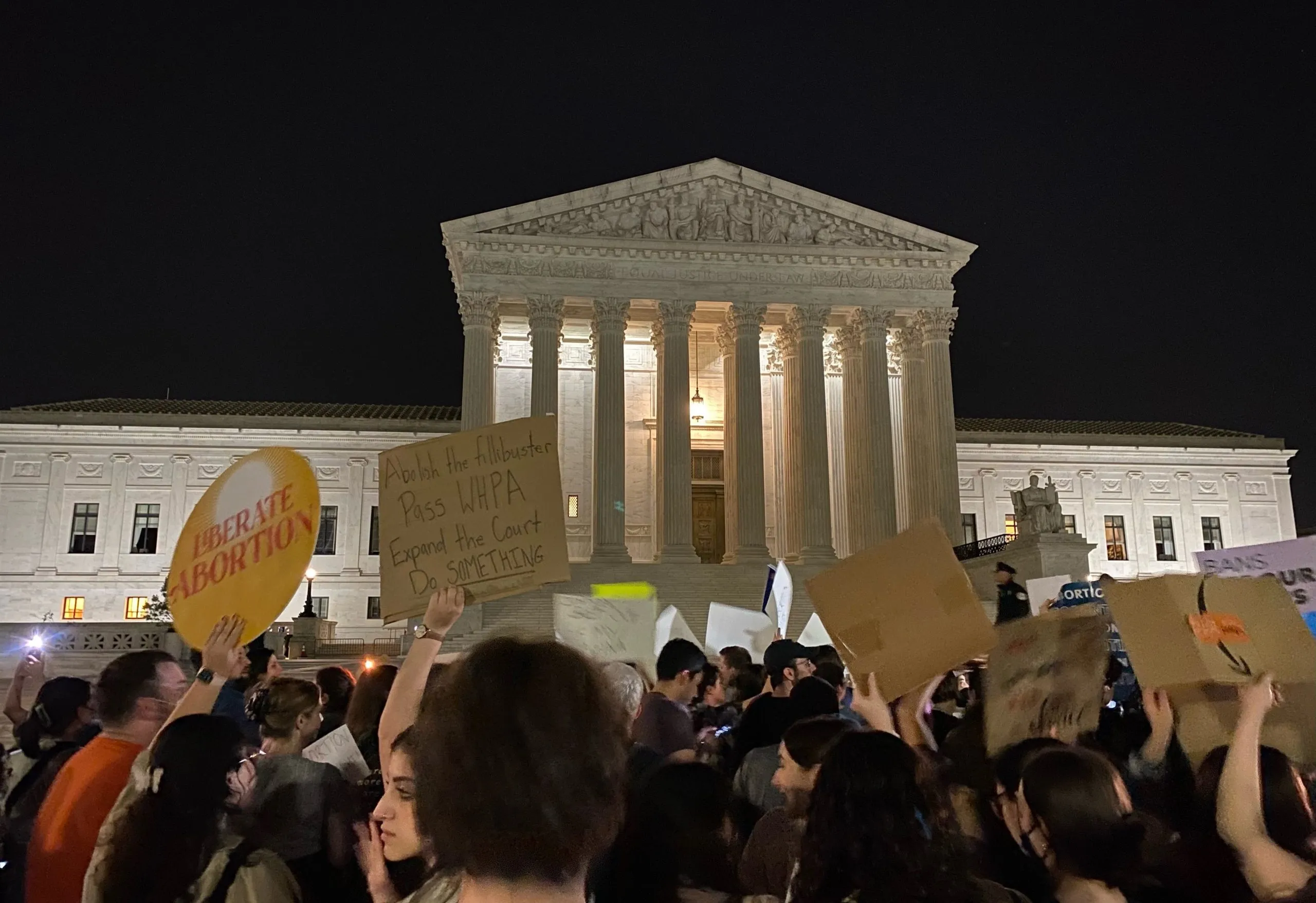
Justice Clarence Thomas’ virtual appearance last week at a legal conference in Washington, D.C. brought renewed attention to court security. Thomas had originally planned to attend in person, but he had to pivot due to an unexplained risk. News coverage of the change noted that justices have taken heightened precautions since 2022, when a leak of a draft of the Supreme Court’s opinion in Dobbs v. Jackson Women’s Health Organization, the case in which the court ultimately overturned Roe v. Wade, led to protests outside some justices’ houses and an assassination attempt on Justice Brett Kavanaugh.
The leak itself was briefly back in the news in mid-February, amid Attorney General Pam Bondi’s testimony before the House Judiciary Committee. During the hearing, Rep. Brandon Gill, a Republican from Texas, asked if “the Biden-Harris DOJ ever determine(d) who leaked the Dobbs decision,” prompting Bondi to explain that she “can’t discuss that,” but that, no, the Department of Justice under President Joe Biden did not identify the leaker.
Bondi’s non-response response implies that the Department of Justice does not consider the investigation to be closed, although the Supreme Court itself announced in January 2023 that, after an unsuccessful investigation led by the Supreme Court marshal, there were few leads left to follow.
Here’s a refresher on the circumstances of the leak, the court’s investigation, and a look at what might happen next.
What is the Dobbs leak?
This part will likely be quite familiar to most SCOTUSblog readers, but, as a refresher, in Dobbs the court reconsidered its past decisions establishing a constitutional right to abortion, ultimately overruling those cases and returning the power to set abortion policy to the states. Dobbs was the highest-profile case of the 2021-22 term, and indeed, one of the highest-profile Supreme Court cases in history.
The court heard argument in Dobbs on Dec. 1, 2021. On May 2, 2022, Politico published, in an article by Josh Gerstein and Alexander Ward, what appeared to be a draft of the court’s opinion in the case without revealing who had leaked it. The article – titled “Supreme Court has voted to overturn abortion rights, draft opinion shows” – reported that the opinion by Justice Samuel Alito, which was dated Feb. 10, had been “circulated inside the court and obtained by Politico.”
The article sparked a flurry of online commentary about whether the draft was real and, if so, how the unprecedented leak had happened. It also led to in-person protests outside the Supreme Court Building, outside some of the justices’ homes, and across the country.
Did the Supreme Court confirm the Dobbs leak was real?
The day after Politico published the draft opinion, the Supreme Court confirmed that it was real in a press release. Chief Justice John Roberts described the leak as “a singular and egregious breach” of the trust between the court and its employees – indeed, the Dobbs leak is thought to be the first leak of a draft opinion, although there have been leaks about the court’s internal deliberations before (such as justices’ likely votes). Nevertheless, Roberts made clear that “[t]he work of the Court will not be affected in any way.”
“To the extent this betrayal of the confidences of the Court was intended to undermine the integrity of our operations, it will not succeed,” Roberts said.
The chief added that he had “directed the Marshal of the Court to launch an investigation into the source of the leak.”
How did the court’s Dobbs opinion compare to the leaked opinion?
While the court’s press release confirmed the authenticity of the draft, it also emphasized that a draft is exactly that, a draft. “Justices circulate draft opinions internally as a routine and essential part of the Court’s confidential deliberative work. Although the document described in yesterday’s reports is authentic, it does not represent a decision by the Court or the final position of any member on the issues in the case,” the release said.
However, when the court released its Dobbs opinion on June 24, 2022, the final document had much in common with the leaked draft. CNN’s in-depth analysis of the two texts showed that more than 100,000 of the 125,290 characters in the final opinion were unchanged from the February draft. As CNN reported, “[w]hile some parts were taken out [from the draft], Alito’s opinion added more to the final ruling — including a critique of the dissenting opinions — than he removed.”
What happened with the Supreme Court’s investigation?
As noted above, following the draft’s leak, Roberts instructed Supreme Court Marshal Gail Curley “to launch an investigation into the public disclosure of the draft majority opinion” so as to “determine who made the unauthorized disclosure.”
On Jan. 19, 2023, seven months after it released its opinion in Dobbs and over eight months after the investigation began, the Supreme Court offered an update on Curley’s investigation. “After months of diligent analysis of forensic evidence and interviews of almost 100 employees,” the court’s two-page statement explained, “the Marshal’s team determined that no further investigation was warranted with respect to many of the ‘82 employees’” who would have had access to the leaked draft. The investigators, according to the statement, followed up “on all available leads,” but had so far been “unable to identify a person responsible by a preponderance of the evidence.”
Along with its statement, the court released a public version of Curley’s report, which explained the investigation in more detail. It indicated that her team conducted “formal interviews” with 97 employees, “all of whom denied disclosing the opinion.” After those initial interviews, the employees were asked to sign sworn statements, under penalty of perjury, attesting that they were not the source of the leak. “[A]ll personnel who had access to the draft opinion” signed these affidavits, according to the report.
The report also revealed that investigators had ruled out as “unlikely” the possibility that someone from outside the court had hacked into the court’s computer systems and accessed the draft opinion that way.
The court’s statement emphasized that investigators would continue to review available evidence but implied that there were few leads left to pursue. It also noted that the court had asked Michael Chertoff, a former secretary of Homeland Security and judge, to assess the investigation, and that Chertoff had deemed it to be “thorough.”
As SCOTUSblog reported at the time, the marshal’s report was “widely criticized” because it provided few insights about how the justices themselves were treated during the investigation. For example, Curley did not reveal whether investigators had spoken with the justices or members of the justices’ families. But in a brief statement released on Jan. 20, 2023, Curley clarified that she had spoken “with each of the Justices, several on multiple occasions.” She further clarified that, unlike court employees, the justices were not asked to swear under penalty of perjury that they were not the source of the leak.
Is the FBI involved?
Even before the court revealed that its investigation had not uncovered a clear culprit, Roberts faced some criticism for the decision to assign the task to Curley from observers who felt the marshal and her team were ill-equipped to conduct a thorough investigation. Although few of the justices have spoken about this, Alito told The Wall Street Journal in 2023 that he felt Curley “did a good job with the resources that were available to her.”
In May 2025, we learned that additional investigators had been assigned to the matter: then-FBI Deputy Director Dan Bongino announced on social media that the FBI was prioritizing work on the Dobbs leak and that he was receiving weekly briefings on the investigation. “If you have any investigative tips on these matters that may assist us then please contact the FBI,” Bongino wrote.
What would happen if the leaker were to be identified?
In the aftermath of the leak, legal experts debated whether what had happened was a crime or merely a breach of the court’s internal code of conduct. Charges would have been more likely if the leak involved hacking or a physical break-in, lawyers told The Washington Post.
As it stands, the most likely charge is for theft of government property. The relevant statute, 18 U.S.C. 641, prohibits stealing or receiving government property, including documents, and carries a penalty of up to 10 years in prison.
The leaker could also potentially be subject to prosecution for lying during the court’s investigation if that individual had signed a sworn affidavit denying involvement.
If the source of the leak is identified as a current Supreme Court employee, there would almost certainly be professional consequences. The court has long used confidentiality pledges or other, similar documents to enforce its expectation of secrecy and has more recently begun having employees sign nondisclosure agreements “promising to keep the court’s inner workings secret,” according to The New York Times (though the enforceability of such agreements is questionable).
What has Pam Bondi said about the Dobbs leak?
February was not the first time Bondi was questioned about the Justice Department’s work on the Dobbs leak. Sen. Ted Cruz, a Republican from Texas, brought up the potential for criminal charges against the source of the leak – if that source can be identified – when Bondi testified before the Senate Judiciary Committee in October 2025.
“General Bondi, do you agree that leaking that opinion was a criminal act?,” Cruz asked after explaining that he believes that 18 U.S.C. 641 would apply.
Bondi responded, “I can’t discuss anything regarding that matter. That should answer your question.”
Cruz urged Bondi “to direct the FBI to use every resource possible to investigate, to find the leaker,” noting that the FBI “has far greater investigatory tools at its disposal than does the Marshals Service.”
Will the source of the Dobbs leak be identified?
To state the obvious: we don’t know.
That said, the justices themselves may have at least some idea of the leaker’s identity. In his 2023 interview with The Wall Street Journal, Alito said that he has “a pretty good idea who is responsible,” but added that “that’s different from the level of proof that is needed to name somebody.” He didn’t elaborate further.
As noted above, Bondi also alluded to an ongoing investigation during her House testimony in February. At the very least, this suggests that the Justice Department may believe there is more to uncover about the leak.
But as Cruz noted during the Senate Judiciary Committee hearing in October, time is running out in at least one regard: There is a five-year statute of limitations on stealing government property, which would mean that prosecutors would have to bring charges by around this time next year.
Posted in Court Analysis, Merits Cases
Cases: Dobbs v. Jackson Women’s Health Organization