Skip to content
Newsletter

SCOTUStoday for Friday, March 20

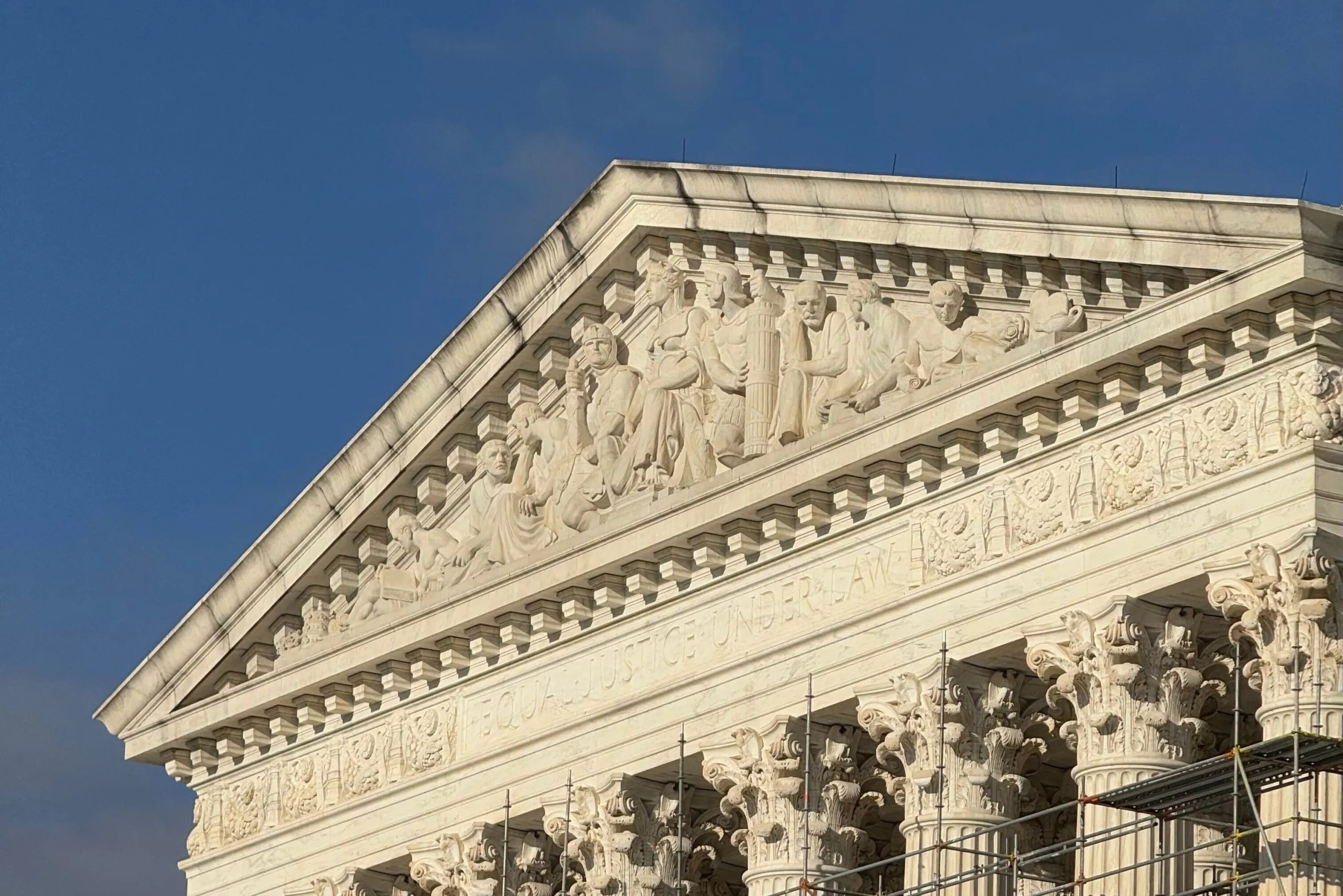
Carved details along top of Supreme Court building are pictured
(Katie Barlow)

The court has indicated that it may announce opinions this morning at 10 a.m. EDT. Our opinion day live blog begins at 9:30. Join us!

At the Court

After the possible announcement of opinions, the justices will meet in a private conference to discuss cases and vote on petitions for review. Orders from today’s conference are expected on Monday at 9:30 a.m. EDT.

Also on Monday, the court will hear argument in Watson v. Republican National Committee, on whether federal law requires not only that voters cast their ballots by Election Day, but also that election officials receive the ballots by then.

On Thursday, Justice Elena Kagan denied a request from a Western Apache tribe to block the government from transferring land in Arizona, including a sacred site called Oak Flat, to a mining company.

Morning Reads

More federal judges warn of an increase in violent threats

Lawrence Hurley, NBC News

During an online forum on Thursday, four sitting judges “added to the chorus of concerns raised about the rise in violent threats against members of the judiciary at a time when President Donald Trump has ramped up his criticism of the courts,” according to NBC News. They described being attacked on social media and over email as they weighed “all kinds of cases, not just those with a political tinge.” “I don’t think being a federal judge is a job for the fainthearted,” said Chief Judge Dolly Gee of the U.S. District Court for the Central District of California. Chief Justice John Roberts addressed threats against judges during an appearance in Houston earlier this week, saying “personal attacks against judges were dangerous and have ‘got to stop.’”

‘Embodied the American dream’: Sandra Day O’Connor remembered at Supreme Court

Zach Schonfeld, The Hill

Former clerks for Justice Sandra Day O’Connor “and top Justice Department officials gathered at the Supreme Court on Thursday to pay tribute to her as a barrier-breaking, tireless advocate for civics and those around her,” according to The Hill. “Justice O’Connor’s life embodied the American dream,” said Attorney General Pam Bondi during the event. In addition to Bondi, U.S. Solicitor General D. John Sauer, former Solicitors General Elizabeth Prelogar and Paul Clement, and eight of the nine active justices (everyone but Justice Neil Gorsuch) took part.

Trump wants the EPA to stop regulating climate pollution. Blue states have launched a high-stakes legal case against him

Ella Nilsen, CNN

On Thursday, leaders of 40 Democratic states, cities, and counties announced that they have “sued the Trump administration” over “the recent termination of a longstanding policy allowing the Environmental Protection Agency to regulate climate pollution,” according to CNN. “The US DC Circuit Court of Appeals is the main legal battleground for the initial court fight between the Trump administration, environmental groups and blue states. If the latter groups prevail and Trump appeals, the case would likely wind up in front of the Supreme Court.”

9th Circuit upholds law barring domestic abusers from owning guns

Bob Egelko, San Francisco Chronicle

On Wednesday, the U.S. Court of Appeals for the 9th Circuit ruled that “[a]nyone who has been convicted of domestic violence can be permanently prohibited from possessing guns or ammunition under U.S. law,” according to the San Francisco Chronicle. Writing for a unanimous panel, Judge William Fletcher noted that “the United States has a long and justified tradition of prohibiting domestic abusers from possessing firearms” and that, in 2024, the Supreme Court upheld “another federal law that barred gun ownership by domestic abusers who have attacked or threatened someone in their household.” That 2024 “ruling involved civil restraining orders, not criminal prosecutions, but Fletcher said the legal basis was the same.”

A Gift From Trump to the Supreme Court

Adam Liptak, The New York Times

In his newsletter, The Docket, Adam Liptak revisited Trump’s Sunday night social media rant against the Supreme Court, contending that the president “inadvertently made the case for the court’s independence.” Trump attacked the Republican appointees who ruled against his tariffs, writing “that Republican justices ‘go out of their way, with bad and wrongful rulings and intentions, to prove how “honest,” “independent,” and “legitimate” they are.’” “You can put [those words] in scare quotes,” Liptak wrote, “but it’s still a gift.”

The Supreme Court Should Let States Run Their Elections

Pat McCrory and Mark Schweiker, National Review

In a column for the National Review, Pat McCrory, a former governor of North Carolina, and Mark Schweiker, a former governor of Pennsylvania, urged the Supreme Court to allow states to count ballots that were postmarked by Election Day but that arrived shortly after – the practice being challenged in Watson v. Republican National Committee. “This is not an argument for lax standards or indefinite counting. States can and should set firm, transparent deadlines. The question is, who decides?,” they wrote. “Entrusting states to manage election logistics within reasonable bounds respects local conditions and strengthens public confidence in the outcome – no matter which party wins.”

On Site

Case Preview

Justices to consider the rights of asylum seekers at the U.S.-Mexico border

The Supreme Court will hear oral arguments on Tuesday in a challenge to the government’s policy of systematically turning back asylum seekers before they can reach the U.S. border with Mexico. The policy at the center of the case is no longer in place, but the Trump administration calls it a “critical tool for addressing” surges in immigrants at the border.

Scaffolding sits around the Supreme Court building in Washington, D.C.
Case Preview

Justices to consider rules pardoning omissions by bankrupt debtors

Tuesday’s argument in Keathley v. Buddy Ayers Construction involves a question about bankruptcy procedure – the standards for overlooking the failure of a debtor in bankruptcy to mention one of its assets to the court.

View from the floor of the Supreme Court building to its ceiling by the pillars
Relist Watch

Uninjured class members, hindsight harmlessness, presidential cronies, and the mistaken use of deadly force

In his Relist Watch column, John Elwood dug into four new relists that will be revisited by the justices during their private conference today. “The lineup this week includes a RICO class-action that asks how many uninjured plaintiffs are too many, a capital case about whether harmless-error review can rely on evidence the jury never saw, and a qualified-immunity dispute featuring the wrong tear-gas round at the wrong time,” Elwood wrote.

relist watch banner art lien
Contributor Corner

Birthright citizenship: why the text, history, and structure of a landmark 1952 statute doom Trump’s executive order

In a Brothers in Law column, Akhil Amar, Vikram Amar, and Jason Mazzone analyzed the role of the text and history of 8 U.S.C. § 1401(a) – part of the 1952 Immigration and Nationality Act that states that “a person born in the United States, and subject to the jurisdiction thereof” is a U.S. citizen at birth – in the Supreme Court’s birthright citizenship case.

The United States Capitol building is seen in Washington D.C., United States, on December 9, 2025

Podcasts

Advisory Opinions

Will Temporary Protected Status for Immigrants End?

Live at the University of Pennsylvania’s Carey Law School, Sarah Isgur and David French break down the Supreme Court’s temporary protected status cases and then are joined by Judge Stephanos Bibas of the U.S. Court of Appeals for the 3rd Circuit.

SCOTUS Quote

CHIEF JUSTICE ROBERTS: “But, scrupulously, I – I looked at – on the naturalization form, there is a question. It’s Number 22. ‘Have you ever’ – and they’ve got ‘ever’ in bold point –”

MR. PARKER: “Uh-huh.”

CHIEF JUSTICE ROBERTS: “ – ‘committed, assisted in committing, or attempted to commit a crime or offense for which you were not arrested?’ Some time ago, outside the statute of limitations, I drove 60 miles an hour in a 55-mile-an-hour zone.”

(Laughter.)

MR. PARKER: “I’m sorry to hear that.”

Maslenjak v. United States (2017)

Recommended Citation: Kelsey Dallas and Nora Collins, SCOTUStoday for Friday, March 20, SCOTUSblog (Mar. 20, 2026, 9:00 AM), https://www.scotusblog.com/2026/03/scotustoday-for-friday-march-20/