

Skip to content
Newsletter

SCOTUStoday for Thursday, March 19

Kelsey Dallas's Headshot
Alex Rivenbark's Headshot
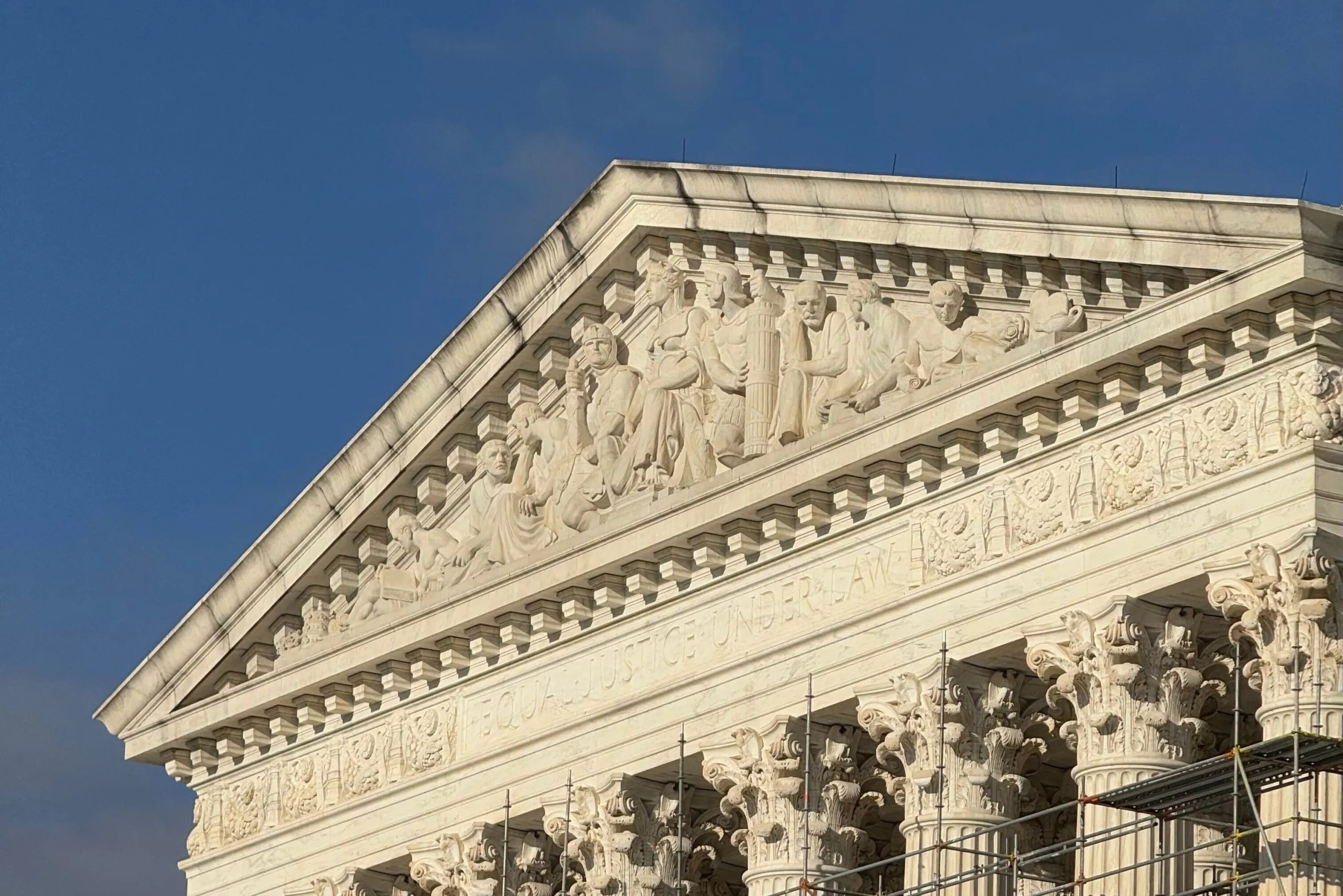
Carved details along top of Supreme Court building are pictured
(Katie Barlow)

Chief Justice Earl Warren was born on this day in 1891. Before Warren joined the court, he served as governor of California for a decade.

At the Court

The court has indicated that it may announce opinions tomorrow at 10 a.m. EDT. We will be live blogging beginning at 9:30.

Also on Friday, the justices will meet in a private conference to discuss cases and vote on petitions for review. Orders from that conference are expected on Monday at 9:30 a.m. EDT.

On Monday, the court will hear oral argument in Watson v. Republican National Committee, on whether federal law requires not only that voters cast their ballots by Election Day, but also that election officials receive the ballots by then. Find Amy’s case preview in the On Site section below.

Morning Reads

Pressure Grows for Supreme Court to End ‘Emergency’ Wins for Trump

Zoe Tillman and Greg Stohr, Bloomberg

The Supreme Court’s Monday announcement that it will hear argument on the Trump administration’s efforts to remove protected immigration status from Haitians and Syrians and leave those protections in place for now felt to some like an acknowledgement of pushback the justices have faced for quickly siding with the administration in most emergency requests in the past year and only rarely explaining why. The justices “have faced mounting public pressure to slow down and show their work – even if they ultimately rule for the administration,” according to Bloomberg. “We hope this is the beginning of the end of what has become this court’s routine acceptance of the government’s purported ‘emergency’ requests,” said J. Michael Luttig, a retired federal appeals court judge appointed by President George H.W. Bush, to Bloomberg.

Trump’s latest tariffs face a fresh set of legal hurdles

Josh Gerstein, Politico

In the weeks since the Supreme Court struck down President Donald Trump’s global tariffs on Feb. 20, the Trump administration has been working to reimpose them under different laws. But new tariffs have sparked new legal battles, including lawsuits in the Court of International Trade over whether the administration is correctly applying Section 122 of the Trade Act of 1974, which authorizes the president to impose temporary tariffs of up to 15% in response to “large and serious balance-of-payments deficit[s],” according to Politico. “While Trump called his new approach ‘time tested,’ that authority has never been invoked before and the high court has not given its blessing to Trump using that specific law in the current circumstances.” “The Court of International Trade has set arguments on the pending suits, including a request for a preliminary injunction, for April 10.”

Advocacy groups get trans athlete bans on ballots in Maine, Colorado

Daniel Wu, The Washington Post

As the Supreme Court considers the legality of state laws barring transgender athletes from participating on women’s and girls’ sports teams, which are in place in almost 30 states, additional states are debating implementing such laws. “Maine and Colorado this week approved ballot initiatives by advocacy groups seeking to ban transgender student-athletes from playing on girls’ sports team,” according to The Washington Post. “Voters in Washington state will also vote on trans athletes in November, and similar measures have been proposed in Arizona, Nevada and Nebraska.”

The Supreme Court’s Birthright Citizenship Decision Hinges on a Case You’ve Never Heard Of

Smita Ghosh, Slate

In Slate’s Executive Dysfunction newsletter, Smita Ghosh explored a 19th -century New York case on inheritance, Lynch v. Clarke, that she believes may play an “instrumental” role in the Supreme Court’s birthright citizenship case. “In the 1844 case, Judge Lewis Sandford [of the New York Court of Chancery] held that Julia Lynch, the child of Irish parents who was born during their ‘temporary sojourn’ in New York, was a U.S. citizen,” Ghosh wrote, adding that “Lynch sheds light on the meaning of the 14th Amendment’s citizenship clause because it represents the state of the law before the amendment was ratified, and the clause, according to its Framers, was ratified to confirm—not change—this aspect of existing law.”

Trump Expects His Judges to Do Whatever He Wants

Jay Willis, Balls and Strikes

In a column for Balls and Strikes, Jay Willis reflected on Trump’s recent complaints about the Supreme Court and about conservative justices ruling against him, contending that these comments make clear that the president expects loyalty from the judges and justices whom he appoints. “The nuances of any given case are irrelevant to him, because he expects his judges and justices to treat his interests as dispositive, and to cast their votes accordingly,” Willis wrote.

On Site

Case Preview

Court to hear argument in case that could have significant impact on 2026 elections

The Supreme Court will kick off its March argument session by hearing a case that could have major implications for the 2026 elections and beyond. If the justices hold that mail-in ballots must arrive by Election Day, laws in more than a dozen states could be upended.

The US Supreme Court in Washington, DC, on December 4, 2022.
Contributor Corner

Supreme Court asylum decision burdens already overworked DOJ

In his Immigration Matters column, César Cuauhtémoc García Hernández revisited the court’s March 4 ruling in Urias-Orellana v. Bondi, which made clear “that federal appellate courts have a limited role overseeing asylum claims.” The decision, according to César, “puts more responsibility on decision-makers who are stretched thin by mounting caseloads, while making it more difficult for migrants to ask federal appellate courts to overturn asylum denials.”

A view of the U.S. Supreme Court as the federal government officially shuts down due to a congressional budget impasse in Washington D.C., on October 04, 2025.
Contributor Corner

Does the Supreme Court have a strong “unitary” judicial power?

You’ve likely heard of the “unitary executive” theory, which some believe gives the president sweeping power, but what about a “unitary judicial” power vested in the Supreme Court? In his ScotusCrim column, Rory Little explored the latter idea “and its possible radical implications.”

supremecourt

Podcasts

Amarica’s Constitution

A Brief Ecosystem

Akhil Reed Amar and Andy Lipka offer an in-depth analysis of Amar’s “friend of the court” brief in the birthright citizenship case.

SCOTUS Quote

JUSTICE SOTOMAYOR: “Mr. Garre, this is the fundamental problem that I think Justice Alito is pointing to, and you’re sort of talking past each other. So maybe I’ll explain his view.”

(Laughter.)

JUSTICE SOTOMAYOR: “Strange, isn’t that?”

JUSTICE ALITO: “I – I could use – I can use the help.”

Fisher v. University of Texas at Austin (2015)

Recommended Citation: Kelsey Dallas & Alex Rivenbark, SCOTUStoday for Thursday, March 19, SCOTUSblog (Mar. 19, 2026, 9:00 AM), https://www.scotusblog.com/2026/03/scotustoday-for-thursday-march-19/