Does the Supreme Court have a strong “unitary” judicial power?

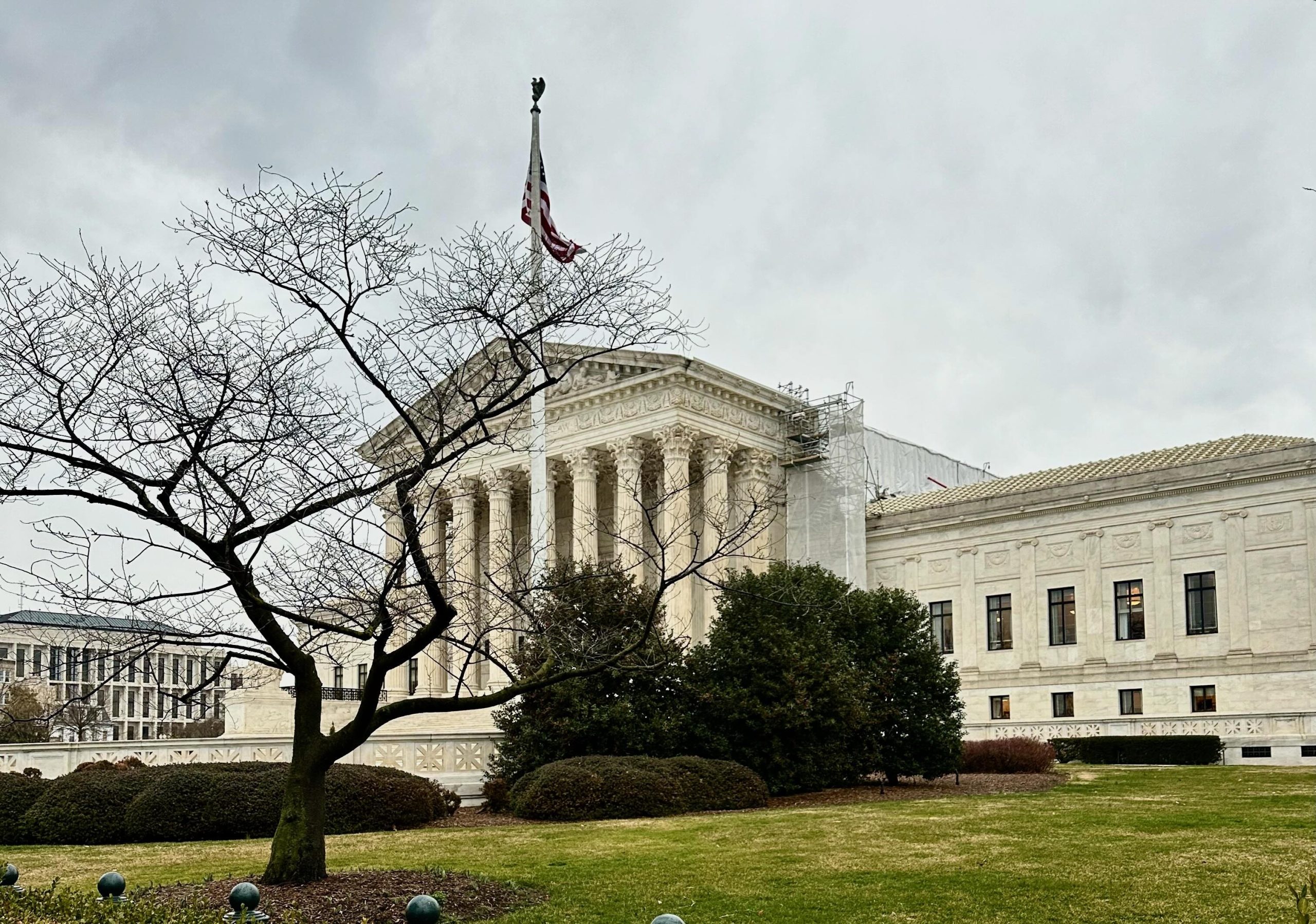
ScotusCrim is a recurring series by Rory Little focusing on intersections between the Supreme Court and criminal law.
The first sentence of Article II of the Constitution introduces the executive branch by announcing that “[t]he executive Power shall be vested in a President.” In recent years, many scholars and judges have focused on the singular “a” in this “vesting clause” to assert a broad and deep – indeed, sometimes unreviewable – “unitary executive” power in the president.
Why isn’t Article III read similarly? The first sentence likewise introduces the judicial branch by announcing that “[t]he judicial Power of the United States, shall be vested in one supreme Court” (and then continues to say “and in such inferior Courts as the Congress may from time to time ordain and establish”). Might not the Constitution’s singular text here (“one supreme Court”) describe a similarly strong, even unreviewable, “unitary judicial” power in the Supreme Court?
Today’s column briefly opens exploration of this idea and its possible radical implications – which I have not previously seen in these terms (but see this SCOTUSblog column speculating about a “unitary legislature”). A 2007 article did suggest that Article III “requires the Supreme Court to have supervisory power over all” lower federal courts, but that is, as discussed below, a weaker claim than what a strong “unitary judicial power” might suggest.
Of course, a short column is no place to explicate a deep constitutional theory; future scholarship will have to dig into the history as well as possible implications that such a theory might lead to. But here are some thoughts, stimulated by a recent Supreme court criminal law argument.
Hunter v. United States, an important criminal law case, necessarily asks where the Supreme Court gets its authority.
During the March 3 oral argument in Hunter v. United States, Justice Elena Kagan asked the government (so you don’t have to hunt, at transcript page 97) whether it was taking the position that “this court has no power to establish rules intended to safeguard the integrity of the judiciary”? Kagan was following up on Assistant Solicitor General Zoe Jacoby’s “answers to Justice [Amy Coney] Barrett” suggesting there is no “source” for the court to write rules that would govern lower courts. The government argued that the court has no such supervisory power in this case. A bit later Kagan asserted that “we don’t need a statute” without saying more. (The reference to Barrett was unsurprising once you learn that 20 years ago, when Barrett was a junior law professor, she wrote that it is “exceedingly” but not definitively “unlikely that the Constitution confers” such inherent authority on the Supreme Court.)
But to back up: here’s what Hunter is about. As part of a plea agreement with the government in a financial fraud case, Munson Hunter agreed not to “appeal or ‘collaterally attack’ the conviction and sentence” the court might impose (excepting a claim for ineffective assistance of counsel). Some weeks later, the district court judge imposed, over Hunter’s objection, a condition that Hunter take prescribed mental health drugs as part of any supervised release. Hunter appealed regarding this condition, which was undiscussed in the plea agreement, alleging constitutional error.
The U.S. Court of Appeals for the 5th Circuit dismissed the appeal without addressing the merits, invoking Hunter’s appeal waiver. The petition for review (certiorari) that the court granted in Hunter demonstrated that various federal courts have recognized different implicit exceptions to what are now standard appeal waivers. The question in Hunter is whether such exceptions should be recognized by the Supreme Court and then enforced against lower courts who disagree (like the 5th Circuit in this case). That necessarily asks where the court gets authority to recognize such exceptions and specify what they may be.
Hunter: may exceptions be read into broad appeal waiver agreements?
As I explained last month, after the application of detailed U.S. Sentencing Guidelines was affirmed to be mandatory in federal criminal cases in 1989, U.S. Attorney offices around the country began demanding “appeal waivers” as part of most criminal case plea bargain resolutions. Over time, there has been a variety of language in such agreements, as appeal waivers were tried and litigated among various offices and court cases. In general, such agreements include a promise by the defendant not to appeal their conviction or sentence in return for leniency that the government is providing regarding charges or the sentence in the plea bargain.
Appeal waivers have become standard Department of Justice policy, even as many defense lawyers argue that they are not really voluntary due to unequal bargaining power and ethical concerns. The American Bar Association has taken the position that exceptions to such waivers should always be permitted. This is a substantial issue: over 90% of all federal criminal cases are resolved by plea bargains, yet a significant number of defendants file appeals despite having agreed to waive them. Thus the interpretation, applicability, and scope of such waiver agreements have been a frequent subject of federal appellate litigation.
The benefit of appeal waivers for the government is to reduce workload and resource expenditures, as well as to ensure finality. Still, over time and in the face of criticisms and concerns, two exceptions appear to have become accepted and are often (but not always) written into appeal waiver agreements: permitting a defendant to appeal to claim ineffective assistance of counsel or that the sentence imposed exceeds the maximum sentence permitted. As noted above, even beyond such written exceptions, some circuits have recognized implicit exceptions for constitutional errors or a “miscarriage of justice” (a term not precisely defined).
In the 2019 case of Garza v. Idaho, a majority of the Supreme Court said that “no appeal waiver serves as an absolute bar to all appellate claims,” and seemingly recognized an ineffective assistance of counsel exception in a state criminal case. But the court carefully noted that it was making no statement about “what particular exceptions may be required.”
The DOJ position in Hunter is that no implicit exceptions beyond any expressly written into a plea agreement should be found. Lisa Blatt presented forceful arguments for Hunter that the court should reject that view, and reminded the justices of their statement in Garza. When a number of justices appeared ready to accept the idea that federal courts should permit some such exceptions even if not written in the agreement, the question of “where do we get the authority to tell lower courts to do that?” necessarily floated in the air.
Does the Constitution embrace a strong “unitary judicial” power for the court?
One answer might be to return to where we began: What does it mean for Article III to have established “one” court in the new federal government that is “supreme”? The text arguably has a “plain meaning” (or at least a plain as “a President” in Article II). Moreover, the framers consciously sought to separate government into three different branches, and that textual separation of powers implies power for each branch, not just separation.
The Supreme Court has long acted as though it has implicit or inherent “supervisory authority” to direct lower federal courts, as well as actors in the other two branches. Judicial review and supervisory authority are really two sides of the same coin – and neither has required statutory approval. In 1803, the iconic case of Marbury v. Madison solidified the concept of Supreme Court judicial review – that is, some judicial “supervision” – of statutes enacted by the legislature, as well as actions of the executive branch (like failing to deliver a judicial commission). No statute has been necessary; judicial review was and is still viewed as an inherent constitutional power of the third branch. In other words, Marbury, authored by a chief justice who was present at the founding, stands as an authoritative expression of the framers’ original intention: to establish a powerful separate branch in our constitutional structure, with the authority to override unconstitutional acts of the other branches.
Similarly, the Judicial Conference, headed up by the chief justice, develops and approves various rules of procedure and practice that govern (“supervises”) all federal courts. The concept of “supervisory authority” by the Supreme Court has been narrowly cabined by tradition, to encompass only litigation in federal courts. By tradition this judicial function has been ratified by statute – but does the chief justice of a “Supreme” court really have no such authority except by legislative grace? Why does the legislative branch get to direct what the “one Supreme court” gets to say about how judicial proceedings are conducted? It has been a good partnership, but whether it is required constitutionally is undertheorized. Might a strong “unitary judiciary” theory, akin to the unitary executive championed in recent years, be developed, and extended beyond borders heretofore conceived?
Indeed, this view of the court as having “inherent authority” spans the arc of our judicial history. Chief Justice John Marshall suggested in an 1825 ruling it was a “political axiom” that federal courts necessarily control their own procedures. The court also mentioned such “inherent” power in an 1844 civil decision in Griffin v. Thompson. As Professor Sara Sun Beale surveyed in her comprehensive investigation of the topic in 1984, the Supreme Court has long asserted “supervisory authority over the administration of criminal justice in the federal courts” (quoting the 1943 decision in McNabb v. United States). Rather than just “inherent,” the source of this authority was recognized by Beale, and echoed two decades later by then Professor Barrett, as the Constitution. And soon after she was elevated to the court, Barrett returned to the topic, noting in a 2022 concurrence joined by Justice Neil Gorsuch that Article III provides at least a “plausible” or “arguable” source for such power.
But even noting its constitutional source, Beale and Barrett explained in their leading law review articles some 22 years apart that the precise contours of the Supreme Court’s constitutional “supervisory” authority has never been fully sourced, developed, or defined. And it is possible to assemble critics of the idea of any constitutional supervisory authority at all. Similar uncertainty is demonstrated by cases in recent decades in which the court has either accepted, or rejected, specific exercises of supervisory judicial authority. Examples include Young v. United States ex rel. Vuitton (approved) and United v. Hasting and Bank of Nova Scotia v. United States (rejecting).
However, those recent cases are focused on a claim of supervisory authority exercised by lower federal courts. So too were Barrett’s and Beales impressive articles. But that’s relatively easy: Congress has some (shared?) authority over lower (“inferior”) federal courts based on the text of Article III. The power established in “one Supreme court” has no such legislative involvement. Thus, for the Supreme Court itself, a dispositive constitutional theory of judicial power is lacking. In this column, I am raising the idea that a textual starting point could be the literal terms of the first sentence of Article III: a strong power of government that is constitutionally established in the “one Supreme Court” itself.
What might a unitary judicial power support?
I’ll suggest some possibilities in answer to the heading above in a minute. But first, I must note that Professors Steven Calabresi and Gary Lawson, both strong unitary executive advocates, did argue in 2007 that the word “supreme” in Article III carries more authority than some recognize. They argued that Congress cannot entirely preclude Supreme Court review of cases that fall clearly within the general jurisdictional descriptions in Article III. But that’s as far as they went. Otherwise, they claimed (citing only one law review article), the Constitution somehow renders the Supreme Court’s authority significantly less powerful than the other two branches. The very similar “vesting” language that begins each of the Constitution’s first three Articles (“a Congress,” “a President,” “one Supreme court”) must be confronted, however. Calabresi and Lawson say that Article III merely creates a “hierarchical” relationship among the federal courts.
As should be obvious by now, I think there is more to it than that. One might argue that the ordinary meaning of “supreme,” in 1787 and today, supports more than just hierarchy. And one might theorize that if Congress may not infringe, or must tread lightly, on executive power even if Congress thinks a statute is “necessary and proper,” then the same interpretation should be given to the judicial power.
But what might a strong interpretation and application of a “unitary judicial power” look like in practice? Although the contours and implications cannot be mined in this short column, here are some ideas. Might the Supreme Court have unreviewable authority to structure its own docket despite statutes to the contrary? Might a strong unitary judicial power call into question various other statutes governing the court, from the mundane (such as that specifying that the court’s term must begin on “the first Monday in October”) to the more profound (such as statutes purporting to limit the court’s authority over habeas corpus)? More pragmatically, could the Constitution require that the court has an absolute right to funds sufficient to maintain its operations?
I have no doubt that the constitutional “judicial power” must be distinguished from executive and legislative powers. They need not be “equal” either in practical effect or interpretation. Difficult and gray lines, including areas of shared constitutional authority, would have to be developed. And history must be used to find guidance. However, I also think it clear that the full scope and limits of a muscular unitary judicial power, if one is to be theorized, could be expansive indeed.
Of course, the foregoing ideas and imagined implications may seem radical. They may provoke gentle, or even derisive, laughter in readers. But 40 years ago few authorities understood the implications when Justice Antonin Scalia italicized “a President” in his lonely Morrison v. Olson dissent, championing authority for strong and unreviewable presidential power. Yet today, a forceful unitary executive theory has pushed current executive branch assertions beyond many imagined norms.
It’s just an idea – run with it.
Scholars and judges appear not to have focused the same textual energy on the similarity between Article II and Article III’s establishment of “The judicial Power” in “one Supreme court” as they have on the office of the president. If “a” president must be assumed to have strong and deep authority as a “unitary” executive,” why isn’t the authority granted by the Constitution to “one” Supreme Court viewed as having some equal degree of power?
The academic federalist development of the unitary executive idea can be traced to the mid-1980s, with rapid-fire, real-world applications proliferating since Donald Trump ascended to the presidency in 2016. As noted, Scalia’s lone-wolf (pun intended) dissent in the 1988 decision in Morrison v. Olson led to a torrent of theoretical and historical examination. Calabresi and Kevin Rhodes’ 1992 article (hard to find on a public website) and Professor Larry Lessig and Cass Sunstein’s exposition in 1994 are two prominent early sources. And the theory certainly has its critics.
By contrast, a “unitary judicial power” theory, if one can be posited at all, is in its nascent stages (although Marbury might be viewed as an “early adopter”). I like the idea and think it is pretty original(ist?). But I leave development to scholarly consideration before advancing further possible conclusions. And no doubt such a theory will benefit from judicial rather than just academic application. We may catch a brief glimpse of that when Hunter is decided in the next two months; the question of Supreme Court authority seems necessarily presented. But whatever the court says, it will likely stimulate, not end, further debate.
Posted in Recurring Columns, ScotusCrim
Cases: Hunter v. United States