The remaining questions after the Supreme Court’s tariffs ruling

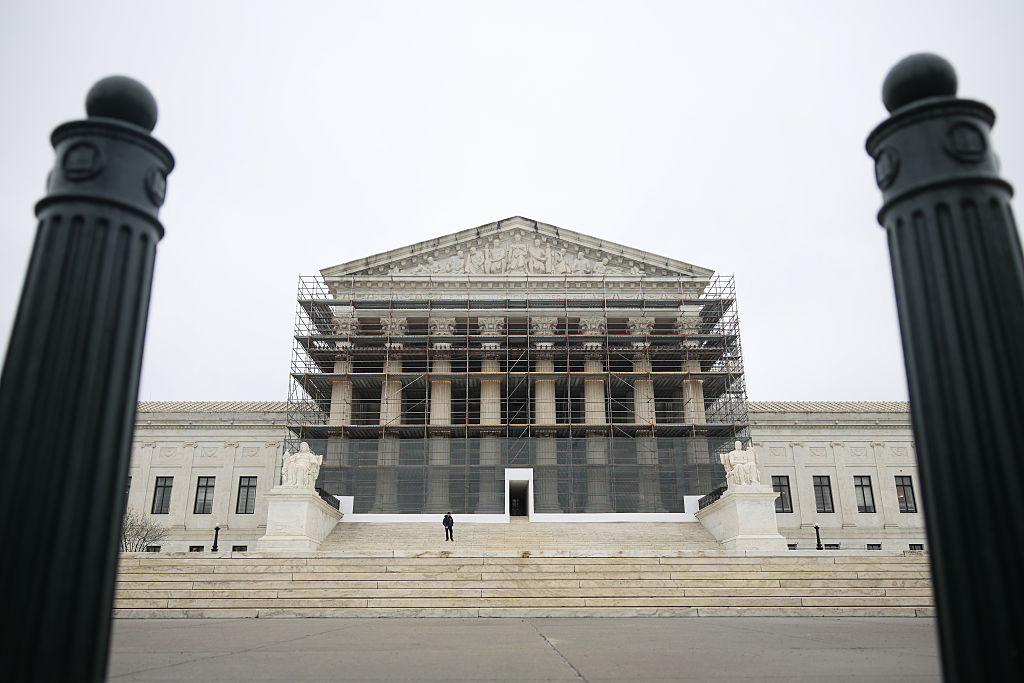
Last month, the Supreme Court ruled that the International Emergency Economic Powers Act, a 1977 law giving the president the power to regulate commerce during national emergencies created by foreign threats, did not give President Donald Trump the authority to impose sweeping tariffs in a series of 2025 executive orders. The vote was 6-3, with the court’s Democratic appointees joining Chief Justice John Roberts and Justices Neil Gorsuch and Amy Coney Barrett to strike down the tariffs.
Although the ruling in Learning Resources v. Trump was a landmark one, it left a variety of questions open – some of which I explore below.
What happens to the tariffs that have already been paid?
Even before the court issued its decision, there was widespread interest in (and concern about) whether and how, if the tariffs were struck down, the government would refund the more than $100 billion that it had already collected. More than three weeks later, the question has still not been clearly resolved.
Earlier in the litigation, the government had promised that it would issue refunds, with interest, to the small businesses challenging the tariffs if those tariffs were ultimately deemed invalid. The government later indicated that it would also provide refunds to the other litigants who filed lawsuits in the Court of International Trade (the court which handles such cases).
But the majority opinion by Roberts did not address the refund issue at all. And in his dissenting opinion, Justice Brett Kavanaugh indicated that “[t]he United States may be required to refund billions of dollars to importers who paid the IEEPA tariffs.” The process of refunding the tariffs, Kavanaugh suggested, “is likely to be a ‘mess.’”
The original dispute returned quickly to the New York-based Court of International Trade, where more than 2,000 lawsuits seeking refunds have now been filed, including by major U.S. companies such as FedEx, Costco, L’Oreal, Dyson, and Nissan North America. Some companies, such as FedEx, have indicated that they will return any refunds to customers who paid the tariffs.
In an order on March 4 in a separate lawsuit, Judge Richard Eaton of the CIT directed the government to provide refunds (with interest, which is accruing at an estimated $650 million per month) to virtually all importers who had paid tariffs imposed under IEEPA.
Two days later, a senior official in the U.S. Customs and Border Protection Agency told Eaton in a court filing that the government was “not able to comply” with Eaton’s order. “CBP,” Brandon Lord wrote, “is now facing an unprecedented volume of refunds” for which “[i]ts existing administrative procedures and technology are not well-suited” – particularly when, in some cases, CBP personnel would have to manually calculate interest in certain circumstances.
Lord indicated that the government is currently developing a new web-based system to “streamline and consolidate refunds and interest payments,” and that it hoped to have the new system ready within 45 days.
In the wake of Lord’s statement, Eaton paused his order requiring the government to issue refunds immediately. In a report submitted on March 12 at Eaton’s request, Lord said that different parts of the new system were between 40% and 80% complete. Easton directed the government to provide another update in seven days.
Can Trump impose new tariffs under some other law?
In his dissenting opinion, Kavanaugh posited that the court’s ruling “might not substantially constrain a President’s ability to order tariffs going forward. That is because,” he wrote, “numerous other federal statutes authorize the President to impose tariffs and might justify most (if not all) of the tariffs at issue in this case—albeit perhaps with a few additional procedural steps that IEEPA, as an emergency statute, does not require.”
Roberts addressed this issue briefly in his opinion for the majority, suggesting that the bar to imposing tariffs under other laws might be higher than Kavanaugh depicted it to be. Roberts emphasized that the laws that Kavanaugh cited “contain various combinations of procedural prerequisites, required agency determinations, and limits on the duration, amount, and scope of the tariffs they authorize.” But in any event, Roberts concluded, “[w]e do not speculate on hypothetical cases not before us.”
Shortly after the court’s decision, Trump announced across-the-board tariffs of 10% – which, he indicated one day later in a social media post, would subsequently increase to 15%. He relied on Section 122 of the Trade Act of 1974, which gives the president the power to impose temporary quotas or imports of up to 15% for up to 150 days to address “large and serious balance-of-payments deficits” – that is, when the money flowing out of the country for goods and services, capital, and financial transfers exceeds the money coming in.
In its May 2025 ruling that struck down the tariffs, the CIT pointed to Section 122 to support its conclusion that IEEPA does not authorize the tariffs. Section 122, the court wrote, “removes the President’s power to impose remedies in response to balance-of-payments deficits, and specifically trade deficits, from the broader powers granted to a president during a national emergency under IEEPA by establishing an explicit non-emergency statute with greater limitations.” In so doing, the CIT appeared to acknowledge that Section 122 might apply to the IEEPA tariffs. That court characterized the trade deficit to which Trump responded as “a type of balance-of-payments deficit.” Therefore, the CIT reasoned, the IEEPA tariffs “fit under Section 122” and “must conform with the limits” that it imposes.
On the other hand, the Trump administration seemed to disclaim any reliance on Section 122 in its brief in the Federal Circuit. Defending Trump’s reliance on IEEPA, the government emphasized that “the concerns the President identified in declaring an emergency arise from trade deficits, which are conceptually distinct from balance-of-payments deficits.”
New challenges to the Trump administration’s invocation of Section 122 have already been filed in the CIT. One such lawsuit, filed by a group of states, contends that Trump “has not met the statutory prerequisites” to use the law. “Section 122,” the states write, “cannot be invoked merely to address trade deficits on their own, and the President does not have the discretion to use clearly erroneous propositions about terms of art to support his tariffs.”
Additionally, the Trump administration announced on March 11 that it would begin investigations of 15 countries and the European Union under another provision of the Trade Act of 1974, Section 301(b), which authorizes investigations into whether U.S. trading partners use unfair trade practices. In a press release, U.S. Trade Representative Jamieson Greer indicated that his agency would begin investigations into excess manufacturing capacity and production in China, the European Union, Singapore, Switzerland, Norway, Indonesia, Malaysia, Cambodia, Thailand, Korea, Vietnam, Taiwan, Bangladesh, Mexico, Japan, and India. If the investigations reveal that such practices are in effect, the available remedies under Section 301(b) include tariffs.
One day later, Greer announced the initiation of investigations under Section 301(b) to determine whether governments in 60 countries had failed to take adequate measures against the use of forced labor, giving foreign companies an unfair advantage over U.S. businesses.
Where do the justices stand on the major questions doctrine?
Six justices agreed that IEEPA did not give Trump the power to impose the tariffs at the center of the dispute. But only three of those justices – Roberts, Gorsuch, and Barrett – relied on the major questions doctrine, the idea that if Congress wants to give the executive branch the authority to make decisions of vast economic or political significance, it must do so clearly. And across the court, there were a variety of disagreements about the scope and application of that doctrine.
In his majority opinion, Roberts reasoned that Trump’s “assertion … of broad ‘statutory power over the national economy’” was “‘extravagant’ by any measure” – particularly in light of the massive amounts of money at stake in the dispute. As in other cases in which the court had recently applied the major questions doctrine, Roberts concluded, “‘a reasonable interpreter would [not] expect’ Congress to ‘pawn[]’ such a ‘big-time policy call[] . . . off to another branch.’”
The court’s three Democratic appointees – Justices Sonia Sotomayor, Elena Kagan, and Ketanji Brown Jackson – declined to join the portion of Roberts’ opinion that relied on the major questions doctrine. In an opinion concurring in part and concurring in the judgment that Sotomayor and Jackson both joined, Kagan questioned whether the principle even exists, referring to it as the “so-called major-questions doctrine.” In her view, the dispute could be resolved through “straight-up statutory construction.” Although “IEEPA gives the President significant authority over transactions involving foreign property, including the importation of goods,” Kagan wrote, it does not give him the power “to unilaterally impose tariffs.”
Gorsuch and Barrett – both of whom joined the Roberts opinion in its entirety – disagreed about the roots of the major questions doctrine, although it’s not clear whether or when their different views might lead them to reach a different result. For Gorsuch, the doctrine is rooted in the concept of the separation of powers. Under the Constitution, he stressed, only Congress has the power to make laws. The major questions doctrine, he wrote in a separate concurring opinion, protects against executive branch infringement on that power by requiring the president to show that there is “clear statutory authority” when he contends that a federal law has given him “extraordinary … power.”
Barrett penned a separate concurring opinion in which she countered that the major questions doctrine is simply a way of interpreting the text of a law to arrive at its “most natural meaning.” She suggested that her own “disagreement” with Gorsuch’s view of the doctrine “may be over the level of clarity required before a particular interpretation can be deemed the most natural one.”
In his dissent, joined by Justices Clarence Thomas and Samuel Alito, Kavanaugh did not dispute that the major questions doctrine exists – indeed, he called it an “important canon.” But “the major questions doctrine is satisfied here,” Kavanaugh argued, because “the statutory text, history, and precedent constitute ‘clear congressional authorization’ for the President to impose tariffs under IEEPA.”
And, “in any event,” Kavanaugh continued, the doctrine should not apply when the president is exercising his power over foreign affairs, as Trump is in this case, given the president’s considerable authority in that area. Instead, Kavanaugh contended, in such cases, courts should “read the statute as written.”
In his opinion, Roberts pushed back against Kavanaugh‘s reliance on a “foreign affairs” exception to the major questions doctrine to uphold the tariffs. Roberts acknowledged that the president “of course enjoys some ‘independent constitutional power[s]’ over foreign affairs ‘even without congressional authorization.’ And Congress certainly may intend to ‘give the President substantial authority and flexibility’ in many foreign affairs or national security contexts,” Roberts agreed. But any such exception, Roberts explained, would not apply to tariffs, because only Congress has the power to impose tariffs during peacetime.
Are there other unresolved issues relating to the interpretation of IEEPA?
In a word, yes. The majority held only that IEEPA does not authorize the president to impose tariffs. It did not address two arguments that the government made and the CIT rejected: whether one set of tariffs, which the president said he imposed because China, Canada, and Mexico had not done enough to stop the flow of fentanyl into the United States, actually “deal with” “an unusual and extraordinary threat,” as IEEPA requires; and whether courts can review the president’s determination that he is acting under IEEPA to “deal with” such threats at all.
The majority opinion also made clear that although the president’s power to “regulate … importation” under IEEPA does not include the power to impose tariffs, it was not weighing in on what that power might include. “That ‘interpretive question’ is ‘not at issue’ in this case,” Roberts wrote, “and any answer would be ‘plain dicta’” – that is, not necessary to decide the case and not binding in future cases.
Can the Supreme Court hear the case again?
In a post on social media, Trump suggested that his administration might ask the court to reconsider its ruling. If it were to do so, such a request would be due 25 days after the Supreme Court issued its ruling – that is, by today, March 17. And under the Supreme Court’s rules, Trump’s solicitor general, D. John Sauer, would have to certify that he was filing the request, known as a petition for rehearing, “in good faith and not for delay.”
The petition’s chances of success would be quite low. The court will only agree to review its decisions on the merits if a majority votes to do so, “at the instance of” one of the justices who joined in the original judgment or decision. This means that if the Trump administration were to seek rehearing, the court would only grant it if all three of the justices who dissented – Thomas, Alito, and Kavanaugh – voted to do so, along with two of the six justices in the majority.
As law professor Steve Vladeck recounted in his newsletter in 2024, the Supreme Court has not granted rehearing in an argued case since 1965, and it has not granted rehearing in an argued case and ultimately reversed its original ruling since 1956, so the Trump administration’s odds appear long indeed.
Posted in Court Analysis, Featured, Merits Cases
Cases: Learning Resources, Inc. v. Trump (Tariffs), Trump v. V.O.S. Selections