SCOTUStoday for Wednesday, February 18
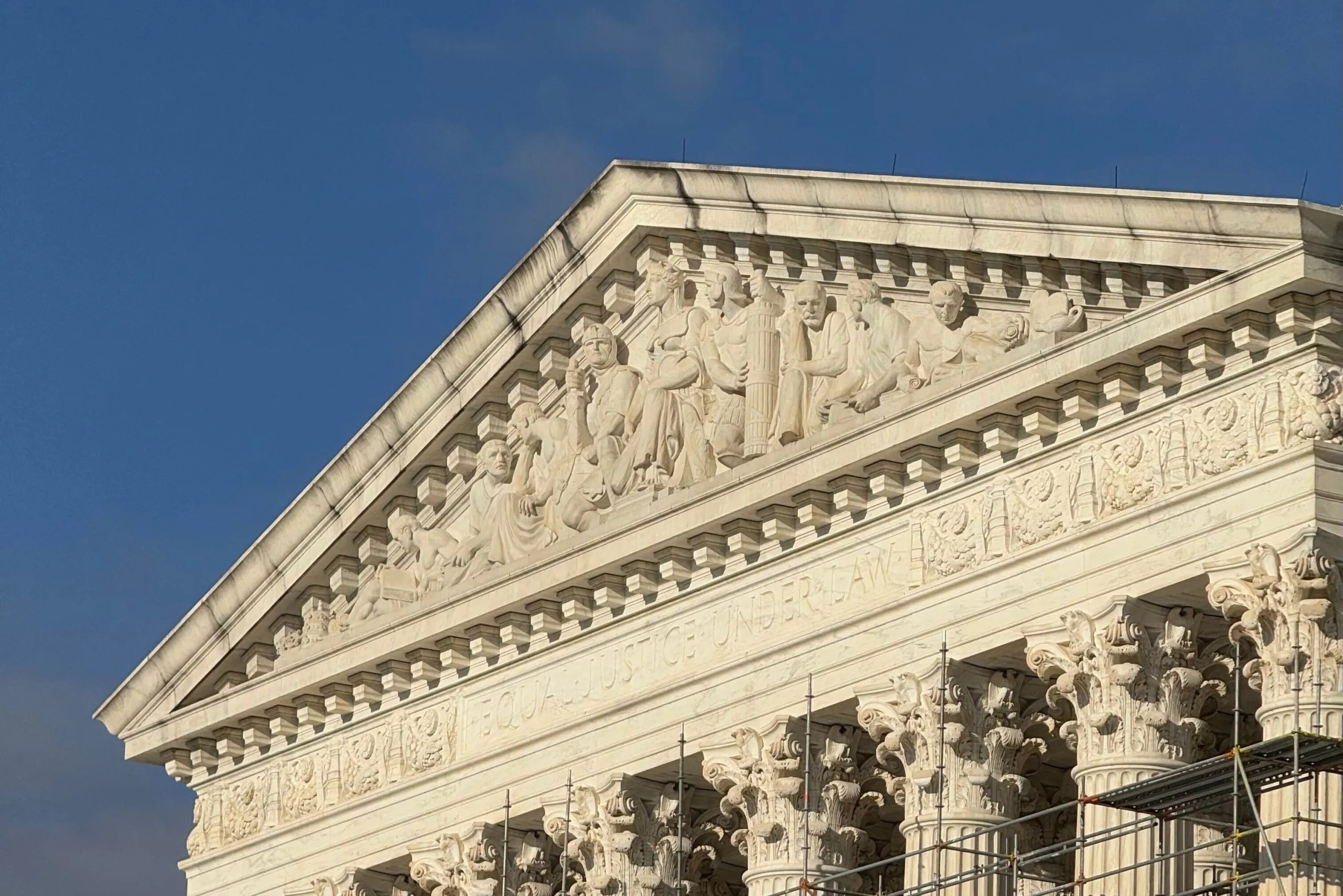
Justice Anthony Kennedy joined the court on this day in 1988. He served for slightly more than 30 years, retiring on July 31, 2018.
SCOTUS Quick Hits
- The Supreme Court has indicated that it may announce opinions on Friday at 10 a.m. EST. SCOTUSblog will host an opinion day live blog that morning beginning at 9:30.
- Also on Friday, the justices will meet in a private conference to discuss cases and vote on petitions for review.
- The court may announce opinions on Tuesday, Feb. 24, and Wednesday, Feb. 25, as well. We will host live blogs on those days.
- On Friday, a Republican member of Congress, a group of voters, and New York election officials asked the Supreme Court to allow New York to proceed with the 2026 elections using its existing congressional map. The voters challenging the current map have been asked to respond to the new filings by 4 p.m. EST tomorrow.
- The court could rule at any time on an interim docket case on California’s policies for parental notification if a student chooses to use different names or pronouns.
- The court will next hear arguments on Monday, Feb. 23, the first day of its February sitting.
Morning Reads
- Will Trump get a fourth Supreme Court justice? Speculation swirls around Alito (Maureen Groppe, USA Today) — Is Justice Samuel Alito about to retire? A growing group of commentators, particularly liberal ones, believe he will, and they point to factors like his forthcoming book and this year’s elections to explain why. “[I]f Alito wants to step down while Republicans control the Senate, he may not want to gamble on this year’s midterm elections. Republicans are expected to have a much easier time retaining the Senate than the House, but a loss can’t be ruled out. That would make it difficult for Trump to confirm a successor,” according to USA Today. Trump has already placed three justices on the court: Neil Gorsuch, Brett Kavanaugh, and Amy Coney Barrett. “Only three presidents since the 1950s – Dwight Eisenhower, Richard Nixon and Ronald Reagan – got to fill more Supreme Court openings.”
- Bayer Eyes Deal to Pay More Than $7 Billion in Roundup Cases (Jef Feeley and Sonja Wind, Bloomberg)(Paywall) — On Tuesday, Bayer AG announced that it has “agreed to pay more than $7 billion as part of a major push to resolve current and future cancer lawsuits over its top-selling Roundup weedkiller,” according to Bloomberg. The proposed settlement addresses “Roundup suits that already have been filed and potential claims that could be filed over a 21-year period,” and it comes after the Supreme Court agreed “to hear its appeal of a $1.25 million Missouri jury verdict against the company’s Monsanto unit over Roundup on the grounds some of the claims in the 2023 case were preempted by federal law.” Bill Anderson, Bayer’s chief executive officer, said that, together, the settlement and the Supreme Court case will resolve “litigation uncertainty.”
- Supreme Court petitioned to hear Tennessee open meetings case (Kim Jarrett, The Center Square) — The Center Square announced on Tuesday that it has appealed its dispute with the Tennessee Judicial Advisory Commission to the Supreme Court. In the lawsuit, the online news organization contends that it has been unlawfully denied access to meetings of the commission, which “recommends changes to Tennessee’s court rules.” “The 6th U.S. Circuit Court of Appeals in Cincinnati ruled in 2025 that the First Amendment does not guarantee public access to the commission’s meetings. The ruling overturned a March 2023 preliminary injunction that ordered the advisory commission to keep its meetings open while the case continued.”
- Free Speech Group That Fought Biden Tech Censorship Accuses Trump of Doing the Same to Anti-ICE Activists In New Lawsuit (James Lynch, National Review)(Paywall) — In a new lawsuit, the Foundation for Individual Rights and Expression (FIRE) “accuses Attorney General Pam Bondi and DHS Secretary Kristi Noem of strong-arming tech companies into censoring an app and a Facebook group each built to share footage of Immigration and Customs Enforcement agents,” according to the National Review. The lawsuit cites past comments and social media posts from members of the Trump administration addressing or alluding to partnering with tech companies to reduce interference with law enforcement activities. National Review noted that the issue of coordination between the government and tech companies came to the fore during the Biden administration and was recently in front of the Supreme Court. In Murthy v. Missouri in 2024, the justices considered alleged “censorship related to Covid-19 opinions that ran contrary to federal guidance. … [T]he Supreme Court tossed the litigation after determining the plaintiffs lacked standing.”
- Why tech giants shouldn’t be liable for creating addictive platforms (Erwin Chemerinsky, Los Angeles Times) — In a column for the Los Angeles Times, SCOTUSblog contributor Erwin Chemerinsky explored past Supreme Court rulings on technology and the First Amendment to explain why he does not believe social media companies should be held liable for “creating addictive and harmful online environments” for children. While sites such as YouTube and Instagram certainly could have done more to protect children, Chemerinsky wrote, “[h]olding any media company liable for the content of its speech raises grave 1st Amendment issues.”
A Closer Look: The Supreme Court Marshal
You may have noticed our (very) brief mention of the Marshal of the United States Supreme Court in our Closer Look on the Supreme Court Police Department.
But what does this position actually entail?
The marshal has several responsibilities. As explored in our prior Closer Look, the marshal directs the Supreme Court police, whose 198 officers provide security for the justices, the Supreme Court building and grounds, and other court employees.
The marshal also deals with certain financial matters, which involves disbursing payroll (including to the justices) and paying the court’s bills.
But that’s not all: The marshal also acts as a general manager, which includes overseeing the Supreme Court’s building operations and events. This entails handling matters such as building renovations, space management, maintenance and cleaning, supplies, contracting, and (importantly!) parking. In terms of events, the marshal manages both special ceremonies and the court’s (almost) daily occurences. These ceremonies can include everything from the investitures of new justices to organizing receptions for visitors.
Perhaps the marshal’s most prominent role, however, is at court sessions. The marshal attends all court sessions and has charge of the gavel, which is used to call the court to order before argument. And it is the marshal who, placed on the right side of the Supreme Court’s bench, announces the justices’ entrance and cries “Oyez, Oyez, Oyez” (pronounced “oh yay” and from French, meaning “Hear ye”). To top it off, the marshal is also in charge of managing all standard courtroom proceedings (which includes seating, security, keeping the time during oral argument, and taping audio recordings).
The position itself was created in 1865 (before this, under the Judiciary Act of 1789, the marshal for the judicial district where the Supreme Court sat was also responsible for serving that court).
Today, Colonel Gail A. Curley serves as the 11th marshal of the court, a position she has held since June 2021. Curely is the second woman to occupy the role and came to the court from the U.S. Army. Before that, Curley was “chief of the National Security Law Division in the Office of The Judge Advocate General,” where she supervised judge advocates and gave legal advice on “national security law to senior Army leadership.”
In May 2022, Chief Justice John Roberts assigned Curley and her staff the task of conducting “a thorough investigation” of the Dobbs draft opinion leak. Curley released her findings in January 2023, concluding that, after analyzing forensic evidence and interviewing employees, her team was (in Roberts’ words) “unable to identify a person responsible by a preponderance of the evidence.”
Curley succeeded Pamela Talkin, who retired in July 2020 after 19 years, and who called the Supreme Court to order for more than 700 courtroom sessions. Less than two months into her position as marshal, on 9/11, Talkin had to interrupt Chief Justice William Rehnquist during a meeting so as to evacuate the Supreme Court Building.
“Over her tenure of nearly two decades, she [took] on many crucial projects – including the renovation of our Court building and the modernization of our security practices – while overseeing the day-to-day operations of our facilities and police,” said Chief Justice John Roberts upon Talkin’s retirement. “We will miss hearing her cry the Court at the beginning of each of our arguments sessions.”
SCOTUS Quote
JUSTICE KAGAN: “You know, it’s not always the case, Ms. Brinkmann, that a lawyer responds to one of Justice Breyer’s hypotheticals by saying that’s really helpful.”
— Justice Elena Kagan in West Virginia v. EPA
On Site
From the SCOTUSblog Team
The art of the circuit split: an explainer
Petitions for review cover a wide range of topics, but many of them include a lengthy discussion of what is known as a circuit split – that is, a disagreement between the federal courts of appeals. Why? Circuit splits are among the top factors that the court considers when determining whether to grant review. But not all splits are created equal. They can be messy or clean. Percolating or persistent. Old or new. Here’s why those descriptors matter.

SCOTUS Outside Opinions
A return to the separation of powers
In a column for SCOTUSblog, Peter Wallison reflected on the tension between the framers’ vision of the separation of powers and the current court’s interest in the concept of the “unitary executive,” which advocates that the president has total authority over the executive branch.

Posted in Featured, Newsletters