Looking back at 2025: the Supreme Court and the Trump administration

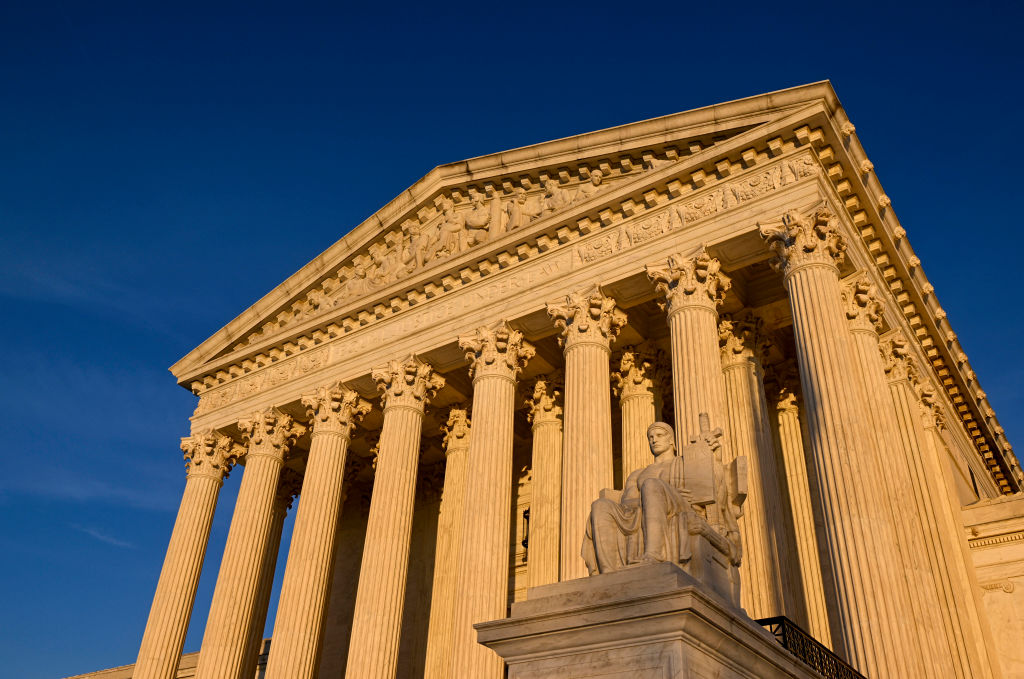
Courtly Observations is a recurring series by Erwin Chemerinsky that focuses on what the Supreme Court’s decisions will mean for the law, for lawyers and lower courts, and for people’s lives.
At the start of the new year, it is impossible to talk about the Supreme Court in 2025, or begin 2026, without focusing on the justices’ handling of matters concerning the Trump administration. No president in history has challenged constitutional limits or sought to increase presidential power in the way that President Donald Trump has in this term in office.
Not surprisingly, hundreds of lawsuits – 358 up until the end of December – were brought challenging Trump’s actions in 2025, and already some came to the Supreme Court. Never before has the court been asked to rule on the legality of so many presidential actions in such a short period of time.
During the first year of this Trump presidency, the Supreme Court overwhelmingly sided with the Trump administration. The court ruled in favor of the Trump administration in the one case in 2025 decided after briefing and oral argument: Trump v. CASA. The court, in a 6-3 decision, held that federal district courts cannot issue nationwide injunctions. Although the court did not declare nationwide injunctions unconstitutional as the solicitor general urged, it held that federal district courts lack the statutory authority to issue such relief. This was a major victory for the Trump administration, and for future presidents, in that it will make it much harder for federal courts to stop unconstitutional or illegal actions, at least through seeking nationwide injunctions.
By my count, based on the SCOTUSblog website, there were at least 24 other rulings in 2025 on the Supreme Court’s emergency docket involving Trump administration actions. Of these, the Supreme Court ruled in favor of the Trump administration in 20 and against it four times.
Only one of these 24 emergency docket cases was unanimous: the court’s recent ruling in Margolin v. National Association of Immigration Judges, a challenge to a policy limiting speech by immigration judges. The court did not grant the solicitor general’s request for a stay of the United States Court of Appeals for the 4th Circuit’s order, sending the matter back to the district court for additional fact-finding. This was likely the only instance in which Justices Clarence Thomas and Samuel Alito voted against the Trump administration on the emergency docket.
Justice Ketanji Brown Jackson voted against the Trump administration in every one of the 24 cases. Justice Sonia Sotomayor did so in 22. Only Jackson dissented in Trump v. American Federation of Government Employees, in which the court stayed a district court’s injunction barring the executive branch from formulating and implementing plans to initiate large-scale reductions of the federal workforce. Also, only Jackson voted no in Noem v. National TPS Alliance in May, which involved the Trump administration’s effort to end the Temporary Protected Status for hundreds of thousands of Venezuelan nationals.
Justice Elena Kagan voted against the Trump administration in 21 of the cases. She did not join Sotomayor and Jackson in dissent in Noem v. Doe, in which the court stayed a district court’s holding that the Secretary of Homeland Security lacked the authority to revoke the categorical grant of parole to 532,000 non-citizens from Cuba, Haiti, Nicaragua, and Venezuela. In Department of Homeland Security v. D.V.D., Kagan initially joined Sotomayor and Jackson in dissenting from the court’s decision to stay a district court’s order preventing the deportation of individuals from several countries to South Sudan. But when the matter came back to the Supreme Court a few weeks later, only Sotomayor and Jackson dissented.
The Supreme Court’s many rulings in favor of the Trump administration on the emergency docket have also included orders by the justices that have paused lower court orders stopping the firing of agency officials, ordering the reinstatement of terminated federal grants, keeping the military from excluding transgender individuals, forbidding deportations to South Sudan of individuals lacking any contact with that country, preventing ICE agents from stopping people without reasonable suspicion based on certain factors, and keeping the State Department from requiring that passports list the holder’s birth sex rather than gender identity.
There were only three other instances, besides Margolin v. National Association of Immigration Judges, in which the Trump administration lost in the Supreme Court in emergency docket rulings in 2025. In one area – challenges to the termination of federal funding – the Trump administration initially lost, but it subsequently prevailed in two cases on the emergency docket. Notably, this is the one place where Chief Justice John Roberts joined with the liberal justices in dissent.
The Trump administration has cut off billions of dollars of federal funding appropriated by federal statutes. In the initial case to come to the court, Department of State v. AIDS Vaccine Advocacy Coalition, the court, by a vote of 5-4, turned down the Trump administration’s request to stay a district court order requiring the executive branch to pay nearly $2 billion in reimbursements to nonprofits and businesses that receive federal foreign assistance. Alito wrote a vehement dissent, joined by Thomas, Justice Neil Gorsuch, and Justice Brett Kavanaugh.
A month later, on April 4, in Department of Education v. California, the court, again by a vote of 5-4, stayed a federal district court’s temporary restraining order preventing the termination of $65 million of teacher training grants. In a short, unsigned opinion, the court said that federal grants are like contracts and claims for breach of contract against the federal government must be brought in the Court of Federal Claims. The court also expressed concern that the federal government might not be able to recover the funds if it ultimately prevailed in the litigation. Kagan wrote a dissent, as did Jackson, who was joined by Sotomayor. Although Roberts did not join either dissenting opinion, he indicated that he would deny the Trump administration’s application for a stay.
On Aug. 21, the court came to a similar conclusion, by the same margin, in National Institutes of Health v. American Public Health Association. A federal district court found that the termination of grants by the NIH was arbitrary, capricious, and an abuse of discretion in violation of the Administrative Procedure Act. The Supreme Court, by a vote of 5-4, stayed this order, again stressing that the matter needed to be filed in the Court of Federal Claims and expressing concern with whether the federal government could later recoup the money.
Gorsuch wrote a concurring opinion chastising the district court for not following the court’s ruling in Department of Education v. California. Justice Amy Coney Barrett wrote the pivotal opinion saying that the challenge to the termination of the grants had to go to the Court of Federal Claims, but the challenge to the policy directives to cut off funding could be heard in the federal district court. Jackson wrote a blistering dissent that invoked the cartoon “Calvin and Hobbes”: “This is Calvinball jurisprudence with a twist. Calvinball has only one rule: There are no fixed rules. We seem to have two: that one, and this Administration always wins.” Roberts again joined the three liberal justices in dissent, though he did not join Jackson’s opinion.
The two other cases on the emergency docket in which the Trump administration lost were both significant. In A.A.R.P. v. Trump, the court, in an apparent 7-2 vote, stopped the Trump administration from using the Alien Enemies Act of 1798 to deport individuals from Venezuela to a maximum-security prison in El Salvador. The Alien Enemies Act allows summary deportations of “natives, citizens, denizens, or subjects of [a] hostile nation or government” over the age of 14 who are not naturalized when the United States is in a declared war or faces imminent invasion from that nation. Before 2025, the Act had been invoked only three times in U.S. history: the War of 1812, World War I, and World War II. On remand, a divided three-judge panel of the United States Court of Appeals for the 5th Circuit ruled that the requirements of the Alien Enemies Act have not been met and it cannot be used to deport individuals.
And on Dec. 23, in Trump v. Illinois, the Supreme Court ruled, in a 6-3 vote, that Trump lacked the authority to federalize the National Guard in Illinois. The majority was comprised of Roberts, Sotomayor, Kagan, Barrett, and Jackson. Kavanaugh concurred in the judgment, while Alito wrote a dissent joined by Thomas, and Gorsuch wrote a separate dissent.
The Supreme Court interpreted two federal statutes in coming to this conclusion. One law, 10 U.S.C. § 12406(3), empowers the president to federalize members of a state’s National Guard if he is “unable with the regular forces to execute the laws of the United States.” The Supreme Court said that this means that a president can federalize a state’s guard only if it can be shown that the armed forces of the United States cannot provide adequate protection.
This, in itself, is obviously a major limit on the ability of the president to federalize National Guard troops. But the Supreme Court went even further. It said that the president could only federalize a state’s guard in a situation in which the U.S. military legally could be used but would be insufficient. This is because the Posse Comitatus Act, 18 U.S.C. § 1385, adopted in 1878, prohibits the United States military from being used for domestic law enforcement except in very limited circumstances, such as when there is an insurrection in a state.
In other words, the Supreme Court said that a president can federalize the National Guard only in the rare circumstances in which the Posse Comitatus Act allows the military to be used for domestic law enforcement and only then if the United States military would be inadequate. The court declared: “[B]efore the President can federalize the Guard under §12406(3), he likely must have statutory or constitutional authority to execute the laws with the regular military and must be ‘unable’ with those forces to perform that function.”
This is an enormously important ruling, especially because Trump had indicated a desire to deploy the National Guard in cities across the country. It also is important, coming at the end of a year in which Trump prevailed in almost every matter in the Supreme Court, in showing that at least occasionally a majority of the justices will say no.
This year, the court will decide cases on the merits docket about the president’s power to remove agency heads, the legality of Trump’s tariffs, and the constitutionality of his executive order on birthright citizenship. There are sure to be many more matters on the emergency docket and likely others on the merits docket, as well.
Ultimately, the question is whether the Supreme Court will check a president who, in the words of his chief of staff, feels he can do anything. Nothing was more important in 2025, or is likely to be more important in 2026, than this.
Posted in Courtly Observations, Recurring Columns
Cases: A.A.R.P. v. Trump, Noem v. National TPS Alliance, Noem v. Doe, Department of Homeland Security v. D.V.D., Trump v. American Federation of Government Employees, Department of State v. AIDS Vaccine Advocacy Coalition, Trump v. CASA, Inc., Trump v. CASA, Inc., Department of Education v. California, National Institutes of Health v. American Public Health Association, Trump v. Illinois, Margolin v. National Association of Immigration Judges