Reviving lenity

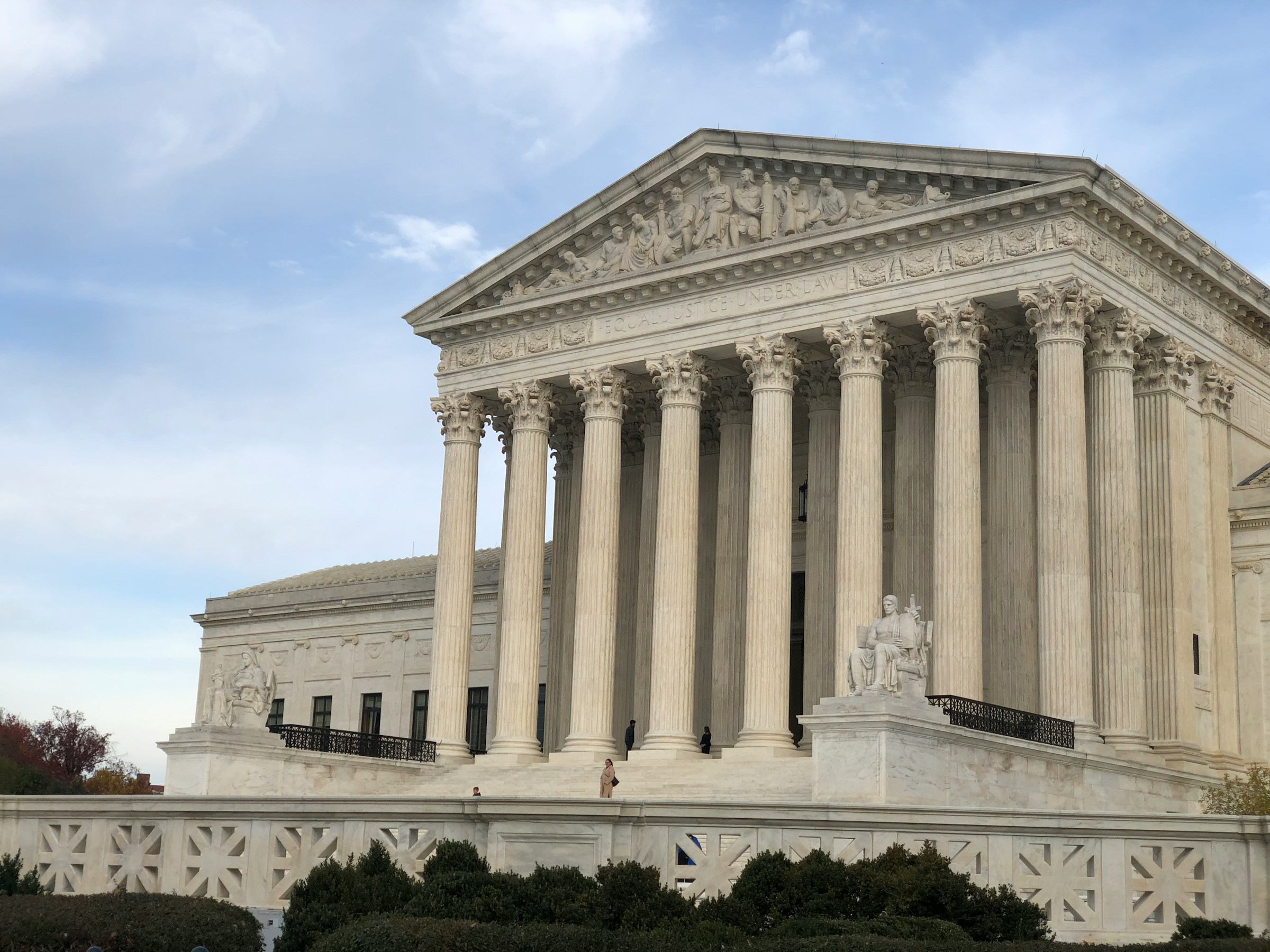
Civil Rights and Wrongs is a recurring series by Daniel Harawa covering criminal justice and civil rights cases before the court.
Please note that the views of outside contributors do not reflect the official opinions of SCOTUSblog or its staff.
For centuries, a doctrine known as the rule of lenity served a vital function in American criminal law. According to this rule, when a criminal statute is unclear about what conduct it means to punish, courts should resolve that uncertainty in favor of the defendant. Lenity was not your average canon of construction. It was a constitutional safeguard, rooted in principles of fair notice and the separation of powers. At its core, the rule of lenity was designed to prevent judges from expanding criminal liability beyond what the legislature had clearly prescribed.
This constitutionally grounded understanding of the rule of lenity is clearest in the Supreme Court’s most canonical lenity case, 1820’s United States v. Wiltberger. The facts there were both straightforward and revealing. Wiltberger was charged with manslaughter for a killing that occurred aboard an American ship on the Tigris River in China. The federal statute at issue punished killings committed on the “high seas.” The government urged the court to read that phrase broadly. Surely, argued the government, Congress could not have meant to leave serious crimes beyond federal reach simply because they occurred on a river rather than an ocean.
Chief Justice John Marshall rejected this argument while at the same time acknowledging its “force.” He conceded that the government’s argument might make sense as a matter of policy. But policy, Marshall insisted, was beside the point. Rivers were not the “high seas,” and it was not the judiciary’s role to extend a penal statute beyond its clear terms. Defining crimes and fixing punishments, Marshall explained, is the legislature’s prerogative. If Congress wished to criminalize killings on rivers, it must do so explicitly. Until then, it was not for the court to fill that gap. Lenity, in other words, was about judicial restraint.
For much of the court’s history, that framework held. Justice Oliver Wendell Holmes, Jr. cautioned against reading statutes based “upon the speculation that, if the legislature had thought of it, very likely broader words would have been used.” Justice Antonin Scalia warned that it is not a court’s job to “play the part of a mind reader” when interpreting statutes. Under this long-held understanding, lenity applied when, after deploying ordinary tools of interpretation, reasonable doubt remained about a criminal statute’s reach.
Today, the rule of lenity is in disarray. The modern confusion began with what may otherwise seem a throwaway line. In the 1974 case of Huddleston v. United States, the court described lenity as applying only when the statute contains a “grievous ambiguity or uncertainty.” Unlike Marshall’s opinion, Huddleston did not ground lenity in concerns about the separation of powers or fair notice. Indeed, the opinion offered little explanation for this language, and it did not engage the court’s earlier cases providing an easier trigger for lenity.
Since Huddleston, the court has never clearly explained what makes ambiguity “grievous,” why that standard is constitutionally appropriate, or how it squares with Wiltberger’s insistence that courts may not extend penal statutes by judicial fiat. Lower courts, left without guidance, have filled the gap unevenly. Some apply a reasonable-doubt framework consistent with Wiltberger. Others invoke the “grievous ambiguity” standard articulated in Huddleston. In fact, every federal court of appeals has applied both the “reasonable doubt” standard and the “grievous ambiguity” standard, because as the full United States Court of Appeals for the 5th Circuit recently observed: “The Supreme Court does not appear to have decided which of these standards governs the rule of lenity.”
Recent debates among the justices reveal just how unstable the doctrine has become. A few years ago, in Wooden v. United States, Justices Neil Gorsuch and Brett Kavanaugh traded concurrences concerning the proper scope of the rule of lenity. Gorsuch argued – in line with past understandings – that lenity is not a discretionary canon but a constitutional rule rooted in due process and respect for the roles of coordinate branches of government. On his view, if “traditional tools of statutory interpretation yield no clear answer, the judge’s next step … is to lenity.” Kavanaugh, by contrast, asserted that lenity should operate only at the very end of the interpretive process and should “rarely if ever come[] into play.”
This uncertainty matters. Congress has enacted thousands of criminal laws, many written broadly and enforced aggressively. With an overly bloated criminal code, lenity should function as a meaningful check – a reminder that punishment must rest on clear legislative authorization. Gorsuch said it best: “Under our rule of law, punishments should never be products of judicial conjecture.” But without clarification from the court, that danger will persist.
At bottom, the rule of lenity is about who bears the risk of uncertainty in the criminal law. For most of the court’s history, that risk fell on the government. When Congress failed to speak clearly, defendants were entitled to the benefit of the doubt. If it wanted, Congress could rewrite the law to clarify its reach. There is no cost for congressional imprecision, however, and thus no real need for Congress to legislate carefully and clearly. When lenity is weakened, the cost of ambiguity shifts from the government to defendants, and the result is more defendants. Given the pedigree and importance of this rule, the Supreme Court needs to resolve when the rule applies sooner rather than later. In the words of Scalia: “If [lenity] is no longer the presupposition of our law, the Court should say so, and reduce the rule of lenity to a historical curiosity.”
Posted in Civil Rights and Wrongs, Recurring Columns
Cases: Wooden v. United States