Bush v. Gore in retrospect

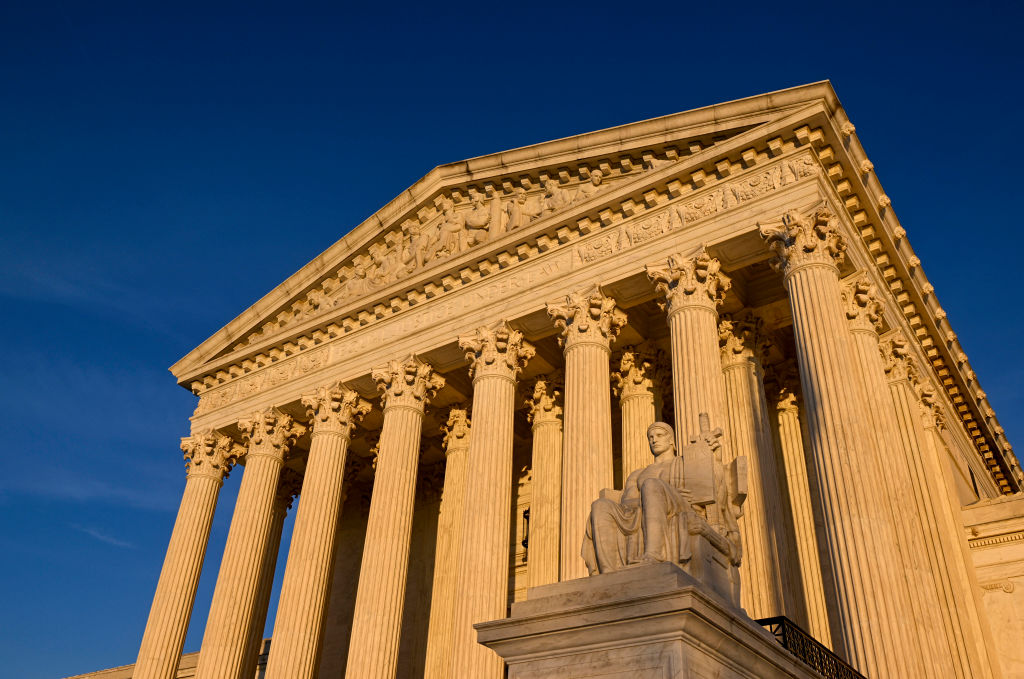
Courtly Observations is a recurring series by Erwin Chemerinsky that focuses on what the Supreme Court’s decisions will mean for the law, for lawyers and lower courts, and for people’s lives.
Please note that the views of outside contributors do not reflect the official opinions of SCOTUSblog or its staff.
Updated on Dec. 18 at 10:27 p.m.
What, if any, is the lasting legacy of Bush v. Gore, which was decided 25 years ago, on Dec. 12, 2000? It is a case that has rarely been cited and seems to matter little in the law. Rather, the decision’s largest significance may be from the widespread perception that the justices were simply motivated by their own partisan preferences as to who should be the next president.
What happened?
I realize that many current law students have no recollection of Bush v. Gore or the events that gave rise to it; many were not yet born in 2000. The presidential election of Tuesday, Nov. 7, 2000, was one of the closest in American history. By early Wednesday morning it was clear that the Democratic candidate, Vice President Al Gore, won the national popular vote but that the outcome of the electoral vote was uncertain. The presidency turned on Florida and its 25 electoral votes. Early on election night, the television networks called Gore the winner in Florida, only to retract their prediction later in the evening. Then, in the early hours of Wednesday, Nov. 8, the networks declared George W. Bush the winner of Florida and the presidency, only to recant that a short time later and to conclude that the outcome in Florida, and thus of the national election, was too close to call.
Litigation immediately ensued, including an argument before the Supreme Court on Dec. 1, in Bush v. Palm Beach County Canvassing Board, after which the court remanded the case back to the Florida Supreme Court. Meanwhile, on Sunday night, Nov. 26, the Florida Elections Canvassing Commission certified the election results: Bush was determined to be the winner of Florida by 537 votes and thus the victor of Florida’s 25 electoral votes.
But the battle was not over: On Monday, Nov. 27, Gore filed suit in Florida under the law allowing him to contest election results. His focus was on the uncounted ballots in Florida, especially because of uncertainty over how many corners had to be detached from the chad on a paper ballot in order for it to be counted. After a two-day hearing, on Monday, Dec. 4, the Florida trial court ruled against Gore on the grounds that he had failed to prove a “reasonable probability” that the election would have turned out differently if not for problems in counting ballots.
The Florida Supreme Court granted review and scheduled oral arguments for Thursday, Dec. 7. On Friday afternoon, Dec. 8, the Florida Supreme Court, by a 4-to-3 decision, reversed the trial court. The Florida Supreme Court ruled that the trial court had used the wrong standard in insisting that Gore demonstrate a “reasonable probability” that the election would have been decided differently. The Florida Supreme Court ordered that there be a count of all uncounted ballots in the state and appointed a state court judge, Terry Lewis, to oversee this. Just hours after the Florida Supreme Court’s decision, Lewis ordered that the counting of the uncounted votes commence the next morning and that it be completed by Sunday afternoon, Dec. 10, at 2:00 p.m.
On Saturday morning, counting commenced as ordered. At the same time, Bush asked the Supreme Court to stay the counting and grant certiorari in the case. In the early afternoon on Saturday, the court, in a 5-4 ruling, stayed the counting of the votes in Florida.
On Monday, Dec. 11, the justices held oral arguments. On Tuesday night, Dec. 12, at approximately 10:00 p.m., the court released its opinion in Bush v. Gore.
In a per curiam opinion, the Supreme Court ruled 5-4 that counting the uncounted ballots without standards violated the equal protection clause and that this counting could not continue because Florida wished to choose its electors by the Dec. 12 “safe harbor” date set by federal law. Federal law provided that there would be a conclusive presumption that a state’s electors by that date would be recognized by Congress; there was no assurance that Congress would count electors chosen after that day (though it had in the past). The per curiam opinion was made up of the five most conservative justices: Chief Justice William Rehnquist and Justices Sandra Day O’Connor, Antonin Scalia, Anthony Kennedy, and Clarence Thomas.
Specifically, the court said that the central problem was that the Florida Supreme Court ordered the counting of the uncounted ballots, but failed to prescribe standards for how to do so. The court said that this results in similar ballots being treated differently. The court thus concluded that counting the uncounted ballots pursuant to the order of the Florida Supreme Court would deny equal protection: “The recount process, in its features here described, is inconsistent with the minimum procedures necessary to protect the fundamental right of each voter in the special instance of a statewide recount under the authority of a single state judicial officer.”
The court then confronted the key question: Should the case be remanded to the Florida Supreme Court for it to set standards for the counting or should the court order an end to the counting process altogether? The court, in its per curiam opinion, said that Florida indicated that it wished to observe the Dec. 12 date set by federal law. The court thus ordered an end to the counting.
Each of the four dissenting justices – John Paul Stevens, David Souter, Ruth Bader Ginsburg, and Stephen Breyer – wrote vehement dissents. Stevens, for example, stated: “The endorsement of [the] position by the majority of this court can only lend credence to the most cynical appraisal of the work of judges throughout the land … Although we may never know with complete certainty the identity of the winner of this year’s Presidential election, the identity of the loser is perfectly clear. It is the Nation’s confidence in the judge as an impartial guardian of the rule of law.”
The significance of Bush v. Gore
There is a perception that Bush v. Gore decided the 2000 presidential election, but the reality is that we never will know who would have prevailed if all the votes had been counted. There are conflicting studies as to what the result would have been and it likely would have depended on the criteria used in counting the votes.
At the same time, Bush v. Gore established no proposition of law that has been followed in subsequent cases. Indeed, the court was explicit that it was deciding just the matter before it and was not setting a general precedent. The per curiam opinion declared: “Our consideration is limited to the present circumstances, for the problem of equal protection in election processes generally presents many complexities.”
In hindsight, the decision seems clearly wrong. First, although it was not discussed in the majority or dissenting opinions, the equal protection challenge was not ripe for review when decided by the Supreme Court. The majority said that counting uncounted votes without preset standards violated equal protection. But that was so only if similar ballots were treated differently. The Florida Supreme Court had created a procedure where one judge was to rule on all of the ballot disputes. If that judge was consistent, then there would be no denial of equal protection. The court, though, stopped the counting before this process could occur. The equal protection challenge would be appropriate to consider only after the ballots had been counted and it could be demonstrated that similar ballots were treated differently.
Second, even if there was an equal protection violation, the Supreme Court erred in ending the counting of votes rather than remanding the case to the Florida Supreme Court to decide, as a matter of Florida law, whether to count the uncounted votes or stop the recount. The court said that the Florida Supreme Court had indicated that it wanted to follow the Dec. 12 deadline set by the federal “safe harbor” statute, as noted above. Since it was Dec. 12, the Supreme Court ordered an end to the counting. But because this was an issue of Florida state law, the court should have remanded the case for the Florida Supreme Court to decide the content of this law under the unprecedented circumstances. The court offered no explanation for why it was not remanding the case to the Florida Supreme Court and effectively bringing the election to a close.
The perception of the Supreme Court
On Wednesday morning, Dec. 13, Gore, though strongly disagreeing with the Supreme Court, conceded the election to Bush. The widespread perception (which persists to this day) was that the court’s decision was less about the law and much more about the political views of the justices.
I wonder, based on subsequent Supreme Court decisions whether under current principles Bush v. Gore would have been decided differently today. The court’s recent ruling on Dec. 4, in Abbott v. League of United Latin American Citizens, is indicative of the conservative justices’ desire to keep the federal courts out of elections. The court reversed the lower court and allowed Texas to use a new map for congressional districts that likely creates five more Republican districts, despite detailed findings that race was impermissibly used in creating the districts in violation of equal protection. Animating the majority’s opinion was a desire for deference to the political process and for federal courts to not be involved in changing the rules for elections.
Might the court today have said that the Florida election dispute was a non-justiciable political question in federal court and the matter was for the Florida Supreme Court and ultimately Congress to resolve? Or has the last quarter century only heightened our sense of the partisanship of the court and made it unthinkable that today’s conservative majority would come out any differently from the conservative majority in Bush v. Gore?
Posted in Courtly Observations, Recurring Columns
Cases: Abbott v. League of United Latin American Citizens