
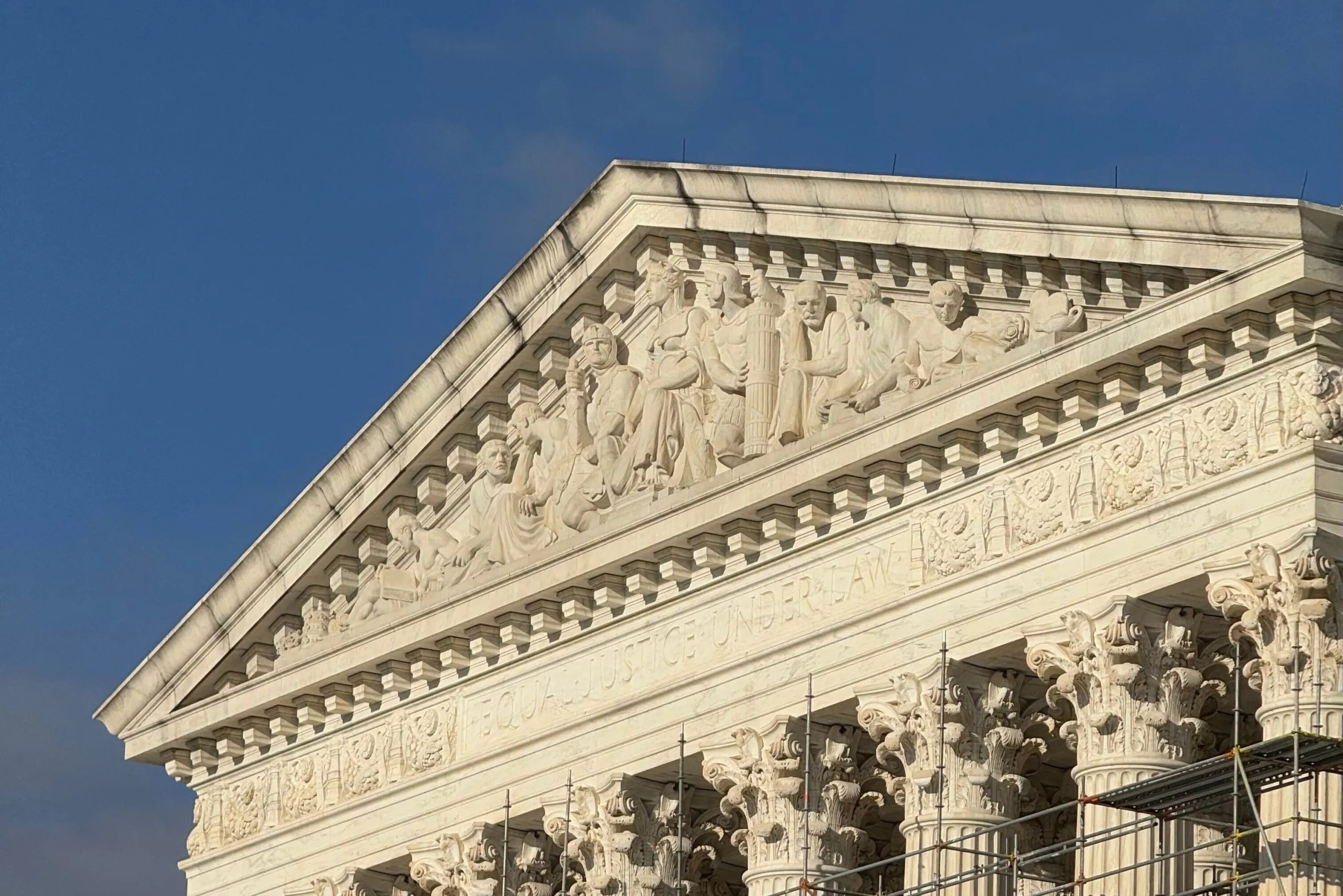


Over the past decade, the Supreme Court has issued multiple high-profile rulings on church-state partnerships and religious schools receiving public funds, holding that faith groups can’t be frozen out of funding programs simply for being religious and that public officials can’t deny requests for religious accommodations when similar accommodations are available to secular groups.
During their private conference tomorrow, the justices will consider an opportunity to further clarify the court’s free exercise jurisprudence by taking up a dispute over Colorado’s universal preschool program. In St. Mary Catholic Parish v. Roy, Catholic challengers contend that the state’s nondiscrimination requirement prevents them from participating in the program and amounts to unlawful religious discrimination.
Colorado’s universal preschool program began to take shape in 2020, when voters in the state approved a proposition that created a funding mechanism for it. In 2021 and 2022, the Colorado General Assembly outlined the goals and structure of the program in a series of bills and instructed the newly created Colorado Department of Early Childhood to further refine the rules for participation. The legislature made it clear that “quality standards must include a nondiscrimination requirement for all participating schools.”
In 2022, preschools began registering to take part in the universal preschool program, which enables Colorado families to receive 15 hours of free preschool each week at a participating institution. The schools had to certify that they met the state’s standards for areas such as classroom size and teacher training, and sign the nondiscrimination agreement, which states that participating preschools must “provide eligible children an equal opportunity to enroll and receive preschool services regardless of race, ethnicity, religious affiliation, sexual orientation, gender identity, lack of housing, income level, or disability, as such characteristics and circumstances apply to the child or the child’s family.”
Although every participating preschool must sign that agreement, they are allowed to express certain preferences that then guide the process by which families are assigned to a school. For example, public preschools can prioritize students in their district and schools that specialize in serving multilingual students can prioritize those students. “Preschools are allowed to decline to enroll children they are matched with who do not fit their enrollment preference, although their choice to decline a student is subject to Department review.”
In the lawsuit that’s now in front of the Supreme Court, the Archdiocese of Denver, two Catholic parishes that operate preschools, and two parents of preschool-age children explain that they cannot sign the nondiscrimination agreement because “Catholic teaching requires them to consider the sexual orientation and gender identity of a student and their parents before admitting them to a Catholic school.” They contend that making Catholic preschools’ participation in the universal preschool program contingent on accepting that agreement violates the First Amendment, citing the Supreme Court’s rulings on funding programs and free exercise from the past decade to support their position.
In 2024, a federal district court in Colorado denied the challengers’ request for an injunction that would prevent the state from requiring Catholic preschools to meet the nondiscrimination requirement. In September, the U.S. Court of Appeals for the 10th Circuit affirmed that decision, holding that the requirement was not designed to target religious institutions and that all preschools are held to the same nondiscrimination policy. Furthermore, according to the 10th Circuit, the record shows that Colorado officials actively encouraged faith-based schools to take part. “Colorado is not attempting to prohibit funds from being used for religious purposes. … The restrictions imposed by the nondiscrimination requirement universally cover enrollment policies and conduct, but they are not a targeted burden on religious use.”
In their petition for review, the Catholic challengers contend that the 10th Circuit’s ruling deepens a disagreement between federal courts of appeals over what it means for a statute to be neutral and generally applicable, the standard at the center of the Supreme Court’s ruling in Employment Division v. Smith. In that 1990 case, the court held that neutral and generally applicable laws – that is, laws that apply to everyone and were not designed to target a specific religious group – do not violate the free exercise clause even when they “incidentally” interfere with religious beliefs or practices.
Some courts, according to the challengers, would hold that Colorado’s policies for schools participating in the universal preschool program are not generally applicable because some schools can sidestep the requirement to accept all eligible students by using the preference system to reject students that don’t fit their specialty areas. The challengers urge the Supreme Court to not only enable Catholic schools to participate in the preschool program by allowing them to consider the sexual orientation and gender identity of a student and their parents, but also to overrule Smith.
The federal government filed an amicus, or friend-of-the-court, brief in support of the Catholic challengers without being asked to by the court, contending that a ruling in the case would provide a “significant benefit” to the country. “This Court should not allow widely diverging views about what makes a law neutral and generally applicable under Smith to stymie religious exercise in major portions of the country,” wrote U.S. Solicitor General D. John Sauer.
Initially, leaders of Colorado’s universal preschool program waived their right to respond to the petition. But in late December, the court called for a response, which the officials filed in early March. In it, they contend that allowing certain schools to use the preference system to prioritize low-income families or students with disabilities does not amount to sidestepping the nondiscrimination agreement.
St. Mary Catholic Parish v. Roy is scheduled to be considered for the first time by the justices at their private conference on Thursday.