Skip to content
Newsletter

SCOTUStoday for Tuesday, April 7

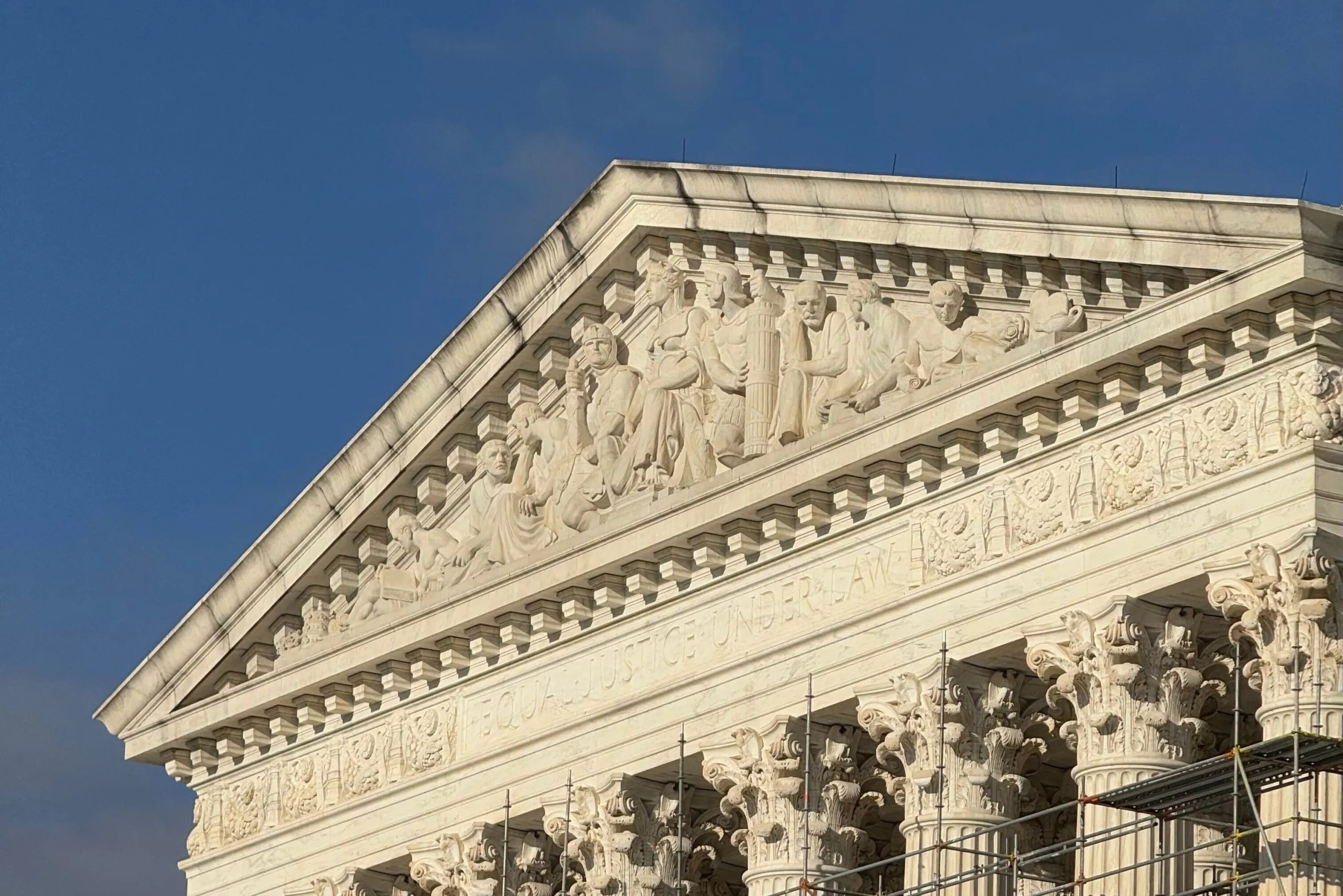
Carved details along top of Supreme Court building are pictured
(Katie Barlow)

President Donald Trump is not done complaining about the Supreme Court’s tariffs ruling. Keep reading to learn more about his latest message for the justices.

At the Court

In its Monday order list, the court announced that it had added one new case to its oral argument docket for the 2026-27 term and cleared the way for Steve Bannon’s conviction for contempt of Congress to be dismissed. For more on the order list, see the On Site section below.

The court will next hear arguments on Monday, April 20, the first day of its April sitting.

Morning Reads

Donald Trump Says Supreme Court Should Base Decision on Fox News Host

Joshua Rhett Miller, Newsweek

In a post shared on Truth Social early Monday morning, “President Donald Trump urged the Supreme Court to consider a Fox News host’s perspective as it mulls birthright citizenship,” according to Newsweek. “It’s too bad that the Supreme Court can’t watch and study the Mark Levin Show tonight on the Birthright Citizenship Scam,” the president wrote. “If they saw it they would never allow that money making HOAX to continue.” In the post, Trump also criticized, once again, the court’s tariffs ruling. “They failed miserably on Tariffs, needlessly costing the USA Hundreds of Billions of Dollars in potential rebates for the benefit haters and scammers. … The Country can only withstand so many bad decisions from a Court that just doesn’t seem to care.”

Supreme Court won't hear tribal member's Oklahoma income tax case

Dale Denwalt, The Oklahoman

The court on Monday announced that it will not hear a “tribal sovereignty case from Oklahoma that could have decided whether some tribal citizens are exempt from paying income tax to the state,” according to The Oklahoman. The case centered on Alicia Stroble, a Muscogee (Creek) Nation citizen who “lives inside the boundaries of the Muscogee Nation reservation” and “works on land owned by the tribe.” She contended that the location of her home and office should make it so that she does not pay income tax to Oklahoma, citing “the Supreme Court’s landmark McGirt ruling that recognized that some treaty-approved tribal reservations still exist, at least with regard to criminal law.”

Appeals court reinstates $656M judgment against the PLO and Palestinian Authority

Associated Press

More than nine months after the Supreme Court “rul[ed] in favor of Americans killed or wounded in attacks in Israel” in a case on the Promoting Security and Justice for Victims of Terrorism Act, the U.S. Court of Appeals for the 2nd Circuit reinstated a “$656 million judgment against Palestinian authorities” thought to be responsible for the attacks that it had previously overturned “on the grounds that U.S. courts couldn’t consider lawsuits against foreign groups over overseas attacks that were not aimed at the United States,” according to the Associated Press. “We conclude that the original judgment for the plaintiffs should be reinstated. That conclusion is consistent with the plain import of the Supreme Court’s decision,” the 2nd Circuit’s decision said.

Apple moves to take its App Store fight back to the Supreme Court

Sarah Perez, TechCrunch

In a Friday filing with the U.S. Court of Appeals for the 9th Circuit, Apple shared its intent to again ask the Supreme Court to weigh in on its dispute with Epic Games over the policies governing Apple’s App Store, according to TechCrunch. The justices previously declined to get involved in 2024, when both Apple and Epic Games raised concerns about a lower court ruling stating that Apple had not violated antitrust laws but requiring Apple to allow app developers to send users to external payment systems instead of Apple’s own payment system. The new petition will address Apple’s decision to charge a 27% commission on purchases made on such external systems.

Executive order aims to limit NCAA athletes to 5 years, 1 transfer

Dan Murphy, ESPN

Five years ago, the Supreme Court sided against the NCAA in a major case on student-athlete compensation, holding that the umbrella group that regulates college sports had violated antitrust laws. The decision paved the way toward a major overhaul of NCAA rules, and athletes are now allowed to transfer schools every year and be paid for their name, image, and likeness rights. However, many legal questions remain unsettled, and the “NCAA has struggled to enforce” even its updated policies. In response to ongoing lawsuits, Trump signed an executive order Friday aimed at resolving some of these questions pertaining to athlete eligibility. “The order directs the NCAA to create rules that mandate college athletes can play for ‘no more than a five-year period’ and allows them to transfer schools only once before they graduate without having to sit out a season,” according to ESPN.

On Site

From the SCOTUSblog Team

Court allows Steve Bannon to move forward on dismissal of criminal charges against him

The Supreme Court on Monday morning added one new case, involving challenges to veterans’ benefit laws, to its docket for the 2026-27 term. The justices also sent the case of Stephen Bannon, a former adviser to President Donald Trump who was convicted of contempt of Congress, back to the lower court, where the Department of Justice has filed a motion to dismiss his indictment. And the court rebuffed, without comment, a challenge to an Illinois law banning guns on public transportation.

A member of the Capitol Police K-9 unit walks a dog in front of the U.S. Supreme Court is on April 07, 2025 in Washington, DC.
Contributor Corner

What really happens on the emergency docket

In a post for SCOTUSblog, Taraleigh Davis explained what she learned about the court’s emergency docket by examining Justice John Paul Stevens’ papers at the Library of Congress. “Stevens’ files contain not only his own memoranda on emergency applications, but the response memos circulated by each of his colleagues, making it possible to reconstruct the full deliberative record across a wide range of such applications,” Davis wrote.

The Supreme Court Building is pictured on March 25, 2026.
Contributor Corner

An actual alternative to originalism

In his Justice, Democracy, and Law column, Edward Foley wrote on the Supreme Court’s embrace of originalism, which requires determining the Constitution’s “original public meaning” when interpreting it. Foley suggested that it would be better for the court “to interpret the Constitution according to its contemporary public meaning,” or “what the average member of the public today understands the words of the Constitution to mean.”

Carvings are shown at the top of the Supreme Court building

Podcasts

Divided Argument

Backup backup backup backup argument

Will Baude and Dan Epps recap and reflect on the oral arguments in Trump v. Barbara (the birthright citizenship case) and then analyze the court’s recent decision in Chiles v. Salazar, about the First Amendment limits on Colorado’s conversion therapy ban. They also confront the taboo question: Are judicial opinions too long?

SCOTUS Quote

JUSTICE SCALIA: “General Brnovich, just as a matter of curiosity, how do you end up being on this side of the case? You – you were defended in the district court, weren’t you?”

MR. BRNOVICH: “The – the Secretary in the State thought the principle of one person, one vote and upholding that principle was very, very important, and that’s why we felt compelled to be involved in this –this case.”

JUSTICE SCALIA: “Well, but only on appeal. You didn’t argue this side in the district court, did you?”

MR. BRNOVICH: “That – that’s is correct, Your – Justice Scalia.”

JUSTICE SCALIA: “What happened? Was there an election in between or something?”

(Laughter.)

MR. BRNOVICH: “Yes, and I won overwhelmingly.”

JUSTICE SCALIA: “I knew it.”

MR. BRNOVICH: “Thanks. Thank you very much. I will be up for reelection in three more years, so the … anyway.”

Harris v. Arizona Independent Redistricting Commission  (2015)

Recommended Citation: Kelsey Dallas and Nora Collins, SCOTUStoday for Tuesday, April 7, SCOTUSblog (Apr. 7, 2026, 9:00 AM), https://www.scotusblog.com/2026/04/scotustoday-for-tuesday-april-7/