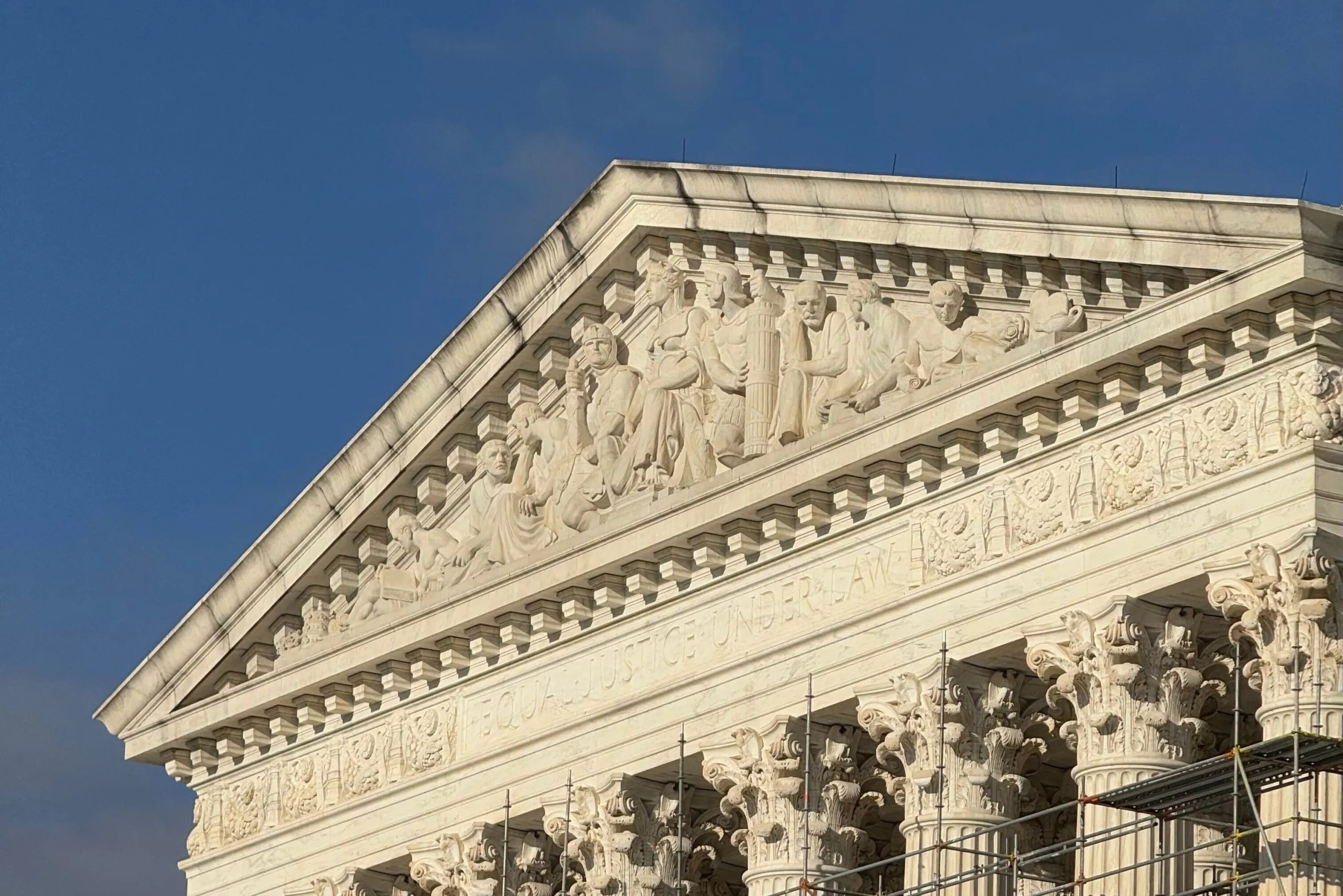


Supreme Court nominees today can expect to spend several days before the Senate Judiciary Committee, fielding questions from “Where were you at on Christmas?” to “Can you hold up what you’ve been referring to in answering our questions?” or, on a more serious note, what the Ninth Amendment means. Each nominee, at least since 1925, has the 12th chief justice to thank: Harlan Fiske Stone was the first nominee to appear at a confirmation hearing before the committee.
When President Calvin Coolidge nominated Stone, who was attorney general, to the Supreme Court on Jan. 5, 1925, much of the press agreed that his “character, learning, and temperament perfectly suited him to the job.” But progressive Democrat and former U.S. attorney Sen. Burton K. Wheeler and his allies soon convinced the Senate to return the nomination to committee based on aggressive actions Stone had taken as the nation’s top prosecutor. The “unprecedented compromise” was not to reject Stone entirely but allow him a hearing before the committee. Stone subsequently gave a “masterful” five hours of public testimony, which “cleared the way for his quick confirmation.” (The committee didn’t formally implement the requirement to appear before it until 1955.)
But back to the beginning. Born on a farm in Chesterfield, New Hampshire, in 1872, Stone grew up in Amherst, Massachusetts, and graduated from Amherst College in 1894, where he played football alongside his fellow student (and future president) Calvin Coolidge. Stone’s classmates predicted that he would “proceed to be the most famous man” of their 1894 class. After law school at Columbia, Stone divided his time for several decades between private practice and academia. He eventually became dean of Columbia Law School in 1910, where he remained for 13 years until Coolidge appointed him attorney general in 1924 and nominated him to the court the following year.
On the bench, Stone aligned himself with the liberal wing anchored by Justices Louis Brandeis and Benjamin Cardozo, and the three came to be labeled the “Three Musketeers.” In particular, Stone was known for his willingness to dissent alone when he believed the court had gone awry. In 1940, for example, he was the sole dissenter in Minersville School District v. Gobitis, which held that public schools’ mandatory flag salute did not violate the First and 14th Amendments. In his dissent, Stone wrote that the “very essence of the liberty” under the Constitution “is the freedom of the individual from compulsion as to what he shall think and what he shall say.” Three years later, the court sided with Stone and overturned Gobitis by a 6-3 vote in West Virginia Board of Education v. Barnette.
But Stone’s most enduring contribution may have come in 1938 in “[t]he footnote that broke constitutional law.” In United States v. Carolene Products Co., a case about a ban on “filled milk,” Stone added what would become the famous footnote four: a suggestion, as explained by SCOTUSblog recurring columnist Anastasia Boden, that “laws should be presumed constitutional unless they interfered with ‘the corrective political processes which can ordinarily be expected to bring about repeal of undesirable legislation.’” Although, according to his clerk, Stone wrote these words as “a starting point for debate,” the footnote took on a life of its own, forming the impetus for the modern “tiers of scrutiny” that (mostly) govern constitutional law to this day.
After several years on the court, Stone was appointed chief justice in 1941 by President Franklin Roosevelt to succeed Chief Justice Charles Evans Hughes. The role proved harder to manage than his years as an associate justice, as Stone struggled to contain rivalries among his strong-willed colleagues. He never got the chance to fully address those challenges. In April 1946, Stone suffered a cerebral hemorrhage while presiding over a session of the Supreme Court and died a few hours later at the age of 73. He was buried in Rock Creek Cemetery and succeeded by Chief Justice Fred Vinson.