Court allows Steve Bannon to move forward on dismissal of criminal charges against him

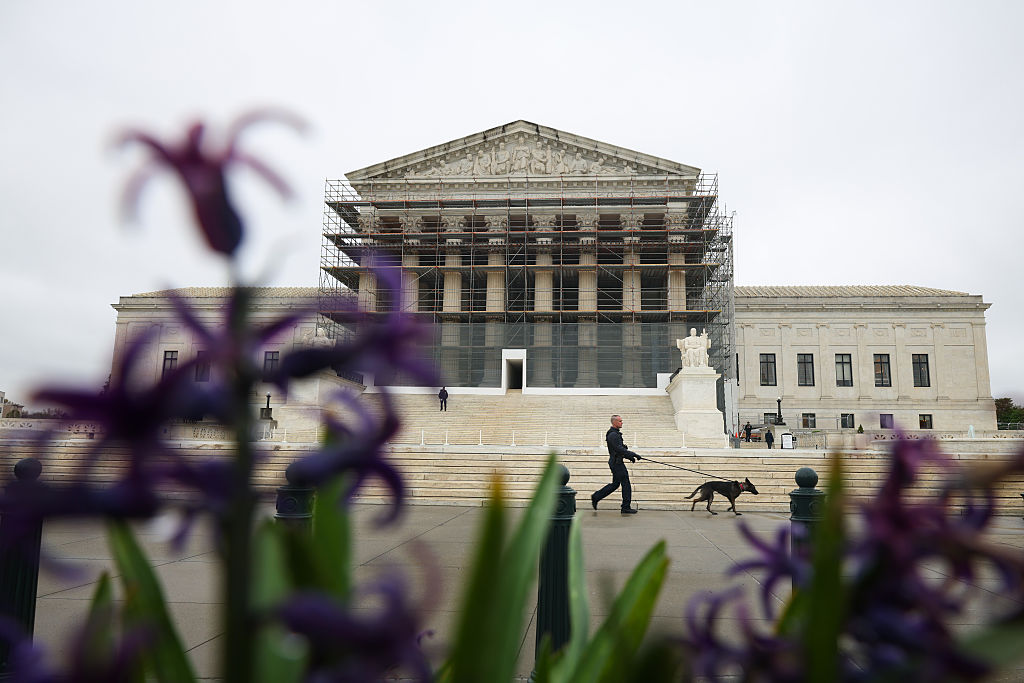
The Supreme Court on Monday morning added one new case, involving challenges to veterans’ benefit laws, to its docket for the 2026-27 term. The justices also sent the case of Stephen Bannon, a former adviser to President Donald Trump who was convicted of contempt of Congress, back to the lower court, where the Department of Justice has filed a motion to dismiss his indictment. And the court rebuffed, without comment, a challenge to an Illinois law banning guns on public transportation.
All of these actions came as part of a list of orders released from the justices’ private conference on April 2. The justices’ next conference is scheduled for Friday, April 17; orders from that conference are expected at 9:30 a.m. EDT on Monday, April 20.
***
The lone grant of review came in Johnson v. United States Congress, in which the court agreed to decide whether federal district courts have the authority to hear challenges to the constitutionality of federal laws affecting veterans’ benefits. The U.S. Court of Appeals for the 11th Circuit ruled that only the Court of Appeals for Veterans Claims and the U.S. Court of Appeals for the Federal Circuit have the power to hear such challenges; the Supreme Court will now review that ruling.
***
Bannon, after he refused to comply with a subpoena from the House Select Committee to Investigate the January 6th Attack on the United States Capitol, was convicted of violating a federal law that makes it a crime to “willfully” fail to respond to a congressional subpoena. He was sentenced to, and served, four months in prison.
The U.S. Court of Appeals for the District of Columbia Circuit upheld Bannon’s sentence. It rejected his argument that his failure to comply with the subpoena was not “willful,” as the statute requires, because he was acting at his attorney’s advice and not in bad faith. Writing for the court, Judge Bradley Garcia said that the D.C. Circuit had “squarely held that ‘willfully’ … means only that the defendant deliberately and intentionally refused to comply with a congressional subpoena, and that this exact ‘advice of counsel’ defense is no defense at all.”
Bannon came to the Supreme Court in October, asking the justices to take up his appeal. In its brief responding to Bannon’s petition, the Trump administration on Feb. 9 urged the court to invalidate the D.C. Circuit’s ruling and send the case back to the lower courts, so that the district court could grant a motion to dismiss Bannon’s indictment, which the government had filed that same day. On Monday morning, the Supreme Court did just that.
***
Bannon’s case was not the only one to return to the lower courts in light of a motion to dismiss filed by the Trump administration. The court also sent back a battle over the “state secrets” privilege, a doctrine that allows the government to withhold information in litigation when disclosing it would compromise national security. Just over four years ago, in FBI v. Fazaga, the Supreme Court ruled that a provision of the Foreign Intelligence Surveillance Act of 1978, which creates a procedure for a federal judge to review sensitive surveillance information behind closed doors when necessary to protect national security, does not trump the “state secrets” privilege. The justices sent the case, which was brought by Muslim American men from southern California who contend that the FBI had illegally spied on them because of their religion, back to the lower courts for them to consider the men’s remaining claims.
When the case returned to the U.S. Court of Appeals for the 9th Circuit, that court agreed that the federal government had properly invoked the state secrets privilege and that at least some of the material was privileged. But it declined to dismiss Yassir Fazaga’s religion claims altogether, instead sending the case back to the trial court for it to take another look at “whether the privileged information establishes a valid defense” for the government.
The FBI came to the Supreme Court in October, asking the justices to take up its case. It told the justices that the ruling by the court of appeals, “if left undisturbed, risks vitiating the state-secrets privilege in the Ninth Circuit and contravenes the way this Court has long understood the privilege” – which, it said, “exists to prevent the privileged information from being used in litigation.”
The court on Monday sent the case back to the lower courts for another look “in light of recent factual developments pertinent to this case and the government’s motion to dismiss.” Among other things, as Josh Gerstein of Politico reported in March, one of the main sources for the plaintiffs’ allegations – a former undercover FBI operative – now says that “much of the information” he provided was “made up.”
***
The justices provided the same treatment in the case of Alexander Sittenfeld, a member of Cincinnati’s city council, who was convicted on federal bribery and extortion charges that stemmed from allegations that he had asked for or accepted campaign contributions in exchange for promises to support a real-estate project. Sittenfeld was sentenced to 16 months in prison and required to pay a $40,000 fine.
After the U.S. Court of Appeals for the 6th Circuit upheld his conviction, Sittenfeld came to the Supreme Court in July 2025, asking the justices to intervene. He contended that “there was nothing remotely approaching a clear corrupt agreement, much less an ‘explicit’ one” for him to support the project in exchange for the campaign contribution. And although he had recently been pardoned, he acknowledged, that pardon does not actually eliminate his conviction or lead to a refund of the fine that he paid.
In a brief filed in November, the federal government urged the justices to send Sittenfeld’s case back to the lower court so that it can dismiss the indictment. That in turn, U.S. Solicitor General D. John Sauer wrote, “would ensure that” Sittenfeld “has obtained full relief from the pardoned convictions.” In a brief unsigned order, the court on Monday threw out the lower court’s decision and returned the case to the 6th Circuit “for further consideration in light of the pending motion to dismiss the indictment.”
***
After considering the case for the first time last week, the court denied review in Schoenthal v. Raoul, a challenge by three Illinois residents who have licenses to carry guns to the constitutionality of the state’s ban on firearms on public transportation.
The U.S. Court of Appeals for the 7th Circuit upheld the law, prompting the challengers to come to the Supreme Court last year. They urged the court to take up the case to clarify the scope of “sensitive places” – for example, the Supreme Court has suggested, “schools and government buildings” – where guns may be prohibited.
***
The court asked the Trump administration for its views in Aldridge v. Regions Bank, a case involving the remedies available under the Employee Retirement Income Security Act of 1974. The plaintiffs in the case, former employees of the restaurant chain Ruby Tuesday, contend that Regions Bank violated its obligations under ERISA, causing them “to lose millions of dollars in pension benefits.” There is no deadline for the Trump administration to file its brief.
Finally, the court did not act on St. Mary Catholic Parish v. Roy, a challenge to Colorado’s exclusion of Catholic preschools from the state’s universal preschool program. Among other things, the petition asks the justices to overrule their 1990 decision in Employment Division v. Smith, holding that someone’s religious beliefs do not excuse compliance with neutral laws that apply to everyone.
Posted in Court News, Featured, Merits Cases
Cases: Federal Bureau of Investigation v. Fazaga, Bannon v. United States, Sittenfeld v. United States, Schoenthal v. Raoul, Aldridge v. Regions Bank, Johnson v. United States Congress