A Supreme Court status report

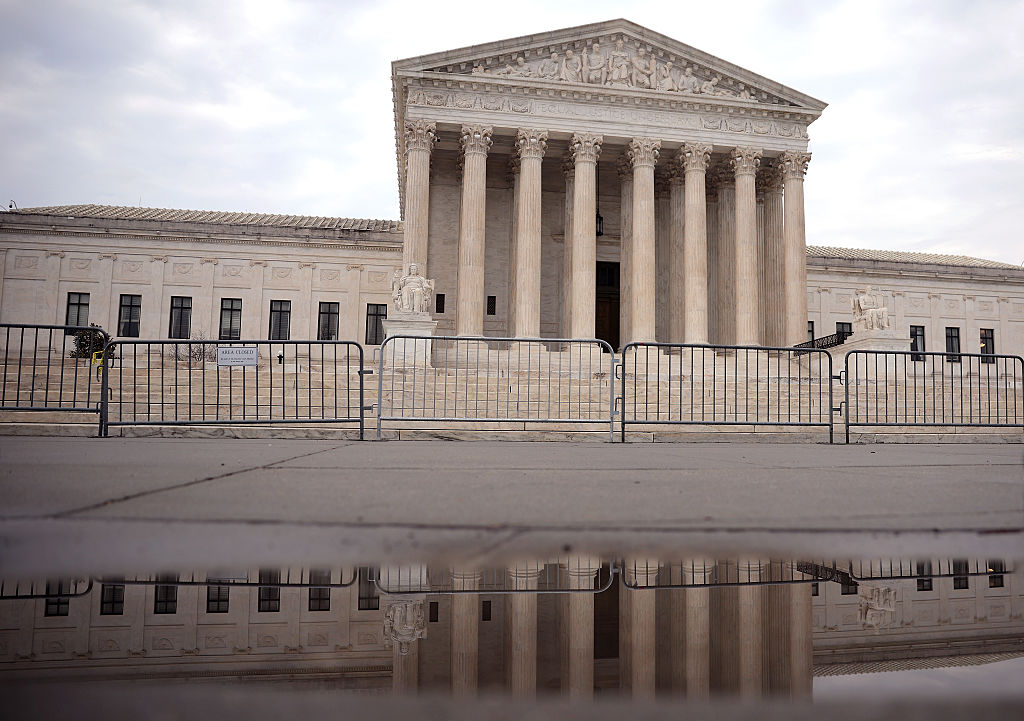
In early January, as the country eagerly awaited a tariffs ruling that – as it turned out – was still more than a month away, Supreme Court watchers raised concerns about the court’s pace. They questioned whether the justices had fallen behind on writing opinions in the 27 cases they had heard by that point, perhaps because of the Trump administration’s ongoing requests for emergency relief.
And the data seemed to bear this out: As The New York Times reported, this term was only the second in the past eight decades in which the court waited until January to release an opinion in an argued case; in “70 of the last 80 terms, the first merits decisions were issued in October or November.”
So, approximately three months later, where do things stand?
After the court wrapped up its March argument session on Wednesday, April 1, I set out to answer that question and found that, perhaps surprisingly, the justices have been moving full steam ahead after their delayed start: The court has caught up to where it was at this time last term and is well past where it was in other recent terms.
Pace of opinions
This term’s first opinion day – that is, a day on which the justices released one or more opinions in argued cases after indicating in advance that opinions could be coming – was Jan. 9, which was the Friday before the start of the January argument session. As noted above, it was uncommonly late for a first opinion day. By that same Friday last term, there had been three opinion days (one in November and two in December). And during the 2023-24 term, there had been one (in December).
But once the court got going, it quickly picked up the pace. Including Jan. 9, there have been 10 opinion days so far this term on which the justices have released 18 opinions, just one fewer than the court had released by this time last term (if you don’t count two announcements that a case had been dismissed as improvidently granted).
And compared to the 2023-24 and 2022-23 terms, the court is moving at lightning speed. In those two terms, the justices released fewer than a dozen opinions in argued cases by the end of the March argument session.
Counting any opinions that come this month, the court is expected to release 40 more opinions in argued cases by the end of the term. But when will that be?
In each of the past five terms, the court held its final opinion day on or before July 1. For example, last year, it was on June 27. If the justices follow their typical pattern for opinion releases, they will likely save one or more of the term’s biggest cases for this final day, which, if this term mirrors last term, will be Friday, June 26. Birthright citizenship, which was argued last week, is a potential candidate, as is the case on mail-in ballots, which was also argued during the March sitting.
Preparing for next term
Throughout the term, as the justices hear cases and write opinions, they also regularly meet to vote on petitions for review. Petitions that are granted are then scheduled for argument later in the current term or added to the oral argument docket for the following term, depending on the time of the year. By early April, it’s expected that the court will have selected at least a few cases for argument in the fall.
As of Monday, there were six cases on the 2026-27 oral argument docket, including a somewhat high-profile dispute over efforts to hold oil and gas companies liable for climate change. By this time last year, there were also six cases awaiting argument in the fall, and, the year before that, just two.
In other words, when it comes to filling out next term’s oral argument docket, the court is also matching its pace from last term and surpassing its pace from the term before that. And if the last few terms are any indication, the justices will likely take up two or three more cases by the end of this month. Potential candidates include a number of Second Amendment disputes over restrictions on high-capacity magazines and AR-15 ownership bans and clashes over parents’ right to know when their child changes their name or asks to use different pronouns at school.
The role of the interim docket
Back in early January, as court watchers awaited not just the tariffs ruling but any ruling in an argued case, it was reasonable to believe that a surge in cases on the court’s interim relief docket was taking up the time that justices would typically spend preparing opinions in argued cases. In December alone, the court addressed closely watched emergency requests regarding Texas’ new congressional map, a clash between the Trump administration and immigration judges, and President Donald Trump’s effort to federalize and deploy National Guard troops to Illinois. And while there was no separate writing in the case on immigration judges, the Texas and Illinois cases each involved at least 18 pages of concurrences and dissents.
The court has fielded several more high-profile requests on its interim relief docket since then, including one from California Republicans seeking to block the state’s redistricting map and two from the Trump administration on the Temporary Protected Status program, but it resolved the former with a single sentence and scheduled the latter two for oral argument at the end of the month. There were 17 pages of separate writings in a dispute about redistricting in New York, but the briefing took place during the justices’ long winter recess.
This slowdown in interim docket action may explain why the justices have caught up with last term’s pace for the oral argument docket.
But that may not offer much comfort to those awaiting highly anticipated decisions in cases that were argued early in the term. For example, the justices have yet to rule in Louisiana v. Callais, on race, redistricting, and the Voting Rights Act, even though they’ve released opinions in every other case from the October argument session.
Posted in Court Analysis, Featured, Merits Cases