The bottom line

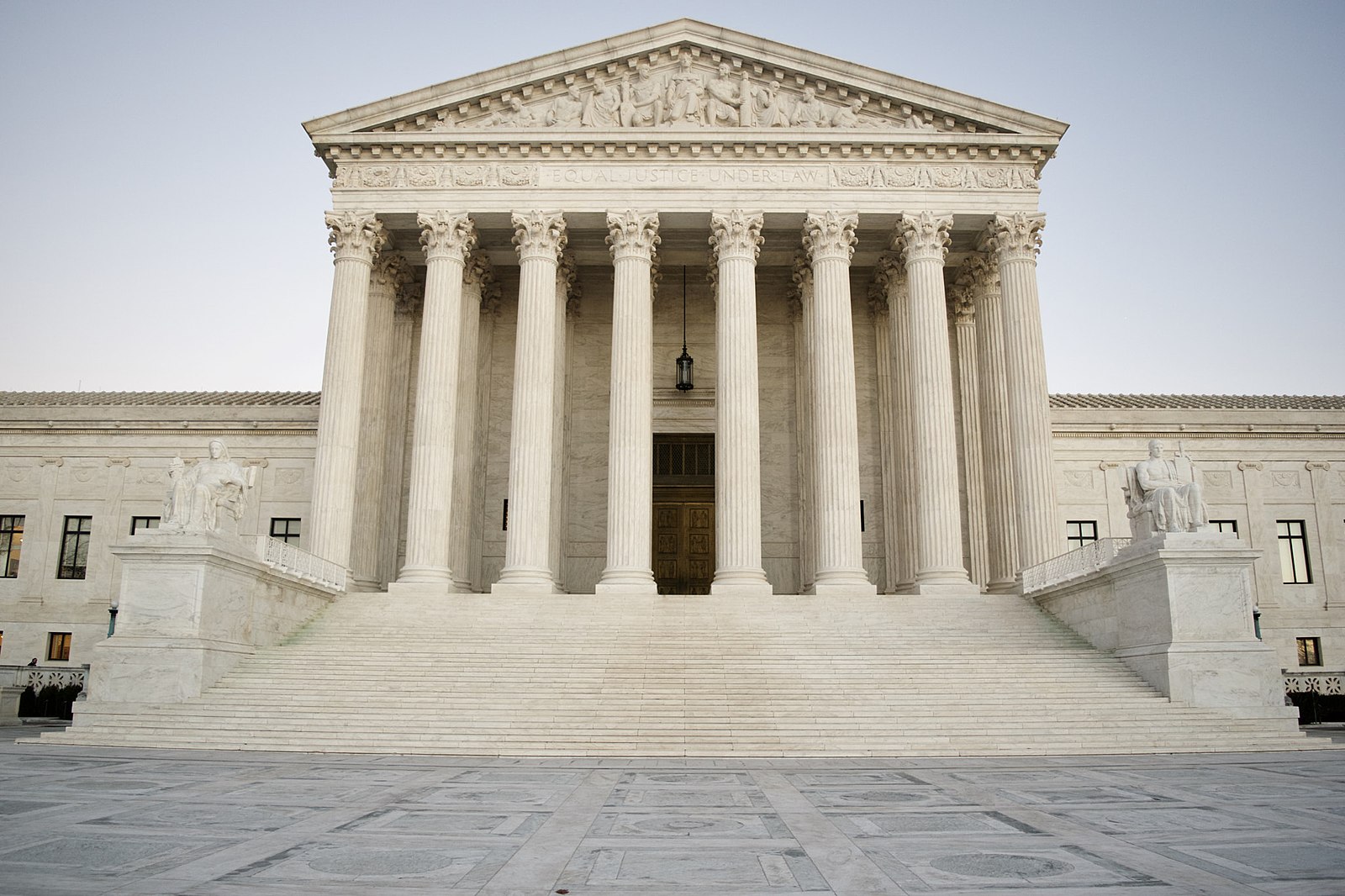
Nuts and Bolts is a recurring series by Stephen Wermiel providing insights into the mechanics of how the Supreme Court works.
Supreme Court watchers are accustomed to poring over the words and phrases written by the justices in their many decisions. Much less attention is paid to the bottom line.
In the Supreme Court there are two steps to the bottom line: the judgment and the mandate.
The judgment
Let’s begin with the judgment. At the conclusion of every high court ruling is a disposition. While it may appear that the justices decide the disposition entirely at their own discretion, this process is actually outlined in a federal statute, which gives the court the power to “affirm, modify, vacate, set aside or reverse any judgment” of a lower court, and “remand the cause and direct the entry of such appropriate judgment, decree, order, or require such further proceedings … as may be just under the circumstances.”
But what, exactly, do those words mean? In practice, it is up to the justices to decide what the bottom line is in a case. And once they do so, the decision concludes with the words, “It is so ordered.”
If the justices uphold the ruling of a lower court, the bottom line is usually straightforward. For example, when the court decided on February 20 in Learning Solutions, Inc. v. Trump that the president did not have the authority to impose tariffs under the International Emergency Economic Powers Act, it reached the same conclusion as the U.S. Court of Appeals for the Federal Circuit. As a result, the justices simply ordered that the lower court ruling was “affirmed.”
While decisions that uphold the lower court’s ruling tend to be clear, other dispositions of cases may be more complicated. For argued cases decided on the merits, the court may also reverse, reverse and remand (send the case back to the lower court for further decision), or vacate and remand. Each of these dispositions hinges on the circumstances of the case and whether the court’s ruling requires a lower court to implement additional steps or to resolve additional issues.
According to The Supreme Court’s Style Guide (which is published by a private author and not available on the court’s website) the difference between reversing or vacating a lower court decision is normally a matter of degree: the court reverses “if it deems the judgment below to be absolutely wrong, but vacate[s] if the judgment is less than absolutely wrong.”
Examples may help, although explaining the bottom line may still not be simple. In one recent ruling, Ellingburg v. United States, the justices ruled unanimously that the U.S. Court of Appeals for the 8th Circuit in St. Louis reached the wrong conclusion when it held that restitution ordered as part of a criminal sentence was not punishment under federal law. Because the justices held that the 8th Circuit was simply wrong, again using stock language, they “reverse[d] the judgment of the U. S. Court of Appeals for the Eighth Circuit and remand[ed] the case for further proceedings consistent with this opinion.”
In the recent decision of U.S. Postal Service v. Konan, the justices ruled, by a vote of 5-4, that the Postal Service is shielded from lawsuits for intentionally misdelivering mail. The U.S. Court of Appeals for the 5th Circuit in New Orleans had allowed a lawsuit against the Postal Service to proceed and had also ruled on related issues in the case. As a result of the Supreme Court’s ruling, the 5th Circuit has to modify its legal standard and reconsider its ruling. To facilitate this result, the justices, using their own standard language, “vacate[d] the judgment of the Court of Appeals and remand[ed] the case for further proceedings consistent with this opinion.”
It is worth noting that when the justices vacate a decision, it effectively wipes that lower court ruling off the books, tossing it out as having no validity.
Sometimes the bottom line brings with it some drama – for example, when the court recognizes a certain urgency in the case. In the landmark Bush v. Gore decision in 2000, in which the justices halted the presidential election recount in Florida, thereby assuring that George W. Bush would be elected, the court reversed and remanded, adding that “the Clerk is directed to issue the mandate [explained below] in this case forthwith.” In 1958 when the court in Cooper v. Aaron upheld a desegregation order for the schools in Little Rock, Arkansas, the school year was about to begin and the court had no patience for delay. Therefore, it instructed that its judgment would “be effective immediately, and shall be communicated forthwith to the District Court for the Eastern District of Arkansas.”
Judges and commentators raise concerns from time to time about whether the court’s practice of remanding for additional action “consistent with this opinion” provides enough guidance to lower courts. This has arisen particularly in the context of the court’s orders in cases on the interim docket. These interim or temporary orders issued by the court typically do not provide reasons for blocking a lower court’s actions, making it challenging for judges to figure out next steps in cases that are still proceeding. Last October, for example, the New York Times reported on three dozen federal judges who complained that the absence of explanations in interim docket rulings “left them confused about how to proceed in those matters.”
Another practice that has drawn criticism – in academic circles and even among the justices – is its use of a “shortcut” procedure known as a “GVR,” short for “grant, vacate, and remand.” When the court issues a decision that creates a new legal rule, the justices will have sometimes put off ruling on related petitions for review until they release their decision on the merits. Shortly after it issues the decision, the court may (depending on the outcome that the petition seeks) grant the pending petition, vacate the lower court ruling, and remand the case for the lower court to apply the new rule. The “GVR” practice is sometimes criticized because the court is effectively negating lower court decisions without really considering (at least publicly) the merits of those rulings.
The mandate
Once the judgment is issued typically comes the mandate. The mandate is the final step in the Supreme Court, the moment when the court certifies to a lower federal or state court the outcome of the case. Put simply: It is when the court’s judgment becomes official.
The issuance of the mandate is a technical step, not prone to controversy. The process is governed by the Supreme Court’s own Rule 45. When the court rules on a case from a state court, the mandate generally is issued 32 days after the decision is announced. The mandate consists of a certified order simply stating the ruling – whether the court affirmed, reversed, or vacated and remanded the ruling of the lower court. The mandate bears the seal of the court and the signature of Scott Harris, the current clerk of the court, on behalf of Chief Justice John Roberts. The mandate may be emailed to the lower court, or in some cases sent through the mail.
When the case comes from a federal court, Rule 45 says that in lieu of a mandate, the court sends a certified copy of the decision to the lower court. This is typically handled via email, also 32 days after the ruling is issued.
If the mandate makes it official, it is nevertheless the second communication in most cases. On the day a decision is issued, the court’s clerk typically emails the lower court a letter notifying it of the judgment and referring it to the opinion on the Supreme Court’s website.
The mandate or certified copy may be delayed if any of the litigants asks the Supreme Court to reconsider its ruling, such as a filing known as a petition for rehearing, which must be submitted within 25 days of the initial decision. The mandate may also be issued more quickly if a justice or the court orders it.
When it comes to the Supreme Court, the bottom line sounds technical and routine, yet the process by which the justices conclude the business of a case is of vital importance for both the courts below and the litigants before it.
Posted in Nuts and Bolts, Recurring Columns
Cases: Learning Resources, Inc. v. Trump (Tariffs), United States Postal Service v. Konan, Ellingburg v. United States