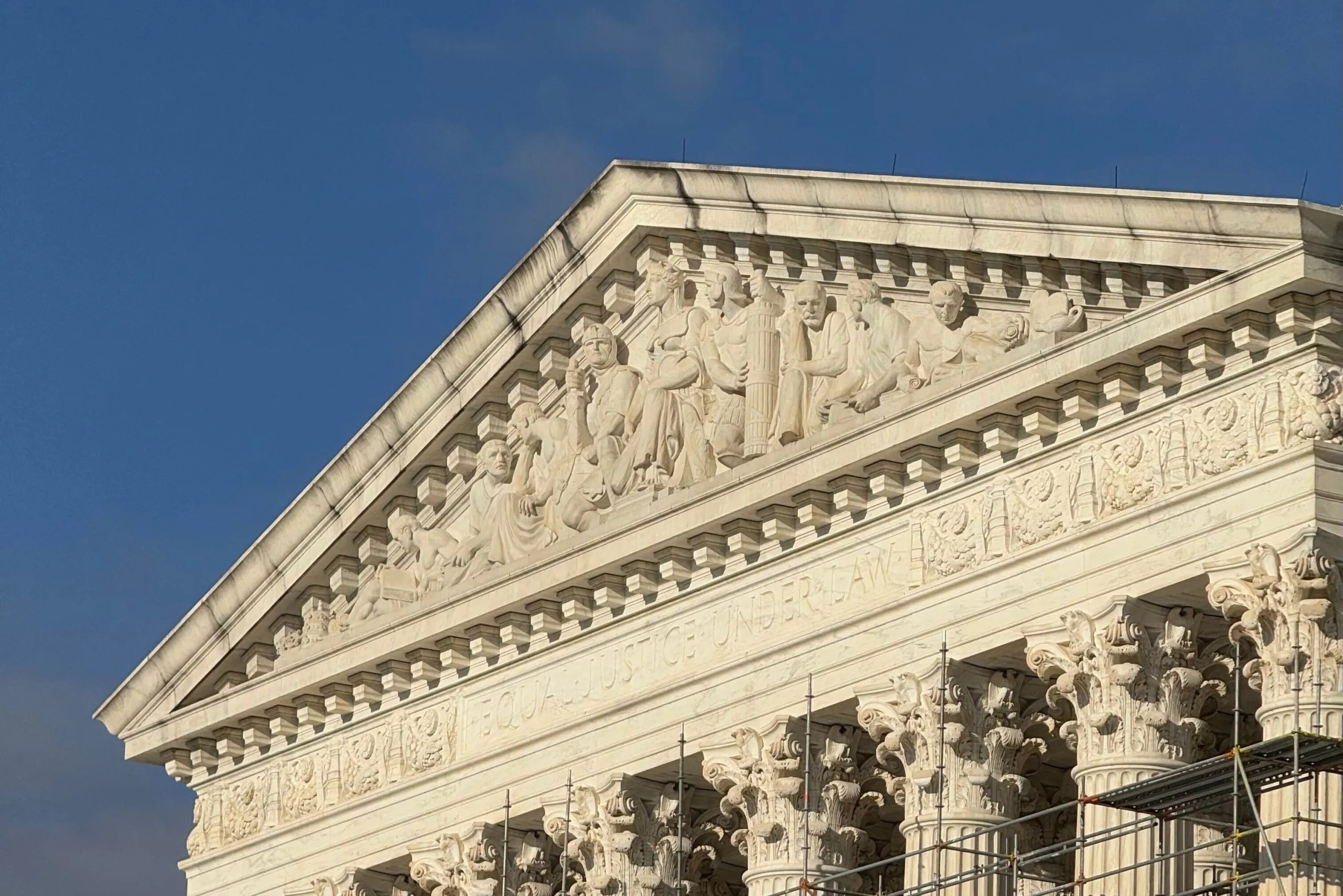


One of the more familiar criticisms of the Supreme Court is that the justices stay there too long. Or as one law review article put it, “Happy Birthday! Now get out.”
Under Article III, Supreme Court justices (along with all Article III judges) have lifetime tenure, as they “shall hold their Offices during good Behaviour.” (This differs dramatically from state supreme court justices, who are term limited in 49 states – the Rhode Island Supreme Court being the exception.)
Those who support a mandatory retirement age often point out that Supreme Court justices, on average, now serve for 26 years after joining the bench. Given life expectancy at the nation’s founding, justices’ times on the court near then were typically a good deal shorter. Proponents of retirement ages also point to its popular public support: Per a 2023 Pew Research Center survey, the majority of Americans favor age limits for “both politicians and Supreme Court justices.”
Those on the other side maintain that life tenure is critical for judicial independence (if justices have to find a career after, say, 18 years, the political environment may influence their votes) and institutional stability. Alexander Hamilton summed this argument up well: the framers provided life tenure “to secure a steady, upright, and impartial administration of justice.”
There have been several prior proposals for mandatory retirement, although none have gone very far. Because life tenure is written directly into Article III, Congress cannot simply pass a law to eliminate it altogether. Such a change would require a constitutional amendment, and several such amendments have thus been proposed.
One of the first emerged in 1937 as an alternative to President Franklin Roosevelt’s “court packing” plan. It consisted of a proposal for a constitutional amendment mandating compulsory retirement at age 75. Roosevelt, favoring increasing the number of justices instead, rejected this. From 1946 to 1955, the American Bar Association pushed for another amendment for retirement at the age of 75. This amendment didn’t get very far either, however, given significant resistance in Congress.
In the 1970s, Sen. Sam Nunn of Georgia tried to have a statute passed for “the removal of any justice who became mentally disabled.” Nunn realized “the problem of mental incapacity [as] troubl[ing] the modern Supreme Court even more than it characterized the nineteenth-century Court,” perhaps referring to Justice William Douglas’ health difficulties while on the bench. (Justice Byron White agreed with Nunn’s sentiment, writing in a memo that “I am convinced that it would have been better had [Douglas’] retirement been required at a specified age.”)
The bill Nunn introduced ultimately evolved into the Judicial Conduct and Disability Act of 1980. The law created a complaint mechanism under which any individual could allege a federal judge had a) engaged in conduct prejudicial to the courts or b) had become unable to perform their judicial duties due to a mental or physical disability. Under the act, complaints are filed with the clerk of the relevant circuit court and reviewed by circuit judicial councils, with ultimate oversight by the Committee on Judicial Conduct and Disability, a body composed of lower federal court judges. But the act has a key limitation: it does not apply to Supreme Court justices. (The basis for this being that impeachment is the only constitutionally permissible means of removing a Supreme Court justice, and that the Judicial Conference does not have “administrative jurisdiction” over the Supreme Court.)
Roughly nine years later, Alabama Sen. Howell Heflin introduced two measures for a constitutional amendment that would have removed “any justice or judge … physically or mentally unable to perform his duties,” but this measure died after one day of hearings in 1990.
Several more recent proposals have again brought up the issue. Rep. Ro Khanna, a Democrat from California, first introduced the Supreme Court Term Limits and Regular Appointments Act in 2020, and then reintroduced it in 2021. If implemented, the act would guarantee each president two Supreme Court nominations per term, with justices serving 18 years before moving to senior status. The bill states that “any Justice who has served a total of 18 years is deemed retired from regular service and may continue to serve as a Senior Justice” – and thus attempts to avoid the constitutional challenge behind eliminating the lifetime tenure of Article III judges. A similar bill – the Supreme Court Tenure Establishment and Retirement Modernization Act – was introduced in 2022 before dying in committee, and reintroduced in both 2023 and 2025.