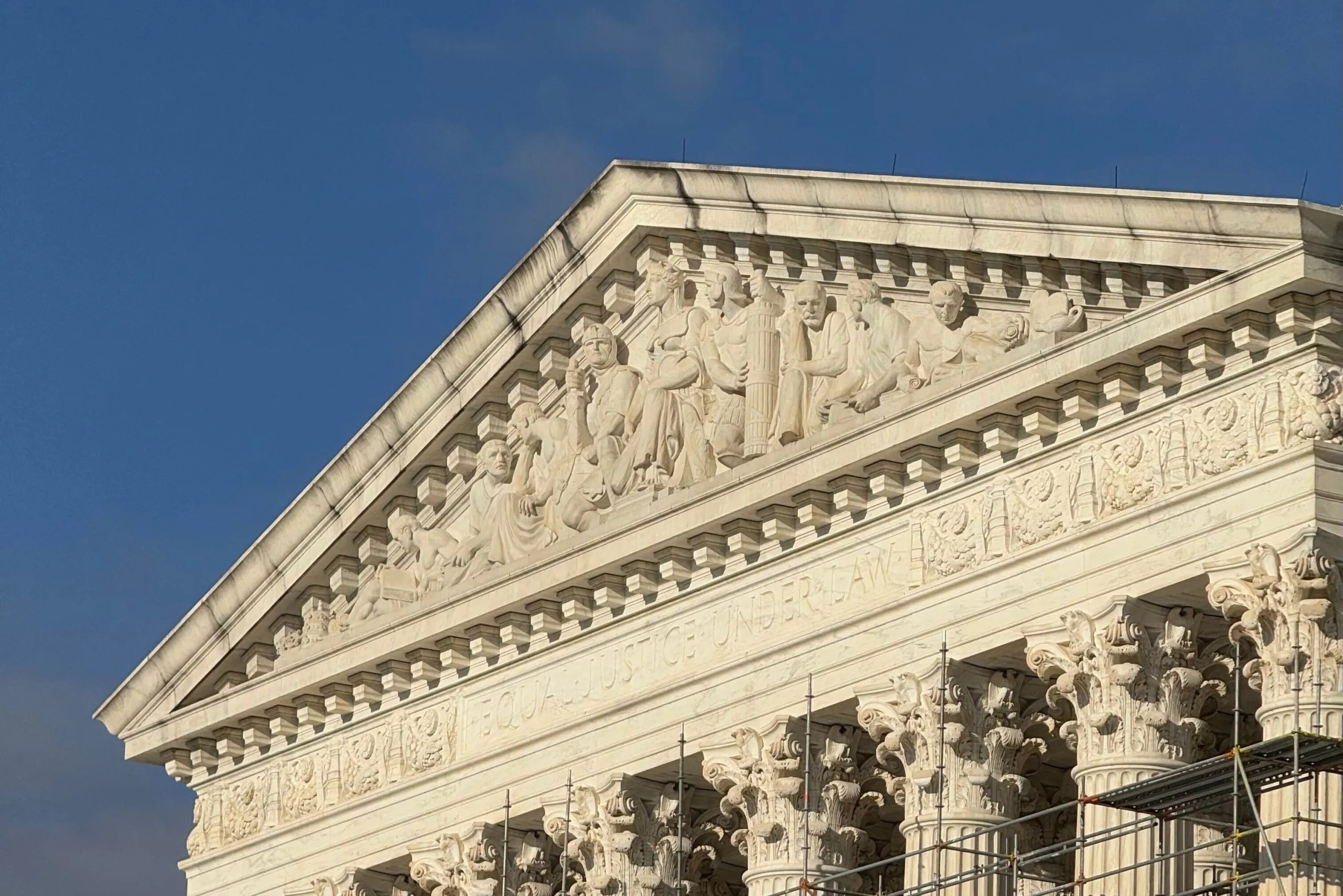


Like the flowering of the cherry blossoms, the question arises virtually every year at this time: Who will be the next justice to retire? This year, according to at least some of the commentariat, the most likely prospect is Justice Samuel Alito. So, we thought it’d be worthwhile to talk about what exactly happens when a justice leaves the bench.
Justices can technically do so in one of three ways: retirement (including resignation), death, or removal following impeachment.
Although death used to be a more common way to leave the court, since 1954 there have been only three justices who have died in office – Chief Justice William Rehnquist in 2005, Justice Antonin Scalia in 2016, and Justice Ruth Bader Ginsburg in 2020.
Only one justice has ever been impeached – and that impeachment resulted in an acquittal.
Which leaves us with retirement. Not until 1869, with the Judiciary Act of 1869, did Congress address pension benefits for Supreme Court justices, allowing them to retire with their full salary beginning at age 70 and with at least 10 years of judicial service. This proved popular: within four years of the legislation four justices retired. The legislation evolved more than a few times, as noted by Steve Vladeck, but since 1937, “[a] retired justice can receive their full salary (and other forms of support, including an office and a law clerk) so long as they continue to ‘serve.’”
Although the majority of justices have retired due to age or ill health, some have “resigned” from the court “because they were dissatisfied with some aspect of their work” (take Justice Thomas Johnson, who was unhappy with his circuit riding duties) or “to accept or seek another office” (see Chief Justice John Jay, who left the court after being elected New York’s governor).
Over the last 21 years, justices have retired for a variety of reasons.
Justice Sandra Day O’Connor announced her decision to retire on July 1, 2005, writing to President George W. Bush that she would retire as soon as her replacement was nominated and confirmed – a decision “influenced by the decline in the health of her husband,” who had been diagnosed with Alzheimer’s disease.
Justice David Souter announced his retirement on May 1, 2009, in a very brief letter to President Barack Obama. Souter did not provide any explanation; as Lyle Denniston described for SCOTUSblog, “in a fashion that bespeaks Souter’s own character,” his letter “was terse, devoid of emotion and determinedly factual.”
On April 9, 2010, Justice John Paul Stevens announced his intent to retire, and officially did so in late June. Stevens later said he decided to resign after suffering a mini-stroke when reading his dissent in the Citizens United case.
Justice Anthony Kennedy announced on June 27, 2018, in a letter to President Donald Trump, that he would retire effective July 31. According to Kennedy, he was doing so to spend more time with his family, after over 30 years on the bench.
The most recent justice to leave the court, Justice Stephen Breyer, announced his retirement in January 2022 (following an “extraordinary campaign” from progressives urging him to leave the bench so that President Joe Biden could name his successor) and retired at the end of the 2021-2022 term.
Although the justices would never say so, politics likely plays a role in retirement timing – according to one study, if the incumbent president shares the party of the president who nominated the justice, and the incumbent president is in the initial two years of his four-year term, a justice has “odds of resignation” roughly 2.6 times higher than otherwise.