
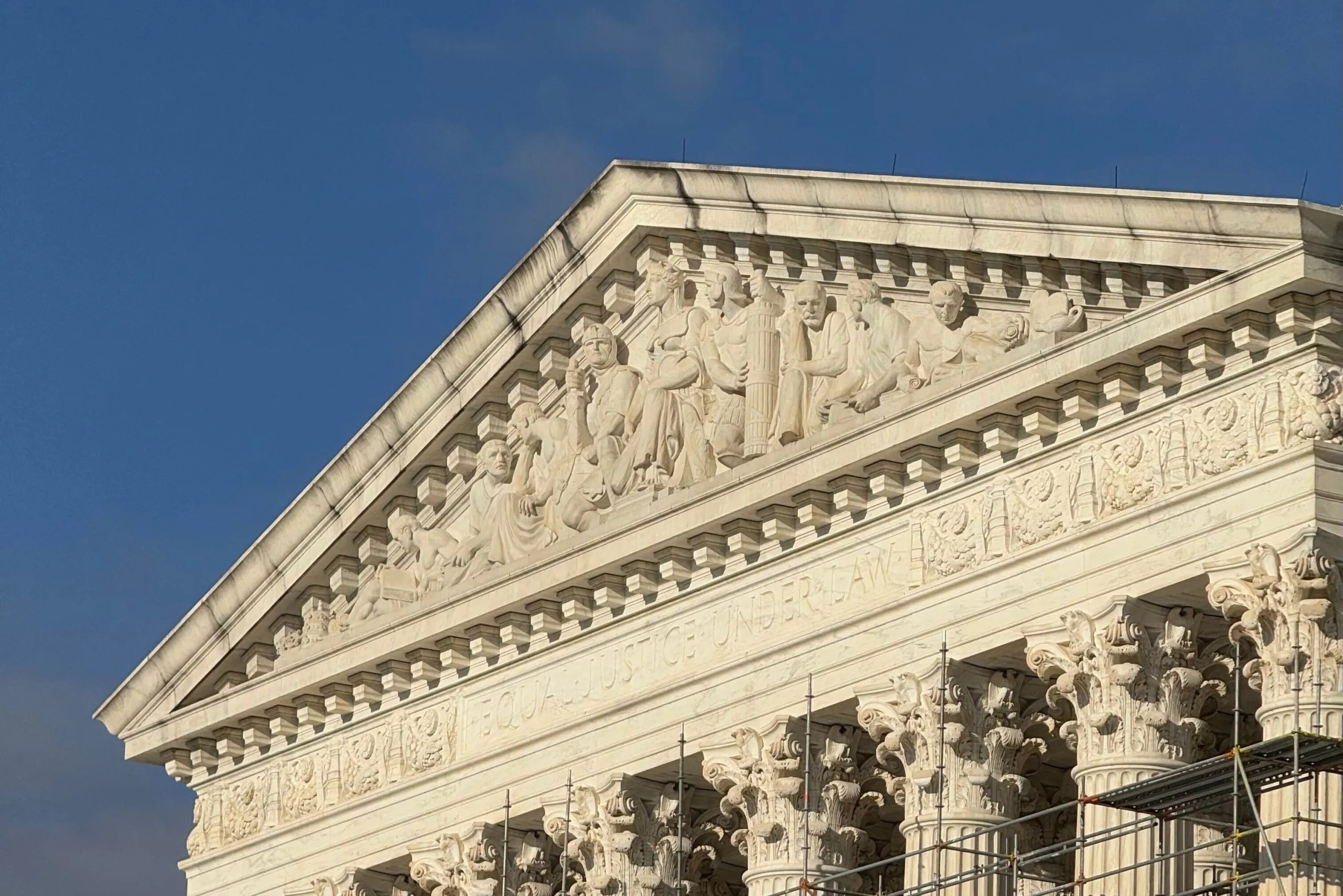


During her remarks at the Library of Congress on Thursday, March 12, Justice Amy Coney Barrett shed light on a question that sometimes comes up on Supreme Court opinion days, including on Feb. 20, when the court released its tariffs ruling: How does a justice decide when to write a separate opinion?
The tariffs case raised this question because it included not only the majority opinion by Chief Justice John Roberts and the principal dissent by Justice Brett Kavanaugh, but also five other separate writings. Barrett and Justice Neil Gorsuch, who joined the majority opinion in full, each wrote a concurring opinion. Justice Elena Kagan wrote an opinion concurring in part and concurring in the judgment, which was joined by Justices Sonia Sotomayor and Ketanji Brown Jackson. Jackson wrote her own solo opinion concurring in part and concurring in the judgment. And although Justice Clarence Thomas (along with Justice Samuel Alito) joined Kavanaugh’s dissent, he also wrote his own solo dissent.
These writings added up to more than 160 pages and exposed rifts in the court over the major questions doctrine – that is, the principle that the executive branch cannot address major policy questions without clear direction from Congress. The six justices in the majority clashed both with the three dissenting justices and, to a certain extent, with each other. Gorsuch, in particular, seemed frustrated with everyone, prompting David French to call his concurring opinion the “Festivus Concurrence” on the Advisory Opinions podcast.
The concurrences and dissents in the tariffs case called to mind an earlier era in Supreme Court history when separate writings were not just common but expected. For roughly the first decade of its existence, the court would resolve cases with seriatim opinions – that is, a collection of separate opinions from the justices, rather than a single opinion of the court. Once these opinions were published, “the lawyers would have to count the justices to try to figure out what propositions of law did the majority support and which propositions were dictum” (not essential to the decision and therefore not establishing a precedent), according to Justia.
Chief Justice John Marshall, who served from 1801 to 1835, convinced his colleagues to end this practice and instead come together behind a single opinion of the court. During her Thursday remarks, Barrett reflected on the significance of this change, noting that Marshall also persuaded his colleagues to forgo all separate writing in most cases. “Concurrences and dissents were actually quite rare, which I think is part of what enabled him to establish the court’s strength,” Barrett said.
Today, separate writings are relatively common, although the court is nowhere near a return to the seriatim approach. During the 2024-25 term, there were 50 concurring opinions and 48 dissenting opinions written, in addition to the 67 opinions of the court.
At the Library of Congress event, Barrett was asked by Judge Robert M. Dow., Jr., who is counselor to the chief justice and who interviewed Barrett on stage, about how she decides when to write separately. Barrett explained that sometimes it’s not her choice, because the most senior justice in the group of dissenters can assign dissents to her. When it’s up to her, Barrett said, she will only write separately for a few key reasons.
“I try not to write [separate opinions] too frequently. I kind of like the way John Marshall said seriatim opinions are out. I generally try to just let the majority opinion speak for the court,” she said. “But sometimes I will write a concurrence or my own dissent if I have something that I feel like I should explain, something about my position that I feel like warrants explanation so that it doesn’t look inconsistent. If I don’t join the full opinion,” Barrett continued, “I usually write to say why. And if I feel like I have something to say that would add to the development of the law, something that I hope that lawyers and other courts will think about or that law professors might help us by writing about or doing some research in, that’s the situation in which I will write a concurrence.”
“I try to resist the temptation to write one because I feel like I could have said what the majority said better,” Barrett added.
In the tariffs case, Barrett appeared to be focused on the first goal: explaining herself. Indeed, she noted at the beginning of her four-page concurring opinion that she was writing separately to address Gorsuch’s characterization of the major questions doctrine and then went on to defend her view that it is “best understood as an ordinary application of textualism.”
You can watch the full conversation between Barrett and Dow on YouTube.