Court to hear argument in case that could have significant impact on 2026 elections

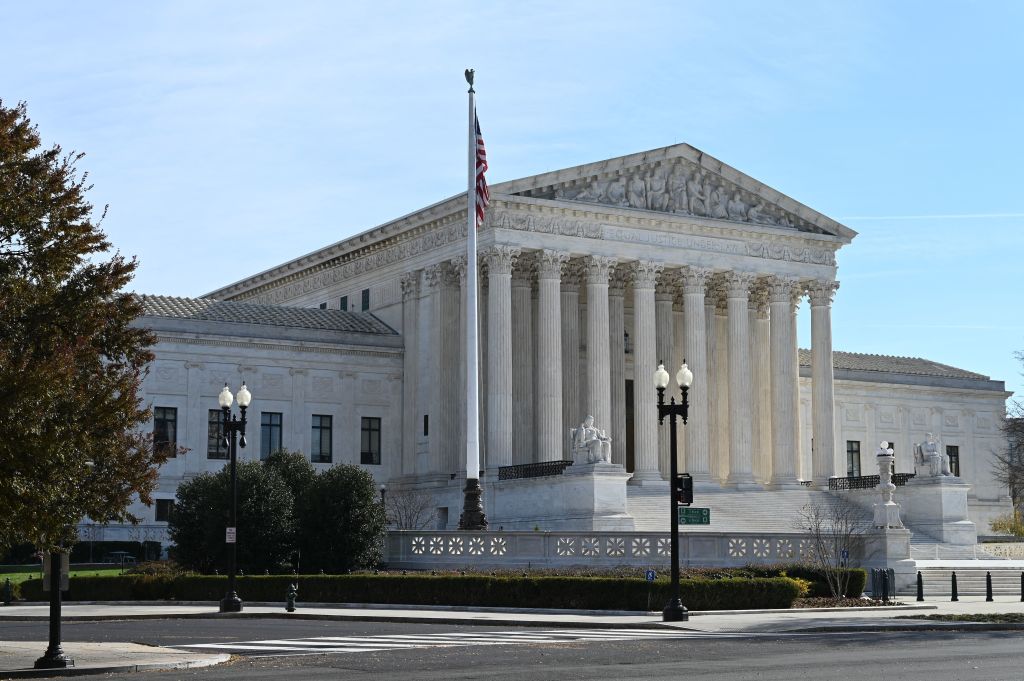
The Supreme Court will kick off its March argument session by hearing a case that could have major implications for the 2026 elections and beyond. In Watson v. Republican National Committee, the justices will decide whether federal law requires not only that voters cast their ballots by Election Day, but also that election officials receive the ballots by then. If the justices agree that it does, laws in more than a dozen states could be upended.
The Constitution provides that “[t]he Times, Places and Manner of holding Elections for Senators and Representatives, shall be prescribed in each State by the Legislature thereof; but the Congress may at any time by Law make or alter such Regulations.” In 1845, Congress – which has the power to determine when the president is elected – chose the Tuesday after the first Monday in November as “election day,” and in 1872 it directed that congressional elections should occur on this day, as well.
In 2020, in response to the COVID-19 pandemic, Mississippi changed its election laws to allow mail-in ballots to be counted as long as they were postmarked by, and then received within five business days of, Election Day.
In 2024, the Republican National Committee and the Mississippi Republican Party, along with a Mississippi voter and a county election official, went to federal court to challenge the post-election ballot deadline; the Libertarian Party of Mississippi filed a similar lawsuit a few weeks later, which was combined with the first suit. The challengers contended that the Mississippi law conflicted with the federal law setting the Tuesday after the first Monday in November as the “election day.”
Senior U.S. District Judge Louis Guirola, Jr., upheld the law. He wrote that “Congress set a national election day to avoid the ‘evils’ of burdening citizens with multiple election days and of risking undue influence upon voters in one state from the announced tallies in states voting earlier. Neither of those concerns,” he concluded, “is raised by allowing a reasonable interval for ballots cast and postmarked by election day to arrive by mail.”
The U.S. Court of Appeals for the 5th Circuit reversed. A three-judge panel made up of Judges James Ho, Kyle Duncan, and Andrew Oldham ruled that federal law requires all ballots to be received by Election Day. Over a dissent by five judges, the full court of appeals turned down Mississippi’s plea to rehear the case, and the Supreme Court agreed in November to weigh in.
In its brief on the merits, Mississippi argued that, for purposes of the federal law, an “election” occurs when voters cast their ballots and choose the candidate that they want to serve in office, and an election does not hinge on when election officials receive those ballots, just as it does not depend on when officials count the ballots.
The Supreme Court’s 2020 ruling in Republican National Committee v. Democratic National Committee, Mississippi wrote, “reinforces that ballot receipt is not part of an election.” In its ruling on the interim docket, Mississippi said, the court blocked a lower-court order that would have allowed ballots to be mailed after Wisconsin’s primary election day. In doing so, Mississippi emphasized, the court distinguished between “the date by which ballots may be … received” by election officials and the date by which they must be cast by voters, thereby acknowledging that the latter is “‘fundamental[]’ to voting and thus to the election itself,” while the former is not.
Mississippi contended that its interpretation is also supported by the history of the federal law establishing a uniform Election Day. Congress enacted the statute, the state said, “to address problems from States holding elections on different days” – for example, the voter fraud that resulted when people were able to vote in more than one state, or the burden created when voters were required to come to the polls on two separate days to vote for president and members of Congress. “Congress was not addressing or deciding an issue of ballot receipt” when it passed the law, Mississippi insisted.
If the 5th Circuit were correct that federal law requires ballots to be received by Election Day, Mississippi cautioned, it would “override countless state laws from the past 165 years and largely require citizens to vote in person, on election day, in their home districts, without the secret-ballot system.” “Congress,” Mississippi concluded, “did not impose the destabilizing revolution in election administration that the ruling below would require.”
A “friend of the court” brief supporting Mississippi, filed by several “individuals and organizations representing military and overseas voters,” warned the justices that a ruling that upholds the 5th Circuit’s decision could disproportionately affect members of the military and their families. There are almost 4 million service members who are stationed overseas or outside their home state, the brief said. Those service members, along with their families and others who live overseas, “encounter time-consuming challenges to register to vote, obtain absentee ballots, and return those ballots,” the brief reported.
A brief from the League of United Latin American Citizens echoed the military groups’ concerns. LULAC told the justices that many of its members “vote by mail because they live in rural communities, are elderly or disabled, wish to avoid in-person intimidation at the polling place, are students, or are members of the military.” “Without a post-Election Day receipt window,” LULAC contended, “many of those ballots will predictably miss the deadline.” This is especially likely to happen, LULAC stressed, in light of “[r]ecent changes to the United States Postal Service” that could result in ballots missing the receipt deadline.
The challengers countered that, under federal law, an “election” occurs when ballots are both submitted and received and that, as a result, laws like Mississippi’s that allow ballots to be counted after the date set by Congress are invalid. They pointed to the Supreme Court’s 1997 decision in Foster v. Love, in which the justices ruled that Louisiana’s “open primary” system, which held elections for Congress in October that effectively ended such contests before November, conflicted with federal law. “When the federal statutes speak of ‘the election’ of a Senator or Representative,” Justice David Souter wrote for a unanimous court, “they plainly refer to the combined actions of voters and officials meant to make a final selection of an officeholder.”
One challenger, the Libertarian Party of Mississippi, told the justices that the state’s “counterintuitive distinction” between when a voter completes and submits a ballot and when the ballot is received “would have struck the 19th-century public as bizarre” because, at that time, “virtually all ballots were marked, submitted, received, and deposited at polling stations in a matter of moments.”
The Libertarian Party added that the entire purpose “of the federal Election-Day statutes is to set a single uniform day for the election. Allowing ballots to trickle in days or weeks” later, it said, “is antithetical to that basic goal.”
Another set of challengers, the Republican National Committee and the Republican Party of Mississippi, argued that the court’s decision in Republican National Committee v. Democratic National Committee does not help the state. Because that case, the Republicans said, arose from Wisconsin’s presidential primary in 2020, the federal Election-Day statutes “were not even implicated.” But in any event, they continued, the issue in that case was whether voters could mail their ballots after Election Day, not whether the ballots could be counted if they were received after Election Day.
The Trump administration, which filed a “friend of the court” brief supporting the challengers, pushed back against an argument made primarily by the veterans’ groups that had joined the lawsuit to defend the Mississippi law – specifically, that federal laws incorporating state-law deadlines for receiving the ballots of overseas service members confirm that Congress did not intend to require all ballots to be received by Election Day. Such “narrow exceptions,” U.S. Solicitor General D. John Sauer wrote, “do not redefine the general rule” but instead simply “relaxed the federal deadline for a cabined class of voters.”
A group of nine states, led by Montana, filed a “friend of the court” brief in which they too urged the justices to uphold the 5th Circuit’s decision. They assured the court that, contrary to the arguments made by groups like LULAC, “[r]equiring mail-in ballots to arrive by Election Day poses no real hardship for absentee voters. The Postal Service delivers the vast majority of absentee ballots extremely quickly.” Moreover, the states said, “there must be a final deadline, and some voters will ultimately miss” it. “But announcing the deadline on [a] specific day in November,” the states suggested, “will make it more likely that voters meet it.”
Posted in Court News, Merits Cases
Cases: Watson v. Republican National Committee (Election Law)