The anticipated criminal law decisions and arguments for the rest of this term

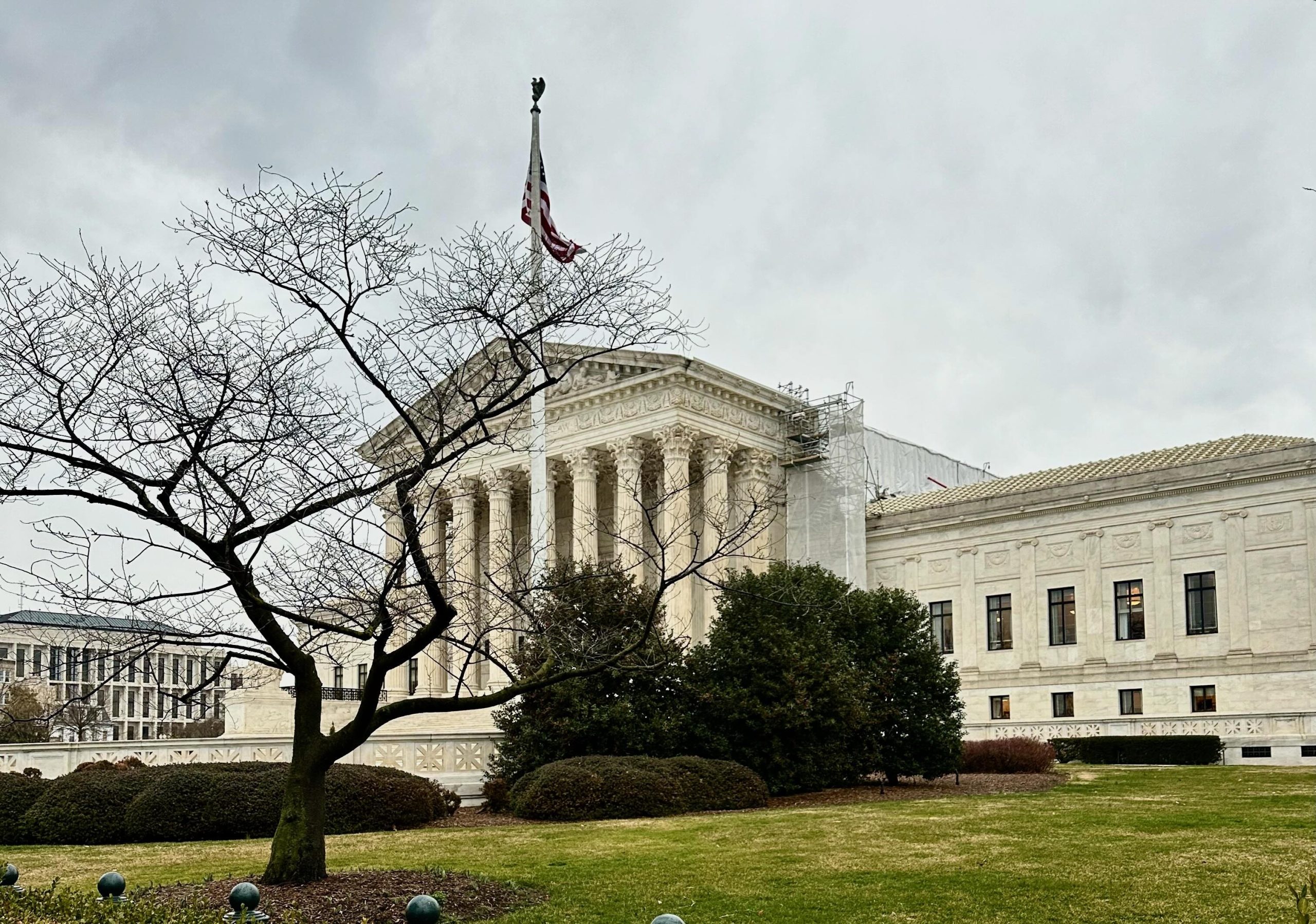
ScotusCrim is a recurring series by Rory Little focusing on intersections between the Supreme Court and criminal law.
Today’s column is my busman’s holiday project: providing nerd-like numbers and information focused solely on Supreme Court cases that address criminal law issues.
This is especially relevant given that the court has now posted its calendar for the final argument session of the 2025-26 term, with oral arguments to take place from April 20-29. And the court will also begin issuing more “headline” opinions this coming Friday. Aside from boring civil cases like birthright citizenship or firing a governor of the Federal Reserve 😀, we are awaiting some big criminal law decisions. And some hugely significant criminal law cases still have oral arguments upcoming (there will be three two-week oral argument sessions at the end of February, March, and April).
By my count, of the 23 cases set for argument over the next two months, five of the cases (22%) are “pure” criminal law, while another six cases are what I categorize as related to criminal law. This is about average: as I summarize for the American Bar Association every August, a substantial percentage of cases that the court hears every term are CLAR (“criminal law and related”). This year it will be over 50%; by my characterization, about 29 of the 57 cases that will be argued this term (34 already argued and 23 still to come) are CLAR.
Argued criminal law cases whose decisions we are now awaiting
The Supreme Court’s published decisions tend to come out – but not always – roughly in the order they have been argued. That is, published decisions in cases argued earliest in the term tend to come sooner (even if still months after their fall arguments – remember, the term officially starts in October and by tradition all argued cases are decided by the end of June or early July). Cases argued last fall were briefly summarized in my argument previews for October, November and December.
By this uncertain measure, a decision in Villareal v. Texas could be coming this Friday. The case was argued back on Oct. 6 and was the first criminal law case argued this term. The question is how far a trial judge can go in ordering a defendant who is in the middle of testifying not to discuss his testimony during an overnight recess, without infringing the defendant’s Sixth Amendment right to the assistance of counsel. Although it is not common for criminal defendants to take the stand – and the Fifth Amendment states they do not have to – this decision will have significant implications for criminal litigators at every level.
Three criminal law sentencing cases that were argued last fall also await decision. Fernandez v. United States and Rutherford v. United States present important, and slightly different, questions for application of the federal First Step Act, a statute permitting an early “compassionate release” for inmates in some cases, enacted under the first Trump administration. I’d expect these decisions to be issued at the same time. Meanwhile, Rico v. United States presents an interesting question about whether time periods should be excluded from statutory limitations periods when a defendant has “absconded” from parole or other non-prison supervision. These three sentencing cases also seem like good candidates for this Friday’s opinion session.
But perhaps the most significant criminal case still awaiting decision from last fall is Hamm v. Smith, argued on Dec. 10. The issue there is how lower courts should evaluate whether a defendant sentenced to death has a mental disability that immunizes him, under the Eighth Amendment and Atkins v. Virginia, from execution. Changes in the court’s membership since Atkins was decided in 2002 could signal, as Jordan Steiker has explained on SCOTUSblog, “a major inflection point in the court’s death penalty jurisprudence,” even as death sentence verdicts (but not executions) appear to be declining. This decision could be issued soon, but might also be the kind of hotly disputed “blockbuster” decision that the court seems to hold (without saying so) until near the end of the term.
(There are other significant criminal-law-and-related cases argued more recently and still awaiting decision, such as the “fear of persecution” immigration case of Urias-Orellana v. Bondi. Those cases will have to await a future column.)
Upcoming spring arguments in criminal cases
Now I will give brief previews of five “pure” criminal law cases scheduled for argument over the next two months. Another six cases are related to criminal law – such as two cases that will be important, as Kelsey Dallas has explained, for the current deportation “surges” against undocumented immigrants – but space requires that I hold off more than a brief mention of them here. (For those interested, those two immigration cases are Noem v. Al Otro Lado, scheduled for argument on March 24, and Bondi v. Lau, scheduled for argument on April 22.)
We begin with United States v. Hemani, which will be argued on March 2, and is an important Second Amendment case. Hemani requires analysis of a long-standing federal statute that criminalizes, among many other things, firearm possession by anyone “who is an unlawful user of or addicted to any controlled substance.” As I explained in my mid-term update last month, the parties still appear to dispute whether Hemani’s prosecution (and this case) under that specific statutory provision applies only to his regular marijuana use, or to all controlled substances. The government also seeks to have the court interpret the statute, non-textually, as limited in application to only “habitual” users. Oral argument will likely involve a broad-ranging discussion of how the court’s recent Second Amendment “history and tradition” theory should play out in this case-specific context. And Hemani is one of two important Second Amendment cases pending this term, the other being Wolford v. Lopez, addressing a Hawaii state law, that was argued last month.
Hunter v. United States is scheduled for argument the next day, March 3. As professors Nancy King and Michael O’Neill explained two decades ago, appellate review of criminal sentences has become common over the past 50 years, as “the glue” to hold together determinate (that is, largely non-discretionary) criminal sentencing “guidelines” systems. In other words, appellate review of criminal sentences expanded to help ensure consistency between different judges and jurisdictions for sentences imposed on similar criminal offenders.
However, given the largely unequal bargaining power between prosecutors and charged defendants, prosecutors soon began to require broad “appeal waivers” from defendants in plea bargains; that is, defendants are now commonly required to agree that they will not file an appeal of their conviction, saving the government resources in exchange for less severe charges or sentences. Hunter presents questions of how to interpret and apply such waivers. (In 2017, the American Bar Association adopted some detailed guidelines for prosectors and defense attorneys on the subject.)
In Hunter, the government seeks a “no exceptions whatsoever” interpretation, even when the sentencing judge later says “you have a right to appeal” (as Federal Rule of Criminal Procedure 32(j)(1) is often read – or misread? – to require judges to do). In contrast, Hunter argues that standard contract-interpretation doctrine supports exceptions to such waivers in unanticipated situations, and that in any case if the prosecutor does not object to a “you have a right to appeal” judicial statement then the government has waived reliance on the prior appeal waiver. Lisa Blatt, representing Hunter, argues with characteristic flourish that “making even the most egregious punishments categorically unreviewable does our legal system a disservice.”
This case is especially pertinent because a multitude of “splits” about how to interpret and apply criminal appeal waivers have developed among the various federal circuit courts. A divided Supreme Court has previously noted the practice of appeal waivers in the 2019 case of Garza v. Idaho, but split 6-3 as to the meaning of broad appeal waivers. Specifically, the majority wrote that “no appeal waiver serves as an absolute bar to all appellate claims” – though Justices Clarence Thomas, Samuel Alito and Neil Gorsuch vehemently disagreed. Hunter thus presents yet another instance of deciding whether recent changes in the court’s membership will shift the meaning of precedent. I expect this oral argument to be full of heat – and hopefully some light.
Abouammo v. United States is scheduled for argument on March 30. Section 2 of Article III of the Constitution provides that “[t]he Trial of all Crimes … shall be held in the State where the said Crimes have been committed.” Similarly, the Sixth Amendment’s “vicinage clause” says that “in all criminal prosecutions,” the “trial” shall be by a jury “of the State and district wherein the crime shall have been committed.”
In this case, Amhad Abouammo emailed false documents from his home in Washington state to FBI agents he knew were from San Francisco. Although Abouammo’s conduct occurred in the district of Washington, he was tried in a California federal court. In affirming Abouammo’s conviction, the U.S. Court of Appeals for the 9th Circuit said that the place where the “contemplate[d] … effect” of a crime will be felt suffices to establish constitutional venue.
This case may seem relatively technical, but it appears to invoke substantial questions of constitutional interpretation. Abouammo argues that the text, the Framers’ understanding, and the history of the Constitutional provisions at issue all require that federal criminal venue be restricted to one’s physical location. The solicitor general has not yet filed its responsive brief, but in opposing review argued that it is well-settled that “continuing offenses” can be “committed” in more than one district, and that this doctrine should apply to the contemplated effects of the specific obstruction of justice statute here. Perhaps minds in 1790 contemplated only physical locations, but the court has had to deal with technology stretching physical boundaries in the past (and will again, see Chatrie discussed below). A more detailed “history and tradition” brief should be filed by the government soon.
The day after the Abouammo argument, on March 31, the court is scheduled to hear argument in Pitchford v. Cain. In the 1986 case of Batson v. Kentucky, the court ruled that striking potential jurors based on their race is unconstitutional. Pitchford involves a complex and “fact intensive” application of that doctrine, under the highly deferential layer of federal court deference to state court criminal judgments required by the Anti-terrorism and Effective Death Penalty Act (commonly referred to as AEDPA, pronounced “ed-pah” or “ah-dee-pah”). The court has reduced the questions presented in this case to one: was the Mississippi Supreme Court’s decision that Terry Pitchford waived his right to challenge the prosecutor’s reasons for striking four black jurors unreasonable?
Pitchford is a black man on Mississippi’s death row. The state trial prosecutor was the same prosecutor found responsible in the 2019 case of Flowers v. Mississippi for “a blatant pattern of striking potential black jurors,” a fact that Pitchford’s brief highlights. The Flowers case, however, came to the court directly from the Mississippi Supreme Court. By contrast, Pitchford’s case is before the court on review of a federal court decision on Pitchford’s habeas corpus petition after the Mississippi state courts all denied Pitchford’s Batson claim. In that context, AEDPA requires more deference to the Mississippi ruling than was true in Flowers: habeas corpus relief “shall not be granted … unless” the applicable caselaw was “clearly established” and the Mississippi court’s decision was so “unreasonable” that “fairminded jurists” could not disagree. (The non-textual “fairminded jurist” interpretation for AEDPA deference was announced in the 2011 case of Harrington v. Richter in 2011 and has been the subject of much attention and criticism). Another difference from Flowers may be that the “law” that initially must be applied here may be the law of “waiver,” rather than the Batson standards directly. On the other hand, the factual Batson record that Pitchford offers is disturbing. Mississippi’s brief in opposition has not yet been filed; there is also a chance that the solicitor general may seek to intervene as an amicus.
Also of note: The petition asking the Supreme Court to review the Pitchford case was relisted eight times before review here was granted. The practice of multiple relistings – that is, placing a review request on the court’s private discussion agenda multiple weeks in a row – is subject to many possible interpretations, and has gone unexplained by the justices. The Pitchford case might have been suggested by some justices for summary reversal; that is, overturning a lower court opinion without briefing or oral argument – but who knows in which direction? The ultimate decision to review the case with full briefing and oral argument might have been a way to resolve (temporarily) deep internal disagreements. Meanwhile, among others, the late Judge Stephen Reinhardt (once called “the liberal lion of the 9th Circuit”) suggested in 2015 that Harrington deference “taken literally … would mean that a federal court could never grant habeas relief.” The Pitchford argument, and the court’s resulting decision, will likely demonstrate various justices’ thinking and stark disagreements about that claim.
Finally, on the penultimate argument day of this term, April 27, Chatrie v. United States is scheduled for oral argument. Chatrie presents what could be a hugely important Fourth Amendment case. The issue is how to apply that 1790 amendment to a modern technological development called “geofence” warrants. Specifically, these are judicially approved orders issued at the request of law enforcement to companies that store cellphone records (in this case, Google), asking them to review the location data records they maintain for millions of customers and, ultimately, identify by name (“deanonymized” is the government’s euphemism) those customers who were present in a particular location on a particular day and time. Such specific location data can then be used – along with other information – to find persons possibly involved in a crime where the day, time, and location are known but the criminal perpetrator is not. Indeed, that is what happened to Okello Chatrie, who after being identified and then further investigated, was convicted of federal armed robbery and firearm brandishing and sentenced to over 11 years in prison.
The further we live from the time of the Constitution’s framers, the more challenging becomes applying their words to unforeseen changes. But as Chief Justice John Marshall explained two centuries ago in McCullough v. Maryland, the constitutional authors intended that the document “endure for ages to come” and “be adapted” to address unforeseen situations. Thus (as I suggest to my students every year), original intent requires an adaptive Constitution. In Chatrie, the court has granted review over the solicitor general’s opposition, and expressly limited the question to be argued solely to the Fourth Amendment, which succinctly protects “[t]he right of … people to be secure in their persons, houses, papers, and effects.” The question is how these words can be applied to people’s electronically-compiled cellphone location data.
The court has previously ruled on Fourth Amendment limitations for telephone wiretaps, surveillance by airplanes, and thermal heat imagers (despite the Framers failure to mention them). In 2018, in Carpenter v. United States, the court recognized the privacy-threatening implications of “pervasive” cellphone use and ruled that government acquisition of cellphone location data was a “search.” But technology continues to evolve at lightning speed and lower courts have now taken different positions regarding geofence searches. The court granted review here over the solicitor general’s opposition – apparently the justices have decided to try to keep up with things.
As Adam Unikowsky wrote in a brief requesting review for Chatrie, “[t]he law enforcement benefits of geofence warrants are obvious, but so too are the privacy implications and potential for abuse.” Is an “anonymized” search of millions of people records a “general warrant” of the type that the Framers clearly opposed? Do such warrants lack the sort of “particularity” that the Fourt Amendment requires? Do other types of mass searches of electronic databanks require warrants at all, and if so, what rules apply?
The parties have not yet filed their briefs on the merits, but this seems like an oral argument that not just criminal law groupies, but also technology company executives at the highest level, will not want to miss.
The court is beginning to fill its docket for next term
In closing, it should also be noted that the court has granted review in two more cases, without scheduling them for oral argument this term. It is very likely that these cases will be scheduled for argument at the beginning of the 2026-27 term next October. Fortunately for me, neither case appears to involve criminal law issues (although the Video Privacy Protection Act case – which is at the heart of one of them – might well be described as criminal law adjacent). The Supreme Court’s docket, like a river, keeps on flowing – I’ll keep reporting on it as long as I can swim.
Posted in Recurring Columns, ScotusCrim
Cases: Wolford v. Lopez, Rico v. United States, Hunter v. United States, United States v. Hemani, Fernandez v. United States, Villarreal v. Texas, Pitchford v. Cain, Urias-Orellana v. Bondi, Rutherford v. United States, Hamm v. Smith (Capital Punishment), Chatrie v. United States, Bondi v. Lau, Noem v. Al Otro Lado, Abouammo v. United States