SCOTUStoday for Monday, February 2


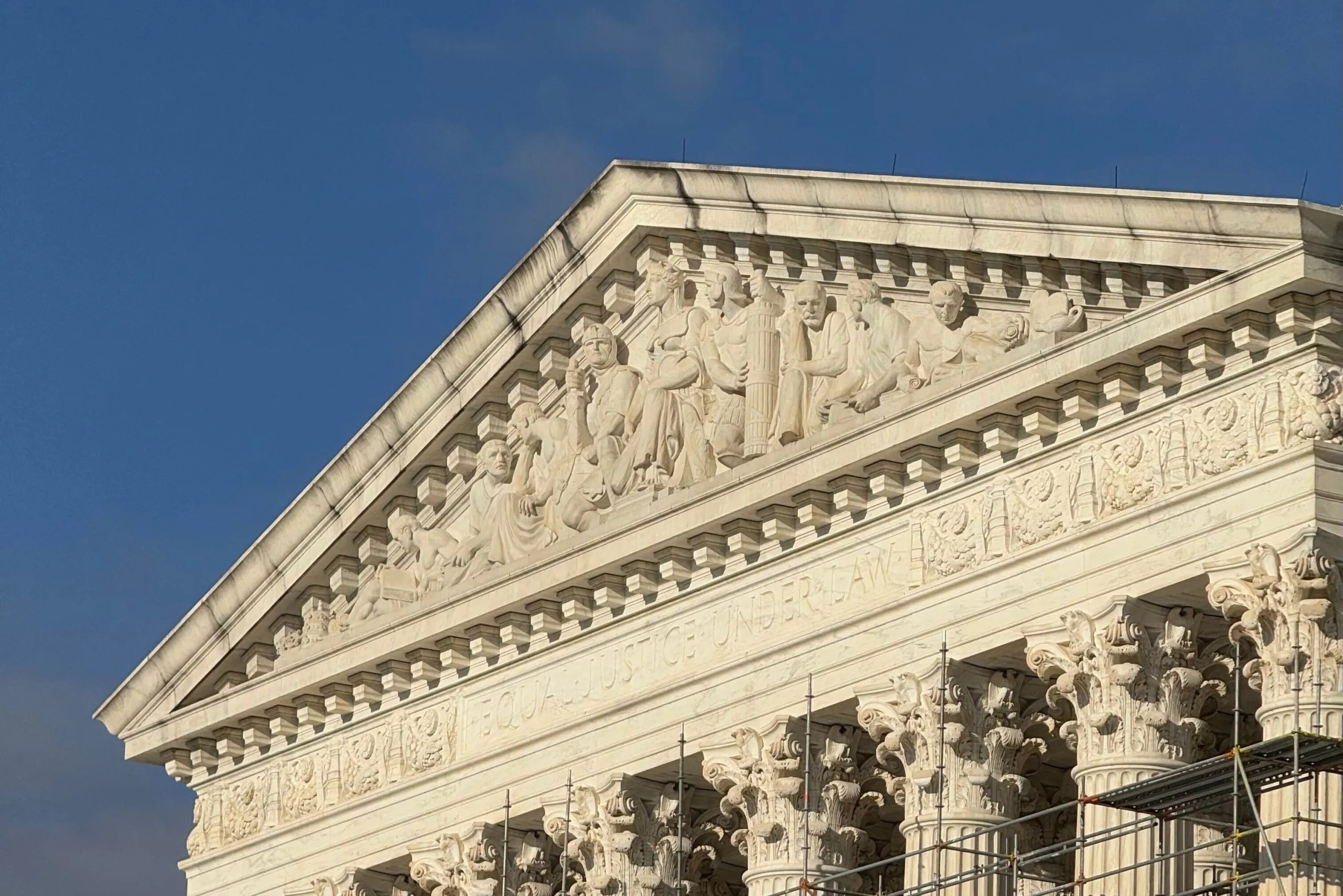
Saturday marked 20 years since Justice Samuel Alito took his seat on the Supreme Court. The question of whether Alito might retire came up often at the end of last term, but President Donald Trump said in December that he hopes Alito remains on the court.
SCOTUS Quick Hits
- On Friday, the court announced what cases it will hear during its March argument session, which will take place from March 23-25 and then from March 30-April 1. Oral argument in the birthright citizenship case, Trump v. Barbara, is scheduled for Wednesday, April 1. For more on the March schedule, see the On Site section below.
- On Jan. 20, a group of California Republicans asked the court on its interim docket to block the state from using its new map in this year’s elections. The case is now fully briefed, and the court’s decision could come at any time.
- The court could also rule at any time on an interim docket case on California’s policies regarding parental notification when public school students choose to use different pronouns or a different gender identity.
- The court has not yet indicated when it will next release opinions. If the court follows its typical pattern, the earliest the next opinion day may be is Friday, Feb. 20, when the justices are next scheduled to be in the courtroom.
- The court will next hear arguments on Monday, Feb. 23, the first day of its February sitting.
Morning Reads
- At the Supreme Court, a Stark Drop in Appeals From the Poor (Jimmy Hoover, The National Law Journal)(Paywall) — New research shows that “[a]ppeals from ‘indigent,’ or poor, litigants have fallen precipitously over the past several Supreme Court terms,” and legal experts aren’t sure what’s driving the trend, according to The National Law Journal. “In its most recent term, the court received around 2,500 appeals from indigent petitioners. That’s just under half of the number of indigent appeals from six years ago, and about a third of the number filed two decades ago, according to U.S. Supreme Court data.” The political scientists behind the new research noted that the drop in these filings was “‘much starker’ than a corresponding decrease in filings from paying petitioners.”
- DOJ misconduct complaint against D.C. federal judge dismissed (Salvador Rizzo, The Washington Post)(Paywall) — A misconduct complaint filed last year by Attorney General Pam Bondi’s former chief of staff, Chad Mizelle, “against Chief U.S. District Judge James E. Boasberg of D.C. has been dismissed because the Justice Department failed to show that he exhibited bias against the Trump administration,” according to The Washington Post. “Mizelle … alleged that Boasberg made inappropriate comments about” the potential for the Trump administration to “defy court orders and touch off a constitutional crisis” while “at a working breakfast hosted by Chief Justice John G. Roberts Jr. during a policymaking conference for the federal judiciary last March.” “The complaint was initially submitted to” the U.S. Court of Appeals for the District of Columbia Circuit, but Roberts transferred it to Chief Judge Jeffrey S. Sutton of the U.S. Court of Appeals for the 6th Circuit. In his decision, Sutton “said a federal appeals court asked the Justice Department to provide evidence of what Boasberg said in the closed-door meeting but did not receive it.”
- Conservatives Launch New Plan To Overturn Gay Marriage in Supreme Court (Jenna Sundel, Newsweek) — A coalition of family-focused advocacy groups, faith leaders, and policymakers has launched the “Greater Than Campaign,” a new effort to overturn Obergefell v. Hodges, the landmark Supreme Court decision that legalized same-sex marriage nationwide. The group contends that “[c]hildren need both a mother and a father” and “says it is ‘changing laws, reshaping culture, and calling America to rise up and protect every child,'” according to Newsweek. This fall, the Supreme Court considered a petition for review that invited the justices to revisit the Obergefell ruling, but the justices declined it on Nov. 10.
- Two former Solicitors General talk about myths and realities of the SG’s Office (NYU Law) — Former U.S. Solicitors General Elizabeth Prelogar and Noel Francisco spoke at NYU Law on Jan. 28 about their experiences serving in the role. “[A] recurring theme in the discussion was the balance that SGs must strike between vigorously advocating for the federal government and taking positions that maintain the credibility of their office,” according to the school’s coverage of the event. Prelogar and Francisco also addressed why they think it is valuable for the solicitor general to try to “model … civil discussion and civil debate,” as Francisco put it. He noted that, while working on controversial cases, he would “spen[d] a lot of time thinking about how … to describe the issues in a way that would take down the temperature.” Prelogar added that she feels “some of the most powerful advocacy can come from showing respect to the other side.”
- To Buckley v. Valeo: The Decision that Saved Democracy (Bradley A. Smith, Institute for Free Speech, The Volokh Conspiracy, Reason) — Reason’s Volokh Conspiracy blog cross-posted Bradley A. Smith’s essay for the Institute for Free Speech on Buckley v. Valeo, a case in which the court held that certain limits on political campaign contributions violate free speech. Smith argued that the decision “saved American democracy.” He wrote, “Americans understandably chafe at the ability of the rich to buy a bigger megaphone than anyone else. But the alternative, the Court understood, is not political equality, but rather leaving it to the central government to decide just who had too much influence, and who not enough.” Smith’s essay was part of the Institute’s symposium marking 50 years since the Buckley ruling was handed down.
A Closer Look: In-Chambers Opinions
These days, the Supreme Court’s interim relief docket (also known as its emergency docket) is regularly in the news. But the prominence of this docket is a relatively new phenomenon. At other times in the court’s history, it was more common for the justices to write what are referred to as in-chambers opinions.
In-chambers opinions are penned by a single justice (generally in their capacity as circuit justice) when acting on an application for interim relief (such as a stay or injunction). This opinion speaks for the entire court, which explains why certain important applications – or those that pose a particularly complex question – are typically referred to the full court for review. If an individual justice denies the application, a party may then present the application to another justice – although this is not favored unless the initial denial was without prejudice (that is, it constitutes a final dismissal). That said, when an application is renewed to another justice after denial, it has become standard practice for the application to be referred to the entire court for review.
So how does the process actually work? Today, when a party wants to petition an individual justice for interim relief, Rule 22 of the Supreme Court Rules indicates that they file the application with the clerk who will then direct it to the correct justice. But if we look back a century, things were not quite that simple. If a lawyer wanted to ask a justice to grant relief (and quickly) they might need to go to the justice’s home (since the justices did not have office space at the court when it was located in the Capitol). To assist in this process, at one point the marshal of the court even made a contact card with the residences of each justice listed.
While in-chambers opinions are much less common today, we still see them occasionally. In March 2024, Chief Justice John Roberts, in a single paragraph, denied an application for release pending appeal in Navarro v. United States, which dealt with whether a defendant had forfeited arguments regarding executive privilege in his release proceeding. (Roberts made clear that this opinion was distinct from any determination in a separate appeal on the merits.)
It is not entirely clear why in-chambers opinions have become so rare. But there are a few potential explanations. One may be that with the developments of technology, it is much easier for the justices to refer applications to the entire court when they are not in the same location. Another possibility is that the cases in which parties are asking for interim relief now involve certain high-stakes issues that the justices are not comfortable handling on their own. Ultimately, only the justices themselves know for sure why this practice has been disappearing and whether it might return – though it’s probably safe to say that contact cards won’t be making a comeback.
SCOTUS Quote
JUSTICE THOMAS: “The — let’s say that I’m both a Prince fan, which I was in the ’80s, and –”
(Laughter.)
JUSTICE KAGAN: “No longer?”
(Laughter.)
JUSTICE THOMAS: “Well –”
(Laughter.)
JUSTICE THOMAS: “– so only on Thursday nights.”
— Andy Warhol Foundation for the Visual Arts v. Goldsmith
On Site
From the SCOTUSblog Team
Supreme Court will hear birthright citizenship case on April 1
The Supreme Court will hear oral arguments on April 1 in the challenge to President Donald Trump’s efforts to end birthright citizenship – that is, the guarantee of citizenship to virtually everyone born in the United States. That case is one of eight cases scheduled during the court’s March argument session, which runs from March 23-25 and again from March 30-April 1.

The Supreme Court has (probably) chosen all the cases it will hear this term
Is the oral argument docket for the current term complete? Unless the court decides to take up and fast-track a high-profile or otherwise particularly urgent case, it seems likely. Here’s why.

SCOTUS Outside Opinions
Can traditionalism be originalist?
In a column for SCOTUSblog, Tal Fortgang explored the relationship between originalism and traditionalism, noting that certain originalists believe an analysis of continuous and widespread practices after a law’s passage should not be part of the pursuit of understanding a law’s original public meaning. Despite this pushback, originalism and traditionalism are compatible, as is demonstrated by the current court, Fortgang contended.

Posted in Featured, Newsletters