SCOTUStoday for Friday, February 13
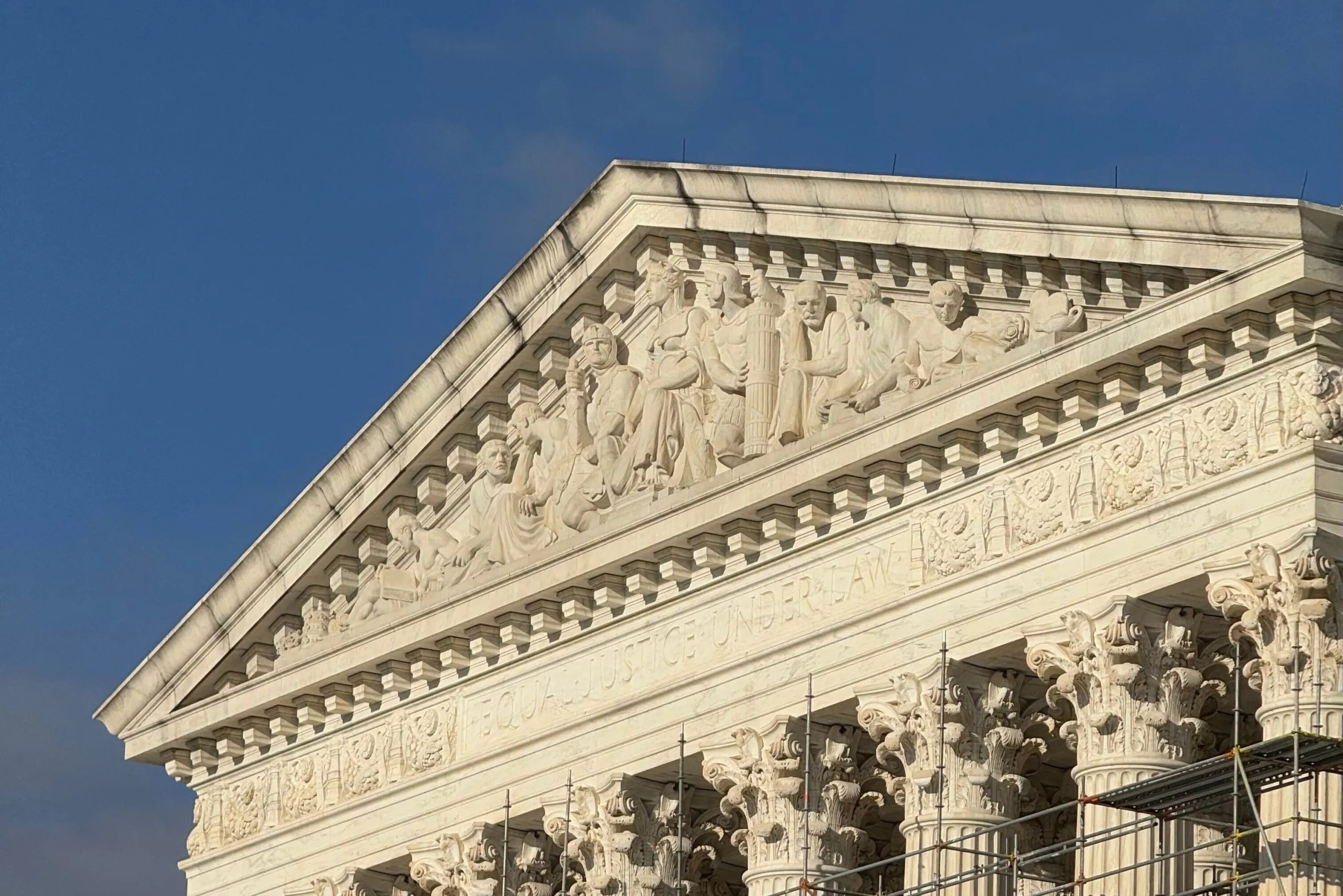
Today marks 10 years since Justice Antonin Scalia passed away at age 79.
A programming note: Monday is Presidents Day, and the court will be closed for the holiday. We will be sending an abridged edition of this newsletter.
SCOTUS Quick Hits
- The court could rule at any time on an interim docket case on California’s policies for parental notification if a student chooses to use different names or pronouns.
- The court has not yet indicated when it will next release opinions. If the court follows its typical pattern, the earliest the next opinion day may be is Friday, Feb. 20, when the justices are next scheduled to take the bench.
- The court will next hear arguments on Monday, Feb. 23, the first day of its February sitting.
Morning Reads
- AI brings Supreme Court decisions to life (Nina Totenberg, NPR) — When Northwestern University professor Jerry Goldman launched Oyez in the 1990s, it revolutionized people’s relationship to the Supreme Court, providing access to “audio of the court’s oral arguments and opinion announcements in every case decided by the Supreme Court dating back to 1955 when the court began taping its courtroom proceedings,” according to NPR. Now, Goldman and his team are using artificial intelligence to make the drama captured on the recordings “ever more real” by pairing the audio with avatars of the justices. “[B]y using photos and videos from the justices’ public appearances, they were able to create real-looking video versions of each justice and things like their mannerisms, head tilts and hand gestures.”
- Judge orders Trump administration to facilitate return of some Venezuelan migrants deported under Alien Enemies Act (Melissa Quinn and Jacob Rosen, CBS News) — U.S. District Judge James Boasberg “on Thursday ordered the Trump administration to facilitate the return of certain Venezuelan migrants who he found were unlawfully deported to a Salvadoran prison under the Alien Enemies Act last year and then released into other countries,” according to CBS News. His brief opinion noted “that the number of Venezuelans who would likely want to be returned to the U.S. to continue challenging their detentions and removals is small, and acknowledged that they will be taken into immigration custody upon their arrival.” Boasberg wrote that his order was in line with “a Supreme Court decision that required the Trump administration to facilitate the release of Kilmar Abrego Garcia from Salvadoran custody. A top immigration official had acknowledged that Abrego Garcia was mistakenly deported back to his home country of El Salvador.”
- National Guard troops were quietly withdrawn from some U.S. cities (Tara Copp and Alex Horton, The Washington Post)(Paywall) — Last month, the Trump administration quietly completed its removal of “all federalized National Guard troops from U.S. cities, after its repeated attempts to surge forces into Democratic-run states encountered judicial roadblocks,” according to The Washington Post. “The pullout was completed … with no public acknowledgment from the White House or the Pentagon other than a social media post weeks earlier in which President Donald Trump announced the troops’ removal.” The deployments to Los Angeles, Chicago, and Portland, Oregon, had prompted legal battles over Trump’s authority to federalize and deploy members of the National Guard. “In late December, the U.S. Supreme Court issued a temporary order blocking Trump from carrying out the Chicago deployment because, it said, the president’s ability to federalize the National Guard likely applies only in ‘exceptional’ circumstances.”
- On Trump’s Tariffs, Supreme Court Hurries Up and Waits (Adam Liptak, The New York Times)(Paywall) — In the first edition of his new newsletter for The New York Times, Adam Liptak reflected on the “endless chatter about when the justices will rule on President Trump’s tariffs program,” and why, despite the sense of urgency around the case, there “are reasons not to hold your breath for a decision any time soon,” including the fact that it’s “unlikely to be unanimous.” “That said,” Liptak continued, “the case was argued early in the term and on the expedited schedule, as urged by the president. Those are potentially reasons to expect prompt action.” The situation serves as a reminder that predictions about when a Supreme Court ruling will arrive rarely come true.
- RNC asks Supreme Court to take up Pennsylvania mail ballot fight (Zach Schonfeld, The Hill) — In a petition for review filed this week, the Republican National Committee asked the court “to reverse a ruling that requires Pennsylvania to count undated and misdated mail-in ballots,” according to The Hill. “At the center of the battle is a legal balancing test courts use to determine if a state’s election law unconstitutionally burdens a person’s right to vote. The RNC’s appeal urges the justices to rein in the test, saying lower judges are improperly intervening in election disputes.” In August, the U.S. Court of Appeals for the 3rd Circuit ruled against Pennsylvania election officials and the RNC, holding that “the state’s instruction to not count ballots that lack a proper date on the outer return envelope imposes an unconstitutional burden on Pennsylvanians’ right to vote.”
- Justice Jackson’s Tariff Tea Leaves (Dan McLaughlin, National Review)(Paywall) — In a column for the National Review, Dan McLaughlin revisited Justice Ketanji Brown Jackson’s Tuesday interview with “CBS Mornings,” during which she explained that “it takes a while to write” opinions after being asked why the tariffs ruling hadn’t yet been released. “On its face,” that answer “doesn’t give away anything about how the case is going,” McLaughlin noted, but he contended that it’s not the answer we “would expect if Jackson is boiling up to an angry dissent.” He wrote, “Jackson’s semi-non-answer looks to me like further confirmation that the people equating the deliberate pace of this decision with good news for Trump are grasping at straws.”
A Closer Look: Chief Justice Salmon P. Chase
Chief Justice Salmon P. Chase – not to be confused with Associate Justice Samuel Chase, who served on the court 53 years prior – is often overlooked, but not due to a lack of achievement: the sixth chief justice built an accomplished career as a lawyer, politician, and chief justice, all while being a passionate abolitionist.
Chase was born in New Hampshire in 1808, the year Congress put an end to the African slave trade. After his father died, Chase moved at age 12 to Ohio to live with his uncle, the Protestant Episcopal bishop of that state, in order to “ease the financial burden” on his mother.
Chase returned to his birth state of New Hampshire to attend Dartmouth, where he became involved in a religious revival movement and graduated at 18. Chase then moved to Washington, D.C., where he studied law under U.S. Attorney General William Wirt (who had been the prosecuting attorney in the Aaron Burr trial).
Following his admission to the bar at age 21, Chase moved to Cincinnati to establish his legal practice. It was there that Chase became a leading figure in the anti-slavery movement, having been “reawakened” to the teachings of his religious beliefs, and he soon became well-known for defending runaway slaves in court when their owners would seek their return under fugitive slave laws. From this opposition to slavery also came Chase’s support for states’ rights – Chase ardently opposed the Fugitive Slave Act, a federal law that effectively forced states to support the institution of slavery.
Believing the Constitution to be fundamentally anti-slavery, Chase led Ohio’s abolitionist Liberty Party – creating an antislavery coalition that would ultimately contribute to his U.S. Senate nomination in 1848, where Chase would serve one (six-year) term representing Ohio. Following this, he was elected as governor of Ohio in 1855; as governor, Chase supported anti-slavery actions, public education, prison reform, and women’s rights, and was reelected to the Senate in 1860 – but left his Senate seat after just two or three days to become Secretary of the Treasury, to which he was appointed by President Abraham Lincoln. (Chase had, not long before, competed with Lincoln for the Republican presidential nominee, but the more moderate Lincoln prevailed.)
Chase and Lincoln were opposites in many respects – indeed, according to one source they “were about as unlike in appearance, in education, manners, in taste, and temperament as two eminent men could be” – and Chase submitted his resignation twice. Nevertheless, Lincoln deeply admired Chase, stating that “Chase is about one and a half times bigger than any other man that I ever knew.”
As Secretary of the Treasury, Chase played a significant role in establishing a national banking system and was “instrumental in the Union war effort.” He implemented the circulation of paper money, later called greenbacks, as legal tender – before he later ruled it unconstitutional. (Chase is also known for putting the term “In God We Trust” on U.S. currency.) He created demand for Union war bonds by establishing a national banking system that required member banks to secure their note issues with government bonds.
Chase served as Treasury Secretary until 1864 when he resigned after a series of political and personal conflicts with Lincoln. A little under six months later, though, Chase was nominated by Lincoln to the position of chief justice following the death of Chief Justice Roger Taney.
Chase was confirmed in December 1864, and subsequently wrote the most majority opinions of the justices that term. Since he was responsible for riding circuit in Virginia, Chase was one of two judges who presided over Jefferson Davis’ trial for treason in 1867 (although the government dropped the charges in 1869).
As chief justice, Chase ruled in the 1868 case of Texas v. White that the “Constitution, in all its provisions, looks to an indestructible Union composed of indestructible States” and the Southern states had therefore never departed from the Union. Also in 1868, Chase attempted and failed in a presidential bid. He met the same fate in 1872 on a second run.
Sometimes deemed his “most celebrated involvement in Reconstruction,” Chase presided over the 1868 impeachment trial of President Andrew Johnson. (Chase’s role here was referenced in the lead up to the 2020 impeachment trial of President Donald Trump, presided over by Chief Justice John Roberts). Throughout the proceedings, Chase made sure the trial was conducted under formal judicial rules, not as a political contest, which angered some of his own in the Republican party who wanted to manage events. Chase also broke a procedural tie (his exertion of authority was upheld by the Senate) in favor of a longer trial. Johnson was ultimately acquitted by one vote.
Chase died at the age of 65 and was originally buried in Washington, D.C., but now lies in Cincinnati. Chase Bank was named in his honor and his image still appears on the $10,000 bill, although one may cost you upwards of $480,000.
SCOTUS Quote
MR. KULEWICZ: “Well, Your Honor, may I – may I push back with an alternative hypothetical?”
JUSTICE KAGAN: “No, definitely not.”
MR. KULEWICZ: “Okay. All right.”
— Justice Elena Kagan in Marietta Memorial Hospital v. Davita Inc.
On Site
From the SCOTUSblog Team
Immigration is in the spotlight at the Supreme Court – and not just because of President Trump
As the Trump administration’s immigration policies continue to dominate headlines, the justices are wrestling with four immigration-related questions, including, most notably, whether President Donald Trump has the authority to restrict access to birthright citizenship. Here’s a brief overview of the disputes.

Contributor Corner
Text, history, and party presentation
In her latest A Second Opinion column, Haley Proctor explored the party presentation principle, or the idea that parties control their case, including what claims they bring and what arguments they make, and that their choices potentially limit how courts may decide the case. The principle has implications for the realm of Second Amendment litigation and beyond, Proctor explained.

Posted in Featured, Newsletters