Supreme Court will hear birthright citizenship case on April 1

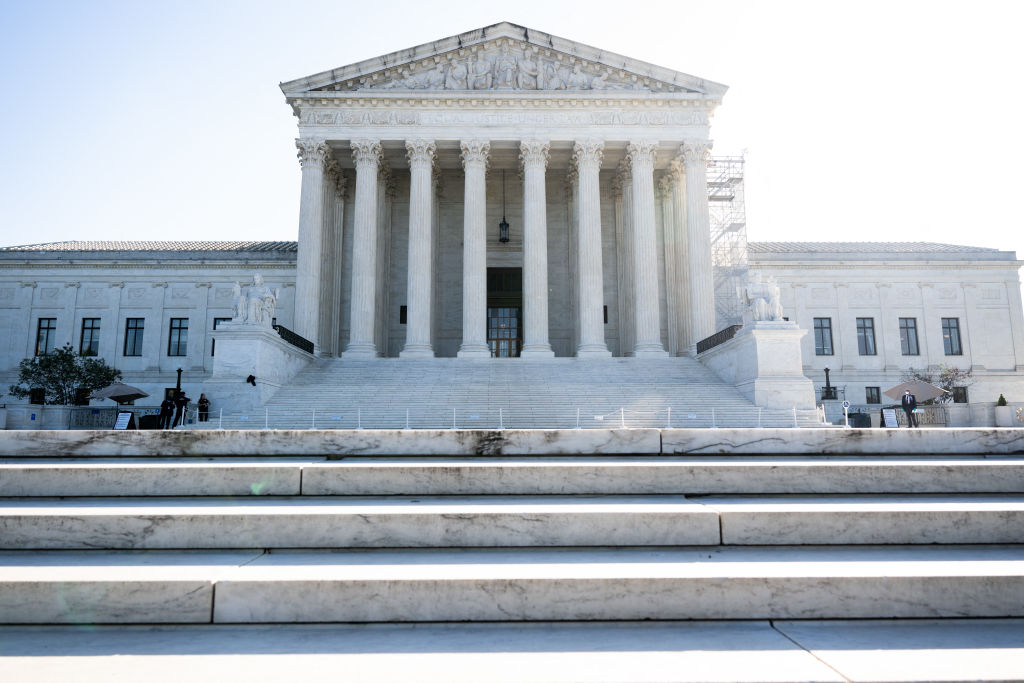
The Supreme Court will hear oral arguments on April 1 in the challenge to President Donald Trump’s efforts to end birthright citizenship – that is, the guarantee of citizenship to virtually everyone born in the United States. That case, Trump v. Barbara, is one of eight cases scheduled during the court’s March argument session, which runs from March 23-25 and again from March 30-April 1. The justices will also hear oral arguments in an important election law case, Watson v. Republican National Committee, on March 23.
Trump issued the executive order at the center of the birthright citizenship case on Jan. 20, 2025. The order, which has never gone into effect, would bar automatic citizenship for babies born in the United States if their parents are in this country either illegally or temporarily.
The challengers in the case contend that the order conflicts with both the Supreme Court’s longstanding case law and the text of the 14th Amendment to the Constitution, which provides that “[a]ll persons born or naturalized in the United States, and subject to the jurisdiction thereof, are citizens of the United States and of the State wherein they reside.”
The Trump administration counters that the citizenship clause of the 14th Amendment, which was added to the Constitution in 1868, was simply intended to ensure that formerly enslaved people and their children were U.S. citizens, rather than to provide the sweeping benefit that it confers today.
The April 1 argument will be the first time that the justices will officially consider the legality of Trump’s order. After several federal courts around the country blocked the government last year from enforcing the order, the Trump administration asked the court to weigh in on the power of federal district courts to issue orders – often known as “universal” or “nationwide” injunctions – that prohibit the government from implementing a law or policy anywhere in the country. The Supreme Court ruled in late June that federal judges generally cannot issue such orders.
After the court’s ruling on universal injunctions, lawsuits contesting the order continued in the lower courts, which once again ruled for the challengers. In Barbara, a federal judge in New Hampshire barred the government from enforcing the order against babies born on or after Feb. 20, 2025, when the order was slated to take effect, who are or would be denied citizenship under Trump’s order.
At the end of September, U.S. Solicitor General D. John Sauer came to the Supreme Court, asking the justices to review the ruling in Barbara as well as a decision by the U.S. Court of Appeals for the 9th Circuit deeming the order invalid. On Dec. 5, the court agreed to take up the Barbara case, and on Friday it set the case for argument on April 1. A decision is expected by late June or early July.
In Watson, the court will consider whether federal law requires ballots to be not only cast by voters by Election Day but also received by election officials by that day. The question comes to the court in a challenge to a Mississippi law, but 30 other states and the District of Columbia have similar laws.
The March argument schedule:
Watson v. Republican National Committee (March 23) – Whether federal laws setting the Tuesday after the first Monday in November in certain years as the “election” day for federal offices trump a state law that permits ballots that are cast by Election Day to be counted when election officials receive them after that day.
Keathley v. Buddy Ayers Construction, Inc. (March 24) – Whether someone who files for bankruptcy but does not disclose potential civil claims that they may be able to bring should be barred from filing those claims later, even if there is no evidence that they intended to mislead the bankruptcy court.
Noem v. Al Otro Lado (March 24) – Whether a non-citizen who is stopped on the Mexican side of the U.S.-Mexico border “arrives in the United States” for purposes of a federal immigration law providing that a non-citizen who “arrives in the United States” can apply for asylum and must be inspected by an immigration officer.
Flower Foods v. Brock (March 25) – Whether workers who deliver locally, without ever crossing state lines, are “transportation workers” “engaged in … interstate commerce” for purposes of an exemption from the Federal Arbitration Act for any “class of workers engaged in foreign or interstate commerce.”
Abouammo v. United States (March 30) – Whether a defendant can be prosecuted in federal court in a place where none of the conduct underlying the criminal charge occurred, as long as the provision of the law at the center of the case dealing with the defendant’s intent “contemplates” effects that could occur there.
Jules v. Andre Balazs Properties (March 30) – Whether a federal court that initially exercises jurisdiction and stays a case pending arbitration retains jurisdiction over an application to confirm or vacate an arbitration award in the same case, even if it wouldn’t otherwise have jurisdiction.
Pitchford v. Cain (March 31) – Whether a Mississippi man on death row forfeited his right to bring a jury discrimination claim when he had not offered any arguments to counter the race-neutral explanations that the prosecutor had offered for his strikes of four potential Black jurors.
Trump v. Barbara (April 1) – A challenge to the legality of Trump’s order ending birthright citizenship.
Posted in Court News, Featured, Merits Cases
Cases: Watson v. Republican National Committee (Election Law), Pitchford v. Cain, Flowers Foods, Inc. v. Brock, Trump v. Barbara (Birthright Citizenship), Noem v. Al Otro Lado, Abouammo v. United States, Keathley v. Buddy Ayers Construction, Inc., Jules v. Andre Balazs Properties