SCOTUStoday for Monday, January 5


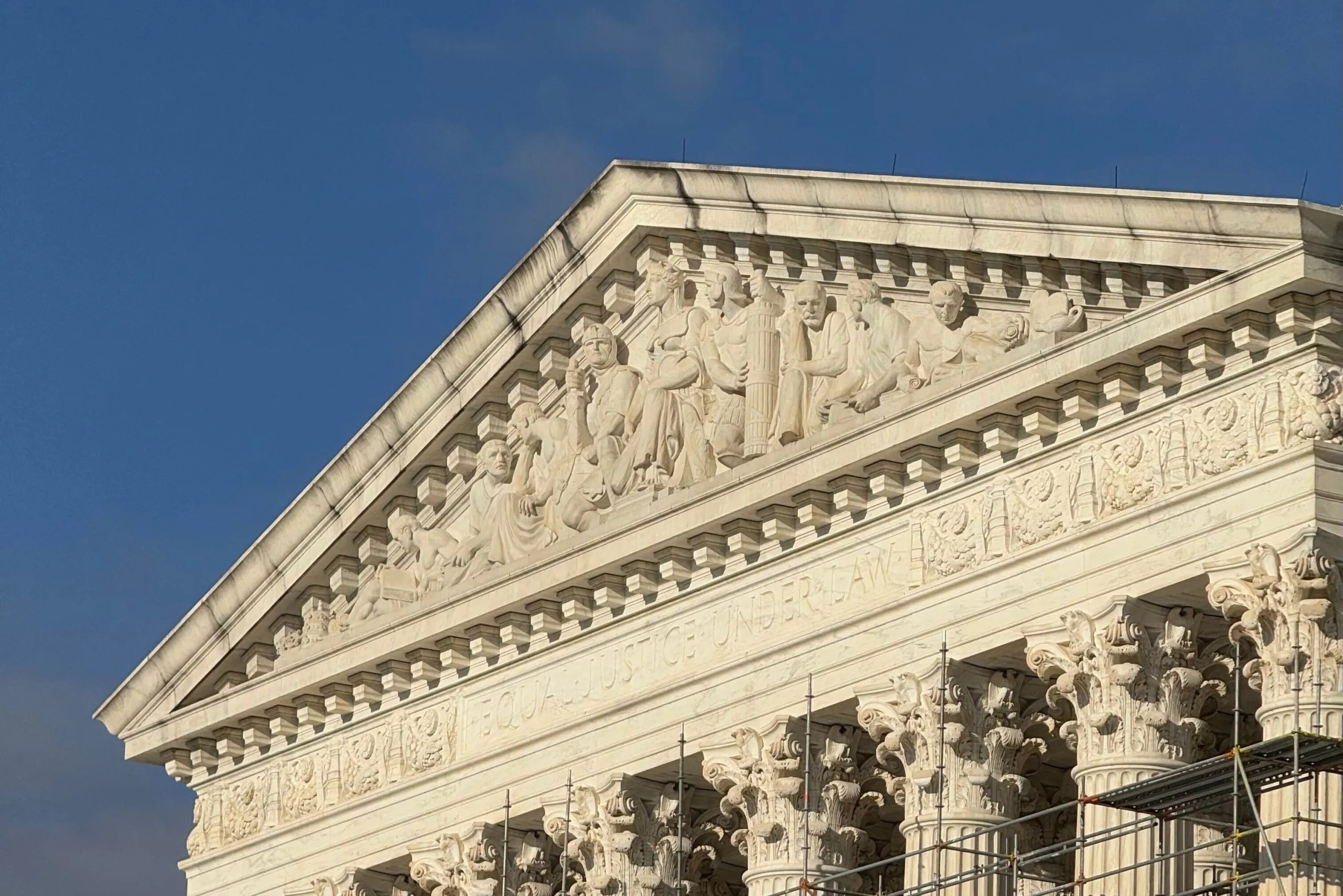
Good morning, and welcome to 2026! Here at SCOTUSblog, it now feels like we’re at the starting line of a marathon that won’t end until the Supreme Court takes its recess in June or July.
SCOTUS Quick Hits
- The court’s January argument session will begin in one week, on Monday, Jan. 12. The court will hear seven arguments over two weeks, including on transgender athletes; the latest chapter in the court’s gun rights jurisprudence; and President Donald Trump’s bid to remove Lisa Cook, a member of the Federal Reserve’s Board of Governors.
- On Friday, the court announced that it will hear arguments in seven cases during the February argument session, which will begin on Monday, Feb. 23, and end on Wednesday, March 4.
- On Wednesday, Dec. 31, Chief Justice John Roberts released a year-end report on the federal judiciary. To learn about what he said in it, see the On Site section below.
Morning Reads
- Can the U.S. Legally ‘Run’ Venezuela After Maduro’s Capture? Here’s What to Know (Charlie Savage, The New York Times)(Paywall) — U.S. troops’ “seizure of President Nicolás Maduro of Venezuela and President Trump’s declaration that the United States will ‘run the country’ for now raise a host of extraordinary legal issues,” according to The New York Times. Among them is a question of whether the United States has violated the United Nations Charter, a treaty ratified by the U.S. that outlines when a nation may use force in another country, and a question of whether Maduro, as a head of state, has immunity in U.S. courts. (“It is a longstanding principle of international law that heads of state have immunity in foreign courts.”) “[T]here is no definitive Supreme Court ruling on the U.N. Charter question,” but past cases do offer guidance on the second question. “Citing a 2015 Supreme Court precedent that says presidents have absolute authority to recognize foreign governments, Professor [Rebecca] Ingber predicted that ‘the Supreme Court will likely rule that Trump has the power to deny recognition to Maduro for the purpose of head of state immunity.'”
- Trump says he’s dropping push for National Guard in Chicago, LA and Portland, Oregon, for now (Michelle L. Price and Jaimie Ding, Associated Press) — Just over a week after the Supreme Court declined to clear the way for President Donald Trump to deploy the National Guard in Illinois, the president on Wednesday announced that he was “dropping — for now — his push to deploy National Guard troops in Chicago, Los Angeles and Portland, Oregon,” according to the Associated Press. “We will come back, perhaps in a much different and stronger form, when crime begins to soar again – Only a question of time!,” he wrote on social media. “Troops will remain on the ground in several other cities,” per the AP, including Washington, D.C., Memphis, and New Orleans, because those deployments rely on different bases than what was at issue in the Supreme Court case.
- Trump: Losing ability to issue tariffs would be ‘terrible blow’ to US national security (Max Rego, The Hill) — In a social media post on Friday, the president again warned the Supreme Court against interfering with his tariff agenda, according to The Hill. “Tariffs are an overwhelming benefit to our Nation, as they have been incredible for our National Security and Prosperity (like nobody has ever seen before!),” he wrote. “Losing our ability to Tariff other countries who treat us unfairly would be a terrible blow to the United States of America.”
- California ban on open carry of firearms ruled unconstitutional by appeals court (Clara Harter and Deborah Netburn, Los Angeles Times)(Paywall) — A three-judge panel of the U.S. Court of Appeals for the 9th Circuit ruled 2-1 on Friday that “California’s ban on the open carry of firearms in most parts of the state is unconstitutional,” according to the Los Angeles Times. Writing for the majority, Judge Lawrence VanDyke “stated that California’s urban ban on open-carry permits does not stand under the Supreme Court’s” 2022 ruling in New York State Rifle & Pistol Association Inc. v. Bruen, which “established a test for determining whether a state’s gun regulations violate the Constitution” that compares current regulations to regulations from the past. “The state had argued that changes in technology make modern handguns more dangerous, thereby justifying the open carry ban. But VanDyke said that line of reasoning had already been rejected by the Supreme Court, and was not relevant to the case.” California is expected to ask the full 9th Circuit to review the case.
- The Right-Wing Justices Know Their Favorite Legal Theory Is Bunk (Simon Lazarus, The New Republic) — In a column for The New Republic, Simon Lazarus explored the “unitary executive theory,” or the idea that the president should have authority over the entire executive branch, including multi-member federal agencies that were previously treated as independent. Lazarus contended that it is not grounded “in constitutional text and history.” In December’s oral argument in Trump v. Slaughter, he wrote, “the conservative justices seemed to reckon with the fact that recent scholarship had obliterated unitary executive theorists’ claims to an originalist birthright.”
- Religious Freedom in America Remains Strong, but Important Battles Lie Ahead (Mark Rienzi, National Review) — In a column for the National Review, Mark Rienzi, president and CEO of the Becket Fund for Religious Liberty, reflected on the Supreme Court’s rulings from the past year in Mahmoud v. Taylor, on whether religious parents can opt their kids out of public school lessons involving LGBTQ issues, and Catholic Charities Bureau v. Wisconsin Labor & Industry Review Commission, on the scope of a faith-based tax exemption, both of which were in favor of the religious plaintiffs. “As America prepares to celebrate her 250th year, 2025 left little doubt that our nation’s founding promise of religious freedom remains strong,” Rienzi wrote.
A Closer Look: Longest Serving Justices
Sworn in on Oct. 23, 1991, Justice Clarence Thomas is the fifth longest serving justice in the history of the Supreme Court and just two years shy of becoming the court’s longest serving justice of all time. As Thomas gets closer to breaking the record, we thought it would be an appropriate time to look at which three justices top this list.
Number one is William O. Douglas, who served on the court 36 years and 209 days, from 1939 to 1975. The end of his tenure was notable for reasons other than Douglas’ famously impassioned judicial opinions. On New Year’s Eve in 1974, Douglas suffered a stroke and became severely disabled. Despite this, he insisted on continuing to sit on the court – refusing to retire while a Republican president was in office. After Douglas began falling asleep during oral arguments, as well as mixing up facts and talking to aides about potential assassins, seven of the other justices agreed that no opinions would be assigned to him nor would his vote would be counted in any case where it was decisive. Douglas eventually submitted his resignation in November 1975 to President Gerald Ford (who, ironically enough, had attempted to impeach him just a few years prior while in Congress).
Second on the list is Justice Stephen Field, coming in at 34 years and 195 days, who served from 1863 to 1897. Field is certainly a contender for most interesting justice. In addition to being the author of the majority opinion in Pennoyer v. Neff (a procedural case that haunts first-year law students to this day), Field survived an assassination attempt and “is the only justice to have been disbarred twice.” In 1895, Field’s colleagues encouraged him to step down due to his declining mental status, but he refused, wishing to become the court’s longest serving justice. Justice John Marshall Harlan, the next most senior associate justice, was delegated the task of persuading Field to retire. As the story goes, Harlan came to Field in the justices’ robing room and reminded him of when Field himself had been sent to encourage Justice Robert Cooper Grier to resign some years prior. Field shouted “Yes! And a dirtier day’s work I never did in my life!” No further attempts were made to persuade the justice to quit and he remained on the court for two more years, accomplishing his goal of becoming the longest serving justice at that time.
Rounding out the top three is Justice John Paul Stevens, who served on the court for 34 years and 192 days (just three days short of Field), from 1975 to 2010. Unlike others on this list, Stevens did not have to be encouraged to leave the court. In 2010, while delivering his dissent from the bench in Citizens United v. FEC, Stevens “stumbled over and mispronounced several words,” according to The New York Times. He decided to retire that very day. After going to the doctor and learning he had suffered a mini-stroke, Stevens wrote to President Barack Obama, informing him that he would be leaving the court.
Were Thomas to become the longest serving justice, he would likely hold this title for quite some time. Chief Justice John Roberts has the second-longest tenure among the current justices, and he’s been on the court for around 14 fewer years than Thomas.
SCOTUS Quote
“The Court’s role as the final expositor of the Constitution is well established, but its role as a platonic guardian admonishing those responsible to public opinion as if they were truant schoolchildren has no similar place in our system of government.”
— Chief Justice William Rehnquist in Texas v. Johnson
On Site
From Amy Howe
Court announces it will hear case on gun rights among several others in February sitting
The Supreme Court will hear oral arguments on March 2 on the federal government’s efforts to prosecute a Texas man for violating a federal statute that prohibits gun possession by users of illegal drugs. That case is one of seven scheduled for the justices’ February argument session.

Chief justice’s year-end report goes back to basics
Chief Justice John Roberts used his latest year-end report – which he releases every year on New Year’s Eve – to reassure the public that federal judges will decide cases impartially, and that the guarantees provided by the Declaration of Independence and the Constitution “remain firm and unshaken.”

Contributor Corner
25 years later: reflections on Bush v. Gore and the Supreme Court
In a column for SCOTUSblog, David Boies, who represented Al Gore in the dispute between Gore and George W. Bush over the Florida recount in the 2000 presidential election, reflected on the Supreme Court’s decision to intervene.

Posted in Featured, Newsletters