Dockets on maximum overdrive: seventeen new relists involving ten issues

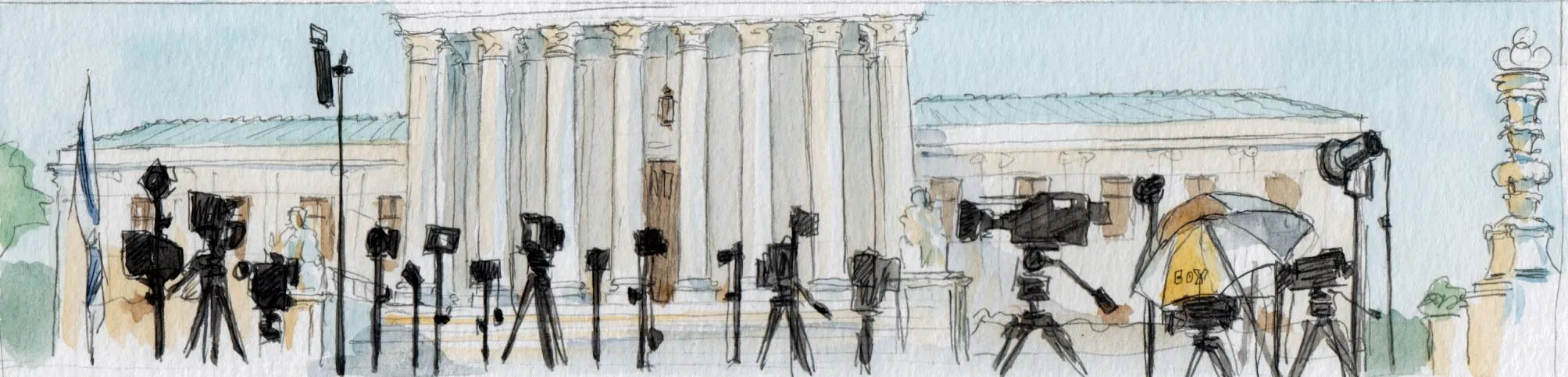
The Relist Watch column examines cert petitions that the Supreme Court has “relisted” for its upcoming conference. A short explanation of relists is available here.
This Friday’s conference marks the Supreme Court’s last real chance to grant petitions in time for argument at the court’s April sitting – the last sitting of this term. The court already has an unprecedented 91 relisted cases in contention for those slots. This week it added 17 more relisted cases raising 10 distinct legal issues. Grants could come as soon as Friday.
Three of those cases raise familiar Second Amendment challenges to the felon-in-possession statute – there are literally dozens of such relists that have been pending for weeks. We won’t address those further. In another four of those cases, the Supreme Court previously called for the views of the solicitor general, and requested amicus (“friend of the court”) briefs have now arrived. Because review is especially likely in cases where the court has asked for the federal government’s views, we’ll begin with those.
Federal preemption and generic drugs
Monsanto Co. v. Durnell asks whether the Federal Insecticide, Fungicide, and Rodenticide Act preempts state-law failure-to-warn claims where EPA has repeatedly approved a pesticide label without a cancer warning and federal regulations bar unilateral label changes. A Missouri jury awarded $1.25 million to respondent John Durnell, who developed non-Hodgkin’s lymphoma after long-term Roundup use, finding Monsanto liable for failing to warn of cancer risks. The Missouri Court of Appeals affirmed the jury’s decision, holding that Missouri’s strict-liability failure-to-warn standard merely parallels FIFRA’s misbranding prohibition and therefore is not “in addition to or different from” federal labeling requirements. In doing so, it expressly declined to follow the contrary decision of the U.S. Court of Appeals for the 3rd Circuit in Schaffner v. Monsanto, which held that FIFRA preempts identical claims. Several federal courts of appeals had previously reached the same conclusion as the Missouri court.
Monsanto argues that this case presents a clean and deepening circuit split over whether EPA’s label approval and its regulations “lock in” labeling requirements, mandating preemption because federal law makes it impossible to add to the label. Durnell responds that the verdict can be sustained on non-label grounds (noting that there was no prohibition on including warnings in marketing and off-label contexts) and that, in any event, FIFRA’s misbranding standard leaves room for state tort enforcement.
For the second time on this issue, the court called for the views of the solicitor general. The United States now sides with Monsanto that the law is preempted, echoing a position the Justice Department took during the first Trump administration, and urges review. That said, the government took the opposite position several terms ago in Monsanto Co. v. Hardeman. With an entrenched split, and Roundup litigation continuing to generate massive verdicts nationwide, this case squarely tees up a recurring preemption question the court has repeatedly sidestepped – but may find increasingly difficult to ignore. I rate this a very likely grant. (Monsanto has also filed companion petitions raising the same issue in Monsanto Co. v. Salas and Monsanto Co. v. Johnson, but Durnell seems the likeliest vehicle.)
ERISA breach of fiduciary duties
Parker-Hannifin Corp v. Johnson asks whether plaintiffs pleading a breach-of-fiduciary-duty claim under the Employee Retirement Income Security Act of 1974 – alleging that retirement plan fiduciaries imprudently retained underperforming investments – must show that their chosen performance benchmark is a meaningful comparator for the challenged funds. Plan participants sued Parker-Hannifin, claiming it violated ERISA by sticking with the Northern Trust Focus Funds despite their lackluster returns compared to allegedly similar alternatives, offering higher-cost shares, and failing to monitor funds. The district court dismissed for failure to state a claim, but the U.S. Court of Appeals for the 6th Circuit reversed 2-1, holding that the allegations plausibly suggested imprudence under Hughes v. Northwestern University without requiring apples-to-apples benchmark proof at the pleading stage. Petitioners argue this creates a split with the U.S. Courts of Appeals for the 7th, 8th, and 10th Circuits, which demand proof that comparators provide meaningful benchmarks, while respondents counter that no true conflict exists and ERISA’s prudence standard doesn’t hinge solely on performance comparisons.
The government, as court-invited amicus, advocates review, arguing both that the courts of appeals are divided and that the 6th Circuit’s decision is erroneous, and it’s necessary for courts to employ “sound” benchmarks to cull meritless lawsuits. But the court’s order inviting the government to file a brief noted that Justice Samuel Alito did not participate in consideration of the petition, suggesting he is recused, and raising the specter that the court could divide 4-4 and be unable to resolve the case.
Anderson v. Intel Corporation Investment Policy Committee raises the same issue, although the plaintiff is petitioning because the U.S. Court of Appeals for the 9th Circuit required a comparable benchmark. Respondent the Intel Corporation Investment Policy Committee argues the case does not implicate a circuit split and doesn’t warrant the court’s review. But it nonetheless says that if the court decides to address the question, the court should grant Anderson as well to ensure that Alito’s recusal doesn’t prevent the court from resolving the case.
Patent infringement and generic drugs
Hikma Pharmaceuticals USA Inc. v. Amarin Pharma, Inc., asks whether a generic drugmaker can be hauled into court for inducing (encouraging or facilitating) patent infringement based on its public (that is, not on its label) statements that its product is the “generic version” of a brand-name drug and its citation of the branded drug’s sales figures – even when the generic uses a so-called “skinny label” that appropriately carves out use of the generic version for the patented application. Specifically, Amarin sued after Hikma launched its generic version for severe hypertriglyceridemia (a use for which the patent had expired), claiming Hikma’s press releases and website encouraged off-label use for Amarin’s patented cardiovascular-risk-reduction method. The district court dismissed for failure to state a claim, but the U.S. Court of Appeals for the Federal Circuit reversed, finding the allegations plausibly alleged induced infringement.
Hikma petitions, arguing that the Federal Circuit’s test conflicts with the Hatch-Waxman Act’s pathway for generics to reach the market and conflicts with the requirement of MGM Studios, Inc. v. Grokster, Ltd., that plaintiffs plead the defendant has taken “active steps … to encourage direct infringement, such as advertising an infringing use or instructing how to engage in an infringing use.” Amarin opposes, insisting that Hikma seeks fact-bound error correction which is not suitable for the Supreme Court.
The solicitor general’s court-invited amicus brief urges the court to grant and reverse, echoing the position it unsuccessfully took in a similar case in Teva Pharmaceuticals USA, Inc. v. GlaxoSmithKline LLC. The solicitor general argues that even the threat of going to discovery here could chill skinny-label use and delay lower-cost drugs. Regular readers of Relist Watch know that this is the court’s second serious look at pharma inducement in three terms, suggesting it may be teetering toward a grant to clarify whether vague marketing puffery crosses the “active inducement” line, especially when state substitution laws already nudge generics into off-label territory. In Teva, Justice Brett Kavanaugh noted that he would vote to grant review; we’ll know soon whether he’s persuaded three of his colleagues to do the same. At the time, I rated Teva a likely grant. So you can draw your own conclusions.
Foreign Sovereign Immunities Act
Agudas Chasidei Chabad of United States v. Russian Federation asks whether the Foreign Sovereign Immunities Act’s expropriation exception strips a foreign state itself of immunity from suit when stolen property is owned or operated by a state instrumentality that engages in commercial activity in the United States, even if the property is not present in this country. The statutory text applies if the property (i) “is present in the United States in connection with a commercial activity carried on in the United States by the foreign state,” or (ii) “is owned or operated by an agency or instrumentality of the foreign state and that agency or instrumentality is engaged in a commercial activity in the United States.”
Chabad has spent decades seeking the return of its collection of thousands of sacred religious texts and archival materials seized by Soviet authorities and now held by Russian state archives. Although Chabad obtained a default judgment and massive contempt sanctions after Russia withdrew from the litigation, the U.S. Court of Appeals for the D.C. Circuit ultimately held that the Russian Federation retained sovereign immunity because the collection is located abroad, concluding that only the first FSIA nexus clause (property present in the United States) can abrogate a foreign state’s immunity.
Chabad argues that the decision rewrites the statute by requiring both presence and ownership to be present, and that the D.C. Circuit’s approach effectively nullifies the expropriation exception for claims against foreign states. It argues that there is a circuit split, pointing to decisions of the 9th and 11th Circuits holding the exception satisfied if the second nexus clause to foreign sovereigns is met and notes that the D.C. Circuit itself upheld jurisdiction in this very case years earlier. Tenex-USA, a Russian state-owned company targeted for attachment, responds that there is no true circuit split, that other courts have never squarely decided the question, and that extending jurisdiction based on an instrumentality’s U.S. contacts would contradict the FSIA’s structure and settled principles of sovereign separateness.
In its court-invited amicus brief, the United States now urges review – albeit in a relatively halfhearted way. The government states only that Chabad has “plausibly allege[d] confusion in the lower courts on the question presented,” and acknowledges that the government has in the past downplayed the depth of the split. The government also acknowledges that in the past it has taken the position that the D.C. Circuit’s position is correct and “[i]n the course of preparing this brief, the United States has not determined whether it maintains that position on the merits.” But the government states that the issue is “important” and “clarity as to jurisdictional issues can help to avoid needlessly protracted litigation.” Both Justices Brett Kavanaugh and Ketanji Brown Jackson would be recused because they served on the D.C. Circuit at the time the case was before that court, but “that would still leave the Court with an odd number of members and thereby avoid the prospect of an equally divided court.”
Now on to the non-CVSG cases.
The state-secrets privilege
Federal Bureau of Investigation v. Fazaga, returns to the court for a second time, now asking whether a court may dismiss claims under the state-secrets privilege only after adjudicating the merits of the government’s defense using the very privileged information the privilege is meant to exclude. After the Supreme Court unanimously held in 2022 that FISA does not displace the state-secrets privilege, the 9th Circuit on remand again reversed the district court’s dismissal of respondents’ religion-based surveillance claims. Although the 9th Circuit agreed that the government properly invoked the privilege and that privileged information would be essential to the government’s defense, it held that dismissal is permissible only if the government first demonstrates – through detailed submissions – that the privileged evidence “clearly shows” a meritorious defense requiring judgment for the government.
The government argues that the 9th Circuit’s approach fundamentally misunderstands the state-secrets doctrine. It maintains that ordinarily, when courts determine that the government has properly invoked that privilege and that the privileged information would be central to further litigation, the rule is that the privileged information must be removed from the case and dismissal is required if the suit would risk disclosure of that information. The government argues that, by requiring courts to use privileged evidence to decide merits questions, the decision effectively nullifies the privilege by forcing the executive to choose between disclosing sensitive information to sustain a defense or forfeiting dismissal altogether. Yassir Fazaga and the other plaintiffs counter that the decision simply prevents dismissal based on speculation and aligns with longstanding D.C. Circuit precedent requiring a showing that a “valid defense” is actually “meritorious and not merely plausible.” Adding an unusual wrinkle, the government alternatively asks the court to grant, vacate, and remand for further consideration in light of “a significant intervening event”: the recent recantation of the FBI informant whose allegations underpin respondents’ claims that the FBI targeted them for surveillance solely because of their religion.
Geofence warrants
Chatrie v. United States asks whether law enforcement’s use of a so-called “geofence warrant” to obtain location-history data from Google violates the Fourth Amendment, and whether suppression is categorically unavailable under the good-faith exception. After a Virginia bank robbery, police obtained a warrant directing Google to provide an anonymized list of devices present near the crime scene during a one-hour window. Officers narrowed that list and – without an additional warrant – obtained information about the movement of certain devices during a two-hour period. Then officers – again without an additional warrant – obtained de-anonymized subscriber information about three devices. One of those devices belonged to petitioner Okello Chatrie. Based on the evidence derived from the geofence warrant, petitioner was convicted of armed robbery. Sitting en banc, the Fourth Circuit affirmed in a one-sentence per curiam, producing nine separate opinions. The court split on whether obtaining the data was a “search” under Carpenter v. United States, but a majority concluded that suppression was unwarranted because officers reasonably relied on a warrant issued amid substantial legal uncertainty.
Chatrie argues that the decision deepens a growing and untenable split over the Fourth Amendment reasonableness of geofence warrants, pointing to the decision of the U.S. Court of Appeals for the 5th Circuit in United States v. Smith, which deemed such warrants unconstitutional general warrants (although it refused to suppress because the officers relied in good faith on the warrant). He also warns that routine reliance on the good-faith exception threatens to insulate geofence warrants from meaningful Supreme Court review altogether. The government responds that the case is a poor vehicle because suppression would be unavailable regardless of how the Fourth Amendment question is resolved (due to the good-faith exception), and because Google’s recent changes to its data-retention practices may limit the issue’s future significance. Of note, X Corp. – owners of the social media platform previously known as Twitter – have filed an amicus brief supporting Chatrie.
Davis v. United States also purports to raise the issue about the lawfulness of a geofence warrant. But the information uncovered by the geofence warrant concerned not the petitioner Johnnie Leeanozg Davis, but his girlfriend and his girlfriend’s daughter, and the government argues (and the U.S. Court of Appeals for the 11th Circuit below held) that Davis lacks standing to challenge a search involving data linked to a third party.
Deference to Sentencing Guidelines commentary
In the 1993 case of Stinson v. United States, the Supreme Court held that the U.S. Sentencing Commission’s explanatory commentary on the Sentencing Guidelines “is authoritative unless it violates the Constitution or a federal statute, or is inconsistent with, or a plainly erroneous reading of, that guideline.” Poore v. United States asks whether, after Kisor v. Wilkie (which required a showing of genuine ambiguity before agency interpretations of regulations warranted deference) and Loper Bright v. Raimondo (which abolished deference to agency interpretations of ambiguous statutes) courts may continue to reflexively defer under Stinson to the Sentencing Commission’s commentary when interpreting the Guidelines – particularly where that commentary expands an unambiguous guideline and increases a defendant’s sentence. Petitioner Raymond Poore received an enhanced sentence after the district court deferred to commentary treating inchoate offenses (such as being a party to a crime) as “crime[s] of violence,” notwithstanding the acknowledgment that the Guideline text itself unambiguously excluded such offenses. The U.S. Court of Appeals for the 7th Circuit then affirmed, deeming itself bound by circuit precedent applying Stinson, and concluding that neither Kisor nor Loper Bright clearly displaced that framework.
Poore argues that Stinson rests on a deference regime that has been fundamentally undermined: Kisor requires courts to find genuine ambiguity before deferring to an agency’s interpretation of its own rules, and Loper Bright reinforces the judiciary’s duty to exercise independent judgment – especially in criminal cases, where the rule of lenity applies (the rule that ambiguities in criminal law should be interpreted in favor of the defendant). He argues that there is an entrenched six to six circuit split, with half the circuits refusing to defer to Guidelines commentary absent genuine ambiguity and the other half continuing to treat commentary as binding.
The government argues that this case is a poor vehicle, asserting that it is is moot because Poore has completed serving his sentence and has identified no collateral consequences. It also downplays the split’s importance in light of recent Guidelines amendments, and characterizes the decision below as a routine application of circuit precedent. The government notes that the court has repeatedly and recently denied review on other cases presenting this issue, which I know only too well – the court denied my (perfectly good!) petition raising this same issue back in 2021. Not that I’m bitter or anything.
State taxation of Indians on reservation land
Stroble v. Oklahoma Tax Commission asks whether Oklahoma can tax the income of a Muscogee (Creek) Nation member who works on tribal land held in trust and who lives on private property within the historic Creek territory recognized as a reservation in McGirt v. Oklahoma – or if federal law preempts such taxation absent explicit congressional consent. That tribal member, Alicia Stroble, a casino worker, sought a refund for state income taxes, arguing McGirt upended Oklahoma’s taxing authority. The state supreme court disagreed, holding McGirt didn’t abrogate longstanding tax statutes. Stroble petitions, arguing the decision below is inconsistent with decades of Supreme Court precedent “prohibiting States from imposing taxes on Indians who live and work within their Tribes’ Indian country absent express authorization from Congress,” and creates a conflict with other courts of appeals that have applied that precedent. Oklahoma opposes, agreeing that the issue is “undeniably important,” but arguing that review is not warranted because the decision below is correct and further review would create harmful uncertainty. Stroble’s reply again blasts the decision as conflicting with “[a]n unbroken line of this Court’s precedents.”
Whether “totality” means “totality”
District of Columbia v. R.W. addresses whether courts evaluating reasonable suspicion for a stop under Terry v. Ohio may exclude facts known to an officer before weighing the totality of the circumstances. Responding to a wee-hours dispatch telling police to be on the lookout for a suspicious or stolen vehicle at a particular address, a D.C. officer saw two passengers flee from the only occupied car in a small parking lot at that address and then saw the driver attempt to back out with a rear door still open. The car was indeed stolen and 15-year-old R.W., its driver, was adjudicated delinquent. The D.C. Court of Appeals suppressed evidence from the stop, holding that the dispatch had to be excluded from the analysis (because the information was of unknown reliability), as did the passengers’ flight (because there was purportedly no reason to attribute it to the vehicle’s driver), and that the remaining facts were insufficient to justify a seizure.
Seeking review, D.C. characterizes the court of appeals’ argument as an “isolationist approach,” improperly excluding factors before assessing the totality of the evidence. D.C. argues that the decision squarely conflicts with the Supreme Court’s repeated rejection of a piecemeal Fourth Amendment analysis and deepens a split with multiple federal circuits and state courts that require consideration of all circumstances known to the officer. Twenty-eight states and the National Fraternal Order of Police support review, warning that the ruling undermines officer safety and creates untenable confusion – particularly in D.C., where local and federal courts apply divergent standards. The other side counters that the case is factbound, that the court below properly required articulable support for vague dispatches and guilt-by-association inferences, and that no true split exists. Perhaps sensing that this case is sufficiently factbound to be an unusual candidate for Supreme Court review, D.C. argues in its reply that “[t]he legal error here was sufficiently straightforward to justify summary reversal [an unsigned opinion reversing the lower court].” That may be under consideration.
Another “lost cause”
Lastly, we have a case that falls into a category I have uncharitably dubbed “lost causes.” These are cases that have been relisted even though no brief has been filed in response to the cert petition, when the court has not granted review without first calling for such a brief. In Diehl v. United States, self-represented federal prisoner David A. Diehl argues that his conviction violated the ex post facto clause prohibiting retroactive punishment, although he never raised that argument below. We’ll see if Diehl gets any traction. While there is one “lost cause” that has stuck around a while, the Supreme Court has dispatched most of them promptly.
That – finally – is all for this week. Honestly, I’m not sure I’m going to be able to continue if the relists keep coming at the rate they have since December.

New Relists
Hikma Pharmaceuticals USA Inc. v. Amarin Pharma, Inc., 24-889
Issues: (1) Whether, when a generic drug label fully carves out a patented use, allegations that the generic drugmaker calls its product a “generic version” and cites public information about the branded drug (e.g., sales) are enough to plead induced infringement of the patented use; and (2) whether a complaint states a claim for induced infringement of a patented method if it does not allege any instruction or other statement by the defendant that encourages, or even mentions, the patented use. CVSG: 12/05/2025
(Relisted after the Jan. 9 conference.)
Agudas Chasidei Chabad of United States v. Russian Federation, 24-909
Issue: Whether a “foreign state” lacks immunity from U.S. jurisdiction under the Foreign Sovereign Immunities Act if either U.S.-nexus test in 28 U.S.C. § 1605(a)(3) is met, or instead a “foreign state” loses its immunity only if the first U.S.-nexus test is met – i.e., if the expropriated property, or property exchanged for it, is found in the United States.
CVSG: 12/09/2025
(Relisted after the Jan. 9 conference.)
Parker-Hannifin Corp v. Johnson, 24-1030
Issue: Whether pleading an imprudent-investment claim under the Employee Retirement Income Security Act, based on how the investment’s returns compared to some performance benchmark, requires allegations showing that the benchmark is a sound basis for comparison for that investment. CVSG: 12/09/2025
(Relisted after the Jan. 9 conference.)
Monsanto Co. v. Durnell, 24-1068
Issue: Whether the Federal Insecticide, Fungicide, and Rodenticide Act preempts a state-law failure-to-warn claim where the Environmental Protection Agency has repeatedly concluded that the warning is not required and the warning cannot be added to a product without EPA approval. CVSG: 12/01/2025
(Relisted after the Jan. 9 conference.)
Monsanto Co. v. Salas, 24-1097
Issue: Whether the Federal Insecticide, Fungicide, and Rodenticide Act preempts a state-law failure-to-warn claim where the Environmental Protection Agency has repeatedly concluded that the warning is not required and the warning cannot be added to a product without EPA approval.
(Relisted after the Jan. 9 conference.)
Monsanto Co. v. Johnson, 24-1098
Issue: Whether the Federal Insecticide, Fungicide, and Rodenticide Act preempts a state-law failure-to-warn claim where the Environmental Protection Agency has repeatedly concluded that the warning is not required and the warning cannot be added to a product without EPA approval.
(Relisted after the Jan. 9 conference.)
Chatrie v. United States, 25-112
Issue: (1) Whether the execution of a geofence warrant violated the Fourth Amendment; and (2) whether the exclusionary rule should apply to the evidence derived from a geofence warrant.
(Relisted after the Jan. 9 conference.)
Poore v. United States, 25-227
Issue: Whether the limits on agency deference announced in Kisor v. Wilkie and Loper Bright Enterprises v. Raimondo constrain the deference courts may accord the Sentencing Commission’s interpretation of its own rules via commentary.
(Relisted after the Jan. 9 conference.)
District of Columbia v. R.W., 25-248
Issue: (1) Whether a court assessing the existence of reasonable suspicion under the Fourth Amendment may exclude a fact known to the officer, or instead must assess all the evidence when weighing the totality of the circumstances; and (2) whether, under the totality-of-the-circumstances test, the officer in this case had reasonable suspicion to conduct an investigative stop.
(Relisted after the Jan. 9 conference.)
Stroble v. Oklahoma Tax Commission, 25-382
Issue: Whether Oklahoma may tax the income of a Muscogee (Creek) Nation citizen who lives and works within the Muscogee (Creek) Reservation that McGirt v. Oklahoma held remains Indian country.
(Relisted after the Jan. 9 conference.)
Federal Bureau of Investigation v. Fazaga, 25-430
Issue: Whether dismissal of a claim after assertion of the state-secrets privilege requires a district court to adjudicate the merits of the claim using the privileged information where the privileged information is relevant to a defense.
(Relisted after the Jan. 9 conference.)
Anderson v. Intel Corporation Investment Policy Comm., 25-498
Issue: Whether, for claims predicated on fund underperformance, pleading that an Employee Retirement Income Security Act fiduciary failed to use the requisite “care, skill, prudence, or diligence” under the circumstances and thus breached ERISA’s duty of prudence when investing plan assets requires alleging a “meaningful benchmark.”
(Relisted after the Jan. 9 conference.)
Davis v. United States, 25-5189
Issues: (1) whether review is warranted to resolve disagreement among the circuits about the reasonableness of geofence warrants; (2) whether the record as a whole demonstrates improper collusion between federal and state law enforcement to make Davis’s arrest by state officers subject to the federal presentment requirements set forth in 18 U.S.C. § 3501(c) and Rule 5(a), Fed. R. Crim. P.; (3) whether Davis’s motion for judgment of acquittal should have been granted on the three carjacking counts for want of sufficient evidence that Davis had the intent to kill or seriously injure anyone.
(Relisted after the Jan. 9 conference.)
Sanchez v. United States, 25-6153
Issues: (1)Whether § 922(g)(1) violates the Second Amendment facially; (2) whether § 922(g)(1) violates the Second Amendment as applied to individuals with convictions for offenses that did not involve the misuse of firearms or establish a credible threat of such misuse.
(Relisted after the Jan. 9 conference.)
Wilson v. United States, 25-6187
Issue: Whether 18 U.S.C. § 922(g)(1) violates the Second Amendment.
(Relisted after the Jan. 9 conference.)
Williams v. United States, 25-6189
Issue: Whether 18 U.S.C. § 922(g)(1)’s lifetime ban on firearm possession for all individuals previously convicted of a felony violates the Second Amendment, either facially or as applied to the Petitioner.
(Relisted after the Jan. 9 conference.)
Diehl v. United States, 25-6278
Issues: (1) Whether the Fifth Circuit had subject matter jurisdiction on direct appeal to consider an ex post facto constitutional argument that was never raised; (2) whether the full ex post facto clause applies where the offense occurred prior to United States v. Booker in light of Peugh v. United States; (3) whether Diehl presented facts showing fraud on the court for purposes of Federal Rule of Civil Procedure Rule 60(d)(3).
(Relisted after the Jan. 9 conference.)
Returning Relists
Issues: (1) Whether, viewing the facts from the officers’ perspective at the time, the officers acted reasonably under the Fourth Amendment by using bodyweight pressure to restrain a potentially armed and actively resisting individual only until handcuffing could be accomplished; and (2) whether the panel erred in denying qualified immunity where no case clearly established that pre-handcuffing bodyweight pressure violates the Fourth Amendment.
(Relisted after the Sept. 29, Oct. 10, Oct. 17, Nov. 7, Nov. 14, Nov. 21, Dec. 5, Dec. 12 and Jan. 9 conferences.)
Issue: Whether the U.S. Court of Appeals for the 4th Circuit violated the Antiterrorism and Effective Death Penalty Act‘s deferential standard by overturning a state-court decision based on the supposed lack of “nuance” and “exhaustiveness” in the court’s written opinion, rather than the reasonableness of its legal conclusion.
(Relisted after the Sept. 29, Oct. 10, Oct. 17, Nov. 7, Nov. 14, Nov. 21, Dec. 5, Dec. 12 and Jan. 9 conferences.)
Indiana, ex rel. Howell v. Circuit Court of Indiana, Wells County, 25-5557
Issues: (1)Whether petitioner made a sufficient factual showing to establish “good cause” for discovering actual judicial bias by showing that the trial judge had made specific allegations as to how his case was affected; (2) whether the Indiana Supreme Court erred in holding that every Indiana Post-Conviction Remedies Rule 1, Section 12 motion constitutes a prohibited “second or successive” petition as a matter of law; (3) whether a prosecutor’s failure to correct testimony of a witness that he knew to be false was used to obtain a conviction, even though other testimony regarding the witness’s credibility was introduced.
(Relisted after the Nov. 7, Nov. 14, Nov. 21, Dec. 5, Dec. 12 and Jan. 9 conferences.)
Allen v. Guzman, 25-5879
Issues: Whether petitioner has a state-created liberty in the appointment of counsel under the newly enacted California Racial Justice Act Penal Gode Section 1473(e), which provides that “the court shall appoint counsel, if the petitioner cannot afford counsel. “
(Relisted after the Nov. 14, Nov. 21, Dec. 5, Dec. 12 and Jan. 9 conferences.)
Issue: Whether the Second Amendment allows the federal government to permanently disarm Petitioner, who has one seventeen-year-old nonviolent felony conviction for trying to pass a bad check.
(Relisted after the Nov. 21, Dec. 5, Dec. 12 and Jan. 9 conferences.)
Mayfield v. United States, 24-7400
Issue: Whether Mr. Mayfield’s conviction under 18 U.S.C. § 922(g)(1) is unconstitutional under the Second Amendment in light of New York State Rifle & Pistol Ass’n, Inc. v. Bruen and United States v. Rahimi.
(Relisted after the Nov. 21, Dec. 5, Dec. 12 and Jan. 9 conferences.)
Medrano v. United States, 24-7508
Issues: (1) Whether 18 U.S.C. §922(g)(1) comports with the Second Amendment as applied to a defendant whose most serious prior felony convictions are attempted burglary and vehicle theft; (2) whether an appellate court should take at face value the assertion of sentencing judges that they would have selected the exact same sentence regardless of any error in applying the Sentencing Guidelines.
(Relisted after the Nov. 21, Dec. 5, Dec. 12 and Jan. 9 conferences.)
Foote v. Ludlow School Committee, 25-77
Issue: Whether a public school violates parents’ constitutional rights when, without parental knowledge or consent, the school encourages a student to transition to a new “gender” or participates in that process.
(Relisted after the Nov. 21, Dec. 5, Dec. 12 and Jan. 9 conferences.)
Duarte v. United States, 25-425
Issue: Whether 18 U.S.C. §922(g)(1)’s categorical ban on the possession of firearms by felons is unconstitutional as applied to a defendant with non-violent predicate offenses underlying his conviction.
(Relisted after the Nov. 21, Dec. 5, Dec. 12 and Jan. 9 conferences.)
Willis v. United States, 25-5009
Issue: Whether 18 U.S.C. § 922(g)(1) is unconstitutional under the Second Amendment, both facially and as applied to Mr. Willis, in light of New York State Rifle & Pistol Ass’n, Inc. v. Bruen and United States v. Rahimi.
(Relisted after the Nov. 21, Dec. 5, Dec. 12 and Jan. 9 conferences.)
Howard v. United States, 25-5220
Issue: Whether 18 U.S.C. §922(g)(1) comports with the Second Amendment as applied to a defendant whose most serious prior felony conviction is drug trafficking.
(Relisted after the Nov. 21, Dec. 5, Dec. 12 and Jan. 9 conferences.)
Marshall v. United States, 25-5259
Issue: Whether 18 U.S.C. § 922(g)(1), which permanently prohibits possession of a firearm by a person who has been convicted of a crime punishable by imprisonment for a term exceeding one year, is subject to as-applied challenges under the Second Amendment.
(Relisted after the Nov. 21, Dec. 5, Dec. 12 and Jan. 9 conferences.)
Reese v. United States, 25-5327
Issues: (1) Whether 18 U.S.C. § 922(g)(1), which prohibits felons from possessing firearms or ammunition, violates the Second Amendment—either on its face or as applied to the petitioner, who has no violent felony conviction; (2) whether § 922(g)(1), which purports to make a felon’s intrastate possession of firearms and ammunition a federal crime solely because those items crossed state lines at some point, exceeds Congress’s Commerce Clause authority.
(Relisted after the Nov. 21, Dec. 5, Dec. 12 and Jan. 9 conferences.)
Compton v. United States, 25-5358
Issue: Whether 18 U.S.C. § 922(g)(1)’s lifetime ban on firearm possession for all individuals previously convicted of any felony offense violates the Second Amendment, either facially or as applied to the Petitioner.
(Relisted after the Nov. 21, Dec. 5, Dec. 12 and Jan. 9 conferences.)
Osbourne v. United States, 25-5382
Issue: Whether 18 U.S.C. § 922(g)(1)’s lifetime ban on firearm possession for all individuals previously convicted of any felony violates the Second Amendment, either facially or as applied to the Petitioner.
(Relisted after the Nov. 21, Dec. 5, Dec. 12 and Jan. 9 conferences.)
Cantu v. United States, 25-5388
Issue: Whether, as the Eighth Circuit held, 18 U.S.C. § 922(g)(1) (which prohibits any felon from possessing firearms) is invariably constitutional both facially and as applied to any defendant, no matter the case-specific circumstances.
(Relisted after the Nov. 21, Dec. 5, Dec. 12 and Jan. 9 conferences.)
Williams v. United States, 25-5415
Issue: Whether 18 U.S.C. § 922(g)(1) is unconstitutional as applied when the predicate convictions which make the person ineligible to possess a firearm were pursuant to a statute which had been found facially unconstitutional for violating the Second Amendment.
(Relisted after the Nov. 21, Dec. 5, Dec. 12 and Jan. 9 conferences.)
Mitchell v. United States, 25-5417
Issue: Whether 18 U.S.C. § 922(g)(1)’s lifetime ban on firearm possession for all individuals previously convicted of a felony violates the Second Amendment, either facially or as applied to the Petitioner.
(Relisted after the Nov. 21, Dec. 5, Dec. 12 and Jan. 9 conferences.)
Hernandez v. United States, 25-5421
Issue: Whether 18 U.S.C. § 922(g)(1), the federal statute that prohibits anyone who has been convicted of “a crime punishable by imprisonment for a term exceeding one year” from possessing a firearm, violates the Second Amendment either facially or as applied to individuals with prior convictions for non-violent offenses.
(Relisted after the Nov. 21, Dec. 5, Dec. 12 and Jan. 9 conferences.)
Kearney v. United States, 25-5424
Issue: Whether 18 U.S.C. § 922(g)(1)’s lifetime ban on firearm possession for all individuals previously convicted of a felony violates the Second Amendment, either facially or as applied to the Petitioner.
(Relisted after the Nov. 21, Dec. 5, Dec. 12 and Jan. 9 conferences.)
Terry v. United States, 25-5433
Issue: Whether 18 U.S.C. § 922(g)(1)’s lifetime ban on firearm possession for all individuals previously convicted of a felony violates the Second Amendment, either facially or as applied to the Petitioner.
(Relisted after the Nov. 21, Dec. 5, Dec. 12 and Jan. 9 conferences.)
Thompson v. United States, 25-5434
Issue: Whether 18 U.S.C. § 922(g)(1)’s lifetime ban on firearm possession for all individuals previously convicted of a felony violates the Second Amendment, either facially or as applied to the Petitioner.
(Relisted after the Nov. 21, Dec. 5, Dec. 12 and Jan. 9 conferences.)
Fowler v. United States, 25-5437
Issue: Whether 18 U.S.C. § 922(g)(1)’s lifetime ban on firearm possession for all individuals previously convicted of a felony violates the Second Amendment, either facially or as applied to the Petitioner.
(Relisted after the Nov. 21, Dec. 5, Dec. 12 and Jan. 9 conferences.)
Finney v. United States, 25-5438
Issue: Whether 18 U.S.C. § 922(g)(1)’s lifetime ban on firearm possession for all individuals previously convicted of a felony violates the Second Amendment, either facially or as applied to the Petitioner.
(Relisted after the Nov. 21, Dec. 5, Dec. 12 and Jan. 9 conferences.)
Greene v. United States, 25-5439
Issue: Whether 18 U.S.C. § 922(g)(1)’s lifetime ban on firearm possession for all individuals previously convicted of a felony violates the Second Amendment, either facially or as applied to the Petitioner.
(Relisted after the Nov. 21, Dec. 5, Dec. 12 and Jan. 9 conferences.)
Perry v. United States, 25-5441
Issue: Whether 18 U.S.C. § 922(g)(1)’s lifetime ban on firearm possession for all individuals previously convicted of a felony violates the Second Amendment, either facially or as applied to the Petitioner.
(Relisted after the Nov. 21, Dec. 5, Dec. 12 and Jan. 9 conferences.)
Crews v. United States, 25-5443
Issue: Whether 18 U.S.C. § 922(g)(1)’s lifetime ban on firearm possession for all individuals previously convicted of a felony violates the Second Amendment, either facially or as applied to the Petitioner.
(Relisted after the Nov. 21, Dec. 5, Dec. 12 and Jan. 9 conferences.)
Gilbert v. United States, 25-5607
Issues: (1) Whether defendants may assert as-applied challenges to 18 U.S.C. § 922(g)(1) under the Second Amendment; (2) whether 18 U.S.C. § 922(g)(1)’s lifetime ban on firearm possession by felons violates the Second Amendment as applied to Mr. Gilbert, who was previously convicted of a non-violent theft offense.
(Relisted after the Nov. 21, Dec. 5, Dec. 12 and Jan. 9 conferences.)
Coleman v. United States, 25-5614
Issue: Whether 18 U.S.C. § 922(g)(1)’s lifetime ban on firearm possession for all individuals
previously convicted of a felony violates the Second Amendment, either facially or as
applied to the Petitioner.
(Relisted after the Nov. 21, Dec. 5, Dec. 12 and Jan. 9 conferences.)
Brown v. United States, 25-5624
Issue: Whether 18 U.S.C. § 922(g)(1)’s lifetime ban on firearm possession for all individuals previously convicted of a felony violates the Second Amendment, either facially or as applied to the Petitioner.
(Relisted after the Nov. 21, Dec. 5, Dec. 12 and Jan. 9 conferences.)
Chafin v. United States, 25-5626
Issue: Whether 18 U.S.C. § 922(g)(1)’s lifetime ban on firearm possession for all individuals previously convicted of any felony offense violates the Second Amendment as applied to Mr. Chafin.
(Relisted after the Nov. 21, Dec. 5, Dec. 12 and Jan. 9 conferences.)
Coles v. United States, 25-5627
Issue: Whether 18 U.S.C. § 922(g)(1)’s lifetime ban on firearm possession for all individuals previously convicted of a felony violates the Second Amendment, either facially or as applied to the Petitioner.
(Relisted after the Nov. 21, Dec. 5, Dec. 12 and Jan. 9 conferences.)
Allen v. United States, 25-5655
Issue: Whether 18 U.S.C. § 922(g)(1)’s lifetime ban on firearm possession for all individuals previously convicted of a felony violates the Second Amendment, either facially or as applied to the Petitioner.
(Relisted after the Nov. 21, Dec. 5, Dec. 12 and Jan. 9 conferences.)
Sternquist v. United States, 25-5656
Issues: (1)Whether 18 U.S.C. § 922(g)(1) is unconstitutional on its face or as applied to Ms. Sternquist because, consistent with the Second Amendment, the federal government may not permanently disarm citizens like her, who have only remote-intime, nonviolent prior felony convictions; (2) whether ATF’s definition of “silencer” as including tubes that do not have holes drilled in them is contrary to the statutory definition of “silencer,” and whether, following Loper Bright Enterprises v. Raimondo, it is error for the courts to defer entirely to ATF’s definition without conducting their own analysis.
(Relisted after the Nov. 21, Dec. 5, Dec. 12 and Jan. 9 conferences.)
Royal v. United States, 25-5658
Issue: Whether 18 U.S.C. § 922(g)(1)’s lifetime ban on firearm possession for all individuals previously convicted of a felony violates the Second Amendment, either facially or as applied to the Petitioner.
(Relisted after the Nov. 21, Dec. 5, Dec. 12 and Jan. 9 conferences.)
Town v. United States, 25-5667
Issue: Whether 18 U.S.C. § 922(g)(1)’s lifetime ban on firearm possession for all individuals previously convicted of a felony violates the Second Amendment, either facially or as applied to the Petitioner.
(Relisted after the Nov. 21, Dec. 5, Dec. 12 and Jan. 9 conferences.)
Coleman v. United States, 25-5668
Issue: Whether 18 U.S.C. § 922(g)(1)’s lifetime ban on firearm possession for all individuals previously convicted of a felony violates the Second Amendment, either facially or as applied to the Petitioner.
(Relisted after the Nov. 21, Dec. 5, Dec. 12 and Jan. 9 conferences.)
Shoffner v. United States, 25-5678
Issue: Whether the district court erred in denying appellant’s motion to dismiss the indictment on the Constitutionality of 18 U.S.C. § 922(g)(1).
(Relisted after the Nov. 21, Dec. 5, Dec. 12 and Jan. 9 conferences.)
Robinson v. United States, 25-5707
Issue: Whether 18 U.S.C. § 922(g)(1), which permanently prohibits possession of a firearm by a person who has been convicted of a crime punishable by imprisonment for a term exceeding one year, is subject to as-applied challenges under the Second Amendment.
(Relisted after the Nov. 21, Dec. 5, Dec. 12 and Jan. 9 conferences.)
Ketzner v. United States, 25-5708
Issue: Whether the Second Amendment allows the federal government to permanently disarm Petitioner Jason Ketzner, due to prior felony convictions, regardless of the nature of those convictions and without any individualized judicial determination of his dangerousness.
(Relisted after the Nov. 21, Dec. 5, Dec. 12 and Jan. 9 conferences.)
Brown v. United States, 25-5731
Issues: (1) Whether defendants may assert as-applied challenges to 18 U.S.C. § 922(g)(1) under the Second Amendment; (2) whether 18 U.S.C. § 922(g)(1)’s lifetime ban on firearm possession by felons violates the Second Amendment as applied to Mr. Brown, who was previously convicted of non-violent felony drug possession and gun possession offenses.
(Relisted after the Nov. 21, Dec. 5, Dec. 12 and Jan. 9 conferences.)
Kimble v. United States, 25-5747
Issue: Whether 18 U.S.C. § 922(g)(1), the federal statute that prohibits anyone who has been convicted of “a crime punishable by imprisonment for a term exceeding one year” from possessing a firearm, violates the Second Amendment either facially or as applied to individuals with convictions for non-violent offenses.
(Relisted after the Nov. 21, Dec. 5, Dec. 12 and Jan. 9 conferences.)
Lee v. United States, 25-5748
Issue: Whether Mr. Lee’s conviction under 18 U.S.C. § 922(g)(1) is unconstitutional under the Second Amendment in light of New York State Rifle & Pistol Ass’n, Inc. v. Bruen and United States v. Rahimi.
(Relisted after the Nov. 21, Dec. 5, Dec. 12 and Jan. 9 conferences.)
Staley v. United States, 25-5850
Issues: (1) Whether 18 U.S.C. § 922(g)(1), the statute permanently prohibiting possession of firearms by persons convicted of a crime punishable by imprisonment for a term exceeding one year, is subject to as-applied challenges under the Second Amendment; (2) whether § 922(g)(1) is constitutional under the Second Amendment as applied to Mr. Staley, whose prior felonies were themselves nonviolent gun-possession offenses.
(Relisted after the Nov. 21, Dec. 5, Dec. 12 and Jan. 9 conferences.)
Peck v. United States, 25-5858
Issues: (1) Whether 18 U. S. C. §922(g)(l) violates the Second Amendment as applied to Petitioner, who was convicted of being a felon in possession of a firearm based on a Nebraska conviction for marijuana possession; (2) whether the Leon good faith exception to the Fourth Amendment’s exclusionary rule applies when law enforcement has not taken reasonable steps to educate itself on the law of the Fourth Amendment.
(Relisted after the Nov. 21, Dec. 5, Dec. 12 and Jan. 9 conferences.)
Hemphill v. United States, 25-5875
Issue: Whether the Fifth Circuit correctly applied the reasoning of the Supreme Court’s opinion in United States v. Rahimi, 602 U.S. 680 (2024), in deciding that the Second Amendment did not apply to Mr. Hemphill’s possession of a firearm.
(Relisted after the Nov. 21, Dec. 5, Dec. 12 and Jan. 9 conferences.)
Robinson v. United States, 25-5903
Issue: Whether 18 U.S.C. § 922(g)(1) violates the Second Amendment.
(Relisted after the Nov. 21, Dec. 5, Dec. 12 and Jan. 9 conferences.)
Contreras v. United States, 25-5909
Issue: Whether 18 U.S.C. § 922(g)(1), the federal statute that prohibits anyone who has been convicted of “a crime punishable by imprisonment for a term exceeding one year” from possessing a firearm, violates the Second Amendment either facially or as applied to individuals with prior convictions for offenses that did not result in disarmament in the Founding era.
(Relisted after the Nov. 21, Dec. 5, Dec. 12 and Jan. 9 conferences.)
Espinal v. United States, 25-5916
Issue: Whether 18 U.S.C. § 922(g)(1) is unconstitutional on its face or as applied to Petitioner because, consistent with the Second Amendment, the federal government may not permanently bar a citizen from possessing a firearm and ammunition based exclusively on a prior felony conviction.
(Relisted after the Nov. 21, Dec. 5, Dec. 12 and Jan. 9 conferences.)
Issue: Whether the requirement that a verdict be based only on the evidence presented in the courtroom at trial satisfies 28 U.S.C. § 2254(d)(1)‘s “clearly established” requirement, and if so, whether a jury’s consideration of and reliance on extrinsic evidence as part of a jury experiment violates this rule.
(Relisted after the Dec. 5, Dec. 12 and Jan. 9 conferences.)
Issue: Whether Article 64 of the Texas Code of Criminal Procedure, as authoritatively construed by the Texas Court of Criminal Appeals, violates due process by arbitrarily denying prisoners access to postconviction DNA testing, rendering illusory prisoners’ state-created right to prove their innocence through newly discovered evidence.
(Relisted after the Dec. 5, Dec. 12 and Jan. 9 conferences.)
Gator’s Custom Guns, Inc. v. Washington, 25-153
Issue: Whether ammunition feeding devices with the capacity to hold more than ten rounds are “Arms” presumptively entitled to constitutional protection under the plain text of the Second Amendment.
(Relisted after the Dec. 5, Dec. 12 and Jan. 9 conferences.)
Issue: (1) Whether a ban on the possession of exceedingly common ammunition feeding devices violates the Second Amendment; and (2) whether a law dispossessing citizens, without compensation, of property that they lawfully acquired and long possessed without incident violates the takings clause.
(Relisted after the Dec. 5, Dec. 12 and Jan. 9 conferences.)
Viramontes v. Cook County, 25-238
Issue: Whether the Second and Fourteenth Amendments guarantee the right to possess AR-15 platform and similar semiautomatic rifles.
(Relisted after the Dec. 5, Dec. 12 and Jan. 9 conferences.)
Issue: Whether the Second Circuit’s qualified immunity analysis conflicts with this court’s repeated instruction that courts must define rights with specificity and look for close factual analogues in determining whether a Fourth Amendment right is clearly established.
(Relisted after the Dec. 5, Dec. 12 and Jan. 9 conferences.)
Adams v. United States, 25-5467
Issue: Whether 18 U.S.C. § 922(g)(1), which prohibits felons from possessing firearms or ammunition, violates the Second Amendment.
(Relisted after the Dec. 5, Dec. 12 and Jan. 9 conferences.)
Thomas v. United States, 25-5477
Issue: Whether 18 U.S.C. § 922(g)(1), the federal statute that prohibits anyone who has been convicted of “a crime punishable by imprisonment for a term exceeding one year” from possessing a firearm, violates the Second Amendment either facially or as applied to individuals with prior convictions for non-violent offenses.
(Relisted after the Dec. 5, Dec. 12 and Jan. 9 conferences.)
Olivas v. United States, 25-5481
Issues: (1) How should courts decide whether an individual prosecution or conviction under 18 U.S.C. § 922(g)(1) is consistent with the Second Amendment to the Constitution; (2) whether Congress has the constitutional authority to enact a statute banning a former felon from possessing “in or affecting commerce” a firearm if the firearm was made in another state.
(Relisted after the Dec. 5, Dec. 12 and Jan. 9 conferences.)
Haynes v. United States, 25-5482
Issue: Whether, as the Eighth Circuit held, 18 U.S.C. § 922(g)(1) (which prohibits any felon from possessing firearms) is invariably constitutional both facially and as applied to any defendant, no matter the case-specific circumstances.
(Relisted after the Dec. 5, Dec. 12 and Jan. 9 conferences.)
Truex v. United States, 25-5485
Issues: (1) Whether § 922(g)(1) violates the Second Amendment facially; (2) whether, to determine the constitutionality of § 922(g)(1) as applied to a defendant, must courts examine whether there is a historical tradition permanently disarming a person with analogous convictions instead of relying on a historical tradition disarming someone serving a sentence.
(Relisted after the Dec. 5, Dec. 12 and Jan. 9 conferences.)
Scott v. United States, 25-5503
Issue: Whether 18 U.S.C. § 922(g)(1)’s lifetime ban on firearm possession for all individuals previously convicted of a felony violates the Second Amendment, either facially or as applied to the Petitioner.
(Relisted after the Dec. 5, Dec. 12 and Jan. 9 conferences.)
Barry v. United States, 25-5510
Issues: (1) Whether courts should analyze as-applied Second Amendment challenges to 18 U.S.C. § 922(g)(1) by examining whether historical tradition supports permanently disarming someone for the predicate offense(s) underlying the defendant’s conviction; (2) whether § 922(g)(1), on its face, unconstitutionally abridges the Second Amendment right to keep and bear arms.
(Relisted after the Dec. 5, Dec. 12 and Jan. 9 conferences.)
Betancourt v. United States, 25-5514
Issue: Whether 18 U.S.C. § 922(g)(1) – the federal statute that prohibits a person from possessing a firearm if he has been convicted of “a crime punishable by imprisonment for a term exceeding one year“ – complies with the Second Amendment.
(Relisted after the Dec. 5, Dec. 12 and Jan. 9 conferences.)
Garcia v. United States, 25-5516
Issues: (1) Whether 18 U.S.C. § 922(g)(1), which prohibits felons from possessing firearms or ammunition, violates the Second Amendment – either on its face or as applied to the petitioner; (2) whether 18 U.S.C. § 922(g)(1), which purports to make a felon’s intrastate possession of firearms and ammunition a federal crime solely because those items crossed state lines at some point, exceeds Congress’s Commerce Clause authority.
(Relisted after the Dec. 5, Dec. 12 and Jan. 9 conferences.)
Moore v. United States, 25-5522
Issue: Whether 18 U.S.C. §922(g)(1) comports with the Second Amendment as applied to a defendant whose most serious prior felony conviction is drug trafficking.
(Relisted after the Dec. 5, Dec. 12 and Jan. 9 conferences.)
Carbajal v. United States, 25-5535
Issues: (1) Whether § 922(g)(1) violates the Second Amendment facially; (2) whether § 922(g)(1) violates the Second Amendment as applied to individuals with convictions for offenses that did not involve the misuse of firearms or establish a credible threat of such misuse.
(Relisted after the Dec. 5, Dec. 12 and Jan. 9 conferences.)
Nelson v. United States, 25-5550
Issue: Whether 18 U.S.C. § 922(g)(1) is unconstitutional on its face or as applied to Petitioner because, consistent with the Second Amendment, the federal government may not permanently disarm citizens with only remote-in-time, nonviolent prior felony convictions.
(Relisted after the Dec. 5, Dec. 12 and Jan. 9 conferences.)
Branson v. United States, 25-5565
Issues: (1) Whether 18 U.S.C. § 922(g)(1) comports with the Second Amendment; (2) whether Congress may criminalize intrastate firearm possession based solely on the firearm crossing state lines at some point prior to the defendant’s possession.
(Relisted after the Dec. 5, Dec. 12 and Jan. 9 conferences.)
Alvarez v. United States, 25-5566
Issue: Whether 18 U.S.C. §922(g)(1) comports with the Second Amendment as applied to a defendant with prior felony convictions for drug possession, publishing unauthorized intimate photos of another, and unauthorized use of a motor vehicle.
(Relisted after the Dec. 5, Dec. 12 and Jan. 9 conferences.)
Owens v. United States, 25-5952
Issue: Whether 18 U.S.C. § 922(g)(1)’s lifetime ban on firearm possession for all individuals previously convicted of a felony violates the Second Amendment, either facially or as applied to the Petitioner.
(Relisted after the Dec. 5, Dec. 12 and Jan. 9 conferences.)
Marrow v. United States, 25-5976
Issue: Whether 18 U.S.C. § 922(g)(1)’s lifetime ban on firearm possession for all individuals previously convicted of a felony violates the Second Amendment, either facially or as applied to the Petitioner.
(Relisted after the Dec. 5, Dec. 12 and Jan. 9 conferences.)
Parker v. United States, 25-5999
Issues: (1) Whether convicted felons have a Second Amendment right, or do only law-abiding persons enjoy this right; (2) whether 18 U.S.C. §§ 922(g)(1) and 924(a)(2) withstands Second Amendment scrutiny in all of its applications, or is it unconstitutional as applied to some felons.
(Relisted after the Dec. 5, Dec. 12 and Jan. 9 conferences.)
Miller v. United States, 25-6054
Issue: Whether, because the Circuit Courts of Appeals and District Courts are split, a writ of certiorari should be granted to settle the Constitutionality of 18 U.S.C. §922(g)(l).
(Relisted after the Dec. 5, Dec. 12 and Jan. 9 conferences.)
Issue: (1) Whether it obviously violates the First Amendment to arrest someone for asking government officials questions and publishing the information they volunteer; and (2) whether qualified immunity is unavailable to public officials who use a state statute in a way that obviously violates the First Amendment, or whether qualified immunity shields those officials.
(Relisted after the Dec. 12 and Jan. 9 conferences.)
Suncor Energy (U.S.A.) Inc. v. County Commissioners of Boulder County, 25-170
Issue: Whether federal law precludes state-law claims seeking relief for injuries allegedly caused by the effects of interstate and international greenhouse-gas emissions on the global climate.
(Relisted after the Dec. 12 and Jan. 9 conferences.)
Sittenfeld v. United States, 25-49
Issue: Whether, when the government alleges bribery based solely on lawful campaign contributions, the defendant may be convicted based on evidence that is ambiguous as to whether the public official conditioned any official act on the campaign contributions.
(Relisted after the Dec. 12 and Jan. 9 conferences.)
Issue: (1) Whether, pursuant to United States v. Munsingwear, Inc., this court should vacate and remand with instructions to dismiss the appeal as moot; and (2) whether, in the alternative, this court should vacate and remand for further consideration in light of Medina v. Planned Parenthood South Atlantic.
(Relisted after the Dec. 12 and Jan. 9 conferences.)
Zherka v. Bondi, 25-269
Issue: Whether the Second Amendment permits the government to disarm an American citizen because he has been convicted of a non-violent fraud offense.
(Relisted after the Dec. 12 and Jan. 9 conferences.)
Bush v. United States, 25-5597
Issue: Whether 18 U.S.C. § 922(g)(1)’s lifetime ban on firearm possession for all individuals previously convicted of a felony violates the Second Amendment, either facially or as applied to the Petitioner.
(Relisted after the Dec. 12 and Jan. 9 conferences.)
Seward v. United States, 25-5599
Issue: Whether 18 U.S.C. § 922(g)(1)’s lifetime ban on firearm possession for all individuals previously convicted of a felony violates the Second Amendment, either facially or as applied to the Petitioner.
(Relisted after the Dec. 12 and Jan. 9 conferences.)
Mason v. United States, 25-5601
Issue: Whether 18 U.S.C. § 922(g)(1)’s lifetime ban on firearm possession for all individuals previously convicted of a felony violates the Second Amendment, either facially or as applied to the Petitioner.
(Relisted after the Dec. 12 and Jan. 9 conferences.)
Campbell v. United States, 25-5603
Issue: Whether 18 U.S.C. § 922(g)(1)’s lifetime ban on firearm possession for all individuals previously convicted of a felony violates the Second Amendment, either facially or as applied to the Petitioner.
(Relisted after the Dec. 12 and Jan. 9 conferences.)
Morgan v. United States, 25-6062
Issues: Whether 18 U.S.C. § 922(g)(1) violates the Second Amendment when applied to individuals based on their past conviction for a non-violent offense. 2. Whether application of 18 U.S.C. § 922(g)(1) violated the Commerce Clause where the only proof of a nexus between the individual’s firearm possession and interstate commerce consisted of the fact that the firearm had crossed a state line at some point before coming into their possession.
(Relisted after the Dec. 12 and Jan. 9 conferences.)
Stokes v. United States, 25-6064
Issue: Whether 18 U.S.C. § 922(g)(1)’s lifetime ban on firearm possession for all individuals previously convicted of a felony violates the Second Amendment, either facially or as applied to the Petitioner.
(Relisted after the Dec. 12 and Jan. 9 conferences.)
Whitaker v. United States, 25-6078
Issues: (1) Whether after New York State Rifle & Pistol Association v. Bruen, and United States v. Rahimi, a criminal defendant may raise an as-applied
Second Amendment challenge to 18 U.S.C. § 922(g)(1); (2) if so, whether under the Bruen/Rahimi methodology, the Second Amendment is unconstitutional as applied to a defendant like Petitioner with only non-violent priors.
(Relisted after the Dec. 12 and Jan. 9 conferences.)
Sullivan v. United States, 25-6100
Issues: (1) Whether Petitioner was induced to take a plea agreement because Petitioner believed she would get a lesser sentence to 4 counts based on Judge J. Michael Seabright’s statements which petitioner relied on when taking a plea deal; (2) whether Petitioner should have been allowed to withdraw her plea; (3) whether Petitioner has shown prejudice from the use of video and teleconference during Petitioner’s change of plea hearing, as Petitioner would not have proceeded with her guilty plea if she waited to appear in person if the district court made more detailed findings about the need for teleconference; (4) whether petitioner should have been able to withdraw her plea when she claimed her innocence to identity theft; 5) whether the statute of limitations is a jurisdictional requirement that cannot be waived by a plea agreement; (6) whether there was prosecutorial misconduct when the when Assistant United States Attorney argued against the 3-level reduction they had would be given to me for acceptance of responsibility.
(Relisted after the Dec. 12 and Jan. 9 conferences.)
Gonzalez v. United States, 25-6106
Issue: Whether 18 U.S.C. § 922(g)(1) is unconstitutional on its face or as applied to petitioner because, consistent with the Second Amendment, the federal government may not permanently disarm citizens whose prior felony convictions were for nonviolent offenses only.
(Relisted after the Dec. 12 and Jan. 9 conferences.)
Johnson v. United States, 25-6107
Issue: Whether 18 U.S.C. § 922(g)(1)’s lifetime ban on firearm possession for all individuals previously convicted of a felony violates the Second Amendment, either facially or as applied to the Petitioner.
(Relisted after the Dec. 12 and Jan. 9 conferences.)
Williams v. United States, 25-6108
Issues: 1. Whether 18 U.S.C. § 922(g)(1), the statute permanently prohibiting possession of firearms by persons convicted of a crime punishable by imprisonment for a term exceeding one year, is constitutional under the Second Amendment. 2. Whether 18 U.S.C. § 922(g)(1) is unconstitutional because it exceeds Congress’s authority under the Commerce Clause as applied to intrastate possession of a firearm.
(Relisted after the Dec. 12 and Jan. 9 conferences.)
Granger v. United States, 65-6122
Issues: (1) Whether convicted felons have a Second Amendment right, or whether only law-abiding persons enjoy this right; (2) whether 18 U.S.C. §§ 922(g)(1) and 924(a)(2) withstand Second Amendment scrutiny in all of its applications, or whether it is unconstitutional as applied to some felons.
(Relisted after the Dec. 12 and Jan. 9 conferences.)
Williams v. United States, 25-6129
Issue: Whether 18 U.S.C. § 922(g)(1) violates the Second Amendment of the United States Constitution, on its face or as applied to Petitioner, because the Second Amendment does not permit the federal government to permanently disarm a person in that person’s home based on a prior felony conviction.
(Relisted after the Dec. 12 and Jan. 9 conferences.)
Posted in Relist Watch
Cases: Parker-Hannifin Corporation v. Johnson, Monsanto Company v. Durnell, Monsanto Company v. Salas, Monsanto Company v. Johnson, Hikma Pharmaceuticals USA Inc. v. Amarin Pharma, Inc., Agudas Chasidei Chabad of United States v. Russian Federation, Chatrie v. United States, Poore v. United States, District of Columbia v. R.W., Stroble v. Oklahoma Tax Commission, Federal Bureau of Investigation v. Fazaga, Anderson v. Intel Corporation Investment Policy Committee