Court announces it will hear case on gun rights among several others in February sitting

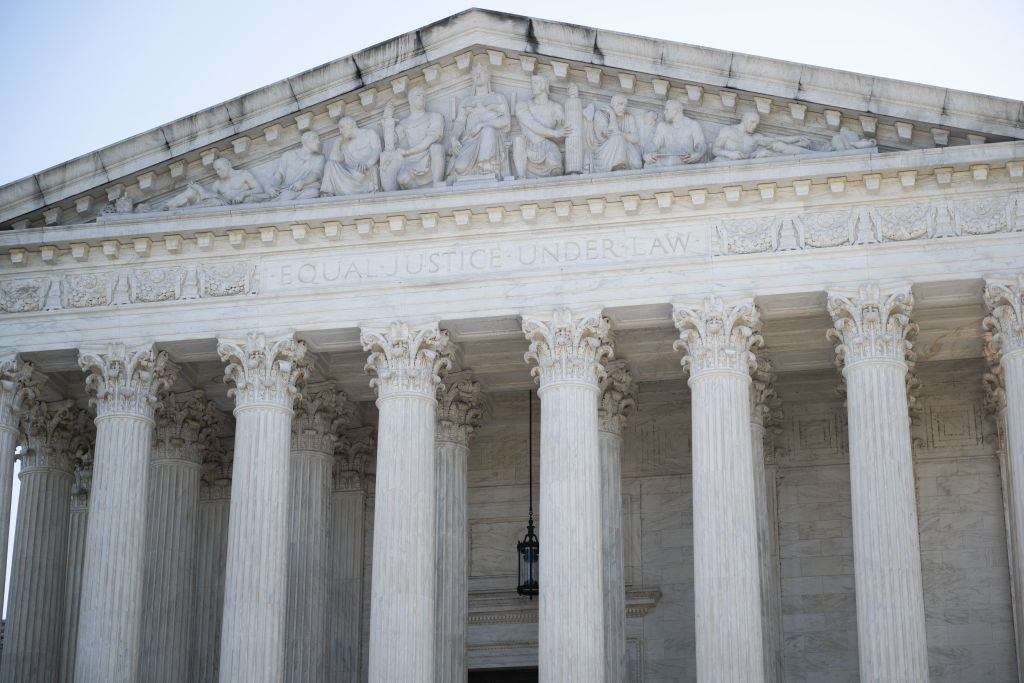
The Supreme Court will hear oral arguments on March 2 in a case on the federal government’s efforts to prosecute a Texas man for violating a federal statute that prohibits gun possession by users of illegal drugs. That case, United States v. Hemani, is one of seven cases scheduled for the justices’ February argument session, which will begin on Feb. 23 and end on March 4.
Prosecutors brought the charge against Ali Danial Hemani after FBI agents found a Glock 9 mm pistol, 60 grams of marijuana, and 4.7 grams of cocaine at his home, which led the United States to charge him with violating the law now at the center of the case. Hemani argued that applying the law to him violated the Second Amendment and that the charges against him should therefore be dismissed.
With the government’s agreement, U.S. District Judge Amos Mazzant granted that request. The district court relied on a 2023 ruling by the U.S. Court of Appeals for the 5th Circuit that struck down a conviction under the same law when “the jury did not necessarily find that” the defendant in that case “was presently or even recently engaged in unlawful drug use.”
After the 5th Circuit upheld Mazzant’s ruling, the Trump administration asked the Supreme Court to grant review, which it agreed to do in October.
The February argument schedule
Havana Docks Corp. v. Royal Caribbean Cruises, Ltd. (Feb. 23) – Whether a company that owned a right to operate and profit from the docks in Havana, which were confiscated in 1960, can bring a lawsuit under the Cuban Liberty and Democratic Solidarity Act of 1996 against four cruise lines for their use of the docks from 2016 to 2019.
Exxon Mobil Corp. v. Corporación Cimex, S.A. (Feb. 23) – Whether Exxon Mobil can bring a lawsuit against three companies owned by the Cuban government under the Cuban Liberty and Democratic Solidarity Act of 1996 for compensation for the 1960 confiscation of property that its Cuban-based subsidiaries owned in Cuba.
Enbridge Energy, LP v. Nessel (Feb. 24) – Whether there are any exceptions to the 30-day time limit to transfer a case from a state court to a federal court.
Pung v. Isabella County, Michigan (Feb. 25) – Whether a Michigan county violated the Fifth Amendment’s bar on the taking of property without “just compensation” and the Eighth Amendment’s ban on excessive fines when it sold a home at foreclosure for unpaid taxes and failed to pay the man’s estate the difference between the taxes owed and the fair market value.
United States v. Hemani (March 2) – A challenge to the constitutionality of a federal law that makes it a felony for any “unlawful user” of a controlled substance to have a gun.
Hunter v. United States (March 3) – Whether a federal appeals court properly dismissed a Texas man’s appeal of a mandatory-medication condition when he had waived his right to appeal as part of his plea agreement but the judge who imposed the condition told him that he had a right to appeal.
Montgomery v. Caribe Transport II, LLC (March 4) – Whether a federal law that supersedes state laws “related to a price, route, or service of any motor carrier” but carves out an exception for “the safety regulatory authority of a State with respect to motor vehicles” prohibits a state-law claim against a broker for negligently selecting a motor carrier or driver.
After the February argument session, the justices will have two more regularly scheduled argument sessions in March and April. Although they have not yet released the calendars for those sessions, one will include Trump v. Barbara, the dispute over President Donald Trump’s executive order attempting to limit birthright citizenship.
Posted in Court News, Merits Cases
Cases: Hunter v. United States, United States v. Hemani, Montgomery v. Caribe Transport II, LLC, Exxon Mobil Corp. v. Corporación Cimex, S.A., Enbridge Energy, LP v. Nessel, Havana Docks Corporation v. Royal Caribbean Cruises, Ltd., Pung v. Isabella County, Michigan