Supreme Court rejects Trump’s effort to deploy National Guard in Illinois

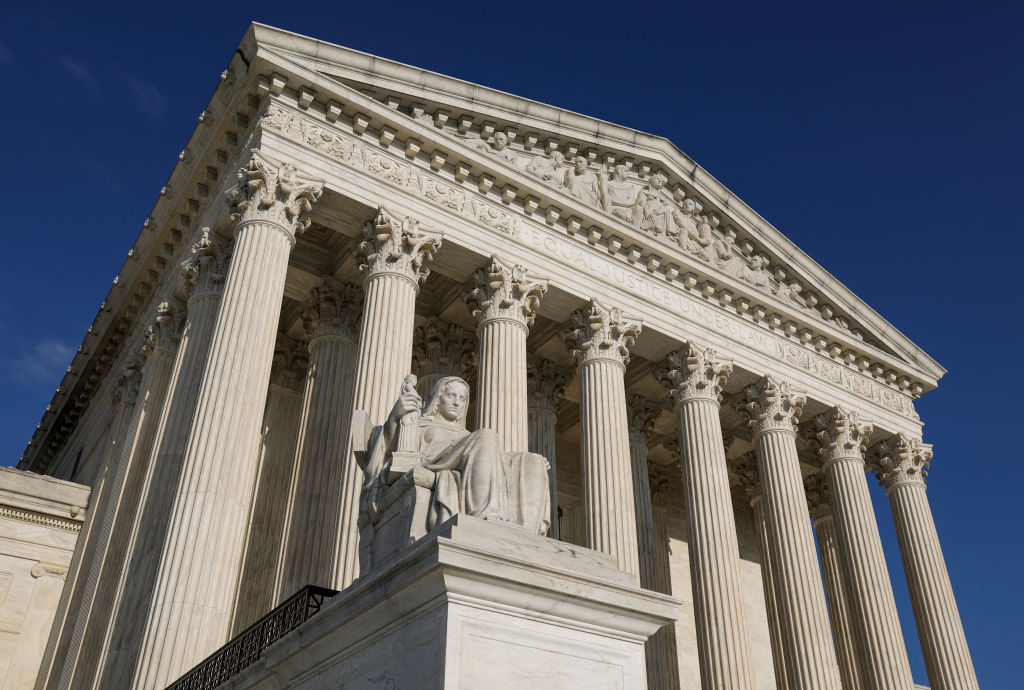
The Supreme Court on Tuesday left in place a ruling by a federal judge in Chicago that bars the Trump administration from deploying National Guard troops in Illinois. In a three-page unsigned order, the justices turned down the government’s request to put the temporary restraining order issued by U.S. District Judge April Perry on Oct. 9 on hold while litigation continues in the lower courts. “At this preliminary stage,” the court said, “the Government has failed to identify a source of authority that would allow the military to execute the laws in Illinois.” It was the second loss for the Trump administration before the court in only four days.
Three justices dissented from Tuesday’s order. Justice Samuel Alito, in a 16-page decision joined by Justice Clarence Thomas, wrote that “[w]hatever one may think about the current administration’s enforcement of the immigration laws or the way ICE has conducted its operations, the protection of federal officers from potentially lethal attacks should not be thwarted.”
Justice Neil Gorsuch indicated that he too would have granted the government’s request.
Although the dispute came to the Supreme Court in its preliminary stages, the case was an important test of the president’s power to send National Guard troops, who are normally controlled by the states, into U.S. cities. President Donald Trump’s decision to deploy National Guard troops to the Chicago area, announced in early October, followed the use of National Guard troops in other major cities with Democratic mayors, including Washington, D.C., and Los Angeles. In deploying the National Guard, Trump cited the need to fight crime or assist federal officials in enforcing immigrations laws.
On Nov. 7, in a separate case, a federal judge in Portland permanently barred the Trump administration from sending National Guard troops to quell protests near an Immigration and Customs Enforcement facility there. U.S. District Judge Karin Immergut, a Trump appointee, acknowledged that “violent protests did occur in June” but added that “they quickly abated due to the efforts of civil law enforcement officers”; since then, she wrote, protests at the facility have been “predominately peaceful.” Immergut concluded that “even giving great deference to the President’s determination,” he “did not have a lawful basis” to call up the National Guard in Portland.
The Trump administration asked the U.S. Court of Appeals for the 9th Circuit to pause Immergut’s ruling while it appeals, but the case was on hold until the Supreme Court ruled in the Chicago case. Tuesday’s order likely will make it substantially more difficult for the Trump administration to rely on the same law to deploy National Guard troops in cities like Portland.
In deploying 300 members of the National Guard to Chicago in early October, Trump relied on a federal law that allows the president to call up the National Guard for federal service when there is an invasion or a rebellion or danger of rebellion, as well as when he cannot “with the regular forces … execute the laws of the United States.”
The state of Illinois and the city of Chicago went to federal court to challenge Trump’s decision to deploy the National Guard there. On Oct. 9, Perry issued an order that prohibited the federal government from “ordering the federalization and deployment of the National Guard of the United States within Illinois.”
One week later, the U.S. Court of Appeals for the 7th Circuit largely upheld Perry’s order. It reasoned that “[t]he spirited, sustained, and occasionally violent actions of demonstrators in protest of the federal government’s immigration policies and actions, without more, does not give rise to a danger of rebellion against the government’s authority.” The court of appeals also found “insufficient evidence that protest activity in Illinois has significantly impeded the ability of federal officers to execute federal immigration laws.”
U.S. Solicitor General D. John Sauer went to the Supreme Court the next day, asking the justices to pause Perry’s order. He contended that the ruling “cause[s] irreparable harm to the Executive Branch by countermanding the President’s authority as Commander in Chief.” Sauer first argued that there is no role for federal courts in deciding whether the president can deploy the National Guard – that is, whether he is “unable with the regular forces to execute the laws of the United States” or whether there is “a rebellion or danger of a rebellion.”
But, Sauer wrote, even if federal courts can review the president’s determination, their review should be “highly deferential” and uphold those determinations “if there is any plausible basis for them—not the type of second-guessing, judgment-substituting, effective-retrial of the factual basis that the lower courts here engaged in.”
Illinois and Chicago countered that the president’s decision to deploy the National Guard troops is one that federal courts can review. They noted that the Supreme Court “has long recognized that ‘the Judiciary has a responsibility to decide cases properly before it, even those it would gladly avoid.’” And they pointed to the text of the federal law outlining the conditions in which the president can call up the National Guard: Nothing in that text, they stressed, indicates that the president is “‘the sole judge of whether these preconditions exist.’”
In largely upholding Perry’s order, Illinois and Chicago continued, the 7th Circuit did give substantial deference to the president’s determination that the conditions for deployment had been met “and assumed that the President need only show that he faces a substantial impediment to the enforcement of federal law, as opposed to a complete inability to execute it.” But the Trump administration could not meet even that lower standard, Illinois and Chicago argued.
On Oct. 29, the court asked the litigants to address a new question, raised in a “friend of the court” brief filed by Marty Lederman, a law professor at Georgetown University Law Center: whether, for purposes of the federal law on which Trump relied to call up the National Guard, “the term ‘regular forces’ refers to the regular forces of the United States military, and, if so, how that interpretation affects the operation” of the law.
In a brief filed on Nov. 10, the Trump administration argued that the term refers to civilian law-enforcement officers, rather than the U.S. military. This is particularly true, Sauer contended, when “there is a strong tradition in this country of favoring the use of the militia rather than the standing military to quell domestic disturbances.” Sauer told the justices that although Trump could have deployed the U.S. military to “quash the violent resistance to federal immigration enforcement,” his decision to send the National Guard instead was entitled to “extraordinary deference.”
Illinois and Chicago countered that when Congress passed the law on which Trump is relying, lawmakers “understood ‘the regular forces’ to refer specifically to the full-time personnel of the United States military.” Indeed, they noted, “Congress uses the words ‘regular’ and ‘forces’” in other laws “to refer to the military or its full-time personnel and to distinguish those forces from supplementary reserve forces like the National Guard.” But even if the term does refer to civilian law-enforcement officials, they insisted, Perry’s order should remain in place because Trump had not shown that he cannot execute the laws with those officials.
More than a month after the final briefs were filed in the case, and on the last day before the Supreme Court closes for Christmas, the court turned down the Trump administration’s request to block Perry’s order. The majority “conclude[d] that the term ‘regular forces’ … likely refers to the regular forces of the United States military. This interpretation means,” the majority said, “that to call the Guard into active federal service” under the law on which Trump relied, the president “likely must have statutory or constitutional authority to execute the laws with the regular military and must be ‘unable’ with those forces to perform that function.” But at this early stage of litigation, the court wrote, the government has not pointed to such a source of authority.
Justice Brett Kavanaugh penned a short concurring opinion in which he agreed with the majority’s decision to reject the Trump administration’s request to pause Perry’s order. But he would have done so on a narrower ground. Although he too believed that “the statutory term ‘regular forces’ likely refers to the U.S. military, not to federal civilian law enforcement officers,” he noted that “it does not appear that the President has yet made the statutorily required determination that he is ‘unable’ with the U.S. military, as distinct from federal civilian law enforcement officers, to ensure the execution of federal law in Illinois.” Before going further and “reach[ing] the broader statutory issues addressed by the Court,” he stressed, he “would have at least invited further briefing and possibly also held oral argument, either on the application itself or by granting certiorari before judgment,” as the court “has done on several recent occasions,” such as when the Trump administration challenged the use of nationwide injunctions.
In dissent, Alito criticized his colleagues in the majority for what he characterized as having “unnecessarily and unwisely departed from standard practice.” The challengers, he emphasized, did not raise the argument regarding the “regular forces” in the lower courts; that issue was instead raised in the “friend of the court” brief filed in the Supreme Court by Lederman. “To make matters worse,” Alito continued, “the Court reaches out and expresses tentative views on other highly important issues on which there is no relevant judicial precedent and on which we have received scant briefing and no oral argument.”
In his two-page dissent, Gorsuch stressed that the dispute implicates “sensitive and gravely consequential questions concerning what roles the National Guard and U.S. military may play in domestic law enforcement.” In his view, “caution seems … key,” and he too indicated that he would “decide this application narrowly, based only on those few arguments the parties preserved and the evidentiary record as it stands.” “In their initial briefing before this court,” he wrote, “the parties proceeded on the premise that” federal law allows the president to “call up and deploy the National Guard when he is unable to execute federal law with civilian federal law enforcement officials. Proceeding on that same premise, I believe the declarations federal law enforcement officials submitted below support the grant of a stay for substantially the reasons given in” Alito’s dissent.
Posted in Court News, Emergency appeals and applications
Cases: Trump v. Illinois