Redistricting cases head for rock bottom

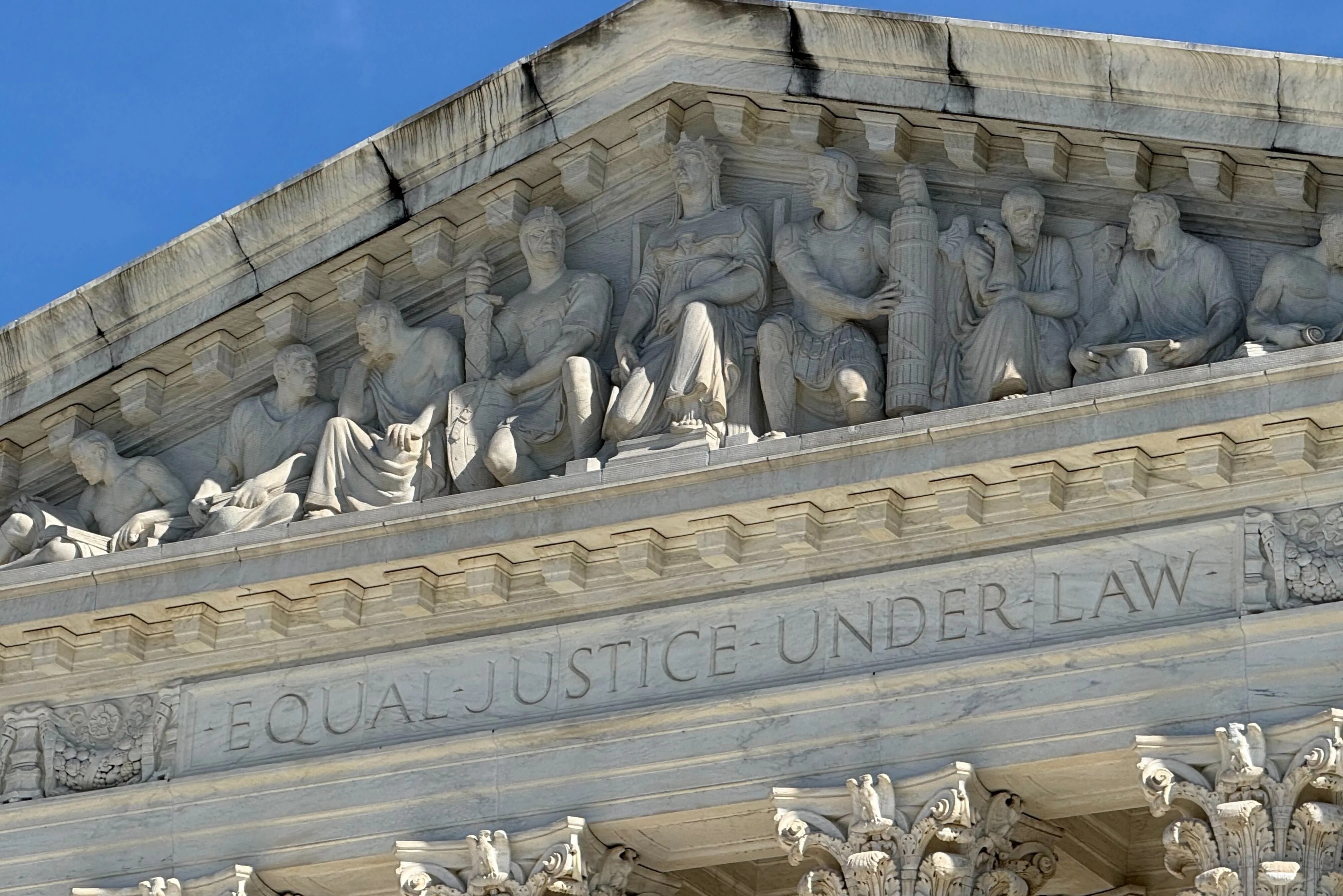
Justice, Democracy, and Law is a recurring series by Edward B. Foley that focuses on election law and the relationship of law and democracy.
Please note that the views of outside contributors do not reflect the official opinions of SCOTUSblog or its staff.
Redistricting law is an utter mess. One major culprit is the Supreme Court’s 2019 decision in Rucho v. Common Cause, which held, 5-4, that addressing partisan gerrymandering is beyond the reach of federal courts.
One might think that once the judiciary has washed its hands of a topic, at least there’s no more ill that can come from that abdication. Yet Rucho looks worse and worse with each fresh redistricting case that the court must confront.
Witness the court’s recent decision in Abbott v. League of United Latin American Citizens. In Abbott, the court granted, on its emergency docket, a stay of a three-judge district court’s preliminary injunction preventing the new Texas map for congressional seats from going into effect. At President Donald Trump’s cajoling, the map was adopted with the goal of improving the odds that Republicans would gain five more seats in next year’s midterms than they would have if Texas kept the map used since the 2020 census.
It is evident to all that Texas adopted its new mid-decade map solely for naked partisan advantage, in derogation of the salutary expectation that new maps are drawn only after each decennial census so as not to unduly unsettle the political playing field at the risk of voter confusion (among other detrimental effects). Trump wants, at all costs, to avoid the Democrats becoming the majority party in the House of Representatives as a result of next year’s elections, which would empower them to launch investigations of his second-term behavior and even potentially impeach him again (though there would be no chance of conviction in the Senate). Accordingly, the president has endeavored to pressure every Republican-led state to alter its current congressional map to minimize the chance of the Democrats taking control of the House. Texas was the first, and biggest, “red” state to comply – although California’s Democrats have also descended into gerrymandering hell in order to “fight fire with fire.”
If it weren’t for Rucho, it would be straightforward to condemn the new Texas congressional map – and any other mid-decade effort to distort district lines to secure more seats for one party over the other – as a blatantly unconstitutional denial of equal electoral representation for the state’s voters regardless of their partisan affiliation. But, as noted above, that case held that any constitutional challenge to partisan gerrymanders is off-limits in the federal judiciary.
Writing for the Rucho majority, Chief Justice John Roberts specifically reasoned that it is impossible for federal courts to know when a redistricting map is infected with too much partisan taint. “At what point does permissible partisanship become unconstitutional?” the chief justice asked. He answered his own rhetorical question by saying “there are no discernible and manageable standards for deciding whether there has been a violation.”
Roberts was wrong. The Texas mid-decade map proves there are at least some circumstances in which it is obvious that partisan manipulation of district boundaries denies equal voting opportunities for members of Congress in violation of the Constitution. When a president demands that maps be changed solely to give him the partisan congressional majority that he wants, and when maps are changed exclusively for this reason and for no other legitimate redistricting purpose, then surely it’s possible for the Supreme Court to discern that “excessive partisan gerrymandering” has occurred. This line drawing is hardly more difficult than the one the court will manage to make, as is clear from the oral argument in Trump v. Slaughter, to distinguish the Federal Reserve from other government agencies for purposes of providing the president a constitutional right to remove officials in the executive branch at will.
Rucho, however, caused the court to flub the recent Texas case. With any inquiry into excessive partisanship off-limits, the district court focused on whether Texas officials had relied inappropriately on race instead of partisanship in drawing their new mid-decade map. In a 2-1 ruling, the district court found that Texas had wrongly used race to achieve its partisan goals. But the Supreme Court, in a distressingly typical 6-3 partisan split of its own, stayed the lower court’s ruling on the ground that partisanship sufficed to explain the new map without any need to consider race. If Rucho weren’t an obstacle, there would have been no need to fight over whether race was an additional factor: the self-trumpeted partisanship of Texas’ mid-decade gerrymandering maneuver would have been enough to condemn it.
Yet it is not just Rucho that’s responsible for making redistricting law such a mess. The Supreme Court has compounded the problem with its racial gerrymandering jurisprudence. Starting with Shaw v. Reno in 1993, the court has said that legislative districts trigger heightened review by courts, and thus are likely unconstitutional, if race predominated in drawing the district’s boundaries. The reason why this line of cases is so troublesome is that it creates an entirely separate inquiry from traditional racial vote dilution claims under either the 15th Amendment or Section 2 of the Voting Rights Act. Racial vote dilution occurs when a racial minority has less opportunity to elect candidates of their choice than voters in the racial majority. Racial vote dilution can be intentional and would thus violate the Fifteenth Amendment, or unintentional, in which case it would still violate the VRA’s Section 2 because it results in the harm of minority voters having less electoral power than majority voters. But the existence of Shaw v. Reno racial gerrymandering claims – which require no proof of any such harm – often causes courts to ignore the much more serious issue of racial vote dilution.
It may be tempting for district courts to focus on a Shaw v. Reno issue rather than racial vote dilution because the latter requires determining whether minority voters are actually injured by the districts drawn, whereas Shaw v. Reno requires examining only what motivated the mapmaker. Yet putting the focus on Shaw v. Reno is to prioritize superficiality over substance: district boundaries need to be drawn somewhere, and as long as everyone regardless of race has equal electoral opportunities – which is necessarily true if there is no racial vote dilution – then how much does it really matter if the mapmaker drew the district boundaries cognizant of racial as well as other demographics? By prioritizing the Shaw v. Reno inquiry, courts thus lose sight of what’s truly important when evaluating the lawfulness of legislative maps.
The new Texas mid-decade redistricting typifies the damage this can do. The plaintiffs challenging the new Texas congressional map claimed that it caused racial vote dilution in violation of both the 15th Amendment and Section 2 of the VRA. But the district court explicitly declined to rule on those vote dilution claims because it rested its preliminary injunction on its perception of a Shaw v. Reno racial gerrymander. And now that the Supreme Court has nullified this Shaw v. Reno determination on the ground that partisanship rather than race sufficiently explains the motive for the new congressional districts, the separate and distinct vote dilution claims are left in limbo.
Even more alarmingly, the Supreme Court’s terse order in the Texas case stated that the district court “violated [the] rule” that “lower federal courts should ordinarily not alter the election rules on the eve of an election.” Never mind that the congressional midterm elections are still 11 months away. Consider the implication of the court’s timing pronouncement for the pending vote dilution claims. The plaintiffs filed their lawsuits against the new Texas map, designed to affect the outcome of the midterm elections, even before the map was officially finalized on August 29, 2025. They could not have sued any sooner.
Now assume the map does cause vote dilution as alleged in the complaints. If so, the Supreme Court seems to be saying that there can be no remedy for racial vote dilution in violation of the Voting Rights Act when a state, like Texas, enacts its violation up to a year before the election takes place. That’s outrageous, effectively granting states complete immunity for aiming to undermine voting rights. Some concern for the timing of election-related litigation is surely warranted, but not to the point that the Supreme Court prevents a remedy for race discrimination that results in an actual diminution of voting rights – and does so by creating a one-year window when the state can act with utter impunity for its deliberate desire to alter the electoral playing field in a way that results in the disadvantage of minority voters.
As bad as that sounds, there’s more. In the monumentally important pending case of Louisiana v. Callais, the court is threatening to eviscerate vote dilution claims under Section 2 of the Voting Rights Act altogether because of a perceived tension between those claims and the Shaw v. Reno doctrine. When vote dilution exists in violation of the VRA’s Section 2, what’s the most straightforward way to remedy it? The answer obviously is to draw districts that equalize electoral opportunities regardless of race. But wait: taking race into account when drawing districts creates a Shaw v. Reno problem, since that doctrine applies whenever a mapmaker takes race into consideration – even when for the purpose of undoing the electoral inequality caused by racial vote dilution. So, it may be that the court in Callais holds that it is impermissible to remedy the actual racially discriminatory denial of equal voting rights. If the court makes that move, it would mean that redistricting law has truly hit rock bottom.
It is too much to expect that the current Supreme Court would fashion sensible redistricting law that would be a model for other modern democracies to follow. That ship sailed with Rucho. Instead, the only hope is for Congress to summon the political will to repair redistricting law itself, as difficult as that shall be given the self-interested desire of incumbent politicians to keep electoral rules unchanged from when they were elected.
But at the very least the Supreme Court should not be an impediment to improved redistricting laws if Congress somehow manages to enact legislation that enhances electoral fairness, as with the passage of the Voting Rights Act of 1965. Rather, the court should facilitate that kind of law’s effectiveness. On this score, the court’s recent stay order in Abbott v. LULAC is a bad omen – especially insofar as it signals that the VRA’s prohibition against vote dilution is unenforceable with respect to any redistricting changes undertaken within a year of an election.
And there is also, unfortunately, reason to fear that with Callais the worst is yet to come.
Posted in Justice, Democracy, and Law, Recurring Columns
Cases: Rucho v. Common Cause, Louisiana v. Callais (Voting Rights Act), Louisiana v. Callais, Abbott v. League of United Latin American Citizens