

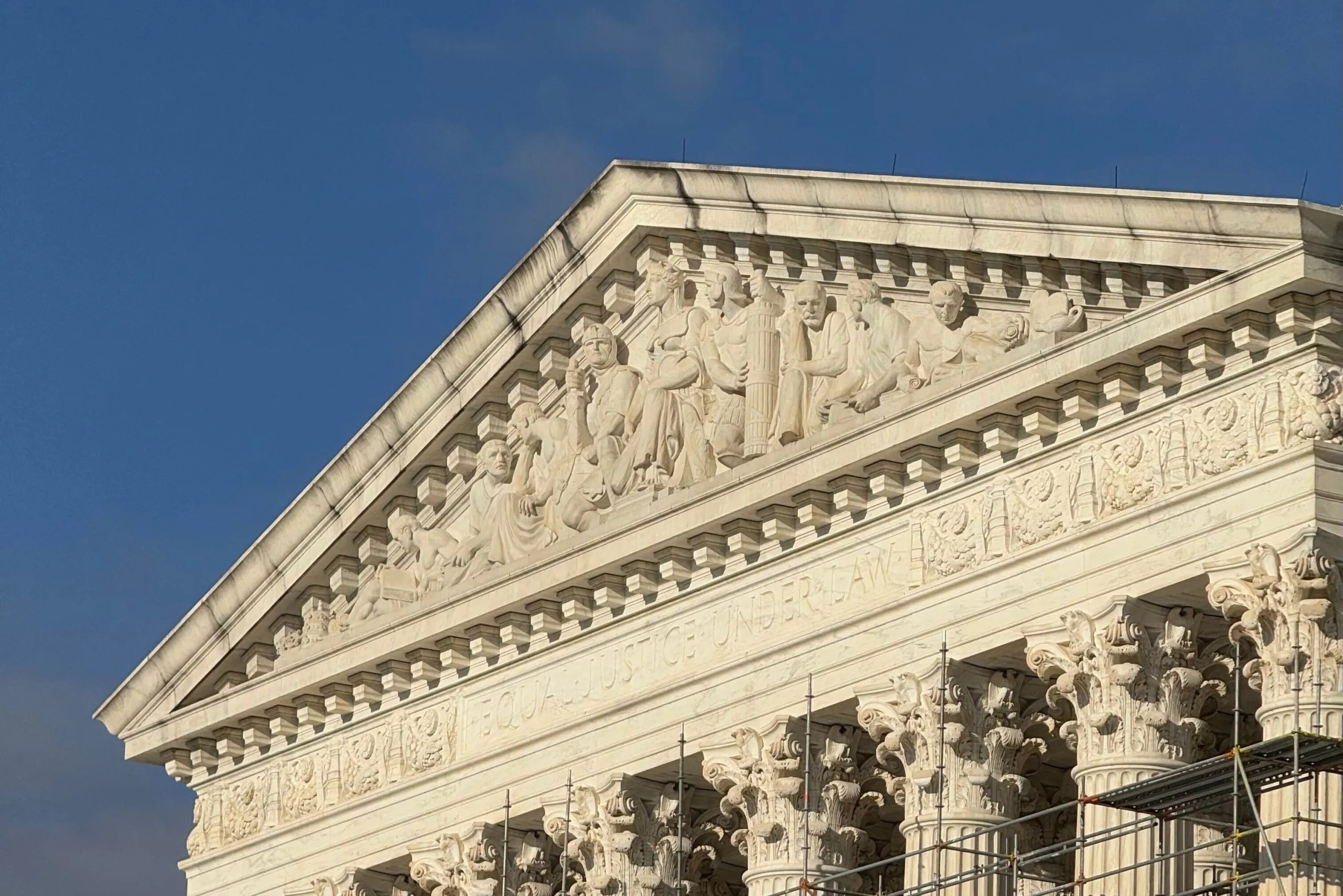


In 1967, President Lyndon Johnson made history when he nominated Thurgood Marshall to replace Justice Tom Clark. Marshall’s nomination as the first Black justice was groundbreaking and hard-fought. But before Marshall, the names of several Black individuals were floated as potential nominees to the Supreme Court.
Perhaps the earliest serious contender was William Hastie. After serving as the first Black territorial governor of the U.S. Virgin Islands, Hastie was appointed by President Harry Truman to serve on the U.S. Court of Appeals for the 3rd Circuit – becoming the first Black federal court of appeals judge. President John F. Kennedy included Hastie on his Supreme Court shortlist but opposition from Chief Justice Earl Warren (who believed Hastie was not liberal enough) and individuals inside the White House (who opposed nominating a Black person) kept Hastie off of the court. (Johnson was also reported to have considered nominating Hastie but ultimately went with Marshall.)
Another name on Johnson’s shortlist was Spottswood Robinson III. Robinson worked alongside Marshall on Brown v. Board of Education and its companion cases while at the NAACP Legal Defense Fund. Following his time with the NAACP, Robinson served as dean of Howard University School of Law (from where he had graduated and briefly taught). In 1964, Johnson nominated Robinson to the U.S. District Court for the District of Columbia, making him the first Black judge to serve on that court. Just two years later, Johnson nominated Robinson once again – this time to the U.S. Court of Appeals for the District of Columbia Circuit, where he served until 1989 and was the chief judge from 1981 to 1986.
Though not formally considered for the court, Charles Hamilton Houston was also a remarkable figure, and someone well known by the justices. Hamilton attended Harvard Law School and became the first Black student to serve on the editorial board of the Harvard Law Review. While working for the NAACP, Hamilton mentored Hastie and Marshall. He also argued several major civil rights cases before the Supreme Court. Although he died in 1950 (four years before Brown v. Board of Education was decided), he is widely recognized as the “architect” of dismantling the “separate but equal” doctrine which was accomplished in Brown. Marshall reflected on Houston’s impact after his death, stating: “We wouldn’t have any place if Charlie hadn’t laid the groundwork for it.”