When the Supreme Court let a president get away with redefining birthright citizenship

The president finds the long-settled meaning of the citizenship clause to be an intolerable obstacle to his agenda. The reason? Each year it would make U.S. citizens of tens of thousands of people who do not fit his racial and cultural ideal of what it means to be an “American.” So what does he do? His administration simply re-defines the citizenship clause to exclude those people – without seeking to amend the Constitution or even get the approval of Congress. What will the Supreme Court do about it?
But enough about the McKinley administration.
Unbeknownst to most, following the 1898 Spanish-American War President William McKinley redefined the phrase “in the United States” in the citizenship clause to deny citizenship to people born in Puerto Rico, Guam, and other territories that became subject to the sovereignty and jurisdiction of the United States following the war. Even today, the executive branch and Congress continue to label those born in most U.S. territories as “statutory” rather than “14th Amendment” citizens, claiming the power to turn their citizenship on and off at will. Indeed, those born in American Samoa remain citizens of nowhere, labeled instead “non-citizen” U.S. nationals. Through all this the Supreme Court has remained stubbornly silent.
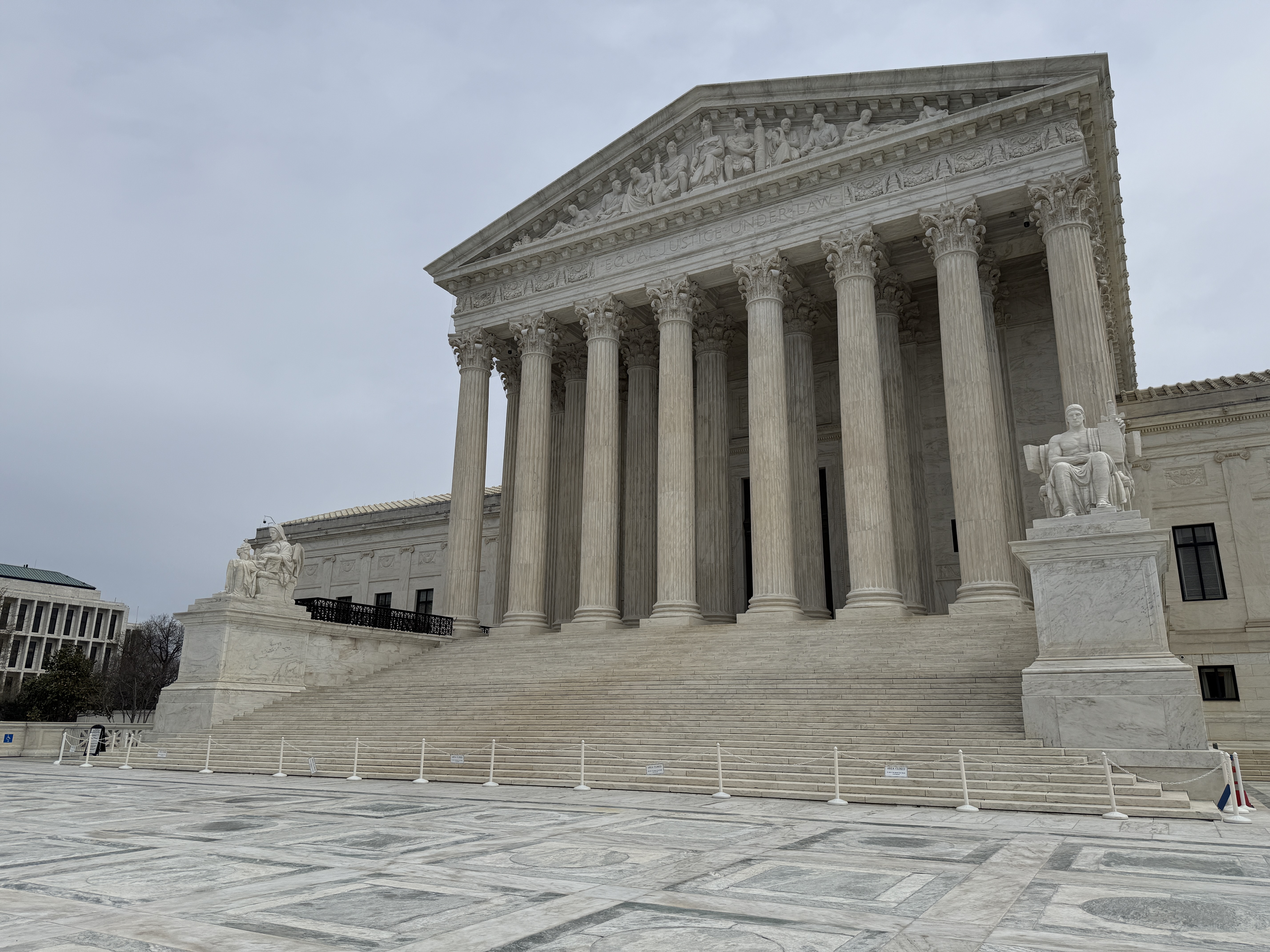
On April 1, the Supreme Court will consider a distinct but related issue: can the Trump administration redefine the long-settled meaning of “subject to the jurisdiction thereof” in the citizenship clause of the 14th Amendment to exclude certain children of immigrants born under the sovereignty and jurisdiction of the United States?
In considering this question, the justices should reflect on the ongoing denial of 14th Amendment citizenship in U.S. territories over the last 125 years as a troubling lesson of what happens when it defers to the political branches on the meaning of this clause.
The citizenship clause as an obstacle to empire
After McKinley’s “splendid little war” with Spain ended, the United States was in a dilemma about what to do with Puerto Rico, Guam, and the Philippines, which it had acquired as spoils of war. The nation was deeply divided between “imperialists” like McKinley and his future Vice President Theodore Roosevelt who wanted to keep and govern these islands as colonies, and “anti-imperialists” like author Mark Twain and industrialist Andrew Carnegie who thought becoming a colonial power was incompatible with the constitutional and democratic values of the United States. Both sides nevertheless agreed that under no circumstances should the people of these islands – who they viewed as racially and culturally inferior – be included within the American polity as U.S. citizens.
There was just one problem for the imperialists – the long-settled understanding of the citizenship clause was that it applied equally to people born in the states and territories alike.
During congressional debates over the citizenship clause, the chair of the Senate Judiciary Committee, Lyman Trumbull, explained that it “refers to persons everywhere, whether in the States or in the Territories or in the District of Columbia.” Just five years after the citizenship clause was ratified, the Supreme Court concluded that it “pu[t] at rest” any notion that those “who had been born and resided always in the District of Columbia or in the Territories, though within the United States, were not citizens.” And mere months before the start of the Spanish-American War, the Supreme Court confirmed in its landmark decision United States v. Wong Kim Ark that the citizenship clause, “in clear words and in manifest intent, includes the children born, within the territory of the United States, . . . of whatever race or color, domiciled within the United States.” (As far back as 1828, Justice Joseph Story had also explained that “[a] citizen of one of our territories is a citizen of the United States.”)
These decisions make sense – from the founding through the ratification of the 14th Amendment large swaths of the United States were still territories and not yet states. So a rule that did not recognize people born in the territories as automatic U.S. citizens would have been the subject of significant debate. There was none.
Undeterred, at the turn of the century McKinley called on his secretary of war, an eminent lawyer named Elihu Root, and his Bureau of Insular Affairs to ensure that U.S. sovereignty over Puerto Rico, Guam, and the Philippines would not mean that people born there would automatically be U.S. citizens. Their solution? Redefine the long-settled meaning of the phrase “in the United States” to exclude these new island territories so birthright citizenship would no longer be an obstacle to overseas expansion.
The Department of War argued in a series of memos that, although “the United States had acquired sovereign title” to Puerto Rico, Guam, and the Philippines through the Treaty of Paris, “these islands were outside the boundaries of the United States.” Specifically, the department took the novel position that “the United States is not bound and privileged by our Constitution” when acting in those territories, even while claiming exclusive “sovereignty” and “jurisdiction” over them. Accordingly, the department concluded that people born there did not “fulfill the requirements of the fourteenth amendment to the Constitution, for while they are subject to the jurisdiction of the United States they are not ‘persons born or naturalized in the United States.’” Under this twisted logic, those born in the new territories would “owe[] allegiance to our Government” but would not be “a member of the civil state, entitled to all its privileges.” In short, they would be colonial subjects.
But what of the Supreme Court’s recognition that the citizenship clause applied to states and territories alike? A “careful reading” of Wong Kim Ark, the department explained, did not support the automatic extension of citizenship “to all classes of inhabitants of any territory which may be acquired by the United States.” Instead, the department argued that Wong Kim Ark actually supported the opposite conclusion – that “the [citizenship] status of the inhabitants of the acquired territory” is subject to the “plenary power” (that is, the complete and absolute authority) of the federal government. Underlying these tenuous arguments, the department made clear its basis for opposing citizenship to these new territories was because they were “largely peopled by an alien race, ignorant of our laws, customs, and institutions, unable to distinguish the difference between the Constitution of the United States and a map of the country.”
The Supreme Court defers
The question of citizenship in the newly acquired territories was first commented on by the Supreme Court in 1901 in Downes v. Bidwell, the most prominent of a series of cases that would become known as the Insular Cases. There, a deeply divided 5-4 court ruled that Puerto Rico was not in “the United States” for purposes of the uniformity clause, which prohibits differential treatment for certain taxes and tariffs. Although Downes had nothing to do with the citizenship clause, Justice Henry Billings Brown, who had authored Plessy v. Ferguson, cautioned that annexation of the new territories could not mean that “children thereafter born, whether savages or civilized,” would be “entitled to all the rights, privileges and immunities of citizens.” Justice Edward Douglass White echoed these same sentiments, observing that the acquisition of overseas territory “peopled with an uncivilized race, yet rich in soil, and valuable to the United States” would not be possible if annexation meant “the immediate bestowal of citizenship on those absolutely unfit to receive it.”
The opportunity to resolve the citizenship question finally came before the Supreme Court in 1904. In Gonzales v. Williams, Isabel González challenged federal efforts to deport her as an undesirable “alien immigrant” after she arrived in Ellis Island from the U.S. territory of Puerto Rico. She argued that she was in fact a U.S. citizen based on her birth in Puerto Rico. The solicitor general disagreed, calling on the court to declare she was not a U.S. citizen. In doing so, he warned “that dangerous or feeble defectives among our island inhabitants are not to be admitted to this country as if they were citizens” because of the “perils” of “oriental and tropical countries … remote in space, culture, or race ideals from our own country.”
So what did the Supreme Court do when presented the opportunity to resolve this much-debated question of citizenship?
It blinked.
Rather than decide whether the citizenship clause applied in the new territories, it simply avoided the question, concluding that although Puerto Ricans owe “permanent allegiance . . . to the United States,” the justices were “not required to discuss . . . the contention . . . that a citizen of Porto Rico [sic] . . . is necessarily a citizen of the United States.” They demurred that the question at issue was “the narrow one whether Gonzales was an alien within the meaning of” the relevant statute, ruling only that “Porto Ricans [sic]” were not “aliens.”
As one scholar has explained, the court’s “strategic silence” and “vagueness” on citizenship opened “the possibility of a status somewhere between citizens and alien” and served as “an invitation to resolve the matter politically and administratively” rather than through the federal courts. This left “lawmakers and administrators room to maneuver in governing new territorial acquisitions,” creating “a vacuum to be filled by bureaucratic and legislative decisions and discretion.”
The unfortunate consequences of allowing the political branches to redefine the citizenship clause
Following this wink and nod from the Supreme Court, the executive branch began relying on the Insular Cases to label those born in island territories as so-called “non-citizen” U.S. nationals – owing “permanent allegiance” to the United States but not having the full rights of citizens.
This held true when the United States purchased the U.S. Virgin Islands from Denmark in 1917, even though the Treaty of Cession expressly provided that “[t]hose who remain in the islands . . . shall be held . . . to have accepted citizenship in the United States.” A 1919 State Department memo concluded that “Danish citizens did not, by the mere fact of the cession of the islands, acquire American citizenship … based upon the well-known statements of the Supreme Court in the so-called Insular Cases.”
Over time, Congress nevertheless began recognizing people born in island territories as U.S. citizens, although based on statute, not the 14th Amendment. It started with Puerto Rico in 1917 and then the U.S. Virgin Islands in 1927. In 1940, Congress statutorily labeled people in Guam and American Samoa as “non-citizen” U.S. nationals, excluding them from the definition of “United States” and instead defining these territories as “outlying possessions of the United States.” Congress went on to recognize those born in Guam as U.S. citizens in 1950. When the Northern Mariana Islands became a part of the United States in 1986, Congress allowed its inhabitants to choose between being full U.S. citizens or being “non-citizen” U.S. nationals – unsurprisingly, few if any chose the latter status.
While people born in Puerto Rico, Guam, the U.S. Virgin Islands, and the Northern Mariana Islands are now recognized as U.S. citizens, both Republican and Democratic administrations have consistently held that they remain “statutory” rather than “14th Amendment” citizens. The State Department’s current Foreign Affairs Manual makes clear its view that absent a congressional grant of citizenship they would remain “U.S. non-citizen nationals.” In 2022, President Joe Biden’s solicitor general, Elizabeth Prelogar, argued to the Supreme Court that “[b]irth in a territory does not automatically confer citizenship under the Citizenship Clause,” because people in U.S. territories are not part of the constitutional “We the People of the United States,” echoing troubling language from Justice Roger Taney’s decision in Dred Scott. Similarly, President Barack Obama’s solicitor general, Donald Verrilli, argued in 2016 that “the Citizenship Clause does not apply to unincorporated territories of the United States,” because the Insular Cases “set out a ‘general rule’ that in an ‘unincorporated territory,’ the Constitution does not necessarily apply in full.”
This label of “statutory” citizenship has consequences. For decades, both the Department of Justice and Congress have suggested not only that Congress could amend existing law to deny automatic citizenship to children born in any of these territories moving forward, but that it could legislate to retroactively strip the citizenship of people who have been U.S. citizens their whole lives. A 1996 House Report grounded these far-reaching conclusions on the Supreme Court’s precedents in the Insular Cases and the 1971 case of Rogers v. Bellei, where the court allowed Congress to legislatively strip the citizenship of someone who did not have 14th amendment citizenship. The report explained the congressional view that “the statutory citizenship of the residents of Puerto Rico . . . could be restricted, modified or even withdrawn by Congress as long as the fundamental rights test of the Insular Cases . . . is met,” meaning, in its view, “the existence of a legitimate Federal purpose achieved in a manner reasonably related to that purpose.”
These are not abstract or hypothetical issues for people born in American Samoa, for example. Even today, federal statutes and administrative policies purport to label the children of non-U.S. citizen parents born there as so-called “non-citizen” U.S. nationals. As such, they lack the full rights of citizens, often being treated even worse than foreign nationals under federal, state, or local law. When individuals born in American Samoa challenged these discriminatory laws as incompatible with the citizenship clause, the Obama, Trump, and Biden administrations all defended the unilateral power of Congress to deny citizenship in U.S. territories. In 2022, when the most recent of these cases reached the Supreme Court, it denied review.
None of this has any basis in the text or history of the citizenship clause. Yet here we are.
Will the Supreme Court repeat the same mistakes?
As the Supreme Court considers next week whether to defer to the Trump administration’s redefinition of the long-settled meaning of the citizenship clause, the experience of people in U.S. territories should serve as a stark lesson.
Supreme Court deference to the political branches over the last 125 years has left the question of birthright citizenship in U.S. territories subject to political manipulation. It is deeply problematic that the political branches continue to hold that they have the power to unilaterally deny U.S. citizenship to people born in Puerto Rico, Guam, the U.S. Virgin Islands, or the Northern Mariana Islands – even if they have been U.S. citizens their whole lives. With the Trump Administration announcing “denaturalization” as one of its top priorities and a recent Senate Judiciary Committee hearing and Senate letter (signed by Senator Markwayne Mullin, now the nominee to lead the Department of Homeland Security) focused on the application of birthright citizenship in the Northern Mariana Islands, this is not just an intellectual concern.
For American Samoans, for example, the status of “non-citizen” U.S. nationals continues to cause significant confusion at the federal and state level, from the U.S. Army stripping the security clearances of long-time American Samoan service members, to Hawaii telling a favored state legislative candidate she was ineligible to run for office on the eve of an election, to Oregon improperly registering American Samoans to vote. All of which is to say: Leaving questions as important as the meaning of the Constitution’s guarantee of birthright citizenship unresolved has ramifications – predictable and unpredictable. This is true whether the question is citizenship in U.S. territories or citizenship for people whose parents are temporary residents or unauthorized immigrants.
In Marbury v. Madison, the Supreme Court warned that when political actors are allowed to define for themselves the meaning of the Constitution’s restrictions on their authority, “the distinction between a government with limited and unlimited powers is abolished.” The Supreme Court has consistently recognized that “the framers of the [14th] Amendment . . . wanted to put citizenship beyond the power of any governmental unit to destroy.” After all, as Chief Justice Earl Warren explained, “[c]itizenship … is nothing less than the right to have rights.”
As we approach the April 1 oral argument in Trump v. Barbara it is clear we have seen this movie before. The question is, will it have a different ending this time around?
Disclaimer: The author served as counsel of record in an amicus brief filed in support of the Trump v. Barbara Respondents on behalf of current and former elected officials and judges from U.S. territories.
Posted in Court Analysis, Merits Cases
Cases: Trump v. Barbara (Birthright Citizenship)