Court to consider ability of federal courts to confirm arbitration awards

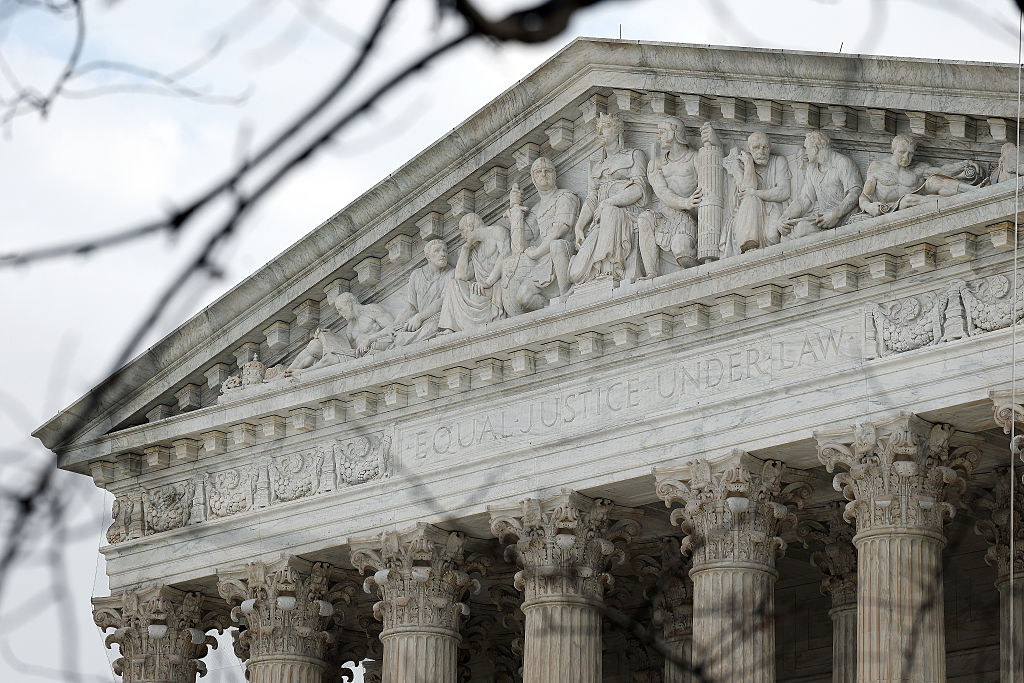
Next week’s argument in Jules v Andre Balazs Properties considers a technical question about the jurisdiction of federal courts to enforce an arbitration award. It is the immediate successor of a case from 2022, Badgerow v Walters, which held that federal courts do not have jurisdiction based on the Federal Arbitration Act to grant that relief. The question here is whether a federal court that has a pending case over which it had jurisdiction to compel arbitration can use that jurisdiction to entertain a motion to confirm the arbitration award.
Like Flowers Foods, Inc. v. Brock, which is being argued today, Jules arises under the FAA, the law establishing a national policy in favor of arbitration. The bulk of litigation under the statute has been under Section 4, which generally obligates federal courts to compel arbitration when the parties have a pre-dispute arbitration agreement, and pretty clearly gives federal courts jurisdiction to do so. The statute authorizes various other forms of relief, the most important of which is enforcing (or invalidating) an arbitration award. The statute is much less clear, however, about whether it gives federal courts jurisdiction to issue that relief. Which brings us to Badgerow, in which the Supreme Court held that the FAA does not give federal courts such jurisdiction.
In this case, Adrian Jules, an employee of a hotel operated by Balazs, filed suit in federal court raising claims of employment discrimination. In due course, Balazs asked the court to send the dispute to arbitration, which the court did. Crucially, the court did not then dismiss Jules’s action but simply stayed it pending the results of the arbitration. After Balasz prevailed in the arbitration, it came back to the federal court and asked it to confirm the arbitration award and dismiss Jules’ claims. The lower courts granted that relief, holding that their jurisdiction over Jules’ original action gave them the authority to confirm the award.
From Jules’ perspective, the whole point of Badgerow is that once arbitration has been compelled, the FAA does not provide further jurisdiction to federal courts; in other words, they are out of the game at that point. The FAA relief to confirm (or reject) an arbitration award is just like litigation to enforce a settlement agreement – which is generally not within the federal courts’ province. And because arbitration is, in substance, contract litigation, Jules argues that the case does not belong in federal court even if the underlying claims that were settled (or arbitrated) arose under federal law. Jules notes that Section 3 of the FAA authorizes a stay “until arbitration has been had,” and argues that the stay necessarily ends when the arbitration is complete, and that the court’s jurisdiction ends with it.
The employer (Balazs) points to supplemental jurisdiction under 28 U.S.C. § 1367. That statute authorizes federal courts, once they have jurisdiction initially, to adjudicate all “related” claims that are “part of the same case or controversy.” Because a motion to confirm an arbitration award necessarily arises out of the “same case or controversy” as a motion to compel the arbitration that led to that award, Balazs argues that Section 1367 directly authorizes the relief that the lower courts granted here.
In essence, the parties are disputing whether the FAA is a free-standing and self-contained jurisdictional statute or whether the general rules of Title 28 of the Judicial Code apply to define the powers that federal courts have. I would look to Justice Elena Kagan as the key figure in argument, for the two overlapping reasons that she wrote the opinion in Badgerow and that she had decades of experience teaching about supplemental jurisdiction in her courses on federal courts. We’ll see what she thinks about it next week.
Posted in Court News, Merits Cases
Cases: Badgerow v. Walters, Jules v. Andre Balazs Properties