Haitian nationals ask court to deny Trump administration’s request to remove their protected status

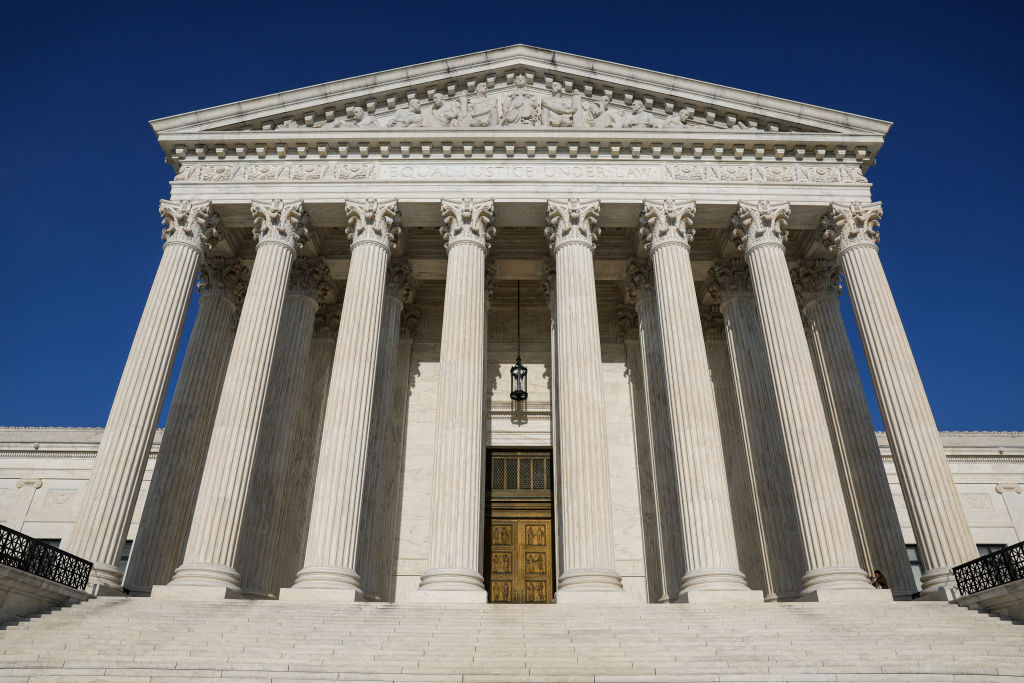
A group of Haitian nationals urged the Supreme Court on Monday to leave in place a ruling by a federal judge in Washington, D.C., that allows them to stay in the United States for the time being because of unsafe conditions in their home country. Since returning to office last year, the Trump administration has sought to end deportation protections for several countries, including Venezuela, Ethiopia, and South Sudan. In a 40-page filing, the Haitian nationals told the justices that they will “suffer irreparable—potentially fatal—injury” if that ruling is put on hold because they could be deported immediately to Haiti, which they described as “‘a maelstrom of disease, poverty, violence (including sexual violence) and death.’”
The program at the center of the dispute is known as the Temporary Protected Status program. Established in 1990 by Congress, it allows the Department of Homeland Security to authorize the nationals of a specific country to remain in the United States and work when they cannot go home because of a natural disaster, armed conflict, or other “extraordinary or temporary” conditions there.
Janet Napolitano, then the Secretary of Homeland Security, designated Haiti under the TPS program in 2010, shortly after a 7.0 magnitude earthquake struck just outside the country’s capital, Port-au-Prince, causing catastrophic damage and hundreds of thousands of deaths. As of June 2025, there were approximately 350,000 Haitian nationals in the United States with temporary protected status.
Then-DHS Secretary Kristi Noem announced late last year that the Trump administration intended to terminate Haiti’s TPS designation, effective Feb. 3, 2026. She had determined, she said, that although “escalating violence and gang violence” persisted in Port-au-Prince, “there are no extraordinary and temporary conditions in Haiti that prevent Haitian nationals … from returning in safety.” And in any event, Noem added, “it is contrary to the national interest of the United States to permit Haitian nationals … to remain temporarily in the United States.”
A group of Haitian nationals with TPS went to federal court in December to challenge Noem’s efforts to end the program. On Feb. 2, U.S. District Judge Ana Reyes temporarily blocked the government from ending the program for Haitians. She ruled that it was “substantially likely” that Noem had ended the Haitian TPS designation “because of hostility to nonwhite immigrants.” Noem had also violated the federal law governing administrative agencies, Reyes concluded, because she had not consulted with other federal agencies before ending Haiti’s TPS designation, nor had she considered “the billions Haitian TPS holders contribute to the economy.”
A divided panel of the U.S. Court of Appeals for the District of Columbia Circuit rejected the government’s request to pause Reyes’ ruling while the Haitian nationals’ challenge moves forward. Although the Supreme Court has already granted requests from the Trump administration to freeze similar rulings involving TPS designations for Venezuela, the majority explained, those cases were “‘meaningfully distinct’ because the government had invoked ‘complex and ongoing negotiations with Venezuela’” as part of its argument for temporary relief – negotiations, the majority suggested, that are not taking place with Haiti.
The Trump administration came to the Supreme Court last week, asking the justices to step in and block Reyes’ ruling. U.S. Solicitor General D. John Sauer characterized the government’s effort to end the TPS designation for Haiti, as well as a similar effort for Syria, as “‘the legal equivalent of fraternal, if not identical, twins’” to its effort to end Venezuela’s TPS program, which the court had allowed to go forward for now. The lower courts, Sauer contended, “should be guided” by the Supreme Court’s orders in the Venezuelan TPS dispute; indeed, he noted, two other federal courts of appeals have followed those orders in cases involving the termination of TPS for other countries.
In their Monday filing, the Haitian nationals countered that if Reyes’ order is put on hold, they could suffer permanent harm by being deported to Haiti while the litigation continues. They noted that conditions in Haiti remain perilous, so much so that “the State Department advises that people ‘not travel to Haiti due to kidnapping, crime, terrorist activity, civil unrest, and limited health care.’” Indeed, they continued, “last month, the decapitated bodies of four Haitian women deported from the U.S. several months earlier were found dumped in a river.”
By contrast, they argued, the government will not suffer permanent harm if Reyes’ order remains in place for now. “Haitian TPS holders have lived in our midst for nearly two decades without problem,” they wrote. “There is no sudden emergency requiring their immediate expulsion.”
Moreover, the Haitian nationals added, they are likely to prevail on the merits of their challenge, which is another key factor that courts consider in deciding whether to grant temporary relief. Among other things, they said, they are likely to win on their claim that the Trump administration violated the federal law governing administrative agencies. They emphasized that although Noem was required to consult with other agencies before terminating Haiti’s TPS designation, the government has conceded “that the only purported consultation was a three-sentence email exchange between a DHS staffer and a State Department staffer that did not address conditions in Haiti at all and touched on national interest obliquely at best.”
Finally, the Haitian nationals urged the justices not to grant review now, without waiting for the court of appeals to weigh in. The issues in the case, they contended, are “important and complex” and are therefore “best resolved in the ordinary course.”
Posted in Court News, Emergency appeals and applications
Cases: Trump v. Miot