The footnote that broke constitutional law

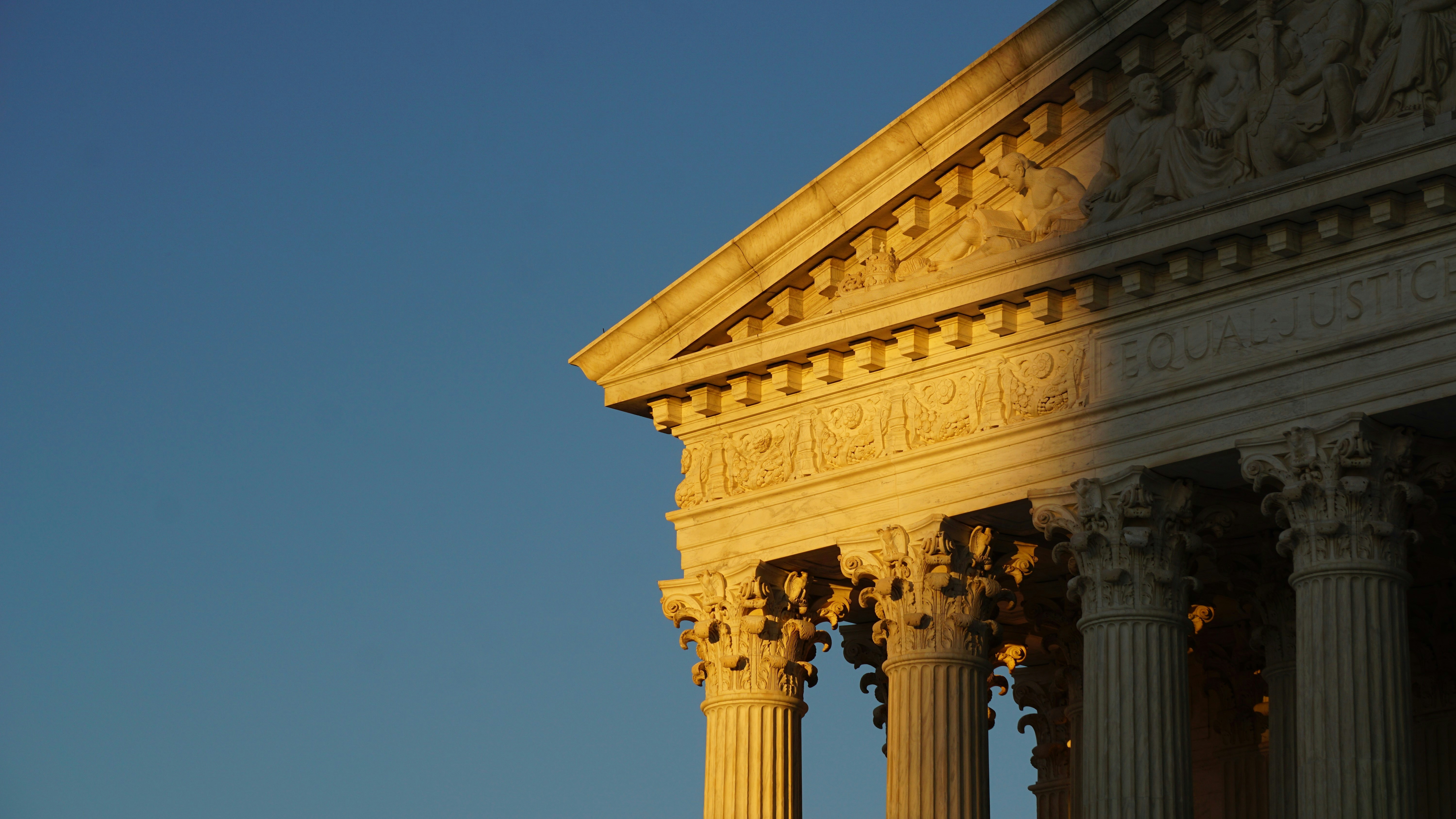
In Dissent is a recurring series by Anastasia Boden on Supreme Court dissents that have shaped (or reshaped) our country.
On a Depression-era dinner table sat a can of milk that wasn’t quite milk. It was called Milnut, and it was technically a “filled milk” – meaning it looked and tasted like the original but had been spun through a centrifuge to remove the butterfat and fortified with vegetable or coconut oil. The valuable butterfat was later sold separately, allowing Milnut to be priced cheaply. Its price, and the fact that it was shelf-stable, made it a formidable alternative to traditional dairy during hard times. And within the world of dairy, it was revolutionary. One reporter likened its makers to Thomas Edison and Henry Ford.

Milnut was safe to drink. But it was dangerous to the entrenched dairy industry, which lobbied Congress for an interstate shipping ban in the form of the Filled Milk Act. Eventually, federal regulators sued the maker of Milnut, Carolene Products Company, for selling filled milk across state lines. The resulting Supreme Court decision would go on to become a staple of constitutional law – not for its holding, but for a mere footnote. Though joined by only four justices and unnecessary to the outcome, that footnote now governs the way many of our constitutional rights are treated in court.
I. The Filled Milk Act
From the outset, the Filled Milk Act bore the hallmarks of economic favoritism rather than a bona fide health regulation. Congress did not stumble upon filled milk by accident; it was pushed there by a dairy industry alarmed by a low-cost competitor during a time of widespread economic distress.
But the makers of Milnut fought back, even deliberately driving the product across state lines to set up a test case. Initially a district court struck down the law. Although the congressional committee reports claimed that filled milk lacked vitamin A and was therefore not as “desirable for feeding infants and nursing mothers” as dairy milk, filled milk was perfectly safe for consumption and was truthfully labeled to distinguish it from traditional milk. More tellingly, the committee had invited affected businesses to show up and testify in favor of the ban.
Based on this, the district court concluded that the law looked more like illegitimate protectionism than a benign health or safety regulation, and that it violated the due process and takings clauses of the Fifth Amendment. And because Congress’ ban threatened not merely the product’s shipment in interstate commerce, but the product’s viability even within states, it also exceeded Congress’ power over interstate commerce.
After several similar lawsuits involving the same ban, some of which ruled against Milnut, the Supreme Court agreed to take up the case.
II. A court in transition
In 1938, the Supreme Court was emerging from the so-called Lochner era, a time when the justices took economic rights (like the right to contract, trade, and earn a living) seriously. In the 1905 case of Lochner v. New York, a majority of justices had ruled that the due process clause of the 14th Amendment protected the right to economic liberty in the same way that it protected other fundamental rights, and courts therefore had a duty to invalidate laws that arbitrarily burden that liberty. While the government could regulate economic activity to protect public safety, it had to produce evidence that its law was meaningfully related to that end. In Lochner itself, for example, the court held that New York had failed to produce evidence that could justify restricting the number of hours that bakers in the state chose to work.
Economic regulations took center stage during the presidency of Franklin Roosevelt and divided the conservative and liberal blocs of the Supreme Court. The conservative wing, known as the “Four Horsemen” (and consisting of Justices James McReynolds, Pierce Butler, George Sutherland, and Willis Van Devanter) trumpeted economic rights and pushed back against federal reach into private transactions. But by the late 1930s, the composition of the court had changed. Roosevelt had appointed Justices Hugo Black and Stanley Reed to replace Van Devanter and Sutherland, and the majority had shifted. And the court had grown deferential to Roosevelt’s expansive federal economic program.
Only seven justices heard Carolene Products – Reed was recused, having recently served as solicitor general, and Justice Benjamin Cardozo was ill (he would die that year). Six of them ruled for the government.
Writing for the majority, Justice Harlan Fiske Stone said that it was good enough that Congress had held hearings concerning filled milk’s effects on public health, “in the course of which eminent scientists and health experts testified.” The court would not inquire further into whether Congress’ concerns were legitimate or if the act even addressed them. Whether the product’s labeling was sufficient to dispel any consumer confusion, or whether an outright ban was necessary, “was a matter for the legislative judgment, and not that of courts.”
Still, even those justices unsympathetic to economic liberty recognized that not all constitutional rights could be treated so casually. Stone, for example, had been an outspoken critic of laws that suppressed free speech, as evidenced by his dissent opposing compulsory flag salute laws in Minersville School District v. Gobitis. How, then, could the court justify judicial protection for some liberties while abandoning others?
III. The footnote
To resolve the tension, Stone added what would become footnote four: laws should be presumed constitutional unless they interfered with “the corrective political processes which can ordinarily be expected to bring about repeal of undesirable legislation.” So, for instance, laws that meddle with political organizations, the dissemination of speech, the right to vote, or that target political minorities, might warrant heightened scrutiny (that is, greater justification) than ordinary economic legislation.
Chief Justice Charles Evans Hughes, however, suggested a change: rather than focusing on a law’s effect on the democratic process, courts should focus on the nature of the right at issue. Some rights, like those explicitly enumerated in the Constitution, should get favored treatment. Others, like economic liberty, should not.
Rather than choosing between the theories, Stone kept both, melding them into one, longer footnote. According to Stone’s clerk, the justice did so because he had written the footnote “not as a settled theorem of government” but instead as “a starting point for debate—in the spirit of inquiry, the spirit of the Enlightenment.” The footnote did not “purport to decide anything; it merely made some suggestions for future consideration (emphasis added).” So Stone simply incorporated Hughes’ suggestions, hopeful that future judges would hammer it all out. In short, laws would be presumed constitutional unless they affected a right specifically enumerated in the Constitution, restricted the political process, or prejudiced what Stone labeled a “discrete and insular minority.” The Filled Milk Act did none of the above.
IV. The quiet dissenter
Although six justices agreed on the outcome of the case, only four justices joined the section with Stone’s footnote. McReynolds, alone, affirmatively dissented.
McReynolds is a complicated and unloved figure in constitutional law. Born in Kentucky in 1862, he was the son and grandson of volunteer surgeons for the Confederacy who came home for his birth and then returned to war. He graduated as the valedictorian at Vanderbilt with scholarship prizes for physics and astronomy. He then graduated from the University of Virginia School of Law, again first in his class. He went into private practice, taught at Vanderbilt Law School, tried his hand at politics as a candidate for the Democratic Party, and became a trust-busting attorney general for President Woodrow Wilson.
By most accounts, he was an unlikeable, irascible bigot. He reportedly would not shake hands with Justice Louis Brandeis because Brandeis was Jewish, and turned his chair when the prolific civil rights attorney Charles Hamilton Huston, who was Black, argued before the court. He wouldn’t speak to Justice John Clarke, either, on account of his political views. Once, when Stone said that an attorney’s brief was “the dullest argument I ever heard in my life,” McReynolds replied, “The only duller thing I can think of is to hear you read one of your opinions.”
Despite that, he could be privately generous. McReynolds donated his estate to charity, including a large sum to the children’s hospital in Washington, D.C. Justice Oliver Wendell Holmes once said, “Poor McReynolds is, I think, a man of feeling and of more secret kindliness than he would get credit for.” Still, no sitting justice attended his funeral, and one article reviewing the memoirs of a McReynolds clerk is aptly titled, “Clerking for Scrooge.”
As a jurist, McReynolds spent 26 years on the bench and wrote some of the most protective due process cases in the court’s history, including Meyer v. Nebraska, striking down a law that prohibited private schools from teaching in foreign languages, and Pierce v. Society of Sisters, vindicating the right of parents to direct the upbringing and education of their children. His defense of unenumerated constitutional rights carried over to the economic realm: he regularly voted with his fellow Four Horsemen to push back against much of FDR’s early economic agenda.
By the time of Carolene Products, McReynolds had gone from a member of the majority to a consistent dissenter. In total, he wrote 157 dissents, 93 of them against New Deal programs. In Nebbia v. New York, he railed against the majority for making milk more expensive during an economic crisis by upholding minimum price laws. According to him, the majority’s reasoning effectively declared “that rights guaranteed by the Constitution exist only so long as supposed public interest does not require their extinction.” In Carolene Products, McReynolds would similarly find himself, and the constitutional right to economic freedom, on the losing side.
V. A life of its own
Yet, in Carolene, McReynolds did not write a dissenting opinion, instead simply registering his dissenting vote and offering not a word to defend it. It is hard to say why. Perhaps by that time he was hopeless about the tide of constitutional law. Perhaps his silence was simply consistent with his view of silence as contempt. Or perhaps he thought the footnote unremarkable and mundane.
It’s also difficult to predict what would’ve happened had he done so. But rather than becoming a starting point for discussion, as Stone intended, footnote 4 took on a life of its own. It has become a centerpiece of constitutional law. Lawyers fight tooth and nail over whether a challenged law most directly affects an enumerated or unenumerated right, or whether it affects a discrete and insular minority group, so that they can receive the higher level of judicial protection to which Stone alluded in the footnote.
The footnote is the basis for modern “tiers” of scrutiny – in which the court decides how strictly or how loosely to evaluate government action. The highest level (strict scrutiny) requires laws to be narrowly tailored to further some compelling government purpose. But rather than being a flexible test, it’s often characterized as “strict in theory, fatal in fact.” Conversely, the lowest tier (rational basis scrutiny) has been called “anything goes.” Economic freedom has been a loser in this scheme, since it has been relegated to the lowest tier and therefore receives almost no judicial scrutiny at all. Some courts have even upheld restrictions on economic rights based on justifications dreamt up by the judges themselves and explicitly disclaimed by the government.
Not too long after Carolene Products, Justice Felix Frankfurter criticized “constitutional adjudication by a deceptive formula.” And he quoted Holmes as saying, “[t]o rest upon a formula is a slumber that, prolonged, means death.” Just last year, Justice Neil Gorsuch wrote that he worried rigid tiers of scrutiny can “take on a life of [their] own” and “do more to obscure than to clarify the ultimate constitutional questions.” Those criticisms are particularly true, as McReynolds predicted in Nebbia but failed to reiterate in Carolene, with regard to economic rights – which have been relegated to an afterthought by the court.
VI. The aftermath
After the Supreme Court upheld the Filled Milk Act, Charles Hauser, one of Milnut’s founders, did not give up. He invested in studies showing Milnut’s healthfulness, innovated and changed the company’s name to Milnot, and skirted the Filled Milk Act by selling only within states where he had factories. He even built a factory on the Oklahoma-Missouri border so that the milk produced on each side could be sold in its respective state.
And he kept suing. Decades later his son would remark that he had “lived with this case almost all of [his] life.” Hauser spent “hundreds of thousands of dollars in legal fees and even a weekend in jail” fighting anticompetitive limitations on Milnut, before being pardoned by FDR. In 1972, a district court finally agreed that the Filled Milk Act, as applied to Milnut, violated due process. But by that time, Hauser was 92 and hospitalized, and the protectionist ban had succeeded in preventing his company from potentially becoming a nationwide success. His family remarked that it would have been futile to tell him the outcome of the lawsuit because he was no longer capable of understanding.
While Milnut has thus been vindicated in the court of history, the legacy of Carolene Products lives on in the court of law. One wonders what would’ve happened if McReynolds had managed to put aside his contempt and write a persuasive dissent.
Posted in In Dissent, Recurring Columns