The Supreme Court and voting identification

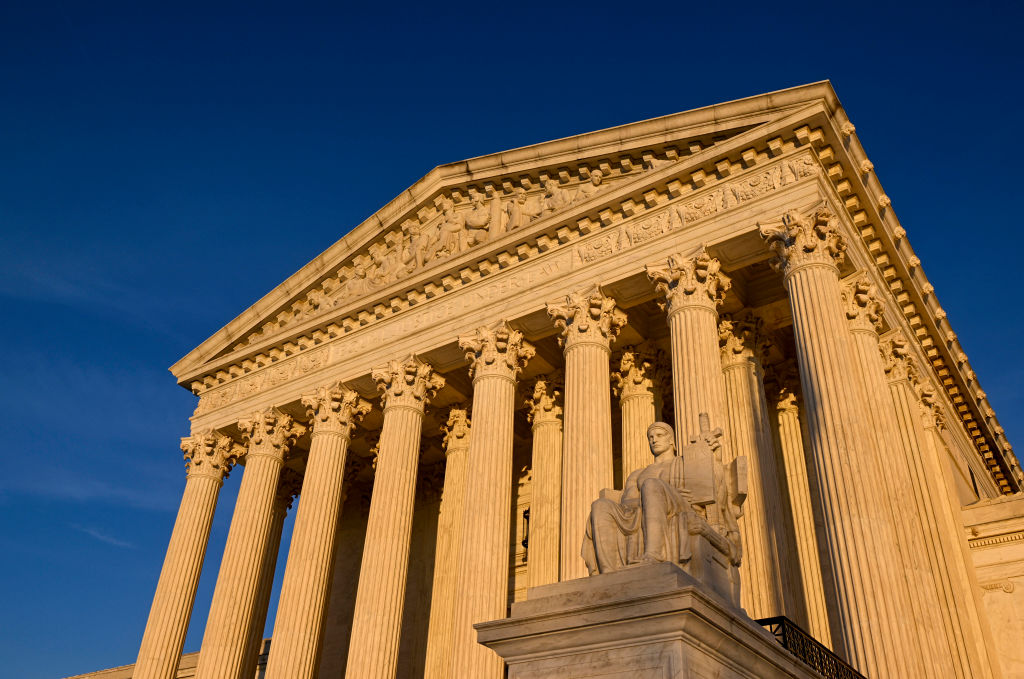
Courtly Observations is a recurring series by Erwin Chemerinsky that focuses on what the Supreme Court’s decisions will mean for the law, for lawyers and lower courts, and for people’s lives.
What has the Supreme Court said about requirements for proof of identification for voting and – given this – what would be the likely fate of the Safeguard American Voter Eligibility Act if it were enacted?
The SAVE Act is a proposed law that would require individuals to provide documentary proof of citizenship when registering to vote and photo identification at the time of voting. It would further require voters submitting absentee mail ballots to provide a photocopy of their I.D. The act also would require states to frequently review voter rolls and remove any noncitizens. And it would mandate that states share voter registration data with the federal government, which many states have refused to do. The act would create personal criminal liability for election officials who violate the law.
The bill passed the House of Representatives in February 2026 and is being stalled in the Senate by a Democratic filibuster. President Donald Trump has urged Republican Senators to change the Senate’s rules to allow this to pass with 50 votes (and if needed, the vice president breaking a tie), rather than the 60 votes needed to end a filibuster. So far, the Republican leadership in the Senate has indicated that there are not the votes to change the Senate rules concerning the filibuster. But there is great pressure on Republican Senators to do so.
There is one major Supreme Court precedent concerning photo identification in voting: 2008’s Crawford v. Marion County Election Board, on an Indiana law requiring voter identification for voting. Reflecting the political impact of the requirement, every Republican in the Indiana General Assembly voted in favor of the law and every Democrat voted against it. The Supreme Court, without a majority opinion, upheld the facial constitutionality of the Indiana law.
Justice John Paul Stevens announced the judgment of the court, and his opinion was joined by Chief Justice John Roberts and Justice Anthony Kennedy. Stevens, quoting the 1983 case of Anderson v. Celebrezze, said that the general rule is that “evenhanded restrictions that protect the integrity and reliability of the electoral process itself are not invidious … Rather than applying any ‘litmus test’ that would neatly separate valid from invalid restrictions, we concluded that a court must identify and evaluate the interests put forward by the State as justifications for the burden imposed by its rule, and then make the ‘hard judgment’ that our adversary system demands.”
Stevens then proceeded to balance the burden on the right to vote against the state’s interest in preventing fraud. As for the former, Stevens found a minimal burden especially because most people have some form of picture identification and those without it can cast a provisional ballot and later verify their identity. As for the latter, Stevens said that there was an important state interest in preventing voter fraud and preserving confidence in the election system. He wrote: “There is no question about the legitimacy or importance of the State’s interest in counting only the votes of eligible voters.” Stevens was clear that the court was rejecting a facial challenge to the law (that is, that the law was always unconstitutional), but there is still the possibility of an “as applied” challenge if it can be shown that in operation the law unduly burdens the right to vote.
Justice Antonin Scalia concurred in the judgment in an opinion joined by Justices Clarence Thomas and Samuel Alito. Scalia said that strict scrutiny (the highest standard of review) is appropriate when it comes to evaluating the constitutionality of a regulation of voting only if the burden is “severe.” Scalia argued that the Indiana law should be allowed because it is reasonable: “The universally applicable requirements of Indiana’s voter-identification law are eminently reasonable. The burden of acquiring, possessing, and showing a free photo identification is simply not severe, because it does not ‘even represent a significant increase over the usual burdens of voting.’ And the State’s interests are sufficient to sustain that minimal burden. That should end the matter.” (It should be noted that six justices rejected Scalia’s approach that only “severe” burdens on the right to vote trigger strict scrutiny.)
Finally, Justices David Souter, Ruth Bader Ginsburg, and Stephen Breyer dissented. Souter argued that there is no evidence of voter fraud that would be cured by photo identification and that it would cause many individuals to be unable to vote. As Souter explained, “Indiana’s ‘Voter ID Law’ threatens to impose nontrivial burdens on the voting right of tens of thousands of the State’s citizens, and a significant percentage of those individuals are likely to be deterred from voting … a State may not burden the right to vote merely by invoking abstract interests, be they legitimate, or even compelling, but must make a particular, factual showing that threats to its interests outweigh the particular impediments it has imposed.”
Crawford v. Marion County would likely mean that the requirement for photo identification for voting in federal elections would be constitutional. But the requirement for proof of citizenship to register to vote is quite different. Under the SAVE Act, a person would have to produce an original birth certificate, a passport, or a naturalization certificate to register to vote. The Brennan Center estimates that more than 21 million Americans lack ready access to those documents. It is estimated that approximately half of Americans do not have a current passport. Also, many people do not have a copy of their original birth certificate. And often birth certificates do not reflect a person’s current name. For example, it is estimated that 70 million married people have changed their last name from the name on their birth certificate. This makes a requirement for proof of citizenship radically different from how the court in Crawford characterized the minimal burden of requiring photo identification for voting.
Moreover, there is a fee to get a birth certificate from a state and about $165 fee for a passport. The Supreme Court has held that people cannot be required to pay money in order to vote. In the 1966 case of Harper v. Virginia Board of Elections, the court found that a poll tax of $1.50 was unconstitutional. The court declared, “To introduce wealth or payment of a fee as a measure of a voter’s qualifications is to introduce a capricious or irrelevant factor. The degree of the discrimination is irrelevant.” The effect of the SAVE Act would be to impose an unconstitutional cost in order to register to vote.
Under the balancing test used in Anderson v. Celebrezze and Crawford v. Marion County, a requirement for proof of citizenship to register to vote is thus very likely unconstitutional. A federal law, the Illegal Immigration Reform and Immigration Responsibility Act of 1996, already explicitly prohibits noncitizens from voting in federal elections. It is a felony for a person to falsely attest under penalty of perjury to being a citizen and eligible to vote.
There is no evidence that noncitizens are registering to vote and casting ballots. Many studies have been done and all have come to the same conclusion: instances of noncitizens voting are extremely rare. A study in 2017 by the Brennan Center looked at 42 jurisdictions where 23.5 million votes were cast, and found only 30 instances in which there were investigations of noncitizens voting, or 0.0001 percent of the ballots vast. The Heritage Foundation, which has advocated passage of the SAVE Act, found that since the 1980s, out of over a billion ballots cast, there only are 68 documented instances of noncitizens voting.
Some states have carefully reviewed their elections to investigate whether noncitizens are voting and found that it just isn’t happening. Utah, for example, did a review of its entire voter list from April 2025 through January 2026. After an exhaustive review of over 2 million registered voters, it found only one instance of a noncitizen registering to vote and zero instances of a noncitizen voting. In Georgia, a 2024 audit of its 8.2 million registered voters found only 20 noncitizens who had registered.
While the SAVE Act thus would do nothing to protect the integrity of elections, it would have the effect of keeping many citizens from being able to register to vote. This has been the experience in states that have adopted a requirement for proof of citizenship in order to vote. For example, when Kansas adopted a requirement for proof of citizenship in order to register to vote, 31,000 citizens – or 12% of all applicants – were kept from registration. Quite importantly, this does not reflect how many people will choose not to bother to register to vote if they have to go to the extra step of figuring out how to obtain an original birth certificate or applying for a passport.
The fate of the SAVE Act in Congress is uncertain despite the strong pressures from Trump. But if enacted, it is sure to be challenged in the courts. While requiring photo identification for voting would likely be upheld, requiring proof of citizenship to register to vote seems clearly unconstitutional.
Posted in Courtly Observations, Featured, Recurring Columns