Skip to content
Newsletter

SCOTUStoday for Wednesday, March 25

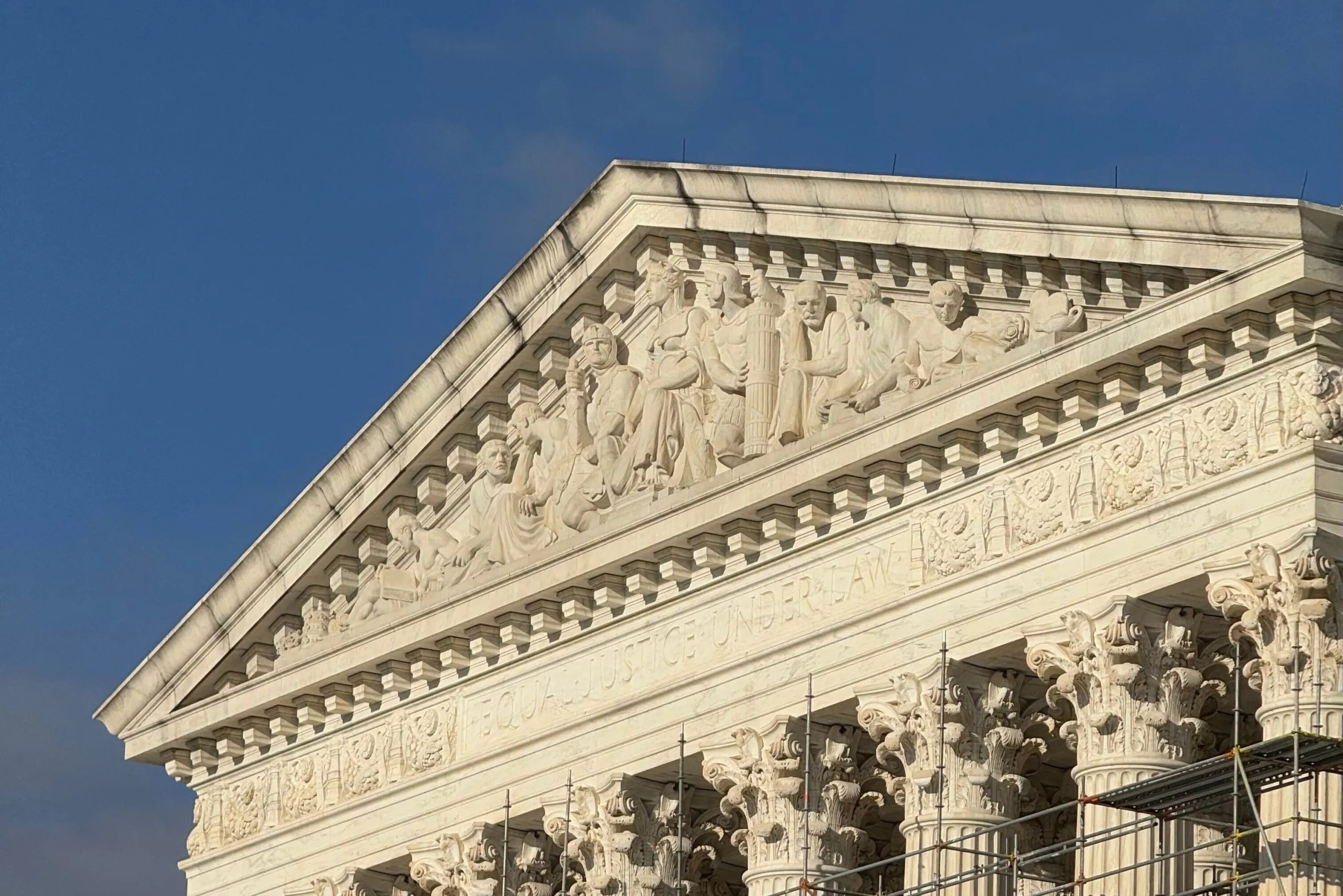
Carved details along top of Supreme Court building are pictured
(Katie Barlow)

It’s going to be another busy day at the Supreme Court, and it’s expected to start with opinion announcements.

At the Court

On Tuesday, the justices heard argument in two cases: Keathley v. Buddy Ayers Construction, on the rules pardoning omissions by bankrupt debtors; and Noem v. Al Otro Lado, on the rights of asylum seekers at the U.S.-Mexico border. For more on the Al Otro Lado argument, see the On Site section below.

After the possible announcement of opinions this morning, the justices will hear argument in Flowers Foods v. Brock, on whether “last-mile” drivers – drivers who deliver from a regional warehouse to a store – are exempt from the arbitration requirements of the Federal Arbitration Act.

Next Wednesday, April 1, we will be live blogging as the Supreme Court hears argument in Trump v. Barbara, the birthright citizenship case. To learn more about the case, join our LinkedIn Live event with Briefly tomorrow at noon EDT.

Morning Reads

Some state officials say shifting mail ballot deadline will complicate plans for November elections

Nicholas Riccardi and Julie Carr Smyth, Associated Press

As the Supreme Court heard argument on Monday on whether mail-in ballots need to arrive by Election Day to be counted, the Associated Press spoke with election officials across the country about what a decision mandating they arrive on that day would mean for the 14 states “that allow regular mail ballots sent by Election Day but arrive some period of days afterward to be counted.” “The biggest challenge,” according to an official in Illinois, “would be informing voters that they faced a tighter deadline,” but there would be concerns about updating election materials and budgetary challenges, as well. “Most election offices have already printed flyers, signs and even ballot envelopes with the current election deadlines for use in November. They would have to scramble to reprint that material, usually done months or years in advance to save money.”

Stephen Miller Asks Why Texas Pays to Teach Undocumented Children

Lauren McGaughy, The New York Times

President Donald Trump’s immigration adviser, Stephen Miller, “raised the idea of ending public education funding for undocumented children in a closed-door meeting with Texas lawmakers in Washington last week, a move that would challenge a decades-old U.S. Supreme Court precedent,” according to The New York Times. Specifically, passing a law that would fund “public education only for children who are citizens” or lawful immigrants “would break with the Supreme Court precedent set in Plyler v. Doe, a 1982 decision that determined that states must pay for the elementary school education of all students regardless of immigration status.”

Judge refuses to drop lawsuit over Musk role as Trump adviser

Miranda Nazzaro, The Hill

As the Supreme Court considers a petition for review from the federal government aimed at blocking “a wide-ranging and intrusive discovery order against the U.S. DOGE Service,” a separate lawsuit over Elon Musk’s work with DOGE is moving forward. “US District Judge Tanya Chutkan issued a memo Monday tossing out a dismissal request from the federal government, stating the claims that Musk and other DOGE leaders unlawfully assumed an expansive role in the federal government can play out in court,” according to The Hill.

Judge scraps another school admissions policies lawsuit

Naaz Modan, K-12 Dive

In December 2024, approximately 18 months after it released its decision ending affirmative action programs in college admissions, the Supreme Court declined to weigh in on a similar dispute involving elite public high schools in Boston that considered students’ zip codes during the admissions process. The group of parents, students, and alumni challenging the policy said it discriminated against white and Asian students. Now, a second lawsuit over updates to the Boston schools’ admissions policies, which also alleges race-based discrimination, is drawing closer to the Supreme Court, according to K-12 Dive, which noted that the case is part of a broader battle over whether policies focused on zip codes or socioeconomic status violate the Supreme Court’s affirmative action decision.

Will Birthright-Citizenship Case Be Decided on Statutory Grounds?

Ed Whelan, National Review

In a post for the National Review’s Bench Memos blog, Ed Whelan reflected on the possibility that the court will strike down Trump’s executive order limiting access to birthright citizenship on statutory grounds, using the statute “that states that ‘a person born in the United States, and subject to the jurisdiction thereof, is a ‘citizen[] of the United States at birth,’” rather than on constitutional grounds, using the 14th Amendment. “As the Chief has put it, ‘If it is not necessary to decide more, it is necessary not to decide more,’” Whelan wrote. “My guess is that the Chief will be part of a supermajority of the Court that rules that the EO violates” the statute “and that declines to address the constitutional question.”

On Site

Argument Analysis

Court appears likely to side with Trump administration on rights of asylum seekers

The Supreme Court on Tuesday appeared likely to uphold the federal government’s policy of systematically turning back asylum seekers before they can reach the U.S. border with Mexico. During roughly 80 minutes of oral argument, a majority of justices seemed to agree with the Trump administration that the policy does not violate a federal law allowing noncitizens to apply for asylum when they “arrive[] in the United States.”

The U.S. Supreme Court is seen on March 04, 2026 in Washington, DC.
From the SCOTUSblog Team

Temporary Protected Status and the Supreme Court: an explainer

The Supreme Court announced last week that it will hear argument in late April on the Trump administration’s effort to remove protected immigration status from Syrian and Haitian nationals. Here’s a brief overview of the Temporary Protected Status program, what’s at stake in these disputes, and what the court has said in the past year about the administration’s authority to revoke protected status.

The US Supreme Court is seen on the first day of a new term in Washington, D.C, on Oct. 7, 2024.
Contributor Corner

Justice Scalia’s uncertain legacy

In his Controlling Opinions column, Richard Re reflected on Justice Antonin Scalia’s complicated legal legacy. “On the surface,” Re wrote, “Scalia’s legacy has never been more distinguished. … Yet the surface celebration masks a deeper ambivalence and even repudiation.”

Scalia

Podcasts

Advisory Opinions

You Can’t Preach Jesus Here | Interview: Judge Rebecca Taibleson

Judge Rebecca Taibleson of the U.S. Court of Appeals for the 7th Circuit joined Sarah Isgur and David French for a conversation about her path to the federal bench. But first, Sarah and David discussed the Supreme Court’s unanimous decision on free speech zones, the viral Afroman jury verdict, and the Pentagon Press policy ruling.

SCOTUS Quote

MR. CLEMENT: “And postmarks have their own problems. I mean, the main mailbox, post box in – post office, rather, in Chicago stays open 24/7. So, when all the other polls close in Illinois or every other state at 8 p.m. … the post office is still open until midnight.

Now I’m not here to say that there could ever be voting fraud in Chicago.”

Watson v. Republican National Committee (2026)

Recommended Citation: Kelsey Dallas and Nora Collins, SCOTUStoday for Wednesday, March 25, SCOTUSblog (Mar. 25, 2026, 9:00 AM), https://www.scotusblog.com/2026/03/scotustoday-for-wednesday-march-25/