Skip to content
Newsletter

SCOTUStoday for Tuesday, March 10

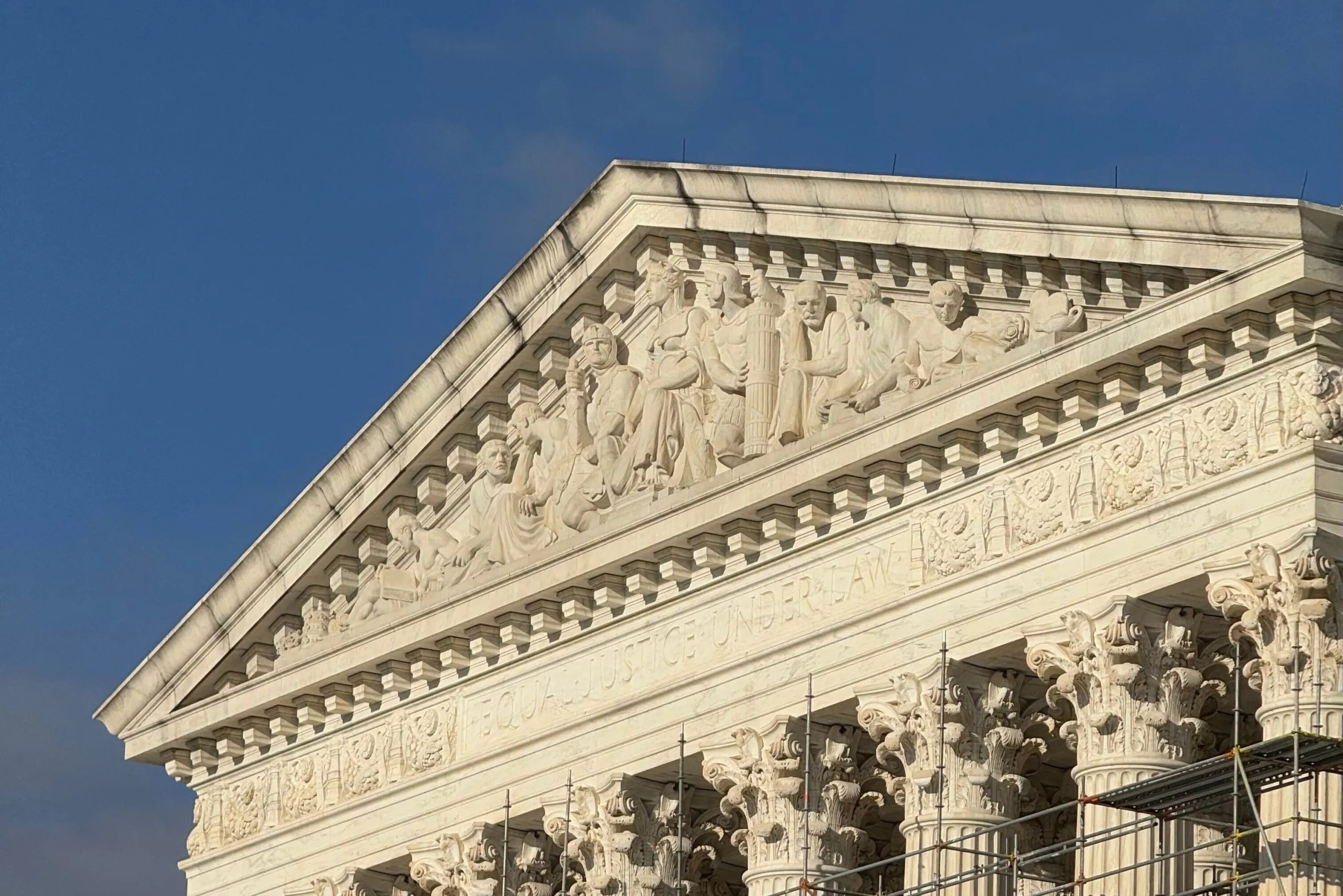
Carved details along top of Supreme Court building are pictured
(Katie Barlow)

SCOTUSblog is excited to announce the addition of podcasts Amarica’s Constitution and Divided Argument to its podcast lineup, joining Advisory Opinions. In a new, jam-packed episode, the hosts of all three podcasts discuss the current term and the future of originalism.

At the Court

On Monday, the court announced that it will hear argument in Department of the Air Force v. Prutehi Guahan, a dispute over the interaction between two federal environmental laws. For more on Monday’s order list, see Amy’s coverage in the On Site section below.

The interim docket case on the Trump administration’s effort to remove protected status from Syrian nationals is now fully briefed, and the court’s decision could come at any time. On Monday, the administration filed a letter addressing a recent development in a related case on Haitian nationals, noting that it will soon file an application for interim relief in that case.

The court will next hear arguments on Monday, March 23, the first day of its March sitting.

Morning Reads

Trump administration criticizes court rulings slowing immigration agenda in Supreme Court appeal

Lindsay Whitehurst, Associated Press

In a Monday filing in an interim docket case on the Trump administration’s effort to remove protected status from Syrian nationals, the administration highlighted a new lower court ruling in a similar case involving Haitians and urged the Supreme Court to issue “a broad ruling that would let it move more quickly to end legal protections for migrants from multiple countries,” according to the Associated Press. “Solicitor General D. John Sauer said the lower-court judges have shown ‘persistent disregard’ for the court’s earlier emergency-docket decisions” in cases on the Temporary Protected Status program, adding that recent rulings are “part of a cycle that looks ‘likely to repeat again and again unless and until this Court steps in.’”

Judge pushes back timeline for tariff refunds

Zach Schonfeld, The Hill

After initially ordering “immediate compliance” with his decision requiring the Trump administration to begin processing tariff refunds, U.S. Court of International Trade Judge Richard Eaton has given the administration “some breathing room,” according to The Hill. Eaton “pushed back the timeline” for refunds after “Customs and Border protection (CBP) indicated it needed 45 days to set up an automated system,” but he still expects the government to move with urgency. “These duties must now be refunded with interest, and the clock is ticking,” Eaton wrote, ordering the government to provide a progress report by Thursday.

A Jan. 6 rioter doesn't want Trump's pardon. Supreme Court weighs in.

Maureen Groppe, USA Today

On Monday, the justices declined a case brought to the court by Glenn Brooks, who was asking to be allowed to continue challenging his conviction “for his role in the Jan. 6, 2021, attack on the Capitol,” according to USA Today. “Lower courts had canceled Brooks’ conviction for entering the Capitol and dismissed his appeal as no longer relevant after Trump last year pardoned nearly 1,600 people charged in the 2021 riot.” Brooks had hoped for his case to be resurrected because “[h]e would rather try to clear his name through the courts than accept a pardon.”

Hip-Hop Icons Tell Justices That Texas Turned Rap Lyrics Into a Death Warrant

Adam Liptak, The New York Times

As lawyers for death-row inmate James Broadnax urge the Supreme Court to delay his execution for two 2008 murders and hear his appeal, they’re getting support “from towering figures in the world of hip-hop, including Killer Mike, T.I., Young Thug, Fat Joe and N.O.R.E.,” according to The New York Times. These artists are involved in amicus briefs about Broadnax’s rap lyrics, which featured “violent themes” and which his attorneys say should not have been used as evidence against him during the sentencing phase of his trial. “The rappers argue that prosecutors mistook the fantasy that is gangster rap for a literal account amounting to a confession.”

Justice Amy Coney Barrett talks about the Supreme Court as dozens protest outside theater

Gregory R.C. Hasman, Albuquerque Journal

Justice Amy Coney Barrett spoke on Sunday in Sante Fe, New Mexico, about her recent book and her work on the court, as “dozens of people stood outside the [event venue] to voice their displeasure at her appearance [based on such things as her vote to overturn Roe v. Wade],” according to the Albuquerque Journal. Barrett alluded to protesters when asked about important traits for judges to have. “I think you need to have a judge that can withstand pressure from the outside and make decisions that are truly what the judge, in her best judgment, thinks are what the law requires without regard to the pushback or the disappointment that you might get,” she said. “And the thing about the law and the thing about being a judge is you are going to disappoint one side. That’s the nature of the enterprise.” Barrett referenced the personal attacks she’s faced when explaining whether she had dreamed of being a justice. “One of the law clerks of another justice asked me that the other day, and I said, ‘Do you mean when I was a little girl did I dream that people would call me a religious zealot, an embarrassment?’ Just teasing,” Barrett said.

On Site

From the SCOTUSblog Team

Court agrees to hear case on environmental laws, does not act on several Second Amendment challenges

The Supreme Court on Monday added just one case – a technical dispute over the interaction between two federal environmental laws – to its docket for the 2026-27 term. It did not act on a variety of other high-profile petitions for review, including one from Steve Bannon and several on the Second Amendment.

WASHINGTON, DC - FEBRUARY 10: The Supreme Court of the United States building, photographed on Thursday, Feb. 10, 2022 in Washington, DC.
Contributor Corner

The dissent that believed the Olympics belong to everyone

In her In Dissent column, Anastasia Boden explored a 1987 case on whether the U.S. Olympic Committee could prevent the Gay Olympic Games from using the word Olympic. Most justices agreed that the USOC had that power, but “even a few of those in the majority dissented when it came to power without accountability, and about the increasingly blurry line Congress sometimes draws between a creature of its own making and an arm of the state,” Boden wrote.

The front façade of the Supreme Court of the United States in Washington, DC.
Contributor Corner

In birthright citizenship case, Justice Department urges court to treat an old concept in a new way

In his Immigration Matters column, César Cuauhtémoc García Hernández pushed back against the Trump administration’s effort to grant birthright citizenship to only those children whose “parents had legal permission to live in the country permanently and in fact did so” at the time of the child’s birth, noting – among other things – that the legal concept of domicile, which is at the center of the administration’s argument, doesn’t appear in the text of the 14th Amendment’s citizenship clause.

A view of the U.S. Supreme Court as the federal government officially shuts down due to a congressional budget impasse in Washington D.C., on October 04, 2025.

SCOTUS Quote

JUSTICE KAGAN: “Do you think it’s a problem for your position that no other court in the world has construed the treaty this way?”

MR. HOOTMAN: “That’s clearly a problem. That’s why I focused so hard on text.”

(Laughter.)

MR. HOOTMAN: “I mean – I mean –”

CHIEF JUSTICE ROBERTS: “Someone’s got to be first, right?”

Water Splash, Inc. v. Menon

Recommended Citation: Kelsey Dallas and Nora Collins, SCOTUStoday for Tuesday, March 10, SCOTUSblog (Mar. 10, 2026, 9:00 AM), https://www.scotusblog.com/2026/03/scotustoday-for-tuesday-march-10/