Justices to hear argument on whether a crime’s “contemplated effects” can expand venue beyond where offense was committed

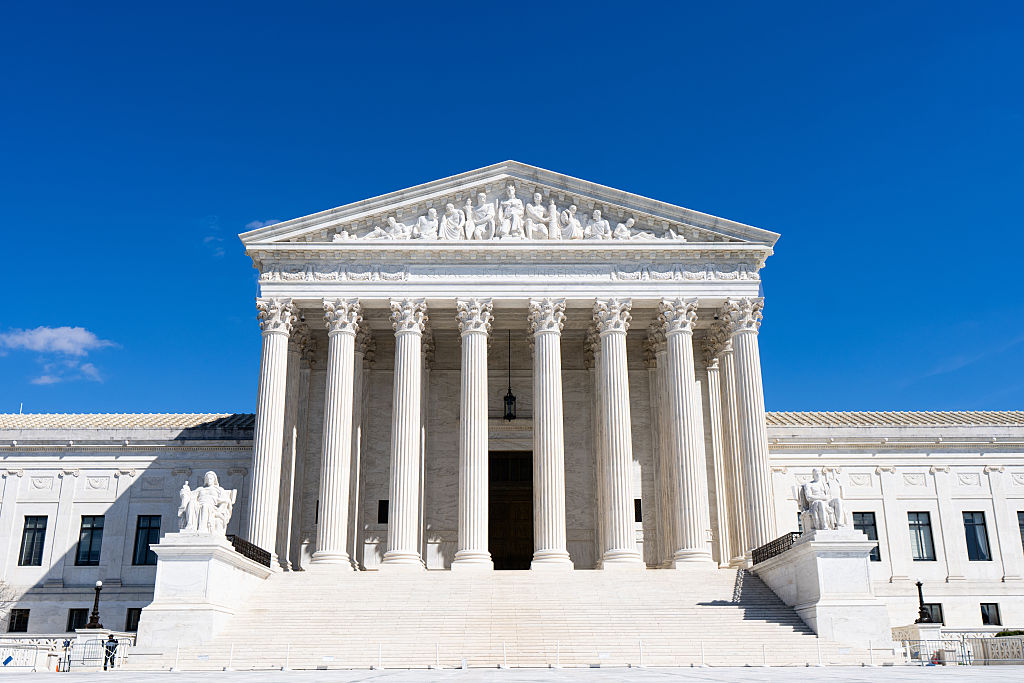
The Supreme Court will hear oral argument on Monday in Abouammo v. United States, in which it will consider whether federal prosecutors can try a defendant not only in the district where the offense actually occurred, but also in the district where the crime’s “contemplated effects” are felt.
The case stems from one of the more interesting factual backgrounds of the term. From 2013 to 2015, Ahmad Abouammo worked at Twitter’s San Francisco headquarters, where his role as a media partnerships manager for the Middle East and North Africa region gave him access to a tool that could pull users’ private, identifying data. Prosecutors say he used that access to find information about Saudi dissidents and pass it along to a high-level official in the Saudi royal court. In return, Abouammo received a luxury watch that he attempted to resell for $42,000, along with three wire transfers of $100,000 each as “consulting” income. A humanitarian worker for the Red Cross who tweeted satire “critical of the Saudi government” had his information disclosed and was apparently “detained in Saudi Arabia due to the Twitter account, held in solitary confinement, and tortured,” before disappearing.
Abouammo left Twitter in 2015 and moved to Seattle, working as a freelance social media consultant. Around the same time, the FBI’s San Francisco field office “opened an investigation into Twitter employees’ potential unauthorized accessing of Twitter information.” The investigation took on more urgency in October 2018, when the FBI learned that The New York Times would soon publish a story about its work.
Two FBI agents subsequently flew from their Palo Alto satellite office to Seattle, accompanied by an assistant U.S. attorney from the Northern District of California. After a few hours interviewing Abouammo, the agents asked him whether he had documentation showing that the money he had received from his Saudi contacts was legitimate consulting income. Abouammo excused himself, went upstairs, and, according to later-recovered metadata, spent that time fabricating a backdated $100,000 invoice from his consulting company. He then emailed it to the agents sitting downstairs.
A grand jury in San Francisco indicted Abouammo on multiple charges, including one count of falsifying records in connection with a federal investigation under a federal law that makes it a crime to “knowingly … falsif[y] … any record, document, or tangible object with the intent to impede, obstruct, or influence the investigation or proper administration of any matter within the jurisdiction of any department or agency of the United States … or in relation to or contemplation of any such matter.”
Following a jury trial, Abouammo was convicted on all counts and originally sentenced to 42 months in prison, followed by three years of supervised release. After the U.S. Court of Appeals for the 9th Circuit invalidated his sentence on other grounds, the district court resentenced him to time served (he had by then been released), followed by two years of supervised release.
In his proceedings, Abouammo argued that the Northern District of California was not the correct place to try him for falsifying records. His only act of document falsification, he said, happened entirely in Seattle.
The 9th Circuit disagreed, holding that Abouammo could be prosecuted in San Francisco because the law’s intent element “‘expressly contemplates the effect of influencing the action’ of another” – and because the false document was directed at, and received by, agents working from the FBI’s San Francisco field office, the offense had been “continued or completed” in California.
Before the Supreme Court, Abouammo points to Article III of the Constitution, which requires that “[t]he Trial of all Crimes … shall be held in the State where the said Crimes shall have been committed,” as well as the Sixth Amendment, which speaks of a right to trial “by an impartial jury of the State and district wherein the crime shall have been committed.” According to Abouammo, both provisions make clear that the location where the crime occurred – rather than its contemplated effects – dictates where the prosecution can be brought.
In further support of this position, Abouammo cites the 2023 case of Smith v. United States, in which the court held that an Alabama fisherman who was charged in Florida for hacking a website with servers in Orlando could be retried after a federal appeals court concluded that he was prosecuted in the wrong place. There, the court stated that the district where a defendant should be prosecuted hinges on “the location of the alleged” crimes, rather than on where it would be most convenient to prosecute the defendant. Because that location “turns on where the offense’s essential conduct elements occurred,” Abouammo contends that he could only be tried for his offense in the Western District of Washington, since “[t]he offense was committed and completed then and there.”
In response, U.S. Solicitor General D. John Sauer emphasizes that Abouammo committed an “inchoate offense,” meaning “an offense that is a step to another crime,” or one that “requires the confluence of falsification and intent.” Under this definition, because Abouammo “specifically intended his conduct to have effect, and it had effect, there,” Abouammo’s offense was committed in part in the Northern District of California.
Sauer also draws a parallel to conspiracy cases, which can be prosecuted in any district where “an overt act in furtherance of the conspiracy occurs, even though traditionally the crime’s only conduct element is an unlawful agreement.” Because obstruction crimes “treat a target of an offense as a central consideration for” purposes of determining where to bring a prosecution, Sauer argues, the location of the targeted investigation is a constitutionally permissible district for prosecution. The government also separately contends that even if the court disagrees with that analysis, Abouammo was properly prosecuted in California because, when he emailed the fabricated document to the agent’s FBI address, he caused a copy of a falsified record to be created on federal computers in the Northern District of California.
Two “friends of the court” weigh in on Abouammo’s side. The Cato Institute writes that if effects alone suffice to establish a district as the proper one for prosecution, federal agencies – such as the FBI, IRS, and SEC – that have offices nationwide could effectively bring prosecutions in any major hub. The National Association of Criminal Defense Lawyers stresses in its own brief the “significant hardships” faced by defendants when prosecutions are brought far from home. NACDL contends that the founders designed the right to a jury drawn from the same district where the crime occurred specifically to prevent such burdens from being imposed as a tool of governmental pressure on defendants.
Although this case is, at first glance, about a relatively technical legal question, the court’s decision in it could be significant. If the court sides broadly with Abouammo and decides that defendants can only be prosecuted in the location of the proscribed conduct, prosecutors could face pressure to bring charges where defendants actually acted, even when that means splitting related charges across districts. A ruling for the government on the broader effects-based theory, by contrast, would solidify a principle with a potentially wide application to any number of federal statutes that associate or link an act in one place with an intent directed at another. That could be quite a boon for prosecutors.
A decision is expected, at the latest, by late June or early July.
Posted in Court News, Featured, Merits Cases
Cases: Abouammo v. United States