Justices dubious about “harsh” rules for omissions by bankrupt debtors

Yesterday’s argument in Keathley v. Buddy Ayers Construction displayed a bench almost uniformly skeptical of a lower court’s absolute standard for responding to the failure of a debtor in bankruptcy to mention one of its assets to that court.
The case involves a bankrupt debtor, Thomas Keathley, who failed to disclose to the bankruptcy court the possibility that a car accident he was in after the bankruptcy filing might produce additional assets for his creditors. Under the rule of “judicial estoppel” in the lower courts, the lawsuit by Keathley against the other driver’s employer was dismissed on the theory that Keathley improperly benefited in his bankruptcy by not calling the accident to the attention of the bankruptcy court. The idea is that because Keathley had an incentive to hide the incident – it might have produced money for his creditors if he disclosed it – he is conclusively presumed to have acted wrongfully and thus barred from bringing his tort claim.
You know it is a bad sign at oral argument when several different justices debate among themselves the best rationales for an opinion ruling against you. And that was the experience of William Jay yesterday, who represents the other driver’s employer. His most determined opponent was Justice Neil Gorsuch, who repeatedly floated the idea of a “short and succinct” opinion telling the lower court that characterizing Keathley’s misstep as either a “mistake” or “inadvertence” would be enough to excuse it. Another thread came from Justice Elena Kagan. For her, complete inadvertence and the absence of any intention to mislead would also seemingly weigh against barring the suit.
A further possible justification for a ruling in Keathley’s favor focused on the windfall of letting the party at fault off the hook. Because the “judicial estoppel” doctrine is supposed to be equitable, it seemed to Chief Justice John Roberts “a little much that the one person who’s getting off is the one whose truck hit the other guy.” Others who seemed unsatisfied with the “windfall” for Jay’s client included Justices Clarence Thomas, Neil Gorsuch, and Ketanji Brown Jackson – she characterized the ruling below as “harsh.”
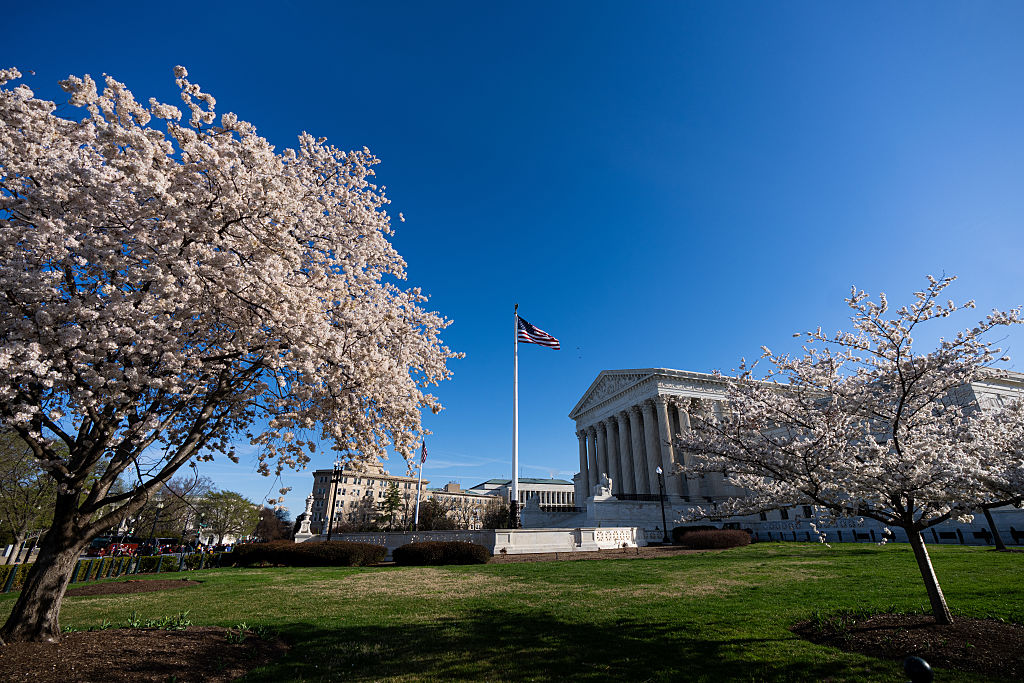
My guess is that we won’t have to wait long after the cherry blossoms start falling along the Tidal Basin to get a ruling in this one, and the back and forth in the argument suggested reason to think Gorsuch is a likely candidate for crafting the opinion.
Posted in Court News, Merits Cases
Cases: Keathley v. Buddy Ayers Construction, Inc.