Justices debate ability of federal courts to confirm arbitration awards

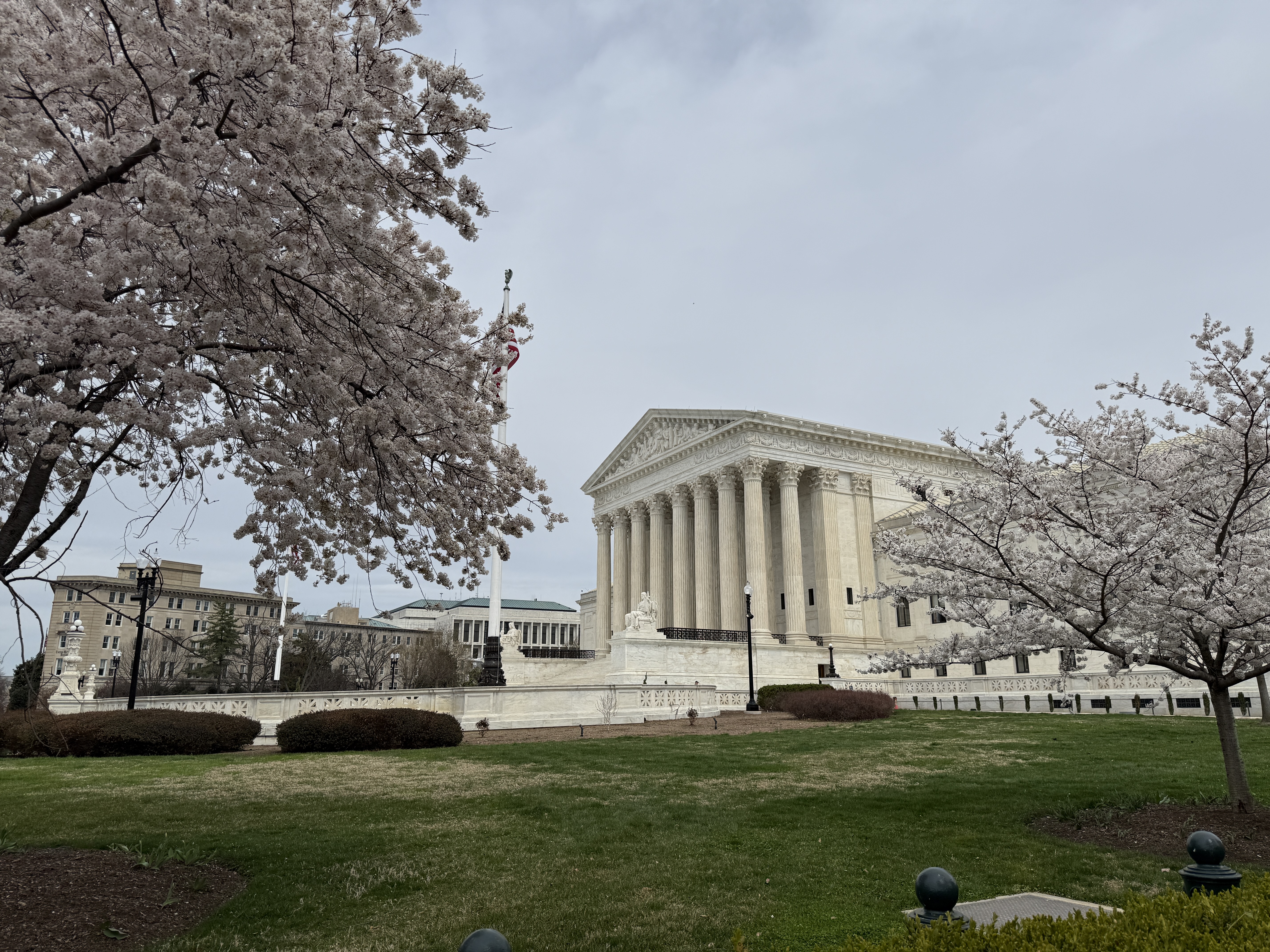
Yesterday’s argument in Jules v Andre Balazs Properties showed a bench with some uncertainty about the jurisdiction of federal courts to enforce an arbitration award.
The specific question in the case is what to do with a motion to confirm (or vacate) an arbitral award if there is a case in federal court about the dispute that was pending prior to the arbitration. We know from a 2022 decision called Badgerow v Walters that federal courts won’t entertain a free-standing suit to confirm (or vacate) an arbitration award. Jules asks whether that relief is available in the context of a case that already is pending in federal court.
One group of justices thought it self-evident that courts can do this. Justice Sonia Sotomayor led that group with a pointed early discourse with Adam Unikowsky, counsel for the employee trying to keep the case out of federal court. Sotomayor got Unikowsky to agree that under the Federal Rules a party seeking arbitration has to plead it as an affirmative defense early in the case. In her view, the request for the court to confirm the award is “just a motion to confirm that [arbitration defense means that] the [underlying] claim can’t go forward.” The comments of Amy Coney Barrett also suggested considerable support for that line of reasoning.
Another group of justices, including Justices Clarence Thomas, Brett Kavanaugh, and Neil Gorsuch emphasized the incongruous results that Unikowsky’s argument presents. For Unikowsky, the suit to confirm is completely separate from the underlying suit, so if the underlying suit was one like this one – which had federal subject matter jurisdiction because the employee raised claims of age discrimination – the federal court would have no power to confirm the arbitration award: if federal subject matter is keeping the case in federal court that disappears when you switch the topic to arbitration. Conversely, if the basis for jurisdiction in the original suit was diversity (the parties are from different states), then because the diversity would continue even after arbitration, the federal court could confirm the award. Thomas and Kavanaugh both characterized that as “odd,” and Gorsuch went even farther, commenting that he was really “struggling to come up with a reason why Congress in the Federal Arbitration Act might have wanted diversity cases to remain in federal court for confirmation proceedings but federal question cases to go to state court.”
The principal justice to speak out against that seeming consensus was Justice Elena Kagan; her views are particularly important because she wrote the opinion for the court in Badgerow. Kagan strongly rejected the argument of Daniel Geyser (trying to keep the case in federal court) that the close relation between the action being arbitrated and the award issued to resolve it would give the district court “supplemental” jurisdiction to confirm the award. For Kagan, the problem is that the two actions “seem[] to [her] completely two different sets of facts.” She explained that “the second case [challenging the arbitration award] is going to [be] about … something like did the arbitrator commit fraud. It’s going to have nothing to do with the actual claims in the case.”
And once she had rejected the availability of supplemental jurisdiction, Kagan poured a lot of cold water on the “motion” point that Sotomayor had made earlier:
[G]oing back to this, “oh, it’s just a motion in a case, if you have jurisdiction in a case, of course, you have jurisdiction over this too,” I mean, this is a very unusual kind of motion, right? It’s a motion which could have been brought as a freestanding suit, which is essentially a freestanding suit. And a freestanding suit in which there would have been no jurisdiction.
So it is pretty hard to know what to think when most of the justices seem to lean one way but the author of the case all agree is most closely on point has strong sentiments the other way.
Finally, perhaps lightening the tone from the discussion above, I would close by quoting a question Justice Samuel Alito asked near the close of Unikowsky’s argument (given that Unikowsky is an advocate of AI): “Well, just out of curiosity, do you think we should ask Claude to decide this case?” Perhaps some enterprising reader will write and tell me if this is Claude’s first appearance before the justices.
Posted in Court News, Merits Cases
Cases: Badgerow v. Walters, Jules v. Andre Balazs Properties