Court to hear argument on claim of racial discrimination in jury selection

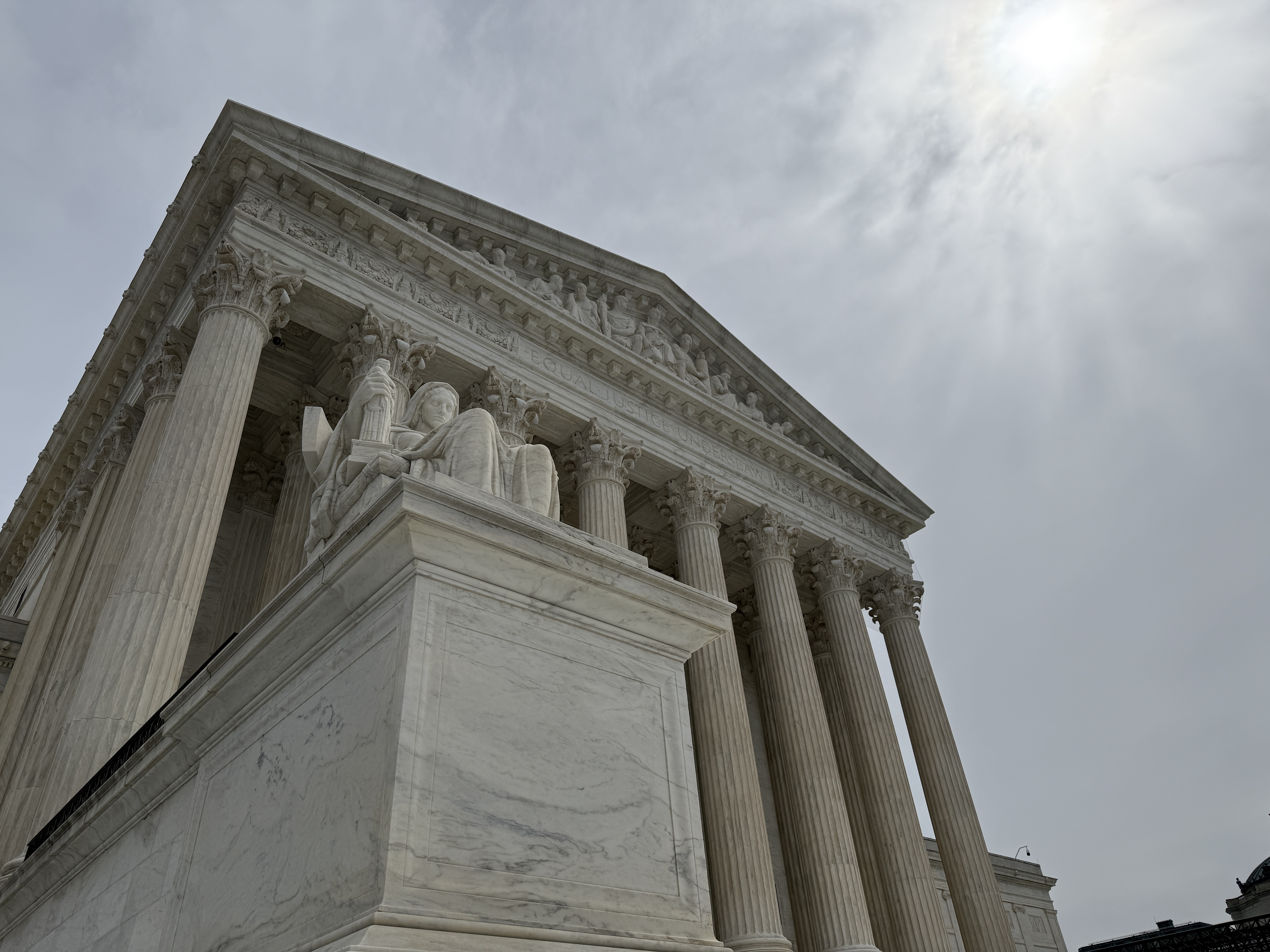
The Supreme Court will hear oral argument on Tuesday in Pitchford v. Cain, the case of a Mississippi man who contends that he was sentenced to death in violation of the Constitution’s ban on racial discrimination in jury selection. Terry Pitchford asserts that such a constitutional violation “undermines the foundational promise of equal justice under law.” But Mississippi counters that this is not one of the “narrow circumstances” in which federal courts can grant state prisoners post-conviction relief.
In 2006, Pitchford was convicted and sentenced to death for his role in the shooting death of a shopkeeper. Another man, Eric Bullins, fired the shots that killed Reuben Britt.
At Pitchford’s trial, the local district attorney, Doug Evans – whose conduct during jury selection led the Supreme Court in 2019 to throw out the conviction of another inmate, Curtis Flowers – eliminated four potential jurors, all of whom were Black.
Pitchford’s lawyers objected. They argued that Evans’ strikes violated the Supreme Court’s 1986 decision in Batson v. Kentucky, holding that the use of peremptory challenges (that is, challenges for any reason) to remove potential jurors based on race violates the Constitution. The state trial judge (who had also presided over Flowers’ case) rejected that contention, and Pitchford was ultimately tried before, and convicted by, a jury with just one Black juror, even though Grenada County, Mississippi, where the trial occurred, is 40% Black.
The Mississippi Supreme Court upheld Pitchford’s conviction and sentence. It concluded that Pitchford had forfeited his right to make his Batson claim because he had not offered any arguments to the trial court to rebut the race-neutral explanations that the prosecutor had offered for his strikes of the four potential Black jurors (such as that one potential juror was late to court and another had a relative who committed “similar offenses” to Pitchford).
When Pitchford went to federal court in Mississippi to seek post-conviction relief, U.S. District Judge Michael Mills agreed with Pitchford that the juror strikes violated Batson. Mills ordered the state to either retry Pitchford within 180 days or release him.
The U.S. Court of Appeals for the 5th Circuit reversed. In its view, even if Mills was correct that Pitchford had not waived his right to make his Batson claim, Pitchford still had no right to relief under the Antiterrorism and Effective Death Penalty Act, the federal law governing post-conviction claims, because the relevant question was not whether the state court’s ruling was right or wrong but instead whether the decision was “an ‘objectively unreasonable’ application of a Supreme Court ‘holding[]’” – which, the court of appeals concluded, it was not.
Pitchford came to the Supreme Court in May, asking the justices to weigh in. In December, they agreed to decide whether, under AEDPA, the state supreme court’s determination that Pitchford had waived his right to rebut the prosecutor’s asserted race-neutral reasons for exercising strikes against four Black jurors was unreasonable.
In his brief at the Supreme Court, Pitchford urges the justices to send his case back so that he can be released or retried. He contends first that prosecutors violated Batson when they selected the jurors for his trial. Evans, Pitchford writes, used his peremptory strikes to remove 80% of the eligible Black jurors, but just 8.3% of the eligible white jurors. And when challenged, Pitchford says, Evans could not offer a credible explanation for his strikes.
The Supreme Court has the power under two separate grounds of AEDPA to step in to remedy the Batson violation, Pitchford insists. First, he contends, the Mississippi Supreme Court’s finding that Pitchford had waived his right to rebut the state’s race-neutral explanation for striking the four Black potential jurors by not first challenging this in the trial court was an unreasonable determination of the facts. “A state court’s factual findings are unreasonable when the court ignores information that was obviously salient. The Mississippi Supreme Court did just that,” Pitchford says, adding that he made his Batson argument several times to the trial court, and the trial judge told his lawyer that her objection to the court’s failure to allow her to rebut the state’s explanations was “clear in the record.”
Second, Pitchford continues, the state supreme court’s ruling was “an unreasonable application of clearly established federal law” in two respects. As an initial matter, the state court barred Pitchford from offering comparisons of potential jurors – for example, that prosecutors had struck a Black juror while accepting a white juror with similar qualifications or characteristics – to support his discrimination claim because he had not done so at trial. Although the Supreme Court has made clear that appellate courts can conduct such analyses, Pitchford emphasizes, the Mississippi Supreme Court declined to do so.
The Mississippi Supreme Court also “unreasonably applied federal law by excusing the trial court” from giving him a chance to respond to the prosecution’s race-neutral explanations, Pitchford contends. Moreover, he adds, the Mississippi Supreme Court should then have either conducted the rest of the Batson analysis itself – that is, determined whether Pitchford had shown purposeful discrimination despite the state’s explanations – or sent the case back to the lower courts for either a Batson hearing or a new trial. Its failure to do so, Pitchford says, “was also an unreasonable application of clearly established federal law.”
In its own brief on the merits, Mississippi urges the Supreme Court to leave the 5th Circuit’s decision (and therefore Pitchford’s conviction and death sentence) in place. First, it argues, the Supreme Court did not agree to decide whether the prosecution’s conduct violated Batson (as opposed to whether Pitchford had waived his right to make such a claim), so the justices should not consider Pitchford’s arguments on that question. But in any event, the state said, Pitchford has not shown that Evans did violate Batson. To the contrary, it stresses, the state “gave reasons that were facially race neutral, credible, and unchallenged,” while Pitchford only offered “bare numbers” to support his argument.
Contrary to Pitchford’s argument, the state continues, the state supreme court’s ruling was not an unreasonable determination of the facts. Although Pitchford “raised a Batson ‘objection’” at his trial, the state acknowledges, he did not make the argument that he made on appeal – specifically, that the reasons that the state offered for its peremptory strikes were simply excuses to hide its discriminatory intent.
Pitchford is also not entitled to relief under AEDPA, the state says, because the Mississippi Supreme Court ruling did not violate clearly established federal law as he contends. First, the state argues, the Supreme Court has never held “that in assessing a Batson claim an appellate court must consider arguments or evidence that the defendant could have presented to the trial judge but did not.” Second, it adds, there is no rule requiring appeals courts to consider comparative-juror analyses that were not raised in the trial court.
The federal government filed a “friend of the court” brief supporting the state. It tells the Supreme Court that both its “precedents and the commonsense administrative concerns that underlie other preservation rules” – that is, rules requiring objections or issues to be raised at trial before they can be considered on appeal – “allow for their application in the context of a claim of racially biased jury strikes under Batson.”
Posted in Court News, Featured, Merits Cases
Cases: Pitchford v. Cain