A quick look at two important weeks for criminal law at the court

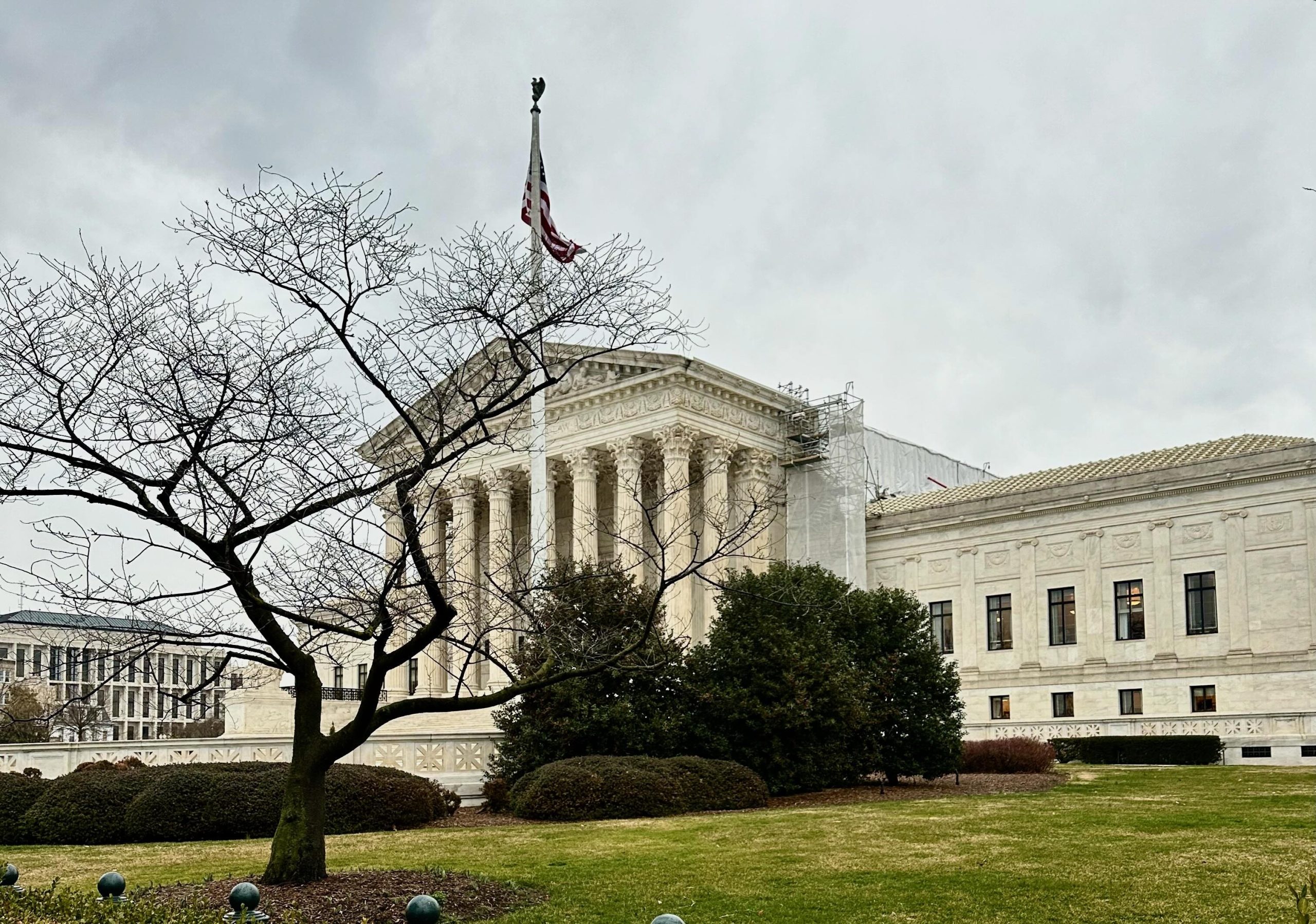
ScotusCrim is a recurring series by Rory Little focusing on intersections between the Supreme Court and criminal law.
Last week and the coming week are important for criminal law fans at the court. Two full-argument decisions were issued, both in favor of the defendant’s position. As I’ve noted before, the Supreme Court’s rulings do not always fall into the ideological patterns that the general public wants to impose on the justices.
This week brings oral arguments in two cases presenting important criminal law issues, and of course the birthright citizenship case, Trump v. Barbara, on Wednesday. There has been plenty of writing already on that case – SCOTUSblog’s case page presents a full list of the many amicus briefs that have been filed. Here is one that discusses its implications for criminal law. I’m surprised there aren’t more on that topic. The Constitution’s privileges and immunities clause applies only to citizens. To the extent that the clause is now, or may be in the future, a source for criminal-law rights and procedures, a Barbara decision favoring the Trump position could have dramatic criminal-law consequences.
Below I first discuss last week’s developments. I wrote about the other two cases set for argument this week, Abouammo v. United States (Monday) and Pitchford v. Cain (Tuesday) in my February preview – for convenience I briefly describe them again toward the end of today’s column.
One summary reversal and two dissents from denial
Last week the court issued a summary reversal “merits” decision, Zorn v. Linton, 6-3, finding that officers should have received qualified immunity from damages when they applied a painful “wristlock” move on passively resisting protestors. Justice Sonia Sotomayor wrote for the three dissenting “liberal” justices, regarding the denial of a petition for review (colloquially referred to as a “dissent from denial”).
In Reed v. Goertz, Sotomayor also wrote for the three that the court should have reviewed a U.S. Court of Appeals for the 5th Circuit case that, Sotomayor said, erroneously rejected Texas’ refusal to test for DNA evidence in a death penalty case.
Meanwhile, in Villarreal v. Alaniz, Sotomayor filed a solo dissent from denial, addressing another qualified immunity case produced by a “deeply divided” 10-5 en banc (full court) 5th Circuit decision. Despite being arrested under a statute later declared to be unconstitutionally vague, the civil rights lawsuit filed by a “citizen reporter” who had been critical of police in Laredo, Texas, was dismissed. Sotomayor called the arrest “a blatant First Amendment violation, “transform[ing]” “everyday journalism … into a crime.”
Interestingly, Villarreal came to the court after the Supreme Court vacated a prior full court decision in the same case, and remanded it “for further consideration in light of” the court’s 2024 summary reversal in a different retaliatory arrest case, Gonzalez v. Trevino. The 5th Circuit majority said that they considered this to be a “narrow remand,” so they only reconsidered the retaliatory arrest claim. That strikes me as an issue worthy of review all by itself: when a lower court decision is entirely vacated, does a “further consideration” order from the court allow examination of the entire case, or just one “narrow” claim?
By the way, the denial of a certiorari petition asking for review does not imply any findings on the merits of the issues presented. But dissents from such denials are sometimes suggestive of future directions the court might go in.
Last week’s full merits criminal decisions
In Rico v. United States, Justice Neil Gorsuch wrote for an 8-1 court in a technically complicated federal “supervised release” (similar to post-imprisonment parole) case. Rico was initially described (by me and the lower court) as a case asking whether a term of supervised release is “tolled” (suspended) when the defendant absconds (that is, fails to report to her supervising officer). But the court saw it differently, and more simply in terms of the result. Rico was given a term of supervised release set to expire in June 2021. She absconded and the authorities “didn’t catch up with her until January 2023.” A sentencing judge then imposed a new two-year imprisonment term, relying in part on a new offense Rico had committed in 2022 – after her prior supervised release term had expired.
The court ruled that “[it] s[aw] nothing in the law” authorizing the extension of a term of supervised release beyond the term originally imposed. In a painstakingly detailed 12-page opinion, Justice Gorsuch rejected various statutory arguments advanced by the government. Some have called this ruling “narrow,” but I think any lawyer practicing federal criminal law will want to read the opinion carefully. Justice Samuel Alito wrote a short dissent saying that the ruling was “pointless” because (he says) the judge could have imposed the same sentence through different means. But, of course, the vacation of a criminal-imprisonment judgment against you is never “pointless,” and funny things sometimes happen after a SCOTUS remand.
The other opinion filed last week was Olivier v. City of Brandon, Mississippi.
Gabriel Olivier is a “street preacher” who was convicted of violating a city ordinance restricting his speaking to a certain area. He paid his fine and did not appeal. But “because he still wanted to preach” where he had been doing so, he filed a Section 1983 (civil-rights) lawsuit seeking to have the ordinance declared unconstitutional. The catch: In the 1994 case of Heck v. Humphrey, the court had said that a Section 1983 lawsuit should be barred if it “would necessarily imply the invalidity of the plaintiff’s [prior] criminal conviction.”
Kagan wrote to reverse the dismissal of his lawsuit, for a unanimous court with no separate opinions filed. She concluded that a previously-convicted defendant like Olivier can file a Section 1983 lawsuit seeking prospective (forward-looking) permission to commit the same act “even if, as a kind of byproduct” they might show that their prior conviction “should not have occurred.” In reaching this decision, the court effectively narrowed some overbroad statements made in Heck and gave the helpful reminder that “general language in judicial opinions” should not “be read as referring to … quite different circumstances that the Court was not then considering.”
Specifically, Kagan’s opinion stated that in Heck the criminal defendant was “in truth mounting a ‘collateral attack’ on his conviction, … intruding on the” separate “domain” of habeas corpus statutes. That is, Mr. Heck really was trying to “work around” limitations imposed by federal habeas corpus statutes before a conviction can be reversed by using a different statute. Not so for Mr. Olivier, Kagan explained. In Olivier, if Heck is “properly understood,” then nothing prohibits a “forward-looking remedy,” and “the Heck language was not meant to address it.” Meanwhile, the opinion noted that an even older decision – Wooley v. Maynard, a famous “live free or die” license-plate case still taught in most constitutional law classes – had permitted a Section 1983 suit in circumstances very similar to Olivier’s. According to Kagan, Heck’s overbroad “phrasing was not quite as tailored as it should have been,” “swept a bit too broad[ly],” and ought not to prohibit Olivier’s lawsuit – or that of other similar prospective-relief challengers who do not seek to recover damages or otherwise challenge their past convictions. As noted, this “logical” result did not attract a single word from any other justice in the case.
Criminal cases being argued this week
Abouammo v. United States. I was delayed getting this to press, and on Monday the court already heard argument to consider whether the Constitutional provisions (Article III and the Sixth Amendment) requiring criminal cases to be tried where the crimes “have been committed” prevents trial in a state where the “contemplate[d] effect” of a crime will knowingly occur but the conduct itself was in another state. Ahmad Abouammo emailed false documents to FBI agents who were visiting him in his home in Seattle, Washington, and whom he knew were from California. He sent the email from his Washington state residence, but the U.S. Court of Appeals for the 9th Circuit upheld his conviction in a California court.
The solicitor general argued that venue for the crime was appropriate in California because Abouammo knew he was emailing to California-based agents and he intended to obstruct their investigation. That seems like a dangerously broad theory, which could allow the government to create federal criminal jurisdiction just about anywhere, by merely sending agents from the government’s preferred district to interview targets where they reside. The parties framed the case largely as governed by past cases (albeit in different directions), and specifically based on the statute of conviction (18 U.S.C. § 5119). I saw the case, as I wrote in February, as less mundane, presenting fascinating questions of constitutional “plain language” interpretation for an originalist court.
Perhaps surprisingly to some, a majority of the justices on Monday sounded inclined to rule for Abouammo. Most gratifying to me was when the chief justice began questioning Assistant Solicitor General Anthony Yang (at page 42 of the transcript) about the Boston tea party, noting that the Constitutional provisions had been included as protection “because of Parliament’s decision to allow the transport of colonists back to England to be tried there.” Justice Neil Gorsuch also intervened, to ask “how the Framers thought about it” “when they were in the revolution” wanting to “depart” from “the King in England.” When Yang dutifully attempted to shift, saying “[t]hat’s not what the colonists were upset about,” the usually dispassionate chief said, dispassionately, “Oh … I don’t think that’s how King George took it.” Those five pages of the transcript are pretty delicious (at least for constitutional criminal-law nerds like me), and I truly do not think the irony of them following just two days after nationwide “No Kings” protests were lost on anyone present. I think the only question left in doubt after today’s argument is whether the constitutional limits for criminal venue will be limited to just the statute at issue, or stated in broader constitutional terms.
Pitchford v. Cain (argument today). Terry Pitchford is a black man on death row, tried by the same state prosecutor found in the 2019 decision in Flowers v. Mississippi to have implemented a “blatant pattern of striking black prospective jurors.” The emotional atmospherics of this case run hot, and the prospect that Pitchford will fall victim to the same unconstitutional conduct is … disturbing.
But law is nothing if not overly (and sometimes unemotionally) technical, and as I also wrote in February, Pitchford’s procedural posture puts him in a more difficult legal position than Flowers (who, it must be said, was hardly viewed either as being in a favorable position prior to oral argument in his case). Argument will turn on technical points about waiver and application of habeas corpus precedents that are extremely deferential to state court judgements. However, my assessment is that the detailed record explained in Pitchford’s reply brief provides ample ground to believe that the Mississippi Supreme Court erred in its understanding of both the facts and the law when it reviewed Pitchford’s case. The argument will undoubtedly be a pitched battle. Early on, we may be able to guess whether the eight relistings of the case for consideration by the justices before review was granted resulted from deep concern about the awful record of this Mississippi court among a majority of the justices, or merely an equally deep commitment by the three “liberal” justices to keep the case – and Pitchford – alive through a full merits examination of the case and record.
Mea culpa regarding a source about the unitary judiciary
My last column proposed that the opening statement in Article III of the Constitution, that “[t]he judicial power of the United States shall be vested on one supreme Court,” might be read to give today’s court a strong “unitary judicial power” similar to the “unitary executive” theory of Article II. I am embarrassed to admit that I missed entirely the remarkable 2009 book by Professor James Pfander, One Supreme Court: Supremacy, Inferiority, and the Judicial Power of the United States. Written in a different cultural age – my goodness, only 17 years ago? – but still deeply relevant, Pfander’s exhaustive research and thinking deserves special attention. He argues quite expressly that “Article III creates a unitary judiciary with a single Court as the common head.” (Almost as remarkably, the entire book can be read online here.) I am pleased to now offer this mea culpa.
Posted in Featured, Recurring Columns, ScotusCrim
Cases: Gonzalez v. Trevino, Rico v. United States, Reed v. Goertz, Pitchford v. Cain, Olivier v. City of Brandon, Mississippi, Villarreal v. Alaniz, Zorn v. Linton, Trump v. Barbara (Birthright Citizenship), Abouammo v. United States