SCOTUStoday for Wednesday, February 4
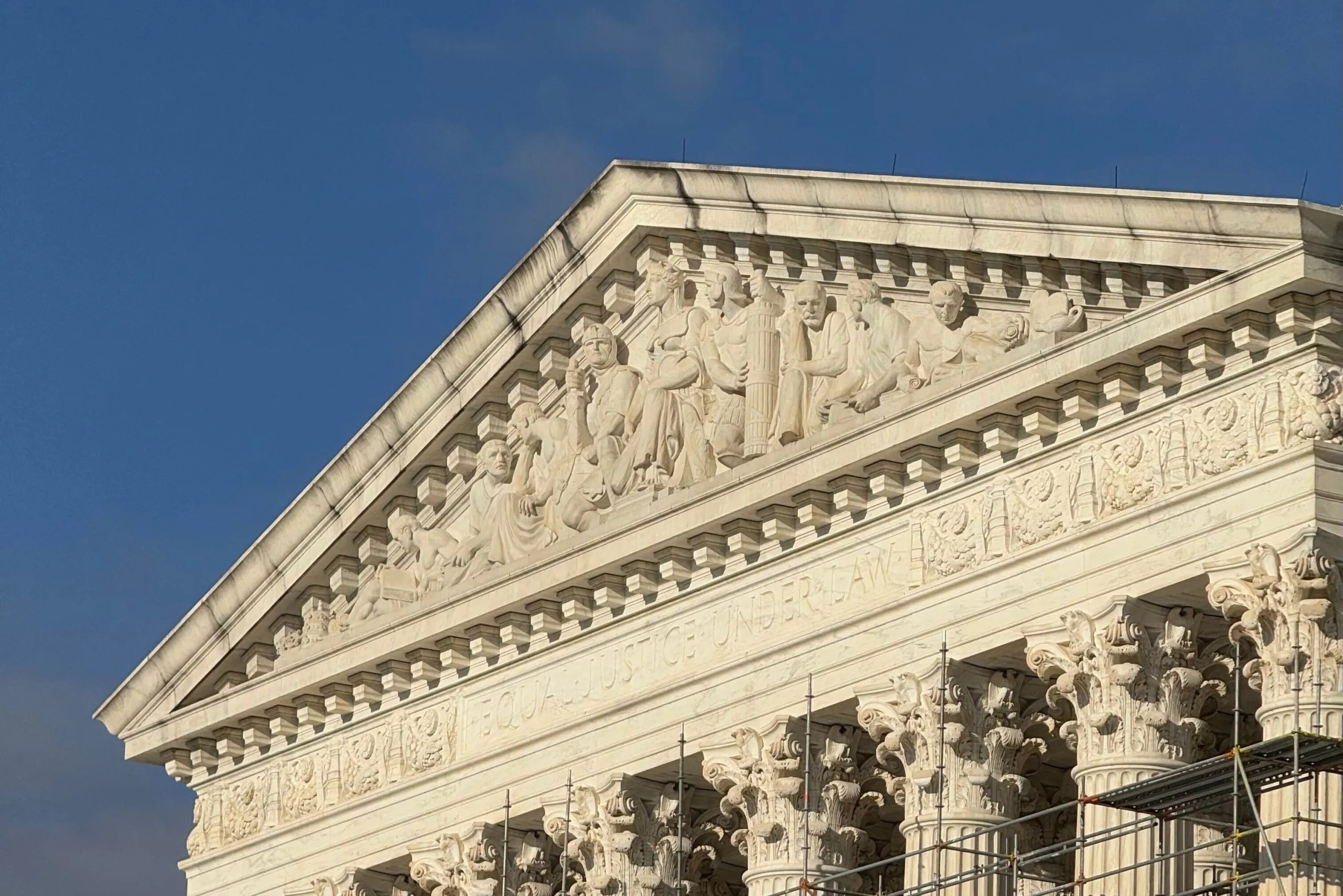
Chief Justice John Marshall was sworn in on this day in 1801. We wrote about his upbringing, political career, and legal legacy (well, at least some of it) in two recent editions of this newsletter.
SCOTUS Quick Hits
- On Jan. 20, a group of California Republicans asked the court on its interim docket to block the state from using its new map in this year’s elections. The case is now fully briefed, and the court’s decision could come at any time.
- The court also could rule at any time on an interim docket case on California’s policies for parental notification when public school students choose to use different pronouns or a different gender identity.
- The court has not yet indicated when it will next release opinions. If the court follows its typical pattern, the earliest the next opinion day may be is Friday, Feb. 20, when the justices are next scheduled to be in the courtroom.
- The court will next hear arguments on Monday, Feb. 23, the first day of its February sitting.
Morning Reads
- Judge extends deportation protections for Haitians in ongoing lawsuit (Salvador Rizzo and Michelle Boorstein, The Washington Post)(Paywall) — On Monday night, U.S. District Judge Ana C. Reyes “extended temporary protected status for about 353,000 migrants from Haiti,” after determining that “the Trump administration’s abrupt move last year to withdraw the legal protections was probably illegal,” according to The Washington Post. In her opinion, Reyes “rebuke[d] Homeland Security Secretary Kristi L. Noem for labeling Haitian migrants as criminals, citing government data contradicting that claim.” “In a statement responding to the ruling, DHS spokeswoman Tricia McLaughlin said Reyes was ‘legislating from the bench,’ vowing that the administration would appeal to the Supreme Court if necessary.”
- US trade negotiator says Supreme Court understands enormous stakes in tariff case (Reuters)(Paywall) — U.S. Trade Representative Jamieson Greer said on Tuesday that the Supreme Court has not yet ruled on tariffs because it is not “an open and shut case” and because the stakes are “enormous,” according to Reuters. “We’ve built a new trade order on the back of these tariffs,” he said. “So the stakes are enormous, and I think the court … is being very careful and considerate as to how they deal with this issue of extreme national interest.”
- Trump DOJ backs Catholic schools in Supreme Court appeal over LGBTQ+ issue (Maureen Groppe, USA Today) — The Trump administration on Friday “took the unusual step of weighing in on [a] case without being asked by the justices,” and urged the court “to let Catholic preschools in Colorado receive public money even if they don’t admit students from LGBTQ+ families,” according to USA Today. The Justice Department contended “that Catholic preschools participating in the state’s tuition-free preschool program should be able to serve only families who support the church’s teachings on sexuality and gender because the state allows preschools to have admissions preferences for nonreligious reasons,” such as by prioritizing children from low-income families. The court is expected to consider whether to take up the case, which was brought against Colorado officials by the Archdiocese of Denver, two Catholic parishes, and two parents of preschoolers, sometime this spring.
- The supreme court may further gut the Voting Rights Act. Mississippi is trying to create its own (Adria R Walker, The Guardian) — As they await the Supreme Court’s decision in Louisiana v. Callais, in which the justices may curtail a major provision of the Voting Rights Act, some Mississippi lawmakers are working to pass a state-level version of that landmark law, according to The Guardian. “The legislation would create a Mississippi voting rights commission, which would require certain jurisdictions to obtain pre-clearance approval from said commission for any changes to election policy or practice. It would also establish protections for people with limited English proficiency along with additional measures.”
- Former Justice Anthony Kennedy sees an uncertain future for his legacy gay rights rulings (Devin Dwyer and Patty See, ABC News) — In an interview with ABC News, former Justice Anthony Kennedy reflected on his “key votes in narrowly decided cases that struck down state bans on anti-discrimination protection for LGBT people, overturned state laws criminalizing same-sex intimacy, and required the federal government to recognize legal marriages of same-sex couples under state law.” He said it’s “for the next generation to decide” if these rulings will remain on the books, but added that many families rely on the same-sex marriage decision. “Stare decisis, the rule that a precedent should be given great weight, in part, depends on reliance,” he said. “There’s been so much reliance on the marriage opinion that if it were to reverse, people who had had what they thought were decent, honorable lives all of a sudden would be adrift again.” Kennedy also addressed his decision to retire almost eight years ago and why he doesn’t regret it. “I don’t know what AI is,” he joked. “I mean, you know, really, it was time for somebody younger to get on the bench.”
A Closer Look: How SCOTUSblog Live Blogs Supreme Court Opinions
One question we often get at SCOTUSblog is how in the world we live blog the announcement of Supreme Court opinions when electronic devices are prohibited in the courtroom.
Before answering that, let’s back up a bit. On days when the court announces opinions, the action is divided between two different venues. The main event is in the courtroom, where justices enter to the traditional “Oyez!” cry from the court’s marshal, Gail Curley. Once the justices are seated, Chief Justice John Roberts indicates that “Justice [X] has our opinion in [No.-XX, case name].” That justice then reads a summary of the decision, which can range in length from quite short (especially if Justice Samuel Alito is doing the reading – for example, as in 2024’s Brown v. United States) to fairly long, as often happens in high-profile cases such as Trump v. United States, in which Roberts’ summary of the majority opinion took nearly 14 minutes.
If there are concurring or dissenting opinions, a justice may also opt to read from his or her separate opinion. That said, this is relatively rare and typically a sign that the reading justice sees the case as extremely important or believes the majority has gone terribly astray. For example, in her 2024 dissent from the majority opinion in Loper Bright Enterprises v. Raimondo, which overturned the Chevron doctrine, Justice Elena Kagan said the majority put courts at the “apex of the administrative process” and that overruling Chevron threatens “a massive shock to the system.”
If there is more than one opinion, the court typically announces its opinions in order of reverse seniority, with the chief justice, who is always the most senior justice, going last. Once the first opinion announcement is complete, Roberts indicates who has the next opinion. He repeats this process until all of the day’s opinions have been released. At that point, the court moves on to any further proceedings for the day (like admitting new lawyers to the Supreme Court bar or scheduled oral arguments) before the marshal gavels the session to a close.
Now back to our original question. While all of this is occurring, some reporters choose to sit in the courtroom for the opinion announcements. Because, as noted, electronic devices are prohibited in the courtroom, they can only bring in a blank pad of paper and pens and must frantically scribble down anything they hear.
But other reporters – including Amy – gather on the first floor of the court building, in the court’s press room, immediately adjacent to the court’s Public Information Office. Shortly before 10 a.m. EST, the reporters gather in the Public Information Office, where the opinions are waiting in boxes to be distributed. (The boxes give us a rough idea of how many opinions we can expect for the day.)
As the opinion announcements begin, audio from the courtroom is projected into the PIO. Once the chief justice indicates that a particular justice has the opinion in a particular case, the staff in the PIO begin to distribute the opinions to the waiting reporters from two desks. Once Amy has her paper copy of the opinion, she returns to her desk in the next room, where she determines how the court has ruled and types the result into the platform that we use for our live blog. While this is occurring, Amy also can hear (although not very clearly) the audio of the opinion announcement in the next room. When it sounds like the author is almost finished reading his or her summary of the opinion, Amy then returns to the PIO to wait for the next opinion – assuming there is one. And on it goes, until opinion announcements for the day come to a close.
SCOTUS Quote
“I guess I find it a little bit perplexing, this idea that you can’t like a person whom you disagree with strenuously, even on important matters. You know, I don’t like everybody who I agree with. And I don’t dislike everybody who I disagree with. Did I say that right?”
On Site
Contributor Corner

The Supreme Court’s vanishing fall docket
In his latest Empirical SCOTUS column, Adam Feldman analyzed the timing of the Supreme Court’s opinions, emphasizing how rare it has become for the justices to release more than a few decisions between October and January. But the current term has departed from this trend, Feldman noted, as the court has already issued seven decisions in argued cases.
SCOTUS Outside Opinions

Why equal protection can’t be settled by biology and statistics
In a column for SCOTUSblog, Issa Kohler-Hausmann and Elise Sugarman reflected on the court’s two transgender athlete cases, explaining why they believe relying on biological and statistical facts to try to argue (for or against) an equal protection claim is a bad strategy.
Posted in Featured, Newsletters