SCOTUStoday for Tuesday, February 17


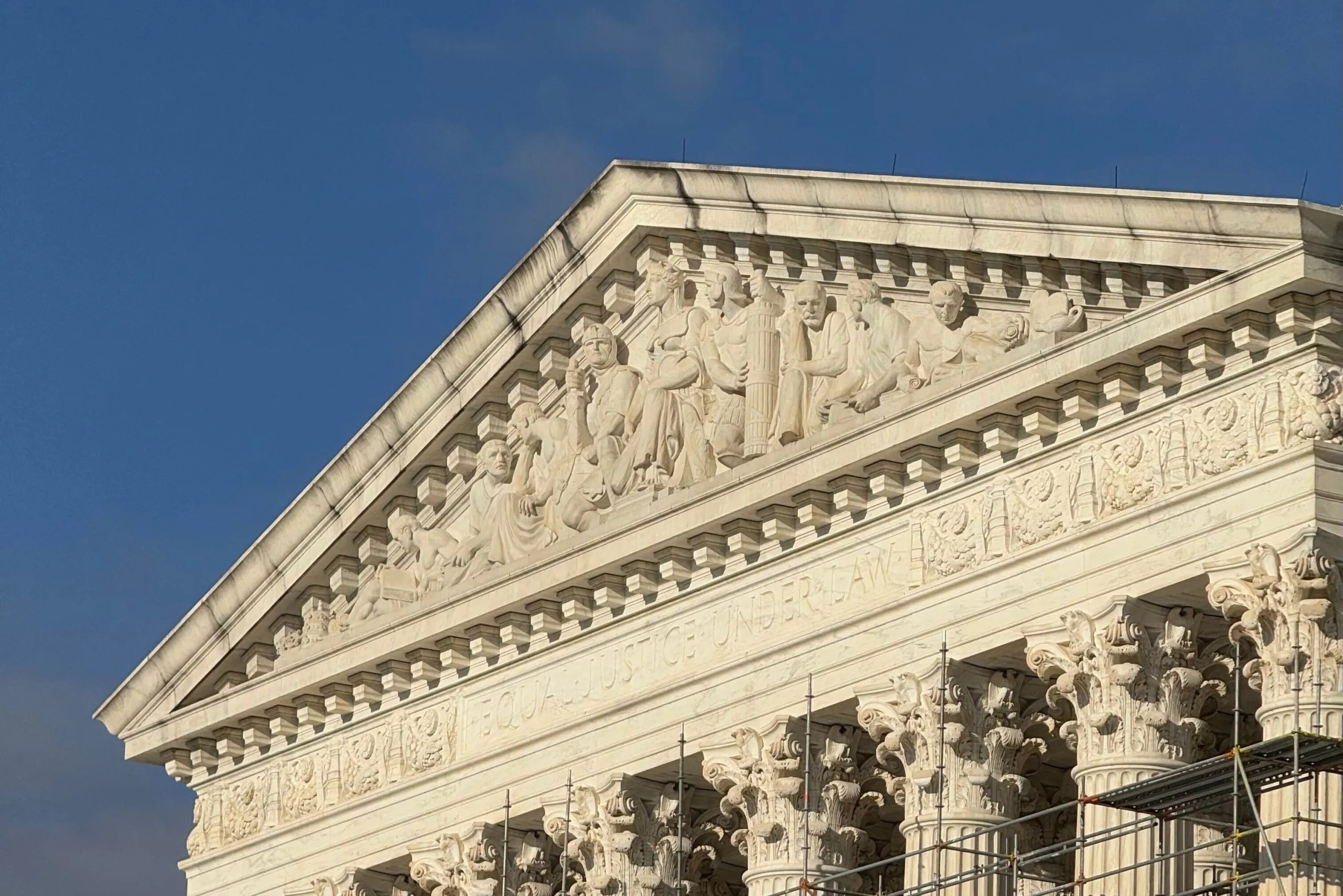
One of the goals of this newsletter is to demystify the work of the Supreme Court. To that end, we’ve published Closer Looks about why the justices wear black robes, how the cert pool works, and how justices ask questions during oral arguments, among other topics.
Which Supreme Court questions should we tackle next? Email your ideas to scotusblog@thedispatch.com using the subject line “SCOTUStoday feedback” and you just might inspire a future Closer Look.
SCOTUS Quick Hits
- The Supreme Court has indicated that it may announce opinions on Friday at 10 a.m. EST. SCOTUSblog will host an opinion day live blog that morning beginning at 9:30.
- The court also may announce opinions on Tuesday, Feb. 24, and Wednesday, Feb. 25. We will host live blogs those days, as well.
- On Friday, a Republican member of Congress, a group of voters, and New York election officials asked the Supreme Court to allow New York to proceed with the 2026 elections using its existing congressional map. The voters challenging the current map have been asked to respond to the new filings by Thursday at 4 p.m. EST.
- The court could rule at any time on an interim docket case on California’s policies for parental notification if a student chooses to use different names or pronouns.
- The court will next hear arguments on Monday, Feb. 23, the first day of its February sitting.
Morning Reads
- States ready to seize Supreme Court redistricting decision amid countdown to midterm elections (Joan Biskupic, CNN) — Although the spotlight is on the tariffs case, the Supreme Court could also soon release its decision in Louisiana v. Callais, on race, redistricting, and the Voting Rights Act. Louisiana is among the states that are expected to immediately work on a new congressional map if the decision comes in the near future, but a later ruling would make it nearly impossible to compete this work in time to use a new map in this year’s elections, as primary deadlines are closing, according to CNN. But “[i]rrespective of what happens in the current cycle, the eventual Supreme Court decision is certain to give states more latitude for 2028 and future elections.”
- Trump keeps losing TPS termination cases at lower courts despite higher court wins (Jack Birle, Washington Examiner)(Paywall) — The Trump administration’s effort to “revoke temporary protected status for immigrants from multiple countries” has sparked several ongoing legal battles and led to divergent rulings from lower courts and the Supreme Court, according to the Washington Examiner. “The Supreme Court gave the green light to ending TPS for immigrants from Venezuela twice, but lower courts have still blocked the Trump administration from ending the status for various other countries, including Haiti,” holding that it had not followed the proper process for revocation. Despite the lawsuits, the administration “continues to seek the termination of the status for additional countries. The Department of Homeland Security announced Friday it would be ending TPS for Yemen.”
- RFK Jr.’s allies are trying to free anti-vaccine doctors to speak their minds (Lauren Gardner, Politico) — Debates over standard vaccine schedules and doctors’ freedom to advise patients not to follow them are fueling a push to get “the Supreme Court to weigh in on how broadly the First Amendment protects doctors’ rights to free speech,” according to Politico. Two cases on COVID-19 vaccines and treatments out of Washington state and California are expected to put the issue in front of the Supreme Court soon. As it stands, doctors, including doctors who are anti-vaccine activists, “who give health advice to their patients or community that runs counter to the medical establishment face a rare but very real risk of state sanctions, including losing their license to practice.”
- U.S. Supreme Court Justice Sonia Sotomayor speaks at UCLA Law (UCLA Newsroom) — Justice Sonia Sotomayor appeared at the UCLA School of Law earlier this month to share “insights on law, public service, and leadership,” according to the school’s coverage of the event. She encouraged students to engage in the political process, whether by contacting elected officials or supporting advocacy groups. “One thing you can’t do is give up. Do something,” she said.
- The Plan for a Radically Different Supreme Court Is Here (Jeffrey Toobin, The New York Times)(Paywall) — In a column for The New York Times, Jeffrey Toobin explored the American Constitution Society, which he described as the “lesser-known liberal counterpart” to the Federalist Society. The A.C.S. “recently announced new leadership, and a new goal: to expand the use of the courts to oppose President Trump’s agenda.” To be effective, Toobin contended, the A.C.S. will need not just strong donor support, but also a clear vision of what associated “judges will stand for” – that is, “a theory of constitutional interpretation” that can counter originalism.
A Closer Look: Women on the Supreme Court Shortlist
In 1981, President Ronald Reagan made history by selecting Sandra Day O’Connor to replace Justice Potter Stewart. While O’Connor’s nomination as the first female justice was groundbreaking, it was not entirely unexpected. Reagan had promised during his campaign to put a woman on the court – likely in part because polling showed that men and women supported having a female Supreme Court justice. Such public support was not always there, however. Before O’Connor was tapped for the court, at least nine other women were included on different presidents’ shortlists of potential candidates – going back as early as the 1930s.
The first woman to have been considered as a potential nominee was Florence Allen, who was also the first woman to serve as a judge on a federal court of appeals after President Franklin D. Roosevelt nominated her to the United States Court of Appeals for the 6th Circuit. (When Allen arrived at the 6th Circuit, there was no women’s restroom in the courthouse.) There was also Soia Mentschikoff (considered by President Lyndon Johnson), the first female to teach at Harvard Law School – joining the faculty three years before female students were even admitted.
President Richard Nixon’s shortlist included two women out of the six potential candidates: Mildred Lillie, a judge in California, and Sylvia Bacon, a judge in Washington, D.C. Both of their names appeared in an unsigned article discussing them as potential candidates, which included references to Lillie’s lack of children and “bathing beauty figure.” (Although Nixon put forth both of these women publicly, perhaps in an attempt to win over female voters, it has been reported that behind closed doors he expressed views that women should not be allowed to vote or serve in any government job because they were “erratic” and “emotional.”)
And then there is Carla Hills, who appeared on President Gerald Ford’s shortlist. Although she did not land a spot on the court, Hills was the third woman to serve as a member of a president’s Cabinet as the Secretary of Housing and Urban Development and served as a U.S. Trade Representative under President George H.W. Bush. Although President Jimmy Carter never had a vacancy arise while in office, it was well-known that Shirley Hufstedler, a judge on the U.S. Court of Appeals for the 9th Circuit, was his top pick.
In addition to O’Connor, Reagan apparently considered four other women for the court: Amalya Lyle Kearse (also shortlisted by Bush and President Bill Clinton), a judge on the U.S. Court of Appeals for the 2nd Circuit; Cornelia Kennedy (also considered by Ford), a judge on the U.S. Court for the 6th Circuit; Joan Dempsey Klein, a justice on the California Court of Appeals; and Susie Sharp, a justice on the North Carolina Supreme Court. But O’Connor won out, despite grumbling among certain conservatives on such things as her position on abortion.
SCOTUS Quote
“You are not going to be [on the court] forever. Other people may disagree with some of the things that you have believed, so you just can’t approach it from the standpoint that you will never be disappointed or concerned. It is very possible you will. But that’s life.”
On Site
From the SCOTUSblog Team
Our favorite SCOTUS quotes
Somewhat to our surprise, one of the most popular features of this newsletter has turned out to be the SCOTUS Quotes. Nora reviewed the 80 or so quotes we’ve used so far to put together a list of the most humorous and most thought-provoking comments that we’ve featured since the section launched in October.

Contributor Corner
The future of SEC enforcement authority
In a column for SCOTUSblog, Alexandros Kazimirov explored Sripetch v. Securities and Exchange Commission, a case on this term’s oral argument docket in which the court may limit the Securities and Exchange Commission’s discretion to punish wrongdoers and, in that way, rein in “some of this agency’s considerable – and more controversial – authority.”

Posted in Featured, Newsletters