Justices send litigation about tainted baby food back to state court

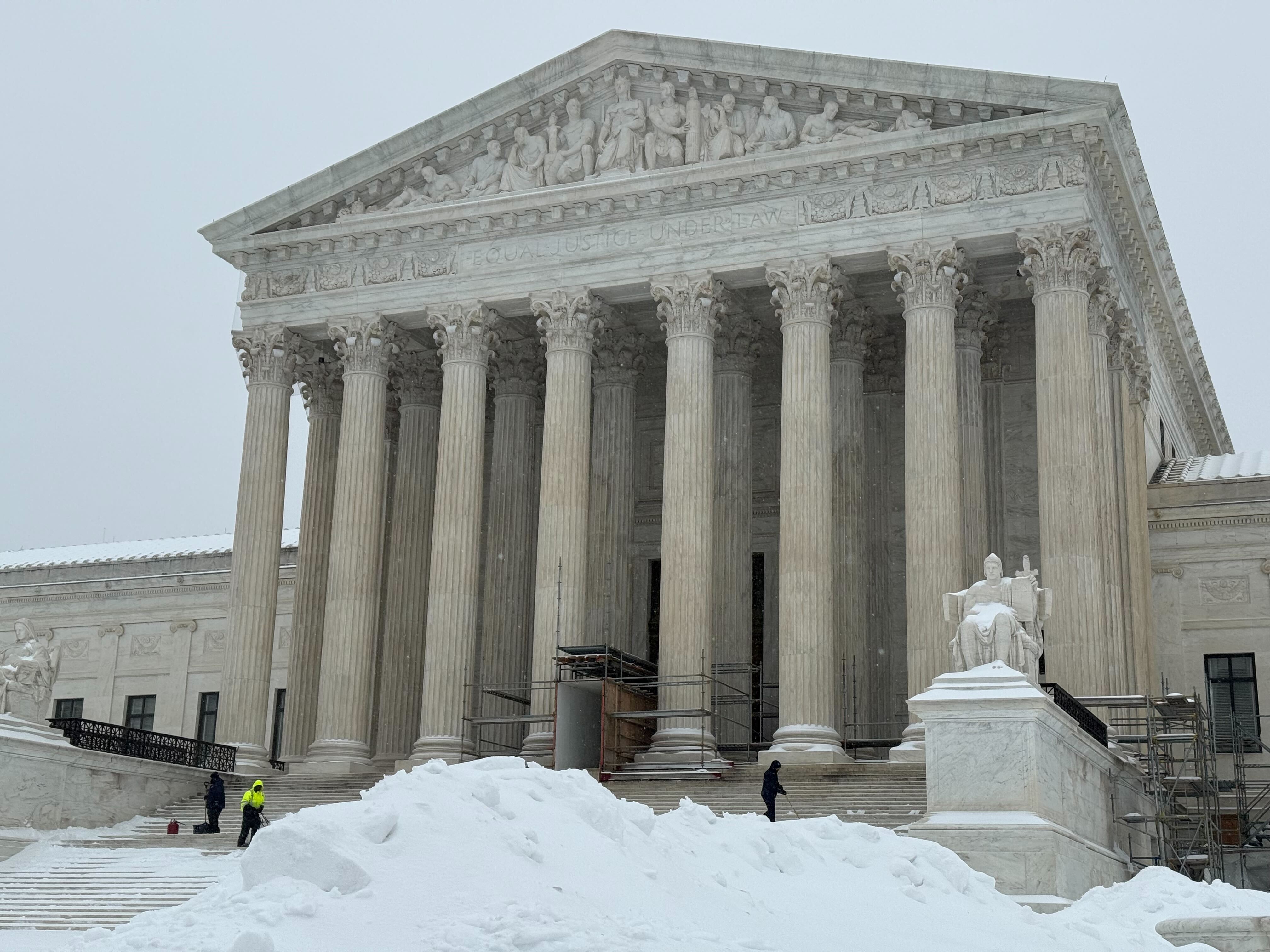
Yesterday’s decision in The Hain Celestial Group v Palmquist resolves a technical problem about what to do when district courts make a mistaken ruling about their own jurisdiction. The final word – Justice Sonia Sotomayor’s opinion for a unanimous court – says that the lack of jurisdiction by the trial court means the whole case goes back to state court.
The dispute involves a claim that toxic metal in baby food harmed a child. Originally, the mother (a Texas resident) sued the manufacturer, Hain (a Delaware company) and also the store where she bought the food (Whole Foods, a Texas company) in state court. If the mother had sued only Hain, the state court could have transferred the case to federal court under the rules for federal “diversity” jurisdiction, which apply to cases in which the litigants are from different states. The inclusion of the Texas company (Whole Foods) as a second defendant in the litigation eliminated diversity, so the case should have stayed in state court.
Hain removed the case to federal court in Texas anyway under a local doctrine in which a court could dismiss Whole Foods from the case as an improper defendant and keep the litigation even though it originally had Texas parties on both sides of the case. The federal court then dismissed Whole Foods, and held a trial at which Hain prevailed, leaving Palmquist with nothing.
On appeal, the U.S. Court of Appeals for the 5th Circuit rejected the trial court’s jurisdictional reasoning – putting Whole Foods back in the case. It then sent the case back to the state court for a potential trial against both defendants. The issue before the Supreme Court is whether the mistaken ruling by the trial court justifies sending the case back to the state courts at this late date. The court answered that it does.
Sotomayor starts by emphasizing that federal courts are “all of limited jurisdiction,” and that this ordinarily means that the district court should have proceeded only if it had jurisdiction “based on ‘the state of facts that existed at the time of filing.’” Here, she explains, where “the court of appeals concludes that the district court lacked jurisdiction over the case when it was … removed to federal court, then the court of appeals typically must vacate any judgment on the merits.”
The murky part of the case is what to do about the “one exception to the general rule,” which allows the district court’s judgment to survive if the district court “‘cures’ a jurisdictional defect prior to final judgment.” Sotomayor carefully works through the facts of an earlier case establishing that exception (Caterpillar Inc. v Lewis) and concludes that Caterpillar cannot support the judgment here. Without going through the details, in Caterpillar the trial court dismissed the “extra” party that ruined diversity with the consent of all remaining parties because of a settlement agreement.
Against that background, Sotomayor characterized the “core dispute in this case” as “whether Whole Foods’s erroneous dismissal before final judgment cured the jurisdictional defect that existed at the time of removal.” As I suggested above, the answer is that “[i]t did not.” For Sotomayor, if “the District Court had correctly dismissed Whole Foods at the outset, … this case would be more like Caterpillar, where the District Court correctly and finally dismissed [the adverse party].” Because Whole Foods “was not dismissed correctly,” that meant that “Whole Foods thus was only temporarily and erroneously removed from the case.” Because it was not “gone for good,” the “jurisdictional defect … ‘lingered through judgment.’”
In the end, all the justices were willing to agree with Sotomayor’s decision and its explanation, thus leaving the lower courts to rely on her reasoning and try to apply it to differing scenarios when similar problems arise in the years to come.
Posted in Court News, Merits Cases
Cases: The Hain Celestial Group, Inc. v. Palmquist