SCOTUStoday for Thursday, January 8

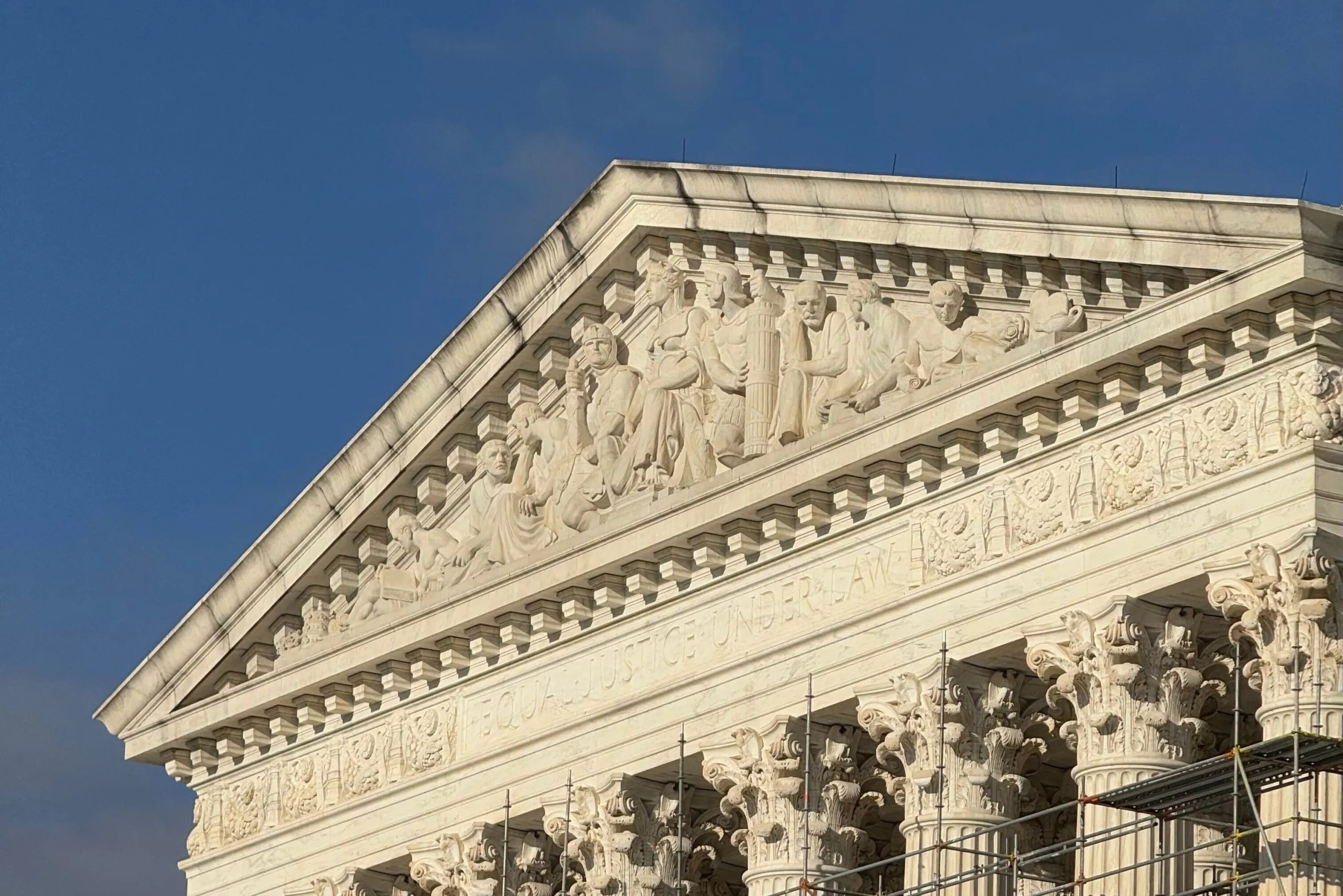
As tension continues to rise over the federal judiciary’s relationship to the Trump administration, the Senate Judiciary Committee’s Subcommittee on Federal Courts, Oversight, Agency Action, and Federal Rights held a hearing called “Impeachment: Holding Rogue Judges Accountable.” A recording of the hearing is available to watch online.
SCOTUS Quick Hits
- The Supreme Court has indicated that it may announce opinions on Friday at 10 a.m. EST. SCOTUSblog will have an opinion day live blog Friday morning beginning at 9:30.
- Also on Friday, the justices will meet to consider petitions for review. We may know as soon as that afternoon if the court has added any new cases to the oral argument docket.
- The court’s January argument session will begin on Monday, Jan. 12. The court will hear seven arguments over two weeks, including on transgender athletes; the latest chapter in the court’s gun rights jurisprudence; and President Donald Trump’s bid to remove Lisa Cook, a member of the Federal Reserve’s Board of Governors.
Morning Reads
- Trump talks up his tariffs with Supreme Court decision looming (Cory Smith, The National News Desk) — President Donald Trump continued to talk up his tariffs on Tuesday after news broke that the Supreme Court may release opinions on Friday. “We’re getting rich because of tariffs, by the way,” the president said at a retreat with House Republicans, according to The National News Desk. “I hope everyone understands that. … We’ll have over $650 billion poured into our country, or coming in shortly, because of tariffs.”
- DeSantis calls for special session on Florida 2026 redistricting (Jim Rosica and James Call, USA Today) — Florida Gov. Ron DeSantis is calling for a special session of the Florida Legislature to be held in April as the state plans a redistricting push ahead of the 2026 elections that would make it “the latest in a series of GOP-led states heeding a push from President Donald Trump to try to create a more favorable electoral climate for his party,” according to USA Today. “DeSantis … said the state needs to wait for a pending U.S. Supreme Court ruling on the Voting Rights Act before moving forward with new maps.” It can’t wait too long, however, unless lawmakers vote “to delay the candidate qualifying period for congressional races, currently scheduled for late April.”
- Pittsburgh Post-Gazette says it will close down, citing losses and labor rules (Laura Wagner and Scott Nover, The Washington Post)(Paywall) — After 240 years and a lengthy labor battle, the Pittsburgh Post-Gazette is shutting down. “The newspaper will print its final edition May 3, according to a statement it issued Wednesday hours after the U.S. Supreme Court denied its request to stay a federal appeals court’s November order that the newspaper adhere to the terms of an earlier labor agreement with its union,” according to The Washington Post. “Recent court decisions would require the Post-Gazette to operate under a 2014 labor contract that imposes on the Post-Gazette outdated and inflexible operational practices unsuited for today’s local journalism,” the newspaper’s owner, Block Communications, wrote in the statement.
- Seventh Circuit shuts down Satanic Temple challenge to Indiana abortion law (Caitlyn Rosen, Courthouse News Service) — The U.S. Court of Appeals for the 7th Circuit on Tuesday dismissed a lawsuit from the Satanic Temple, “a nonreligious group that advocates for benevolence and empathy,” that aimed to force changes to Indiana’s 10-week abortion ban, which was enacted “in 2022, shortly after … Roe v. Wade was overturned,” according to Courthouse News Service. The Satanic Temple had contended that Indiana’s abortion law “unfairly blocks the organization from providing telemedicine abortion care” and subjects its members to “a stigmatic injury” because they are “perceived as evil” due to their support for abortion. The 7th Circuit panel held that these injuries were not concrete enough to give the Satanic Temple “standing to sue the state.”
- NFL, three teams appeal to Supreme Court in coach Brian Flores’s discrimination suit (Zach Schonfeld, The Hill) — The NFL and three NFL teams have asked the Supreme Court to weigh in on a lawsuit filed by coach Brian Flores, now the defensive coordinator for the Minnesota Vikings, who contends that he participated in “sham” interviews for head coach openings in the past and that the league and teams are engaged in racial discrimination, according to The Hill. “In a petition docketed Tuesday, the NFL and the teams — the Denver Broncos, Houston Texans and New York Giants — urged the justices to reverse a ruling that would allow the case to proceed before a jury. The league says it should proceed in arbitration.”
- U.S. Appeals Court Won’t Take Up Case to Resurrect 9/11 Plea Deal (Carol Rosenberg, The New York Times)(Paywall) — The U.S. Court of Appeals for the District of Columbia Circuit announced on Tuesday that it will not rehear a dispute over a plea deal reached between a senior Pentagon official and three people accused of plotting the Sept. 11, 2001, terrorist attacks, including the alleged mastermind of the plot, Khalid Shaikh Mohammed. “Under the agreement, each would admit to his role in the plot in exchange for life sentences and avert a death-penalty trial,” according to The New York Times. Days after the deal was finalized, then-U.S. Defense Secretary Lloyd J. Austin III “declared it void,” which led to the current battle over whether Austin’s decision came too late. “Two military courts ruled that Mr. Austin had acted too late and that the contract was still valid. Then, in July, a three-judge panel of the appeals court sided with Mr. Austin, 2 to 1, and again nullified the deal.” The full D.C. Circuit has now declined to revisit the panel’s decision, “leaving the Supreme Court as the last place to potentially consider the question.”
A Closer Look: Monsanto Company v. Durnell
Moving forward, we plan to explore at least one petition per week, with a focus on particularly notable, unique, or interesting disputes.
At their private conference on Friday, the justices will consider taking up Monsanto Company v. Durnell, a case on Roundup weedkiller and policies governing product safety labels. Monsanto, which developed the pesticide, has asked the court to determine whether it can be held liable under state laws for not including a cancer warning on Roundup containers when such a warning was not required by – and indeed, according to the company, conflicted with – federal law. (Monsanto has also filed petitions for review in two other, very similar cases, but it has encouraged the court to grant cert in Durnell.)
The dispute is part of a “tidal wave” of lawsuits aimed at holding Monsanto liable for causing cancer. The first such cases were filed more than a decade ago, soon after the International Agency for Research on Cancer, part of the World Health Organization, described glyphosate, a key Roundup ingredient, as “probably carcinogenic to humans.” Since then, the company has paid billions in damages and in settlement agreements and been acquired by Bayer, which maintains that Roundup does not cause cancer.
In its Supreme Court petitions, Monsanto urges the justices to resolve a disagreement between the federal courts of appeals that has emerged as thousands of Roundup-related cases have worked their way through the legal system. The petition asks whether Monsanto can be held liable for violating state-level labeling requirements when it believed – and, at one point, was actually told by the EPA – that it could not satisfy these requirements without violating federal labeling rules. Specifically, according to the Durnell petition, the EPA said in 2019 that changing the labels to reflect the International Agency for Research on Cancer’s claims about glyphosate would “render a pesticide ‘misbranded.’”
For his part, Durnell – who was diagnosed with non-Hodgkin’s lymphoma following his exposure to Roundup and won a jury award of $1.25 million in his failure-to-warn case against Monsanto – claims that the company was not prevented by federal law “from warning consumers that Roundup may be carcinogenic or that they should wear protective gear when spraying it.”
In a friend-of-the-court brief filed at the invitation of the court, U.S. Solicitor General D. John Sauer agreed with Monsanto’s position, arguing that “EPA’s approval of Roundup labels without a cancer warning, combined with an EPA regulation that prohibits petitioner from adding such a warning without agency approval, preempts [Durnell’s] failure-to-warn claim.” Sauer acknowledged that the federal government took the opposite position when it weighed in on a similar petition for review in 2022, which the court later denied. Since that 2022 brief was filed, Sauer noted, a new administration has entered the White House.
Monsanto contends that “tens of thousands of claims” over Roundup “remain pending in courts across the country,” which raises the stakes of the pending petitions. We could hear as soon as Friday afternoon if the justices vote to take up the case.
SCOTUS Quote
“Words which are vague and fluid … may be as much of a trap for the innocent as the ancient laws of Caligula.”
— Justice William Douglas in United States v. Cardiff
On Site
Case Preview
Court to hear argument in case seeking to hold companies liable for damaging Louisiana coast
The court will return to the bench on Monday for the first argument of 2026 and confront a thorny dispute over the circumstances in which a federal contractor can transfer a case from state to federal court.

Contributor Corner
January’s criminal law arguments – and is “party presentation” morphing into a court-controlling rule?
In his latest SCOTUSCrim column, Rory Little reflected on the principle of “party presentation” and previewed this month’s argument in Wolford v. Lopez, a case on a Hawaii law that prohibits gun owners with a concealed carry permit from carrying a handgun on private property without “express authorization.”

Posted in Featured, Newsletters