Justices to consider whether to weigh in on $5 million verdict against Trump at next conference

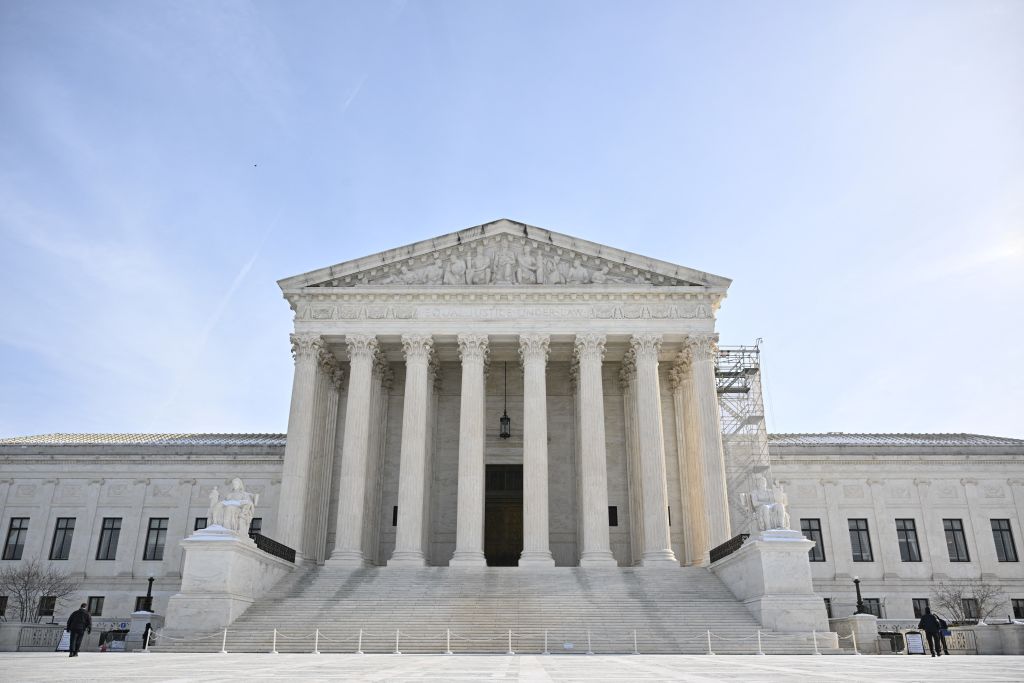
When the justices hold their private conference on Friday, Feb. 20, the petitions for review that they are slated to consider will include one from President Donald Trump, asking the Supreme Court to weigh in on the 2023 verdict against him in a civil suit brought by E. Jean Carroll. Trump calls the lawsuit “facially implausible” and “politically motivated”; Carroll urges the court to deny Trump’s petition, telling the justices that the verdict would stand regardless of their ruling.
Carroll, a journalist known for writing a popular advice column for Elle for 27 years, filed her lawsuit in 2022. She alleged that Trump had sexually abused her in a dressing room at a luxury department store in Manhattan in 1996 and that he had defamed her in a 2022 social media post calling her accusations, among other things, a “complete con job” and a “Hoax.” Carroll relied on a New York state law enacted that year, which gave adult victims of sexual abuse one year to sue their abusers, even if it would have otherwise been too late to do so.
In May 2023, a jury found Trump liable for sexually abusing and defaming Carroll, and awarded her $5 million. Trump appealed to the U.S. Court of Appeals for the 2nd Circuit, which issued an opinion in December 2024 upholding the verdict. In June 2025, the full 2nd Circuit turned down Trump’s request to reconsider the case.
In his petition for review, filed by lawyers from the James Otis Law Group (a firm founded by D. John Sauer, Trump’s solicitor general), Trump stressed that he had “clearly and consistently denied that this supposed incident ever occurred.” He contended that Carroll did not have any evidence to corroborate her accusations, and he argued that she had “waited more than 20 years to falsely accuse Donald Trump, who she politically opposes, until after he became the 45th President, when she could maximize political injury to him and profit for herself.”
Trump’s petition for review argued that the lower courts should not have allowed Carroll’s lawyers to introduce three pieces of evidence: testimony by two women, Jessica Leeds and Natasha Stoynoff, who alleged in 2016 that Trump had assaulted them – on an airplane in 1979 and at Trump’s home in Florida in 2005; and the “Access Hollywood” tape – a 2005 recording that surfaced shortly before the 2016 election, in which Trump bragged about grabbing women by their genitals.
Opposing Supreme Court review, Carroll’s lawyer, Roberta Kaplan, contended that the 2nd Circuit had held, and Trump does not contest, that even if the district court had been wrong to admit the three pieces of evidence, it ultimately wouldn’t have made a difference “taking the record as a whole and considering the strength of Ms. Carroll’s case.” Therefore, she argued, the Supreme Court should deny review, “because any ruling from this Court would not affect the Second Circuit’s judgment.”
The Supreme Court could act on Trump’s petition as soon as Monday, Feb. 23. However, the justices have a general practice of considering petitions for review at two or more conferences before granting them, which would mean that they might not announce a decision to grant review until March 2 or later.
Posted in Court News, Potential Merits Cases
Cases: Trump v. Carroll