Supreme Court rebuffs Trump administration’s request in dispute over immigration judges

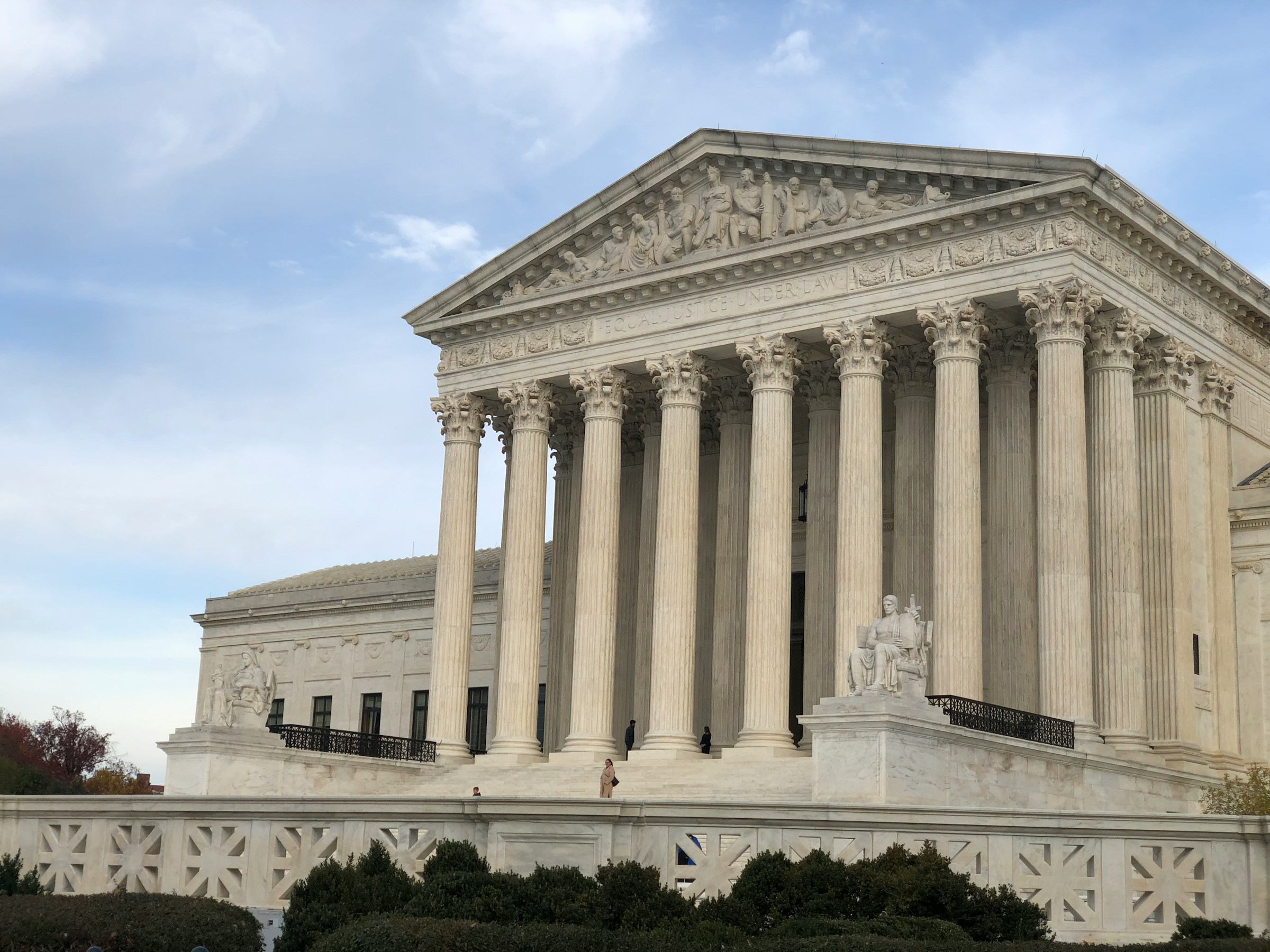
The Supreme Court on Friday turned down a request from the Trump administration in a dispute over a policy limiting speaking engagements by immigration judges. A federal appeals court had sent the challenge by a group representing the judges back to a federal trial court for more fact-finding on the independence of the administrative scheme set up to deal with claims by federal employees, and – in a brief unsigned order – the justices left that ruling in place. However, the court also left open the possibility that the government could return to the Supreme Court to seek relief “if the District Court commences discovery proceedings” before the justices rule on the government’s petition for review of the lower court’s decision. Law professor Stephen Vladeck, who closely tracks cases on the court’s docket, stated on social media that Friday’s order was the Trump administration’s “first real loss” at the Supreme Court since April of this year.
At the center of the dispute is a policy that the National Association of Immigration Judges describes as barring its members “from speaking in their personal capacities about immigration and about the agency that employs them.” The NAIJ went to federal court in Alexandria, Virginia, to challenge the policy on behalf of their members, arguing that it violates the First Amendment.
U.S. District Judge Leonie Brinkema threw out the group’s case, holding that under the Civil Service Reform Act the NAIJ was required to pursue its claims through the administrative process.
The NAIJ went to the U.S. Court of Appeals for the 4th Circuit, which sent the case back to Brinkema. It pointed to recent actions by President Donald Trump that, in the court’s view, “call into question” whether the administrative scheme for claims by federal employees remains independent of the president – for example, Trump’s firing of both the Special Counsel, who would initially consider the group’s claims in the administrative process, and the chair of the Merit Systems Protection Board, to which the Special Counsel could refer the claims. And if the administrative process is not independent, the court of appeals suggested, Congress may not want to require claims by federal employees to proceed through that scheme. The 4th Circuit therefore directed Brinkema to find the additional facts necessary to consider “the continued vitality of the adjudicatory scheme.”
U.S. Solicitor General D. John Sauer came to the Supreme Court on Dec. 5, asking the justices to block the 4th Circuit’s ruling from going into effect after that court refused to do so. Sauer told the court that “‘unelected judges’ do not get ‘to update the intent of unchanged statutes if the court believes recent political events … alter the operation of a statute the way Congress intended.” Moreover, Sauer added, the 4th Circuit’s ruling had already created “destabilizing uncertainty” that could “extend beyond federal personnel actions” to other “administrative-review schemes that preclude district-court jurisdiction” – for example, the Federal Trade Commission.
Sauer urged the court to issue an administrative stay – a temporary order that would pause the 4th Circuit order to give the justices time to consider the Trump administration’s request. Chief Justice John Roberts, who handles emergency appeals from the 4th Circuit, granted that request on the same day that the government made it.
Opposing the government’s request, the NAIJ told the justices that the “carefully calibrated system of review” established by Congress “has been called into question. If the administrative process for federal employees is not independent from the president’s control, the group wrote, “the inference that Congress intended to withdraw district-court jurisdiction over federal employment claims may no longer be appropriate.” And in any event, the group noted, there is no harm to the government from allowing the fact-finding to go forward.
In its order declining to intervene, issued eight days after the case was fully briefed, the justices agreed with the NAIJ that “the Government has not demonstrated that it will suffer irreparable harm without a stay.” But at the same time, the court indicated that although it would not intervene at this stage, its denial would not bar the government from returning to the court if the district court moved ahead with fact-finding before the court rules on the government’s as-yet-unfiled petition for review.
Posted in Court News, Emergency appeals and applications
Cases: Margolin v. National Association of Immigration Judges