SCOTUStoday for Wednesday, December 17
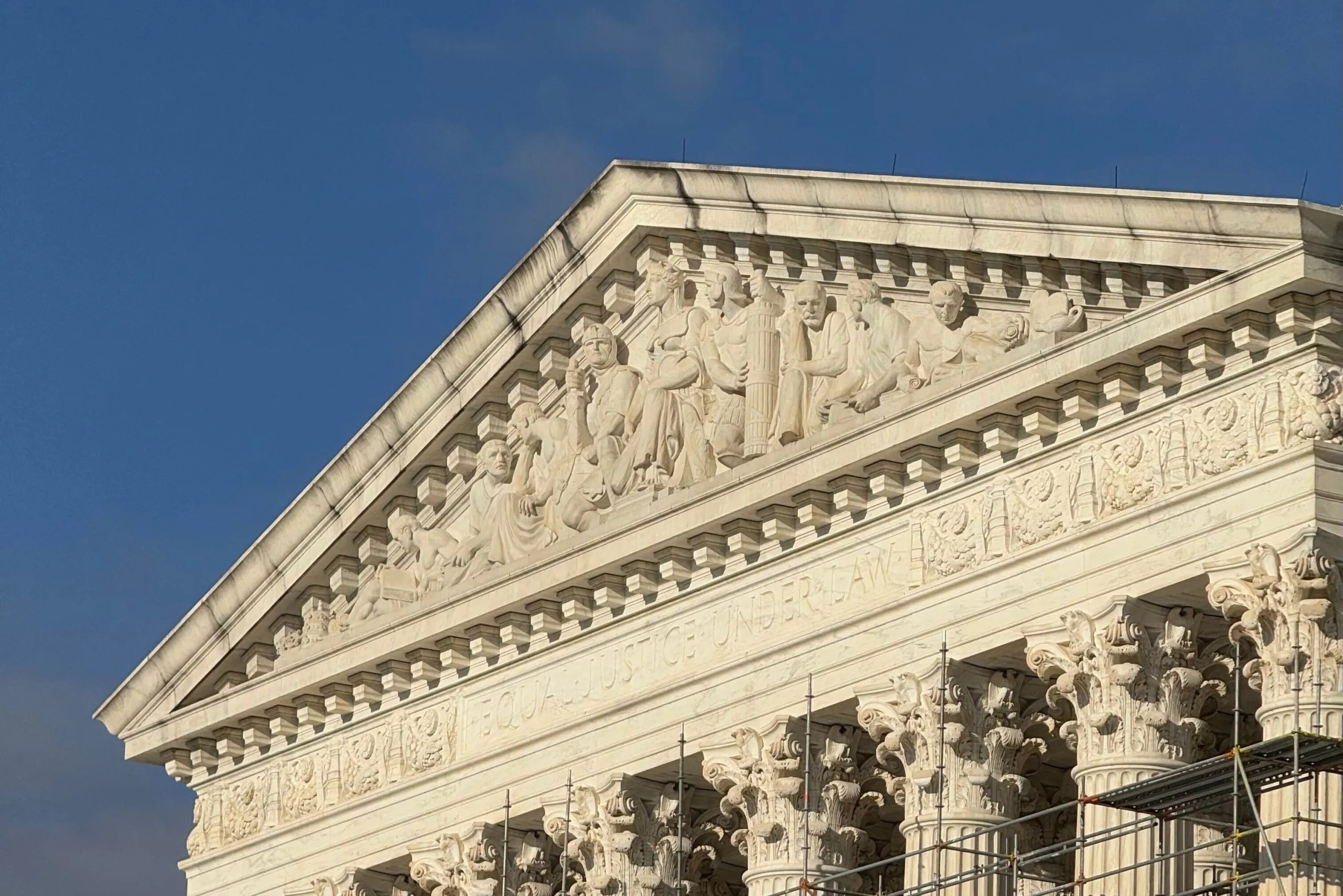
Yesterday, Franklin the Turtle made an appearance on Reason’s Volokh Conspiracy blog. Here’s why.
SCOTUS Quick Hits
- The court could issue decisions in the interim docket cases on President Donald Trump’s effort to deploy the National Guard to Illinois and a dispute between the Trump administration and immigration judges at any time.
Morning Reads
- Bessent says Supreme Court tariff ruling, Fed chair pick expected in January (Amanda Macias, Fox Business) — In a Tuesday interview with Fox Business, U.S. Treasury Secretary Scott Bessent said he expects the Supreme Court’s ruling on tariffs to come in January. He noted that the administration has “plenty of revenue alternatives” if the court strikes down the tariffs, but added that such a ruling would harm the country. “Economic security is national security. So this ruling is really a national security ruling and if they rule against the administration, they will be ruling against national security,” Bessent said.
- New Trump tariffs collection hits $200 billion, Customs says (Lori Ann LaRocco and Dan Mangan, CNBC) — U.S. Customs and Border Protection announced on Monday that the “United States has collected more than $200 billion in tariffs this year as a result of new duties imposed by President Donald Trump since the beginning of 2025,” according to CNBC. “If the Supreme Court rules that Trump’s new tariffs are illegal, it is possible the court could say that companies that have paid the duties so far are entitled to refunds.”
- Alabama’s Black lawmakers could nearly be wiped out by a single US Supreme Court ruling, report warns (John Sharp, AL.com) — A new report from Black Voters Matter and Fair Fight Action contends that a Supreme Court decision eliminating Section 2 of the Voting Rights Act – the provision at the center of Louisiana v. Callais – “could wipe out 191 Democratic-held legislative seats across the South,” according to AL.com. “When a lot of people think of the Voting Rights Act, they think of the congressional districts,” said April Albright, national legal director with the Black Voters Matter Fund, to AL.com. But the VRA also affects “state-level districts, and it could even go below that and deal with county and municipal districts,” she added. “We want it to be clear that if the Court vacates Section 2 of the Voting Rights Act, it can have implications far beyond whether minorities have one or two congressional districts in Alabama.”
- Louisiana law requiring age verification on social media is unconstitutional, federal judge rules (Matthew Albright and Matt Bruce, The Times-Picayune) — A federal judge on Monday “blocked Louisiana from enforcing a 2023 law requiring social media companies to verify the age of users, obtain parental consent and provide parental controls, saying it violates the First Amendment,” according to The Times-Picayune. “[C]iting numerous rulings from federal appeals courts and the U.S. Supreme Court,” Judge John deGravelles wrote that “most social media use, even by minors, is protected by the First Amendment.” As a result, he explained, “the government can only intervene in narrowly tailored circumstances — and Louisiana’s law was too broad and vague.” Louisiana Attorney General Liz Murrill said in a statement that the state intends to appeal the ruling.
- Little Sisters of the Poor file another appeal over contraception mandate (Tyler Arnold, Catholic News Agency) — Nearly a decade after they first appeared before the Supreme Court, and 14 years after their legal battle began, the Little Sisters of the Poor are still fighting for an exemption from the Affordable Care Act’s contraceptive mandate. On Friday, they asked a federal appellate court to overturn a district court ruling that said an exemption offered to the Little Sisters and other similarly situated organizations by the first Trump administration was put in place in a way that “did not comply with the Administrative Procedure Act,” according to Catholic News Agency. The Supreme Court previously upheld the exemption on different grounds.
A Closer Look: Courtroom Lectures at the Supreme Court
For those with an interest in the judiciary – or who are simply looking for an engaging, educational outing with family members in town over the holidays – perhaps check out the Supreme Court’s Courtroom Lectures. These free, docent-led programs offer a glimpse into the court’s procedure and history, and with sessions running through Dec. 24 and resuming on Dec. 29, they fit neatly into holiday itineraries around Christmas.
Held entirely within the courtroom, the 25-minute lectures are designed for visitors of all ages (unlike court sessions themselves, which, given their “formal nature and length” are “not recommended for infants or young children”). The purpose of the lectures is to “introduce … the judicial functions of the Supreme Court, the history of the building, and the architecture of the Courtroom.” Specifically, lecturers cover the building’s history dating back to its completion in 1935 along with the architecture of the courtroom itself, including the marble friezes depicting lawgivers like Moses. Perhaps coolest of all: these sessions allow participants to sit in the space where oral arguments are held.
But let’s turn to Tripadvisor. One reviewer stated that the lecture is “A MUST … when Court is not in Session. Done every half-hour. It will change the way you think about the high court.” Not everyone was so positive, however: according to another review (albeit from 2016), “the docent half hour ‘lecture’ about the supreme court … was deadly boring but I think it depends on who is leading it.”
As for logistics: Lectures typically occur each weekday at 10:30 a.m., 11:30 a.m., 12:30 p.m., 1:30 p.m., and 2:30 p.m., except on federal holidays or when (duh) the court is in session. No reservations are needed, but visitors should join the line in the Great Hall (just outside the courtroom on the first floor) at least 15 minutes before a lecture is scheduled to begin, especially during busier seasons – the court does not look fondly upon latecomers, bar members and the public alike.
SCOTUS Quote
“One half the doubts in life arise from the defects of language.”
— Justice William Johnson in Gibbons v. Ogden
On Site
Contributor Corner
In his latest Courtly Observations column, Erwin Chemerinsky explored the lasting legacy of Bush v. Gore, the 2000 case that brought an end to the recount in Florida and made it possible for George W. Bush to be certified as the winner of the presidential election. Chemerinsky noted that “the decision’s largest significance may be from the widespread perception that the justices were simply motivated by their own partisan preferences as to who should be the next president.”
WWWWD: What Would Woodrow Wilson Do?
In his latest AV Ristorante column, Brian Fitzpatrick reflected on Trump v. Slaughter, a case on the president’s authority to remove the heads of independent federal agencies, and raised a provocative question: What if the premise that these agencies were considered independent to begin with is false? To explain why he’s asking that question, Fitzpatrick pointed to an 1887 article from Woodrow Wilson.
Posted in Featured, Newsletters